Colorado Architecture News | 10.21.26
News from the Colorado Chapter of The American Institute of Architects
10.21.26
In this Newsletter:
- Register today for the Practice + Design Conference
- Imagining Architecture for Colorado’s Next 150 Years
- Funding Opportunity: Large Building Decarbonization Grants
- Oct 21 • University of Colorado Anschutz Health Sciences Building tour
- Oct 22 • LAWS whiskey house tour
- Oct 27 • Cherry Creek North multi-site tour
- Oct 28 • CRAN Fall Home Tour
- Member Spotlight: Margarita Gonzalez, Assoc. AIA
- Premier Partner Spotlight: IMEG
AIA COLORADO’S
NEWS
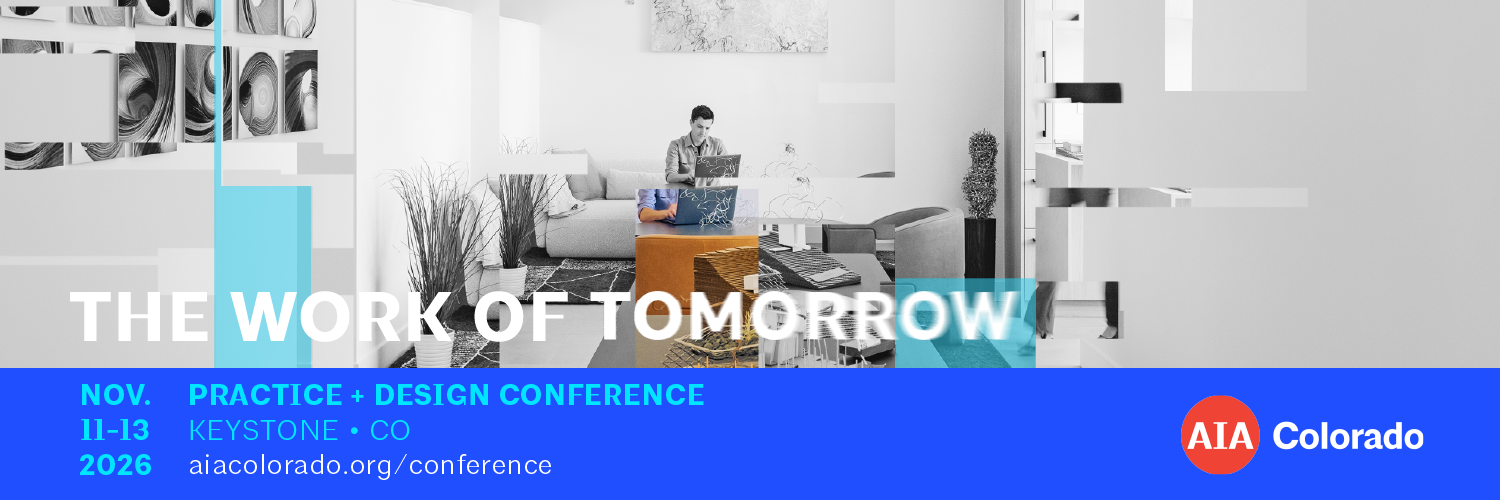
Three Days of Learning, Connection, and Inspiration
The AIA Colorado Practice + Design Conference brings our architecture community to Keystone November 11–13 for exceptional keynotes, fresh learning opportunities, and the camaraderie members look forward to every year.
October 30 is the last day to register at the regular rate and reserve lodging through our Keystone room block. Make your plans now to join us for all three days, including Wednesday’s State of the State of Colorado, which is included in this year’s registration.
Earn up to 12 LU|HSW, with 14 LUs total submitted. We’ve expanded the schedule to help you get the educational credits you’re looking for:
- New morning micro-sessions: Start Thursday and Friday with three presentations in a one-hour learning session, from 7:30–8:30 am, before the day’s first keynote.
- New Thursday Lunch & Learns: Choose from three HSW presentations offered from noon–1 p.m.
- Outstanding keynotes and intriguing breakouts: Explore ideas shaping the profession with John Ronan, FAIA; Stephen Kieran, FAIA; Robert Ivy, FAIA; Florian Idenburg and Jing Liu; and Angela Brooks, FAIA, and Lawrence Scarpa, FAIA.
There’s plenty to discover between sessions, too. Scheduled committee meetups offer time to connect with fellow volunteers or learn about a committee you’re interested in joining. Visit a sold-out Expo Hall featuring new vendors, and stop by AMP Media for a free professional headshot.
Reduced registration is available for Early-Career Architects, AIA members licensed after January 1, 2021. Associate AIA members also enjoy reduced conference pricing.
Come for the education, reconnect with your community, and leave with fresh ideas for your practice!
Imagining Architecture for Colorado’s Next 150 Years
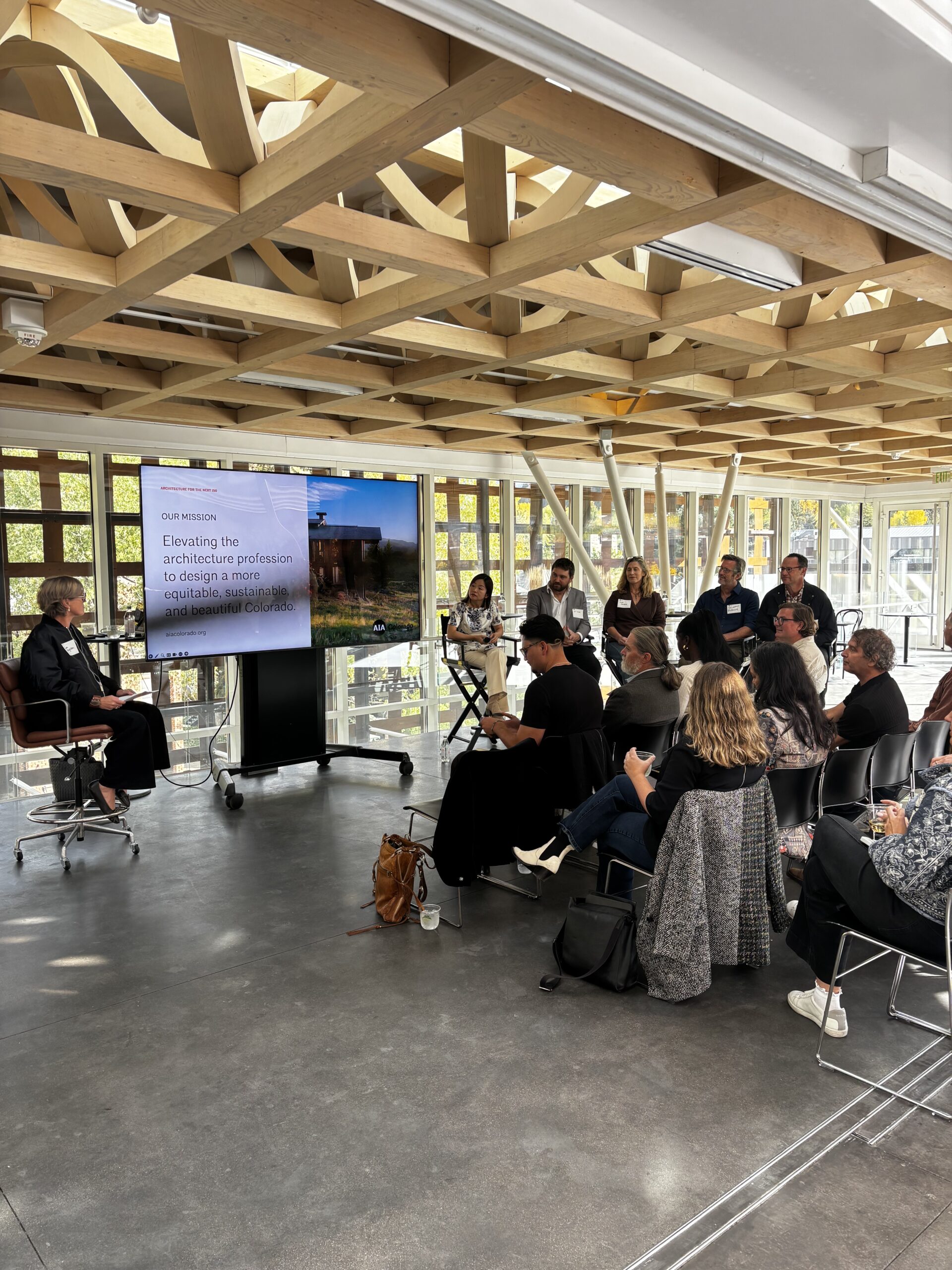
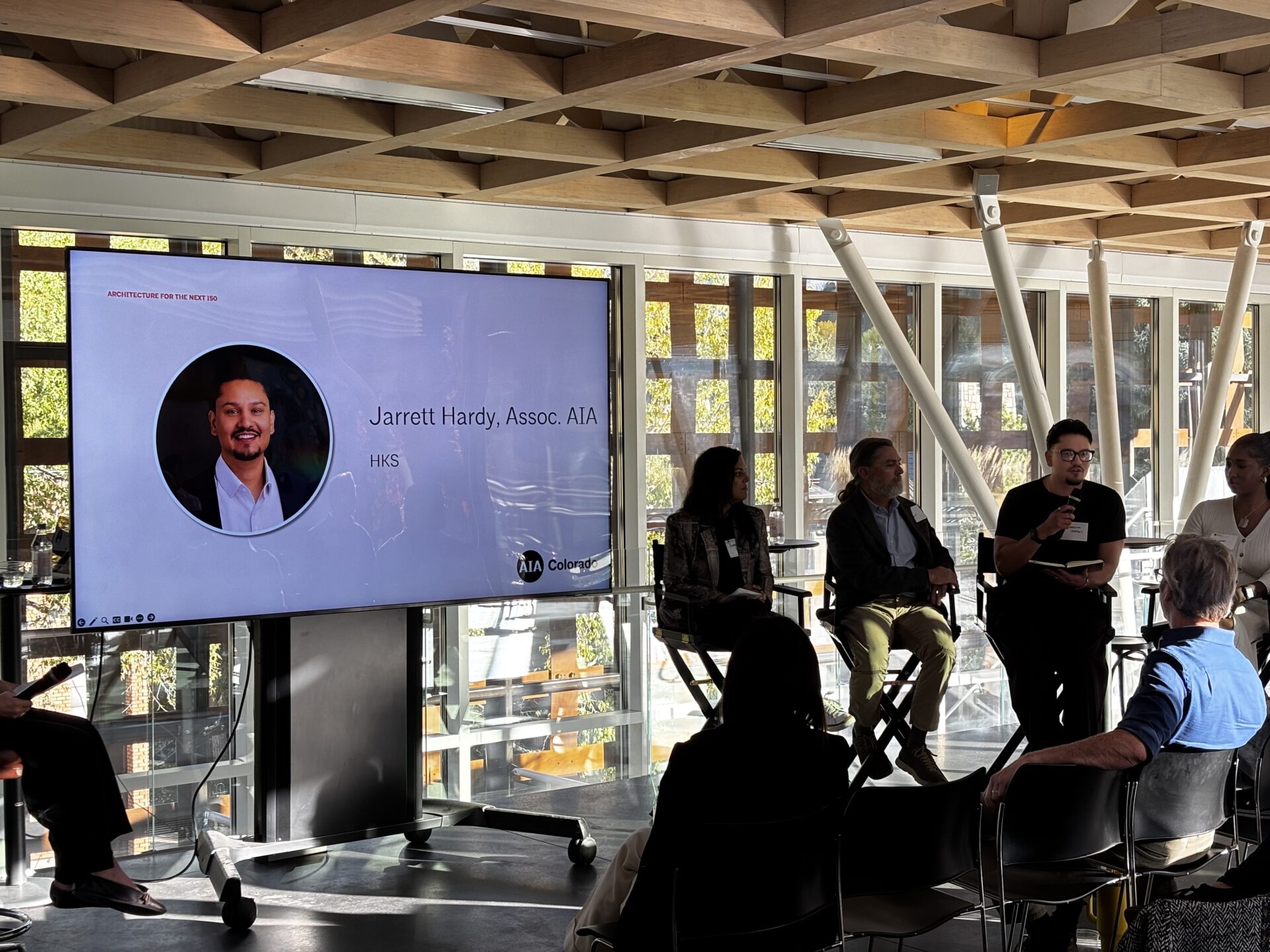
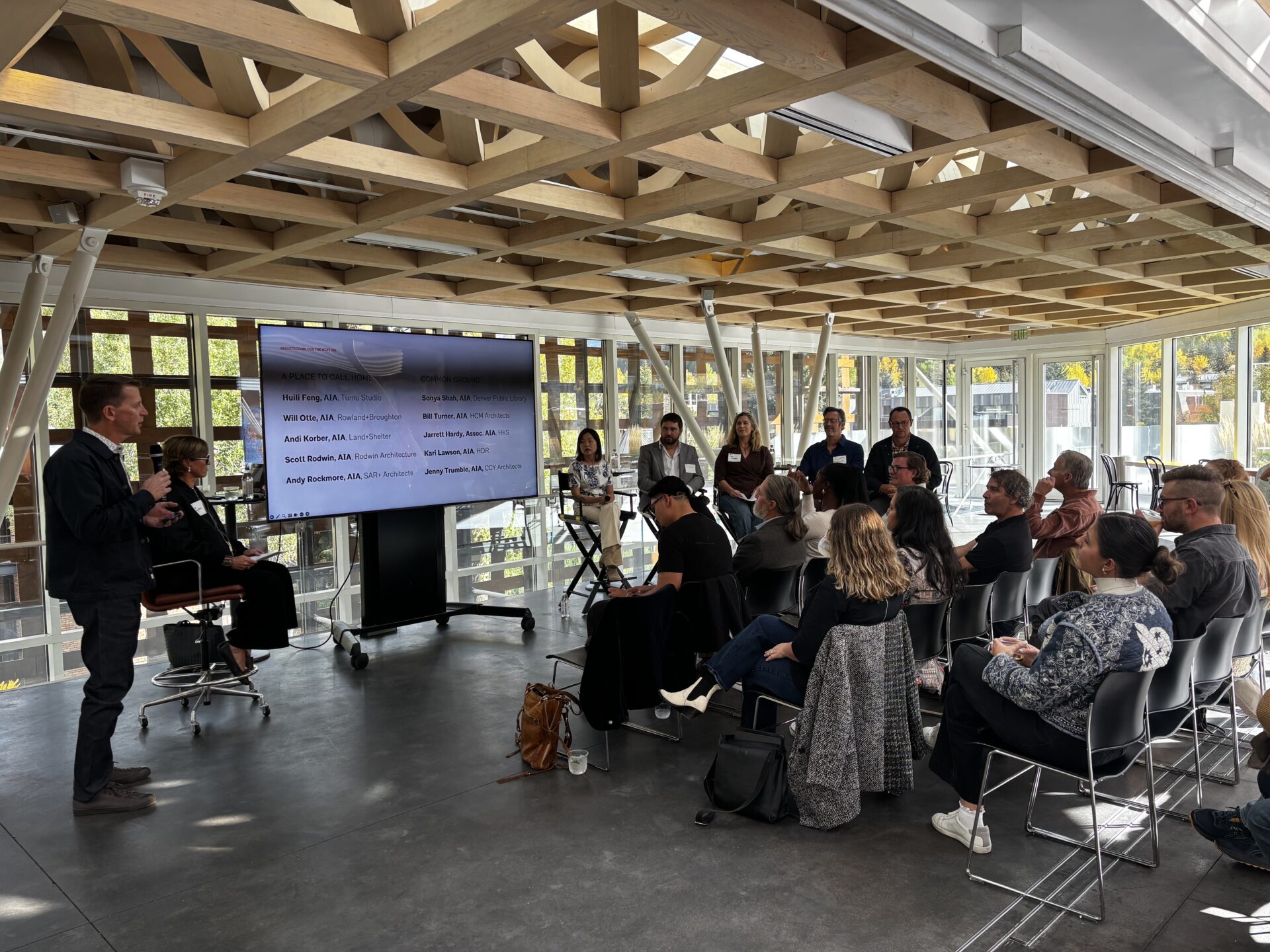
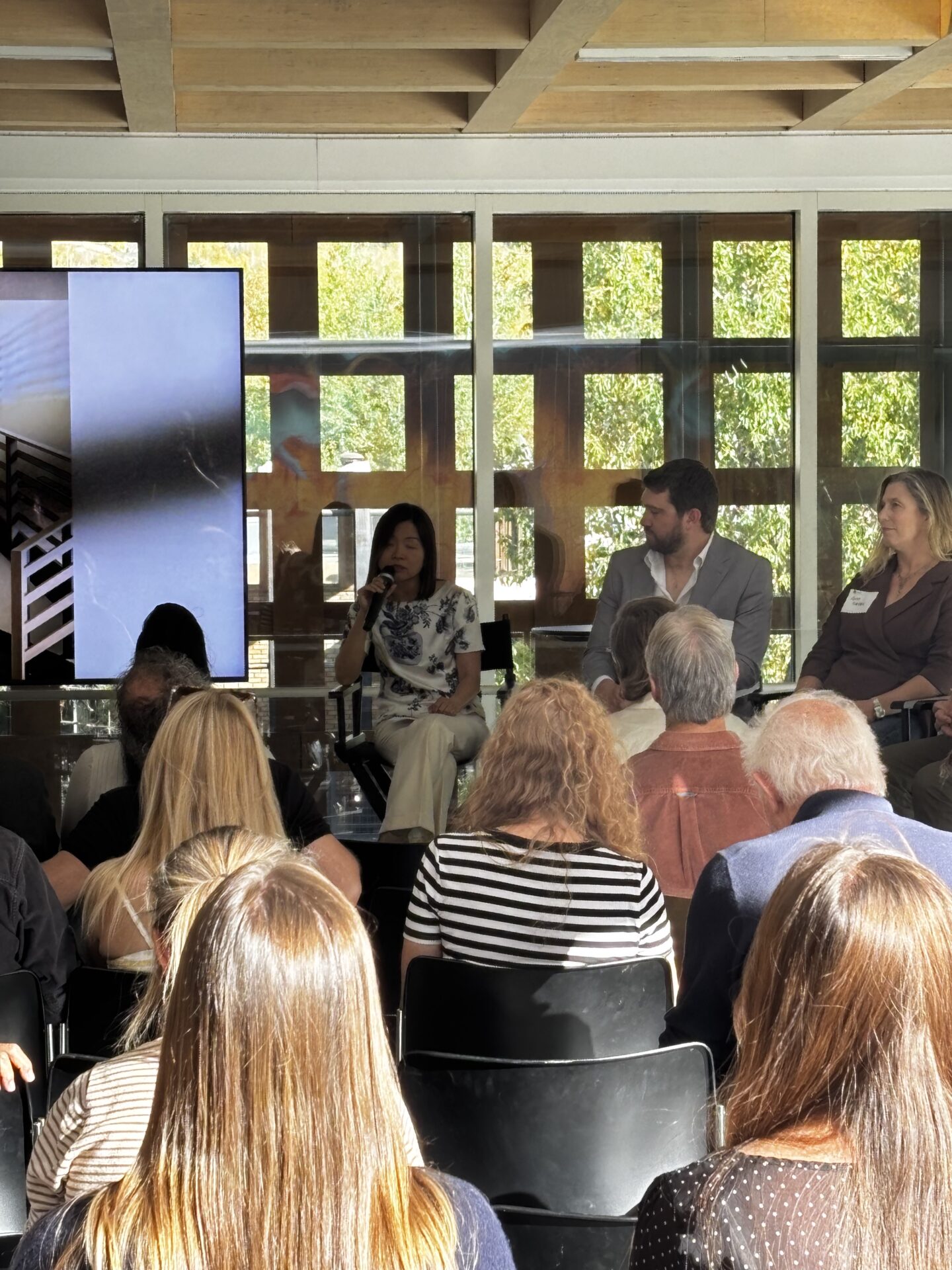
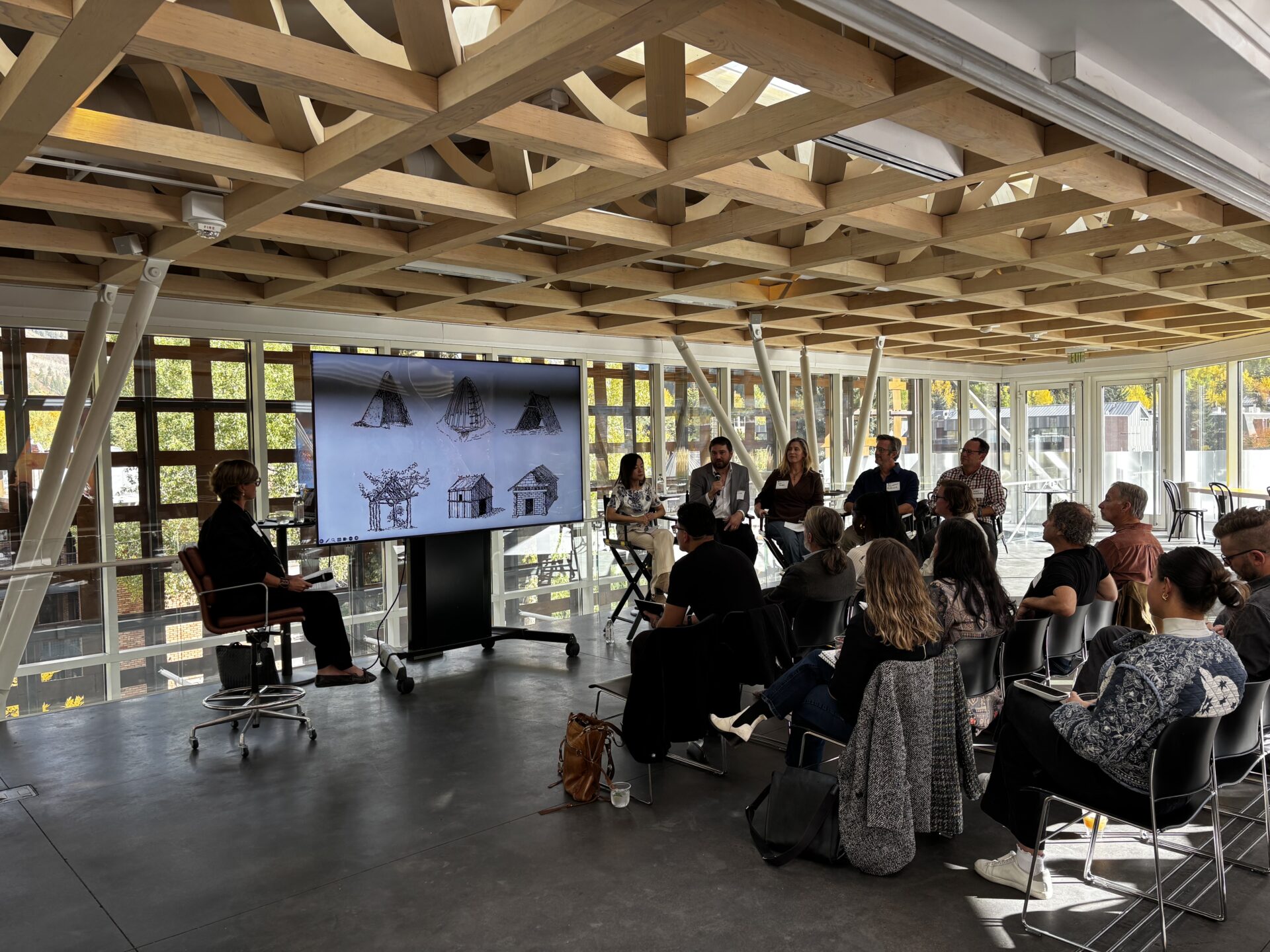
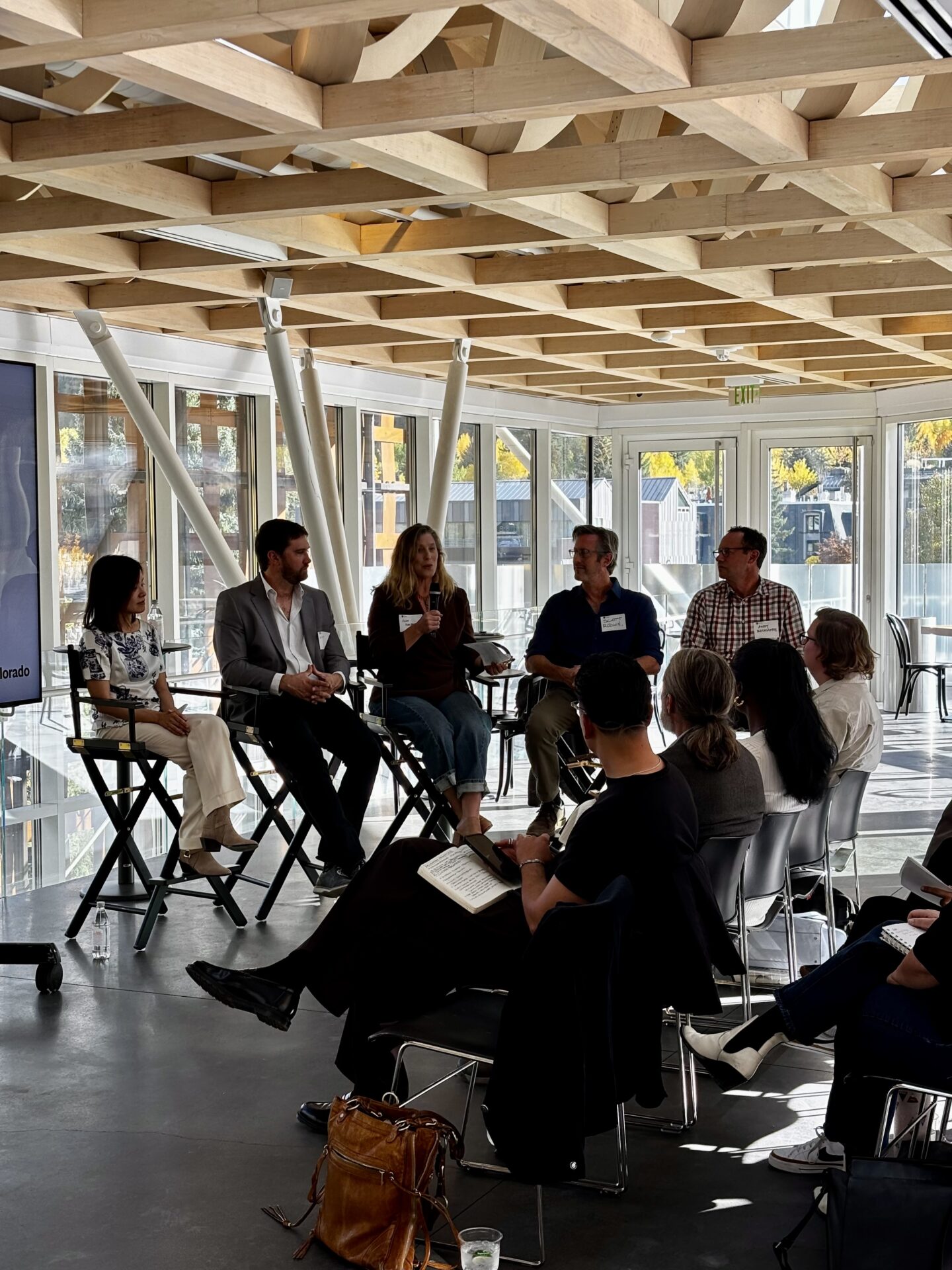
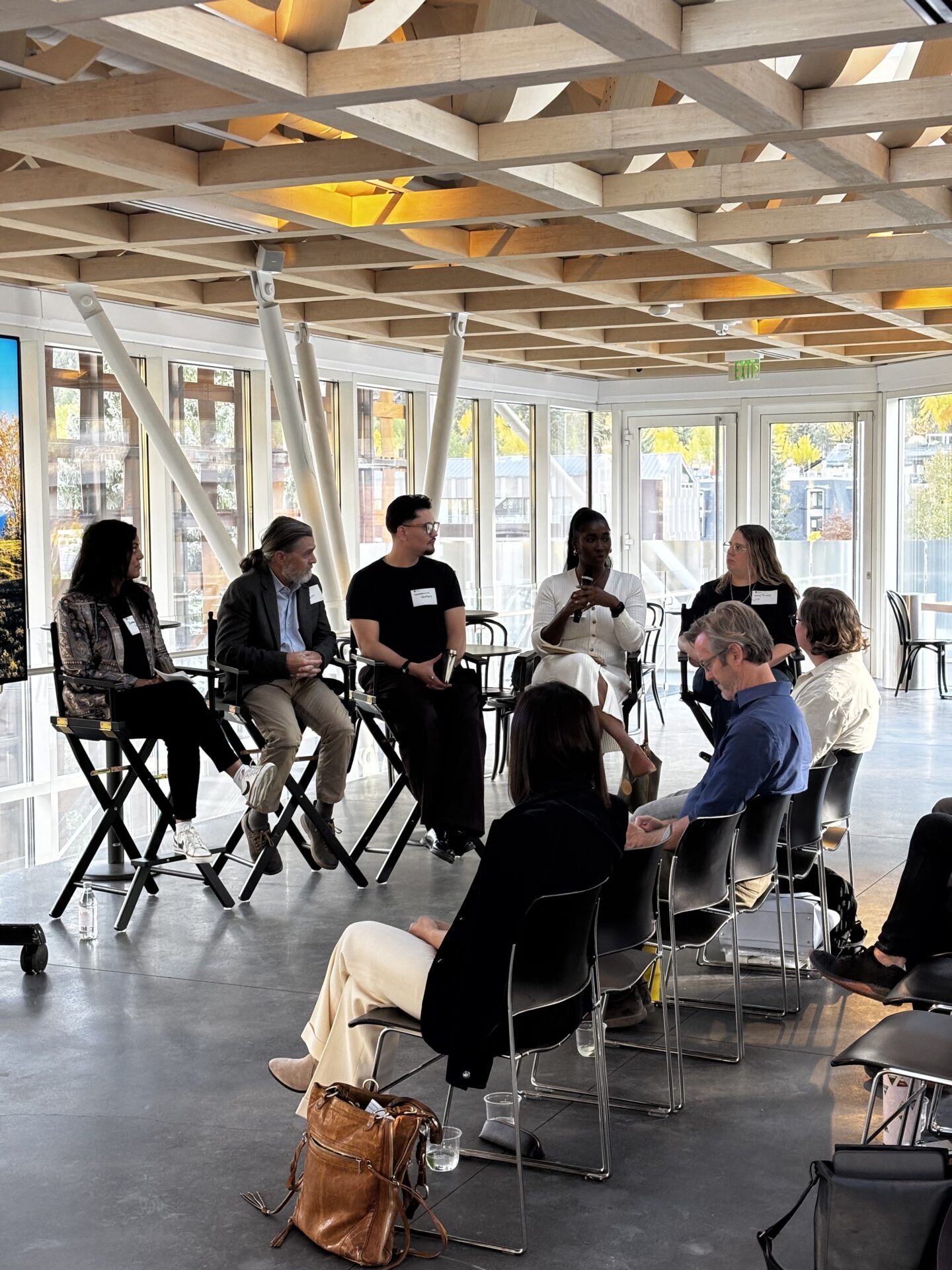
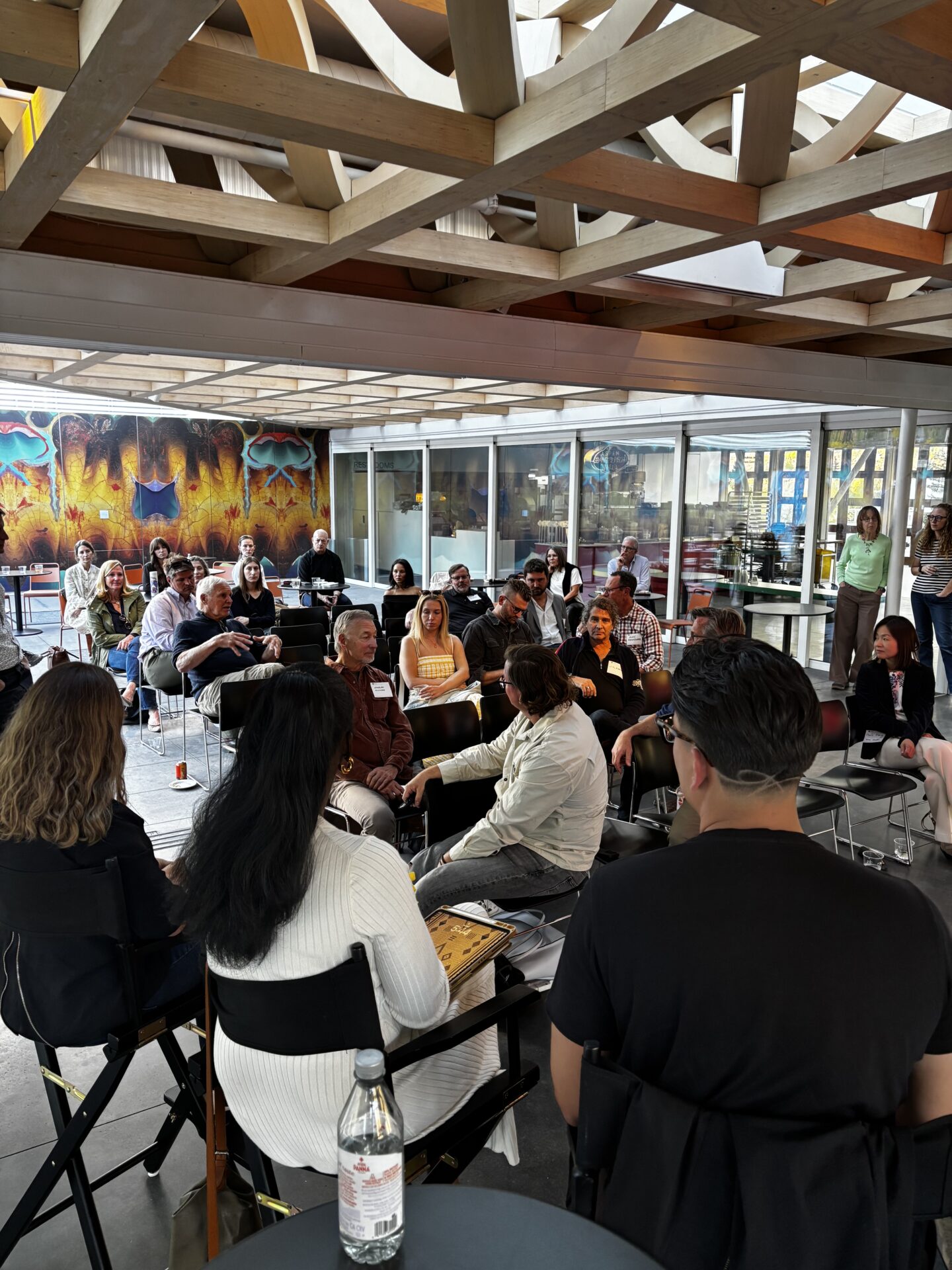
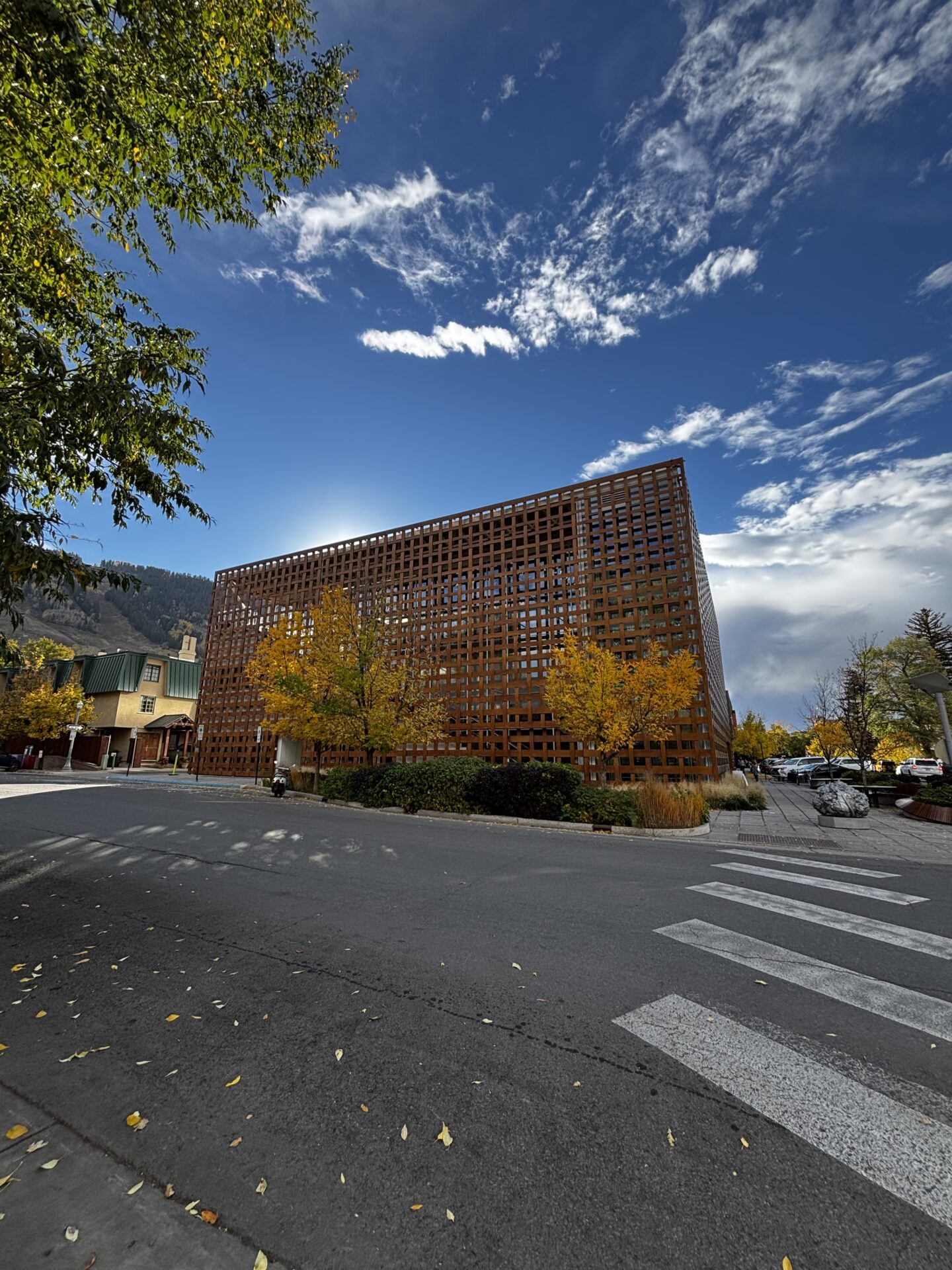
On October 8, architects, community members, and design enthusiasts gathered at the Aspen Art Museum to consider how architecture can shape Colorado’s next 150 years. Moderated by Sarah Broughton, FAIA, the program featured Huili Feng, AIA; Will Otte, AIA; Andi Korber, AIA; Scott Rodwin, AIA; Andy Rockmore, AIA; Sonya Shah, AIA; Bill Turner, AIA; Jarrett Hardy, Assoc. AIA; Kari Lawson, AIA; and Jenny Trumble, AIA. The panelists explored how homes can respond to changing needs, costs, and climate conditions, as well as how public spaces, infrastructure, transportation, and cultural places can strengthen community. Together, they challenged architects to move beyond identifying problems and help communities imagine what could go right. Read the event recap and explore photos from the conversation here.
Funding Opportunity: Large Building Decarbonization Grants
The Colorado Energy Office is accepting applications through October 23 for the second and final funding round of its Large Building Decarbonization (LBD) Showcase Grant Program supporting implementation-ready projects that help large buildings meet Building Performance Colorado targets ahead of their deadline or reduce emissions beyond their selected target.
Awards range from $500,000 to $2 million, with $8.5 million available in this round. Funding can cover 50% of implementation costs for standard buildings and 65% for under-resourced buildings. Eligible projects can include electrification of heating and water heating systems, high-efficiency electric HVAC and heating equipment, onsite renewable energy and energy storage, and other qualifying improvements.
AIA Colorado members are encouraged to share this opportunity with building owner clients who may have eligible projects. Even if your firm isn’t pursuing the funding directly, making clients aware of available resources is another way architects can provide value as trusted advisors.
Already working with clients on Building Performance Colorado upgrades? We’d also like to hear what you’re seeing. Are building owners moving forward with necessary improvements? What challenges are affecting their decisions or timelines? Share your experience with Nikolaus Remus, AIA, AIA Colorado’s Advocacy Engagement Director at nikolaus@aiacolorado.org. Learn more and review eligibility requirements here.
AIA COLORADO’S
EVENTS
Oct 21 • University of Colorado Anschutz Health Sciences Building tour
Wednesday, October 21st, at 4pm, join members for tour of the University of Colorado Anschutz Health Sciences Building, a 2023 AIA Colorado Design Award of Merit recipient. Designed by Anderson Mason Dale and ZGF Architects and completed in 2022, the Anschutz Health Sciences Building furthers the University of Colorado Anschutz Medical Campus’s trajectory as one of the leading medical care, translational research, and educational facilities in the world. Tour approved for 1.5 LU|HSW. More info and RSVP here.
Oct 22 • LAWS whiskey house tour
Thursday, October 22nd, at 5pm, join members for a tour of LAWS whiskey house, a 2025 AIA Colorado Design Award of Excellence recipient. Explore both the architecture crafted by BOSS architecture and the whiskey-making process that sets Laws Whiskey House apart. The tour culminates with a cocktail and unique Q&A session with owner representative and architects from BOSS. Tour approved for 1 LU|HSW. More info and RSVP here.
Oct 27 • Cherry Creek North multi-site tour
Tuesday, October 27th, at 4pm, join members for a guided architectural tour of two new commercial office projects in Denver’s Cherry Creek neighborhood: 2nd and Adams and 242 Milwaukee. The tours will explore the design and technical execution of contemporary five-story office buildings, with particular attention to how traditional masonry and high-performance glass systems balance structural demands, energy efficiency, daylight, and occupant well-being. Tours to be led by OZ Architecture and 4240 Architecture. Combined tours approved for 2 LU|HSW. More info and RSVP here.
Oct 28 • CRAN Fall Home Tour
Wednesday, October 28th, at 4:30pm, join AIA Colorado’s CRAN to explore a new Boulder home built following demolition of the previous residence. Melton Design/Buildarchitects Richard McSwain, AIA and Alex Parulis will share how the team balanced the homeowners’ goals with Boulder’s stringent zoning requirements and resolved structural, mechanical, and stormwater challenges. Limited to 16 AIA members. Tour to be submitted for 1 LU|HSW. More info and RSVP here.
MEMBER
NEWS
Member Spotlight: Margarita Gonzalez, Assoc. AIA
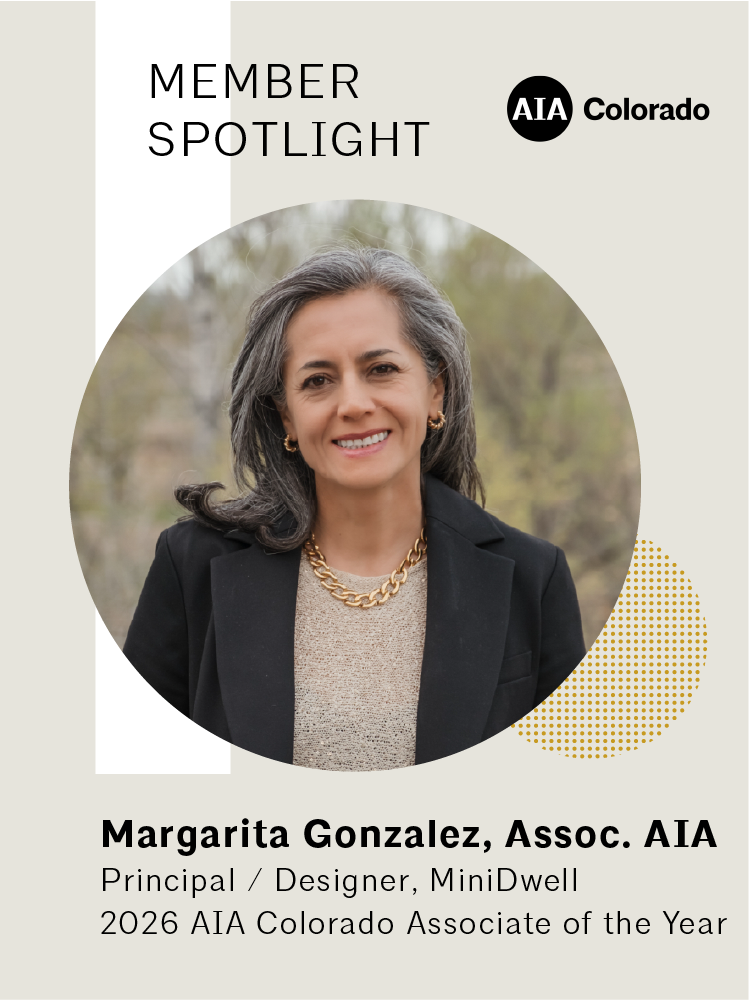
Meet Margarita Gonzalez, Assoc. AIA, founder and principal of Minidwell and AIA Colorado’s 2026 Associate of the Year honoree. Margarita reflects on the international experiences that shaped her approach to design, the importance of listening to communities, and how education and involvement in AIA Colorado help create a sense of belonging within the profession.
Read the Member Spotlight here.
Rodwin Architecture announced the promotion of three architects to Associate: Blake Sullivan, AIA, Co-Chair of AIA Colorado’s Custom Residential Architects Network (CRAN), Kirsten Heitfeld, AIA, Secretary of AIA Colorado’s Committee on the Environment (COTE). and Shannon Wehner, AIA.
COMMUNITY
NEWS
Shaping the Denver Region’s Building Energy Policies: Industry and Technical Partner Input Sessions
Friday, October 23, from 9 – 11am, The Building Policy Collaborative, a program of PowerAhead Colorado, invites you to a virtual session about collaborating with local governments to develop a policy framework to improve energy performance in existing commercial and multifamily buildings. Your feedback will help inform the final regional model framework. The framework will serve as a model policy local governments can adopt to advance their building energy goals. Join them for a virtual session to learn about the draft policy framework and provide comments. Learn more and register here.
Denver Permitting Forum: Commercial + Multifamily Projects
November 17, from 2 – 4pm, join the Denver Permitting Office for updates on commercial and multifamily permitting, including process improvements, new customer tools, and recent regulatory changes. Connect with staff from city departments involved in permitting and bring your questions for a general Q&A. Meet at 101 W. Colfax Ave., first-floor auditorium and enter at Cleveland and 15th streets. RSVP required. Reserve your spot here.
Colorado Springs Fire Department quarterly meetings with architects
The Colorado Springs Fire Department would like to extend an invitation to local architects to attend a quarterly meeting for collaboration and discussion of pertinent topics. If you have specific topics that you would like to discuss, please email them to Senior Fire Inspector Jacob Watson at Jacob.Watson@coloradosprings.gov at least two days before the meeting. The next meeting will be Friday, October 23rd, from 9 – 11am, at the Fire Construction Services conference room at 2880 International Circle Colorado Springs, CO 80910.
Celebrate 100 Years of Design Education at CU Boulder
Wednesday, November 4, from 4:40 – 6:30pm, join CU Boulder’s Department of Environmental Design for an evening celebrating 100 years of architecture and environmental design education. The event features a gallery reception and exhibit exploring CU’s design education history, followed by a talk and discussion with AIA CEO Carole Wedge, FAIA, who will receive the 2026 ENVD Distinguished Alumni Award. Alumni, members of the design community, and the public are welcome. Learn more and join the celebration here.
Shaping the Denver Region’s Building Energy Policies: Industry and Technical Partner Input Sessions
October 23, from 9 – 11am, The Building Policy Collaborative, a program of PowerAhead Colorado, invites you to a virtual session about collaborating with local governments to develop a policy framework to improve energy performance in existing commercial and multifamily buildings. Your feedback will help inform the final regional model framework. The framework will serve as a model policy local governments can adopt to advance their building energy goals. Join them for a virtual session to learn about the draft policy framework and provide comments. Learn more and register here.
CAP’s Fall 2026 Lecture and Exhibition Series
All events are free, open to the public, and will be recorded unless otherwise specified. All lectures, unless specified, will start at 12 p.m. and be held on the Second Floor Gallery of CU Building, 1250 14th St, Denver, CO. View the full Fall schedule here.
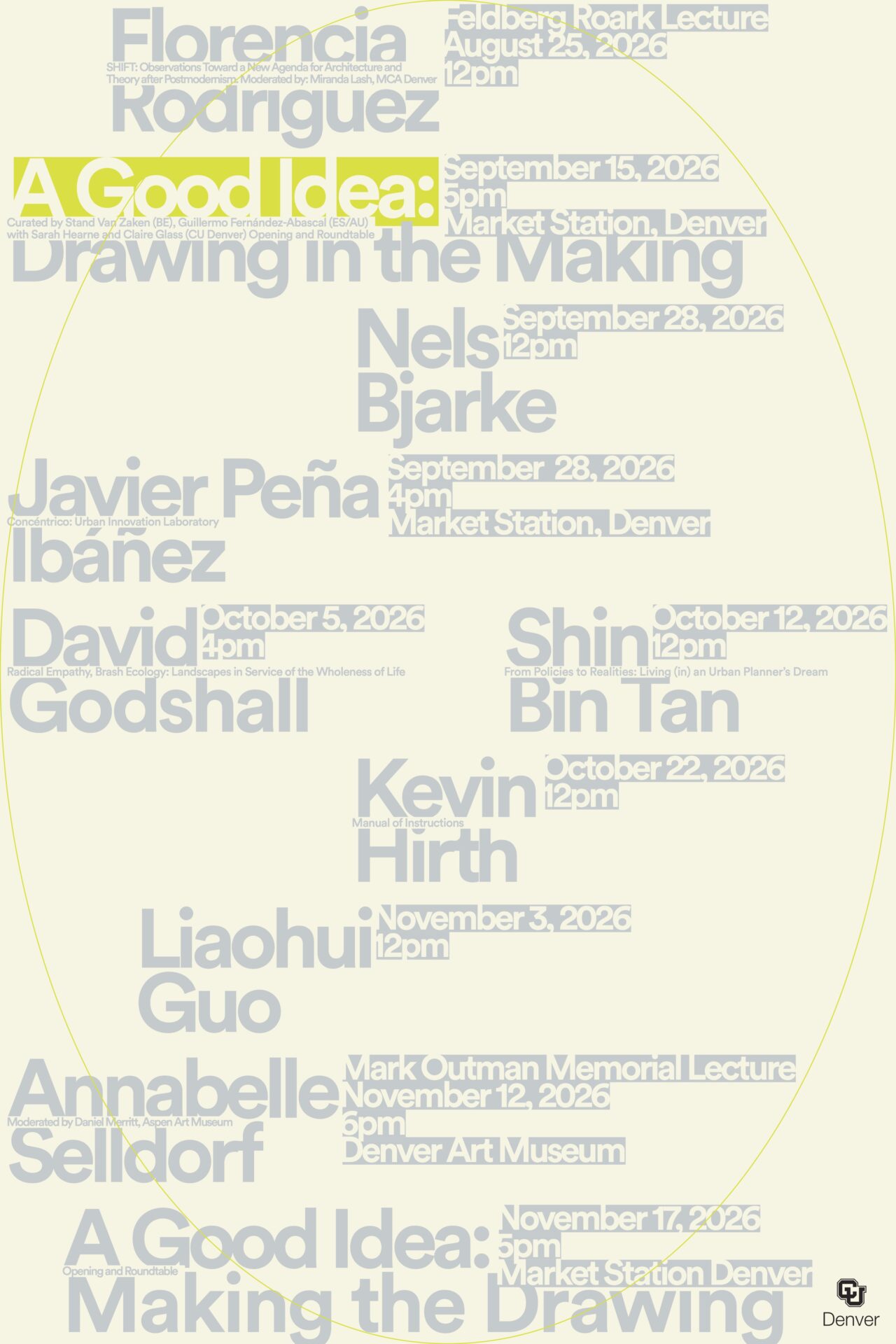
- Thursday, October 22 • Kevin Hirth – CU Denver CAP, Associate Professor and Director of Undergraduate Studies, KEVIN HIRTH Co., Founder
- Tuesday, November 3 • Liaohui Guo – Atelier Guo, Principal Architect
- Thursday, November 12 • Annabelle Selldorf, FAIA – Selldorf Architects, Founder
CAREER CORNER
JOB BOARD UPDATES
AIA Colorado Job Board
Looking for your next career move? Explore fresh job listings updated daily. Hiring? Showcase your open position for 30 days and connect with top-tier talent.
Featured listings:
NEWA FROM
AIA NATIONAL
AIA Expands Licensure Support for Associate Members Through PrepARE
Your Associate AIA membership includes free PrepARE practice exams for the Architect Registration Examination® (ARE®), plus discounted access to expanded resources and community support. Start here.
Architecture Billings Decline Further Amid Weak Market Conditions
The ABI score fell to 44.7, down from August’s score of 47.2, marking the largest share of firms reporting declining billings since May. Read more at AIA.
AIA publishes guide to advance regenerative design
AIA’s report, Creating a Better World Together: Financing and Building Regenerative Design, provides a roadmap for funding and delivering regenerative projects. Learn more at AIA.
Women’s Leadership Summit 2026
Women’s Leadership Summit, powered by AIA, brings together the largest network of women in architecture, design, and the allied building industries. This year, the event will take place in Kansas City, MO, from November 1-3. Be part of the WLS community dedicated to advancing women’s leadership and empowerment. Learn more and register at AIA.
AIA COLORADO’S
PREMIER PARTNER SPOTLIGHT

With a history that dates back over 100 years, IMEG Corp. grew from several firms coming together under one uniting vision: people-centered engineering. As a national engineering and design consulting company IMEG intentionally localized a focus to serve carefully chosen regions and markets, allowing them to put relationships and communities first, without sacrificing expertise.
IMEG’s specialties are high-performing building systems, infrastructure, program management and construction-related services, but the secret to the success is found in a deep bench of 1,600 team members. For IMEG, people-centered engineering is about more than the people served — it’s representative of the engaged employee culture they’ve worked hard to create. IMEG believes in investing in their people and their professional futures through continuous training, community involvement and the ability to develop a niche specialty.
AIA COLORADO’S
ALLIED MEMBERS
Find the Right Expertise
Our Allied Members bring depth and diversity to Colorado’s design and construction community. These experienced professionals offer specialized knowledge that complements architectural practice and elevates project outcomes statewide.
Helpful Links:
2026 Practice + Design Conference
- Keystone Conference Center, Keystone, CO
- November 11 – 13
- Conference sponsorship information
- Expo Hall registration
Celebrate the 17 winning projects of the 2026 Design Awards and meet the eight recipients of this year’s Honor Awards here.
AIA Colorado Firm Directory
- Add your firm to the directory here.
Volunteer Opportunities:
Have news to share? If you or your firm have been featured in the media, published in a design outlet, received an award, or announced a major promotion, email AIA Colorado’s Communications Director Jon Bell.
Member Spotlight: Margarita Gonzalez, Assoc. AIA

AIA Colorado Member Spotlight celebrates the architects who are shaping Colorado’s built environment and strengthening our profession. Through conversations about design, leadership, career paths, and the communities they serve, this series offers a personal look at the people behind the projects and the ideas that continue to move architecture forward.
AIA Colorado Member Spotlight
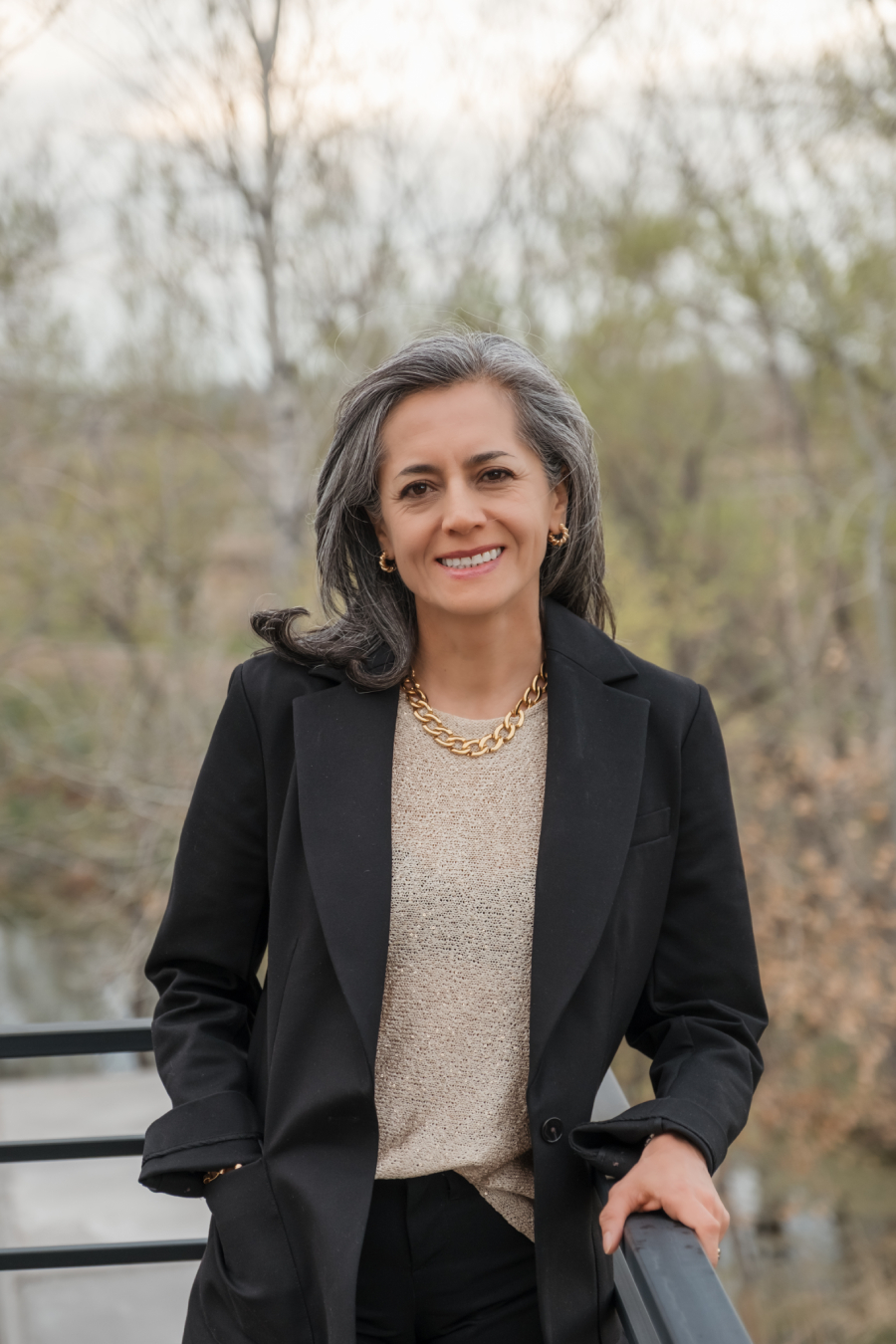
Margarita Gonzalez, Assoc. AIA
Introduction
For Margarita Gonzalez, Assoc. AIA, architecture began with watching her father work at his drafting table. That early fascination with thinking through drawings grew into a career spanning countries, cultures, classrooms, and practice, with a lesson that continues to guide her work: listen before you design.
AIA Colorado’s 2026 Associate of the Year honoree, Margarita is the founder and principal of Minidwell, a Denver practice focused on residential design. An internationally trained architect with a Master’s in Architecture and PhD earned in Paris, she brings 26 years of experience and a global perspective to her work in design and education.
In this Member Spotlight, Margarita reflects on establishing a practice in a new country, helping students find their place in architecture, the sense of belonging she found through AIA Colorado, and what it means to design for a shared planet.
The Conversation
Tell us about your journey to becoming an architect. What shaped you along the way?
My father is a civil engineer, and I grew up watching him work at his company and draw at his drafting table. I fell in love with the idea of thinking through drawings, and that early fascination led me to architecture.
I have since lived, practiced, and taught architecture across different countries and cultures. That experience taught me that architecture is never universal. It is shaped by culture, economics, traditions, climate, and, most importantly, the people who inhabit it. What may seem obvious to a designer can mean something completely different to someone else.
Above all, my journey has taught me to listen: to places, cultures, stories, and people. Architecture has been my way of discovering not only how we build, but how we live and belong.
Above all, my journey has taught me to listen: to places, cultures, stories, and people.
What is a pivotal moment in your career that changed how you think about architecture?
When I moved to Denver, I expected to continue teaching architecture, as I had in Saudi Arabia and France. But without the credentials to join a university faculty, I had to reinvent myself in practice. I also had to learn a new system, Colorado’s zoning, codes, and way of practicing, which pushed me to become more independent and eventually establish my own practice.
That experience changed how I see architecture. I discovered that practicing can be even more rewarding than teaching: there is something powerful about seeing a building come to life and become part of people’s everyday lives.
Taking that risk, with the guidance of an excellent mentor, taught me to approach architecture with an open mind and embrace unexpected opportunities. Sometimes, the doors that close are the ones that lead us somewhere new.
In your view, what role should architects play in shaping Colorado’s communities?
We have to remember that we are building for the people who live in Colorado today, and for those moving here tomorrow.
Someone moving from New York may have very different expectations than someone coming from Florida or another country, yet once here, we all share the same climate, landscape, and place.
As architects, we have a responsibility to listen before we design: to understand who our communities are, where they come from, and what they need. We should challenge the idea of a “Colorado architecture” and instead create architecture that reflects the many people who now call Colorado home.
Our role is not simply to design buildings, but to help shape communities where people feel represented and have a sense of belonging.
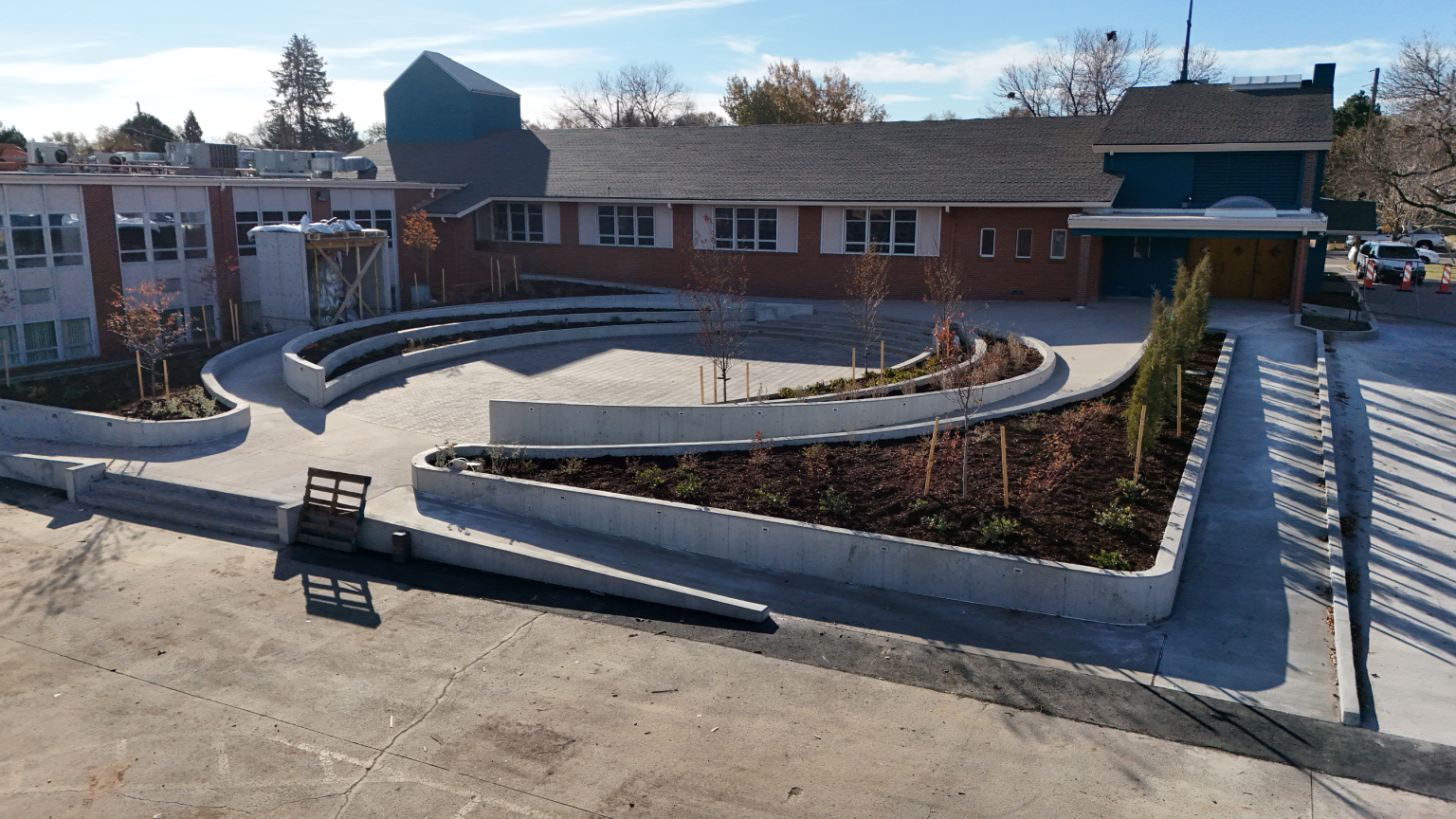
The Notre Dame Parish and School Plaza was a community-driven effort to create a safe gathering space for the church and an outdoor classroom for students during school hours. Designed for Faleide Architects.
Photography: Horizon Builders
Where do you see the future of architecture heading in the next 5 to 10 years?
I became involved in education because I wanted to help open the door for more diverse voices in architecture. Some of my students are now finishing their bachelor’s degrees, and seeing them enter the profession gives me great hope.
I believe the future of architecture in the United States will be more diverse, bringing new perspectives and new ways of imagining the spaces we inhabit. This could transform how we design schools, senior living, housing, and communities, while encouraging us to rethink how we adapt existing buildings, respond to climate change, and use new technologies.
What excites me most is that the future does not have to look like the past. We may even begin to explore what it means to inhabit environments beyond Earth, which could challenge our understanding of architecture and humanity itself.
I believe the next generation will bring experiences and ideas that our profession has not always made room for, and they will help us create architecture that is more inclusive, inventive, and responsive to the world around us.
I am certain the future is bright, not because we know exactly where architecture is going, but because we have the opportunity to imagine something we have never seen before.
Why are you a member of AIA Colorado?
I joined AIA as soon as I arrived in Denver because I wanted to become part of the architectural community in my new home. I started by volunteering with the Design Conference Committee, which opened the door to other committees and showed me how much impact we can have when we participate beyond our individual practices.
At the time, AIA Colorado had created a Task Force for Equity, Diversity, and Inclusion. The conversation was gaining momentum nationally, influenced by movements such as #MeToo, but it was also driven by something more fundamental: the recognition that our profession does not yet reflect the communities we serve. I saw an opportunity not simply to diversify the profession, but to help shape what the next generation of architecture could look like.
AIA gave me something I deeply valued as an architect who came to this country from elsewhere: a sense of belonging. I found a community that was willing to listen to my experiences, challenge my ideas, and make space for my voice. In return, I found ways to contribute my own perspective.
For me, membership is not simply about belonging to a professional organization; it is about helping build the profession we want to inherit. I hope to remain a member as long as I can, because I believe architecture becomes stronger when more voices are invited to shape it.
AIA gave me something I deeply valued as an architect who came to this country from elsewhere: a sense of belonging.
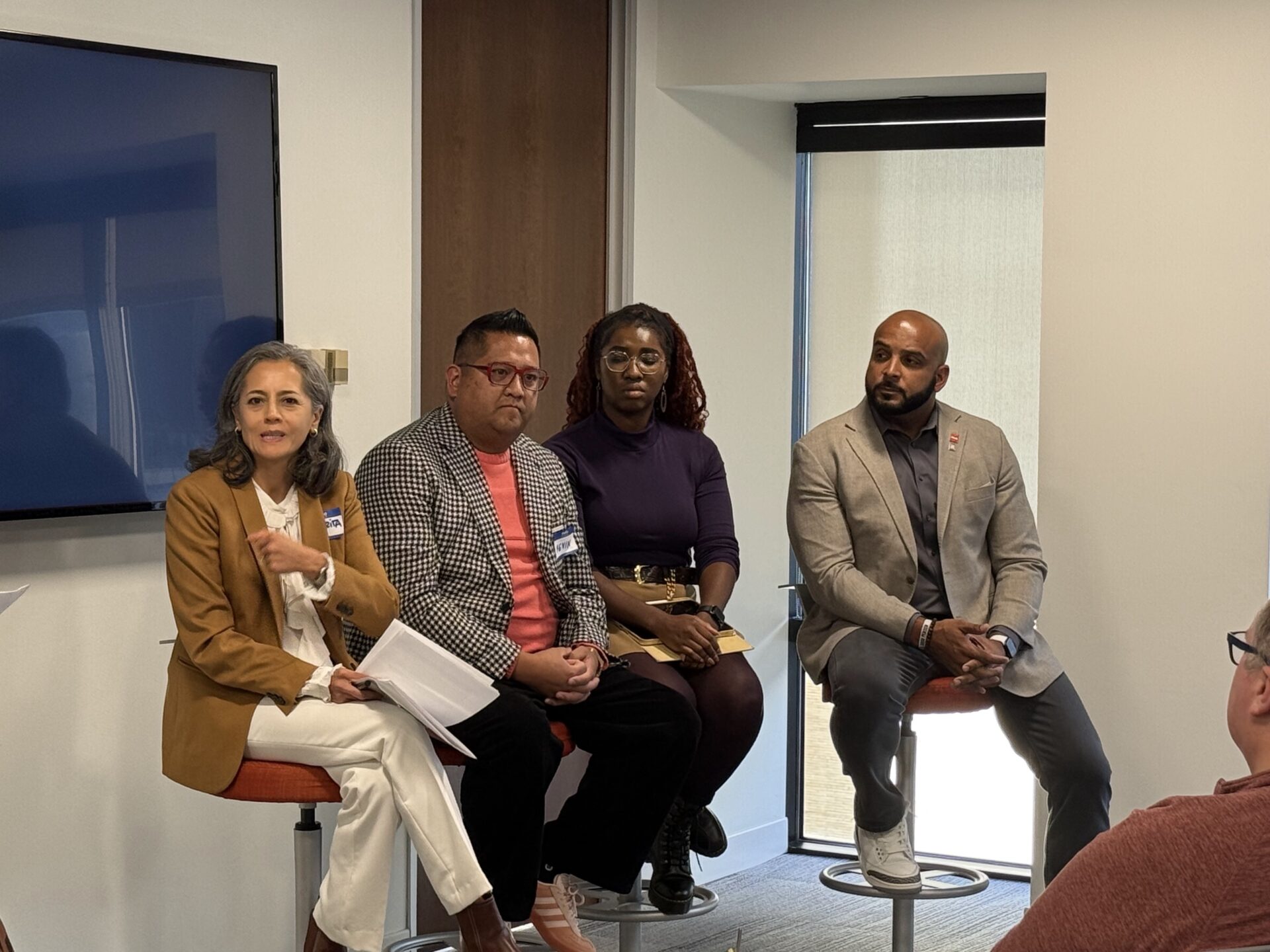
At the State of DEI Conference in Denver, the J.E.D.I. Committee organized a panel discussion addressing federal policies challenging diversity, equity, and inclusion in the workplace.
Photography: Sarah Morasso, AIA
What advice would you give to emerging professionals in Colorado?
I teach college-level architecture courses to high school students, and when I introduce them to the path of becoming an architect, they are often surprised by how long and demanding the journey can be. Many young people are drawn to architecture without fully understanding the commitment it requires, and perhaps that is why some lose their way along the journey.
I recommend not looking for an easier path. Being an architect carries a great responsibility, and I believe that responsibility is part of what makes the profession meaningful.
The beauty of the journey is in the process: seeing a building come to life and watching people make it their own. Along the way, an architect develops a passion for building not only buildings, but places where people can live, explore, play, and enjoy their lives.
When you finally see that joy in someone’s face, you realize that all the challenges and sacrifices along the way were worth it.
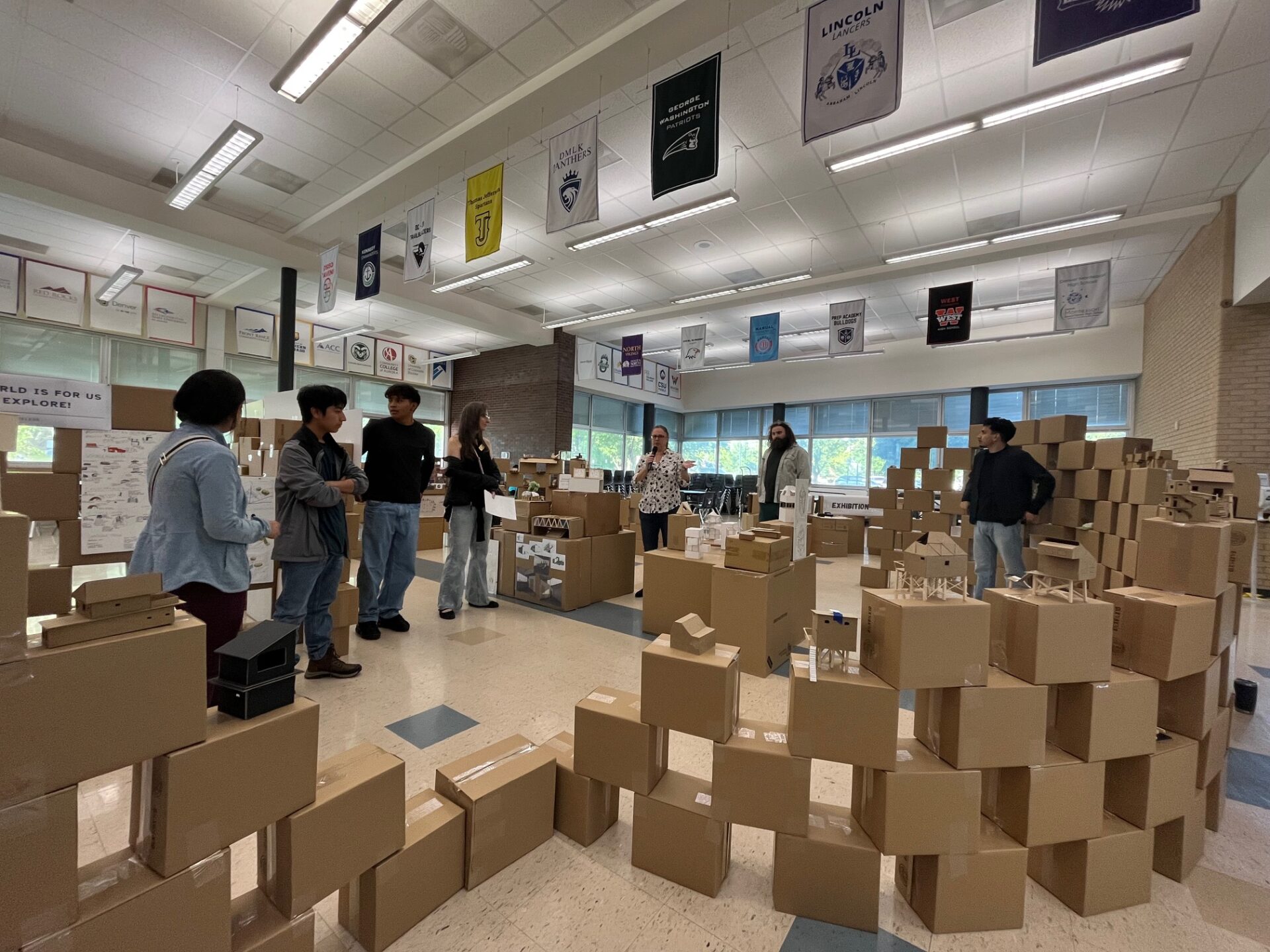
We organized an exhibition at the Career Education Center to showcase our students’ projects and give them an opportunity to demonstrate their creativity, skills, and knowledge. At this Early College, many of our students come from low-income and historically underrepresented communities, making it especially meaningful to create a platform where their talent and potential can be recognized.
Photography: Margarita Gonzalez, Assoc. AIA
What are you currently reading, listening to, or learning?
Over the summer, I joined a book club reading Orbital by Samantha Harvey. The book follows six astronauts circling Earth, physically separated from it and reflecting on humanity, our planet, and what it means to belong.
Their descriptions of Earth from orbit made me think about how much we take for granted: from that distance, there are no borders, races, or religions, only one planet and one shared home. It reminded me that we don’t simply inhabit buildings; we inhabit a planet. For me, architecture is therefore not only about creating shelter, but also about strengthening our relationship with the place that makes life possible.
At the same time, Orbital offers a nostalgic view of our planet and makes us ask: How can we improve our living conditions while reducing our impact? And shouldn’t we architects lead the way?
I’m also fascinated by the possibility of life beyond Earth. If we were to inhabit Mars, we would first have to recreate many of the conditions Earth provides naturally: air, water, shelter, and a livable climate.
This raises an exciting question for architects: What happens to architecture when the environment itself becomes part of what we have to design? I’m fascinated by what this next chapter of humanity could mean for how we live, adapt, and imagine the future.
Thank you to Margarita Gonzalez, Assoc. AIA, for sharing her story and reflections on listening, belonging, and opening doors for the next generation.
Congratulations on being recognized as AIA Colorado’s 2026 Associate of the Year!
Imagining Architecture for Colorado’s Next 150 Years
Architecture
for the Next 150
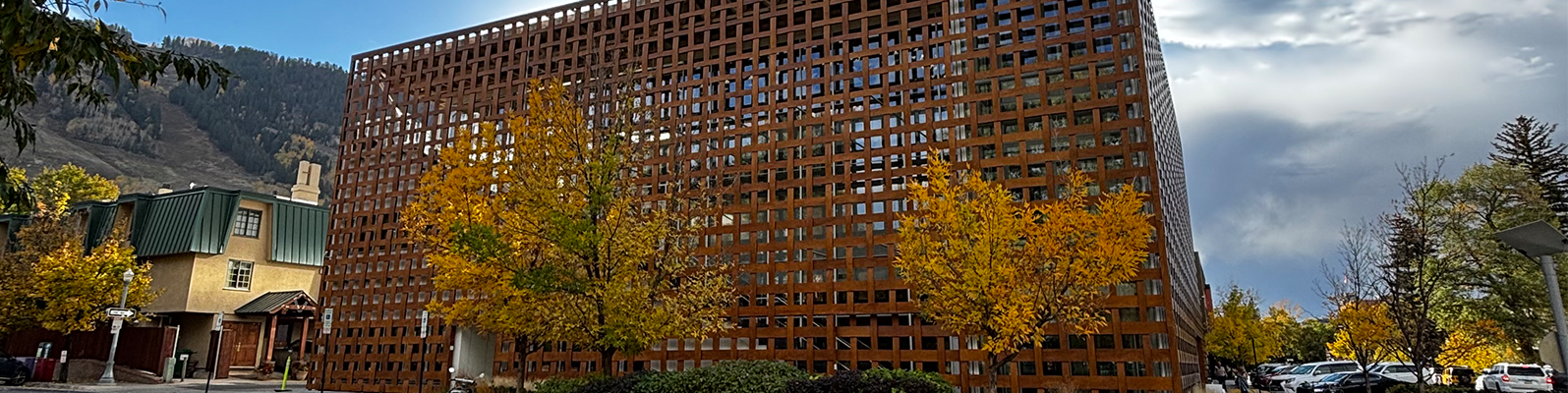
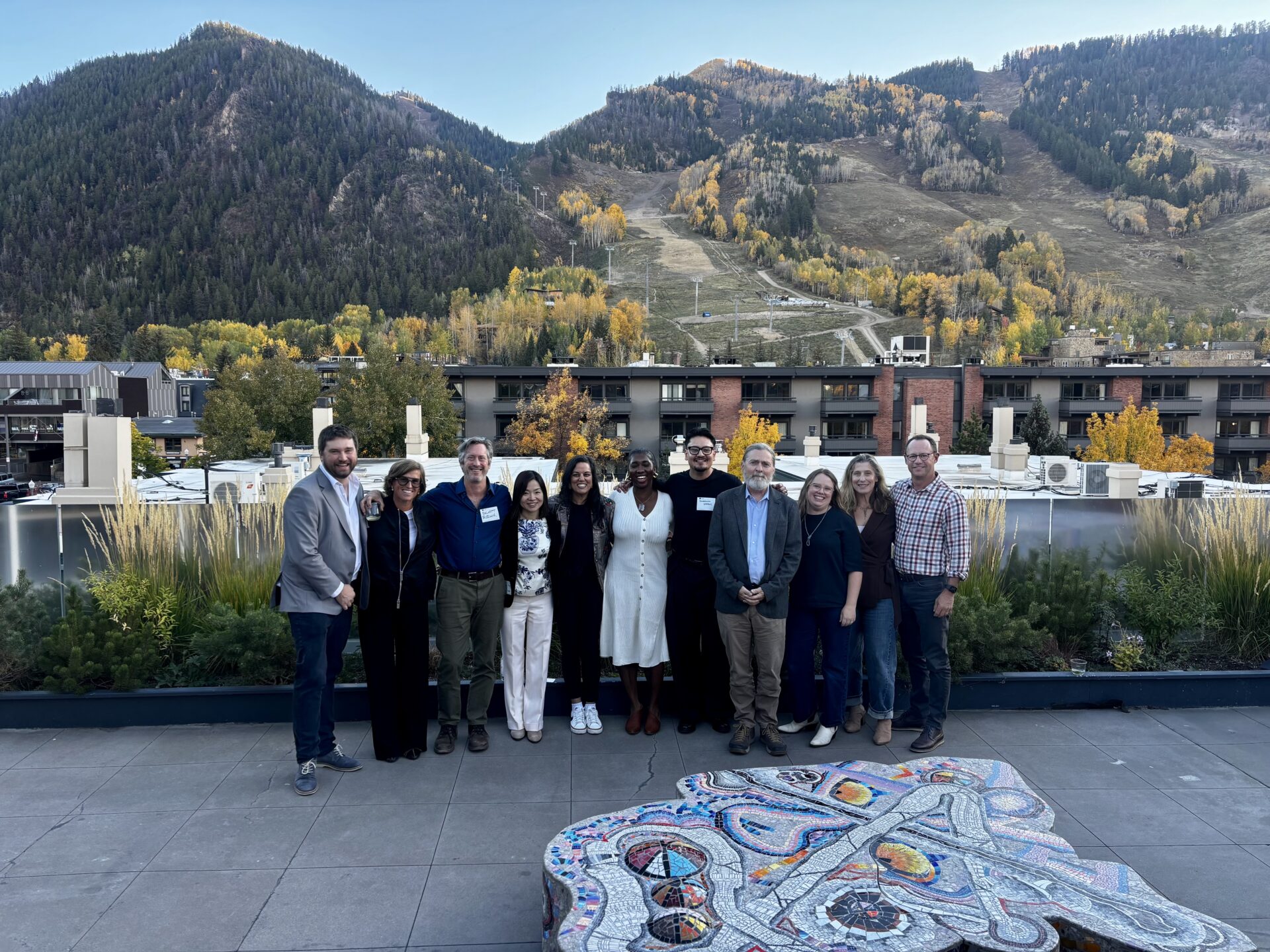
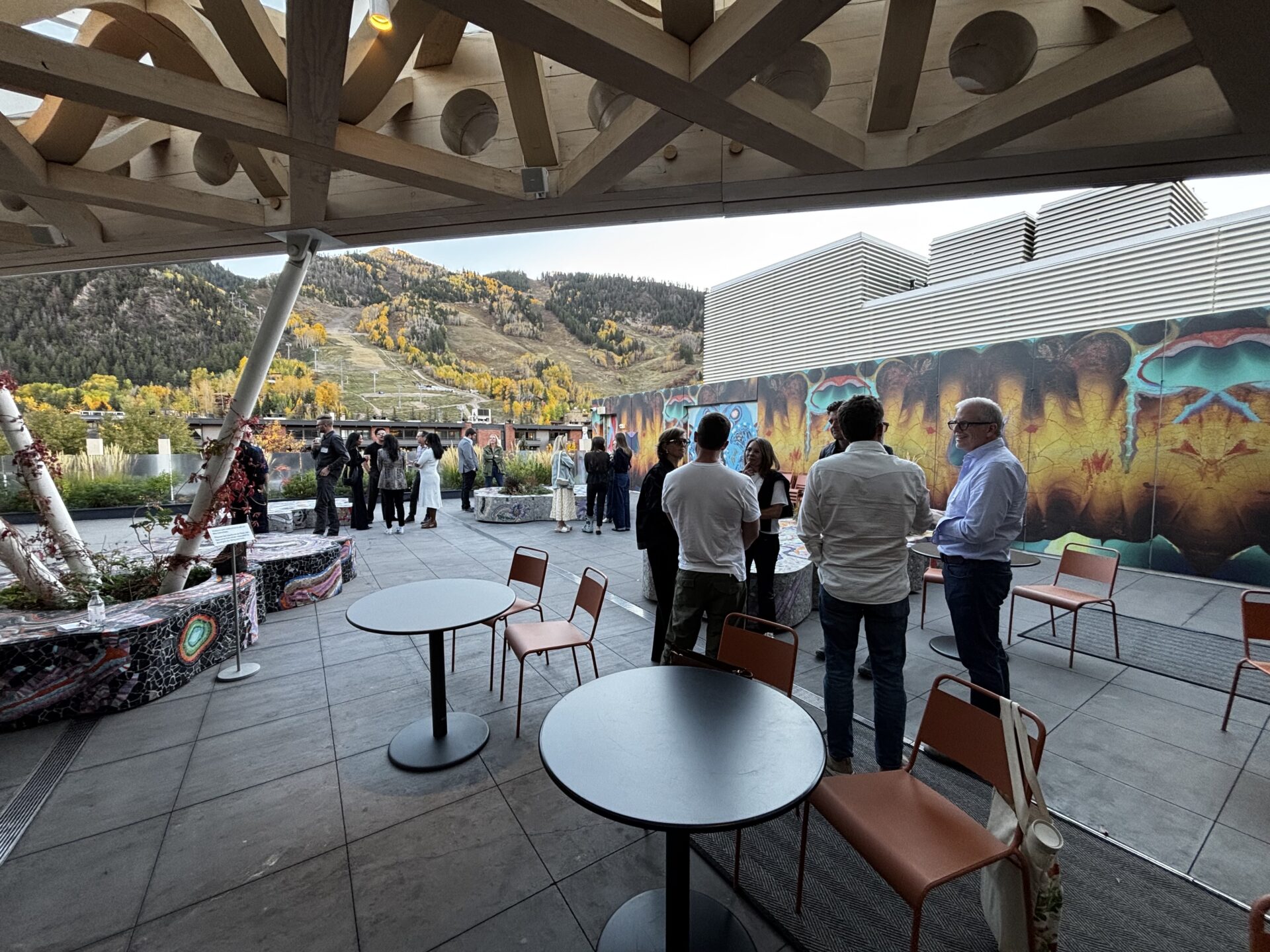
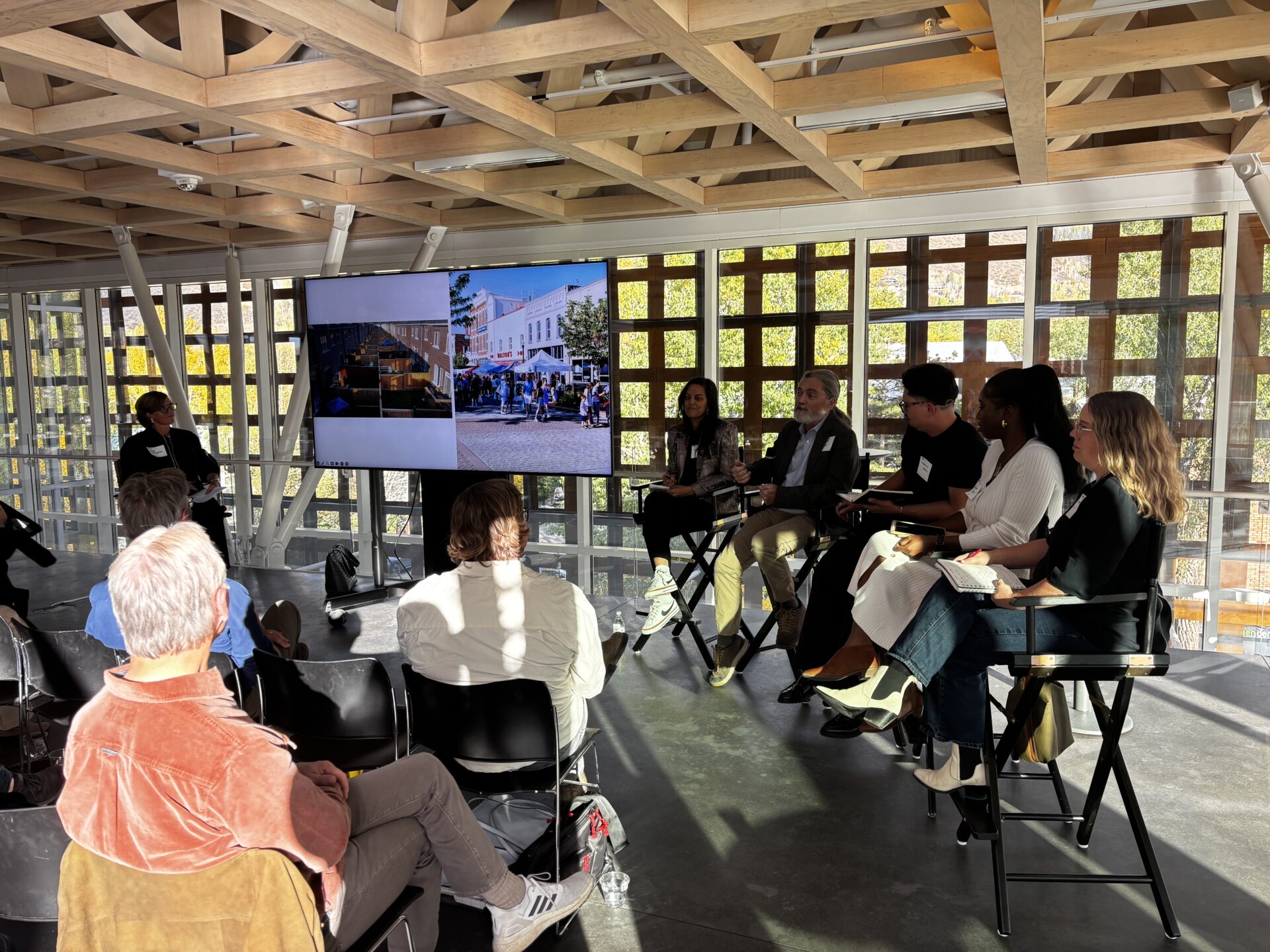
On October 8, 2026, architects and community members gathered at the Aspen Art Museum to consider an ambitious question: How can architecture help shape Colorado’s next 150 years?
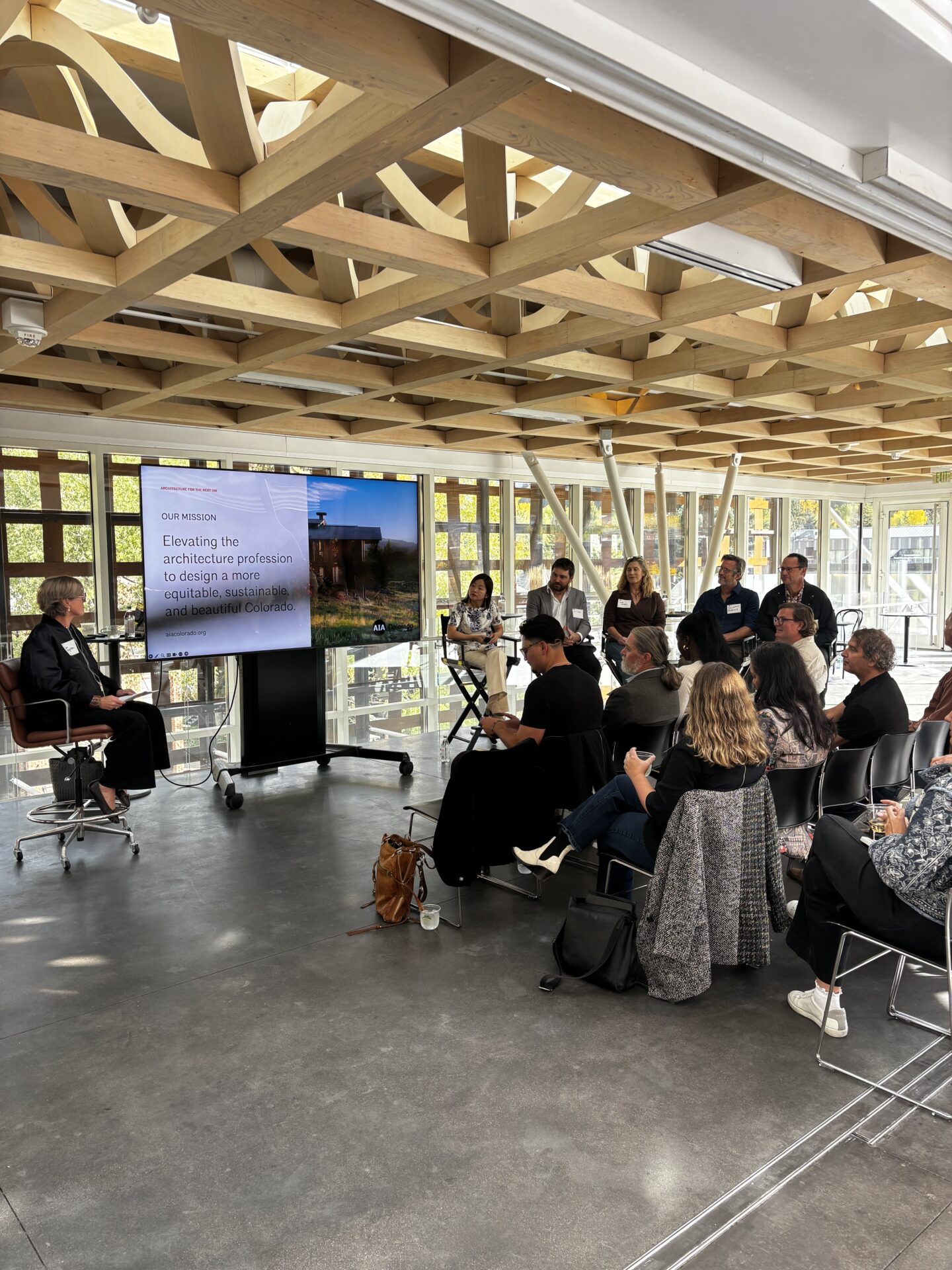
Presented by AIA Colorado, Architecture for the Next 150 brought together members of the AIA Colorado Board of Directors and architectural leaders from across the state. The program looked to Colorado’s architectural legacy not simply as a record of the past, but as a foundation for imagining what could come next.
Mike Waldinger, Hon. AIA, CEO of AIA Colorado, opened the program, and Sarah Broughton, FAIA, of Rowland+Broughton moderated two panel conversations. The first examined the changing meaning of home. The second considered how architecture and the public realm can create common ground.
Across the event, the speakers explored resilience, affordability, emotional well-being, community identity, infrastructure, transportation, cultural life, and the forces reshaping architectural practice. While their subjects varied, a shared idea emerged: architects have an opportunity to move beyond diagnosing problems and help communities imagine what could go right.
Panel
A place to call home
The first conversation asked whether homes can continue to support the good life as Colorado faces changing household needs, increasing costs, shifting professional practices, and more severe climate conditions.
Huili Feng, AIA, of Tumu Studio, encouraged architects to give emotional performance the same attention they give climate, materials, and physical performance. She organized that ambition around protection, connection, and freedom.
A home can provide openness and a relationship to the surrounding landscape while also offering places of shelter and retreat. Connection to nature can extend beyond a view to include changing light, weather, air, and seasons. Feng also emphasized the value of spaces that occupants can interpret for themselves, such as a deep windowsill, a generous stair, or an unexpected reading nook. Rather than prescribing every experience, architecture can create conditions for comfort, discovery, and joy.
Will Otte, AIA, of Rowland+Broughton, considered how the fundamental responsibilities of a home are expanding. Access to clean air, water, food, safety, and comfortable temperatures can no longer be taken for granted as environmental conditions become less predictable.
Wildfire smoke, temperature extremes, and power interruptions place greater demands on building envelopes, interior environments, and mechanical systems. At the same time, homes must support psychological health and a meaningful connection to the natural world. Otte’s presentation raised an important question for the profession: As homes take on a greater protective role, how can healthy and resilient environments remain accessible rather than becoming premium amenities?
Andi Korber, AIA, of Land+Shelter, turned the discussion toward the forces transforming architectural practice itself. Private equity, consolidation, and the integration of architecture with engineering, construction, and real estate development may bring new efficiencies and resources, but they may also weaken independent design judgment, local knowledge, and opportunities for small firms.
Using affordable housing development near Aspen as a point of departure, Korber considered why large national organizations may be better positioned to deliver projects that local firms once would have led. Her presentation resisted a simple conclusion. Architects may need to defend independent practice, influence larger organizations from within, or create new collaborative models that give smaller firms access to shared technology, research, and administrative resources. The larger challenge is finding ways to achieve affordability and scale without losing creative independence or responsibility to place.
Scott Rodwin, AIA, of Rodwin Architecture, identified four forces he believes will shape the future of housing: sustainability, resilience, community, and abundance.
He anticipates that all-electric, net-zero-energy homes will become increasingly common through renewable energy, batteries, efficient building envelopes, and heat pumps. Resilience will also become more valuable as homes are asked to protect residents from fire, smoke, drought, extreme temperatures, and power outages.
Rodwin extended resilience beyond the individual building. Cohousing, live-work townhomes, cottage courts, and other community-oriented models can help people share resources and support one another. He also encouraged communities to begin with the outcomes they want, then revise codes and approval processes so those outcomes become easier and less expensive to achieve.
Andy Rockmore, AIA, of SAR+ Architects, proposed that the next 150 years should be about building neighborhoods, not only buildings. He encouraged architects to measure success by what happens outside the front door.
Using West Thorn, a proposed mixed-income neighborhood in Gunnison, Rockmore explored how responding to Colorado’s housing needs could also create stronger relationships and a sense of belonging. The project combines varied housing types with walkable streets, community agriculture, childcare, and a shared community barn. Everyday interaction becomes part of the neighborhood’s basic structure.
His presentation also considered how modular construction might support affordability while preserving character and responding to place. The challenge is to build housing that meets immediate needs while creating neighborhoods people will value for generations.
Panel
Finding common ground
The second panel expanded the conversation from the home to the spaces, institutions, and systems people share.
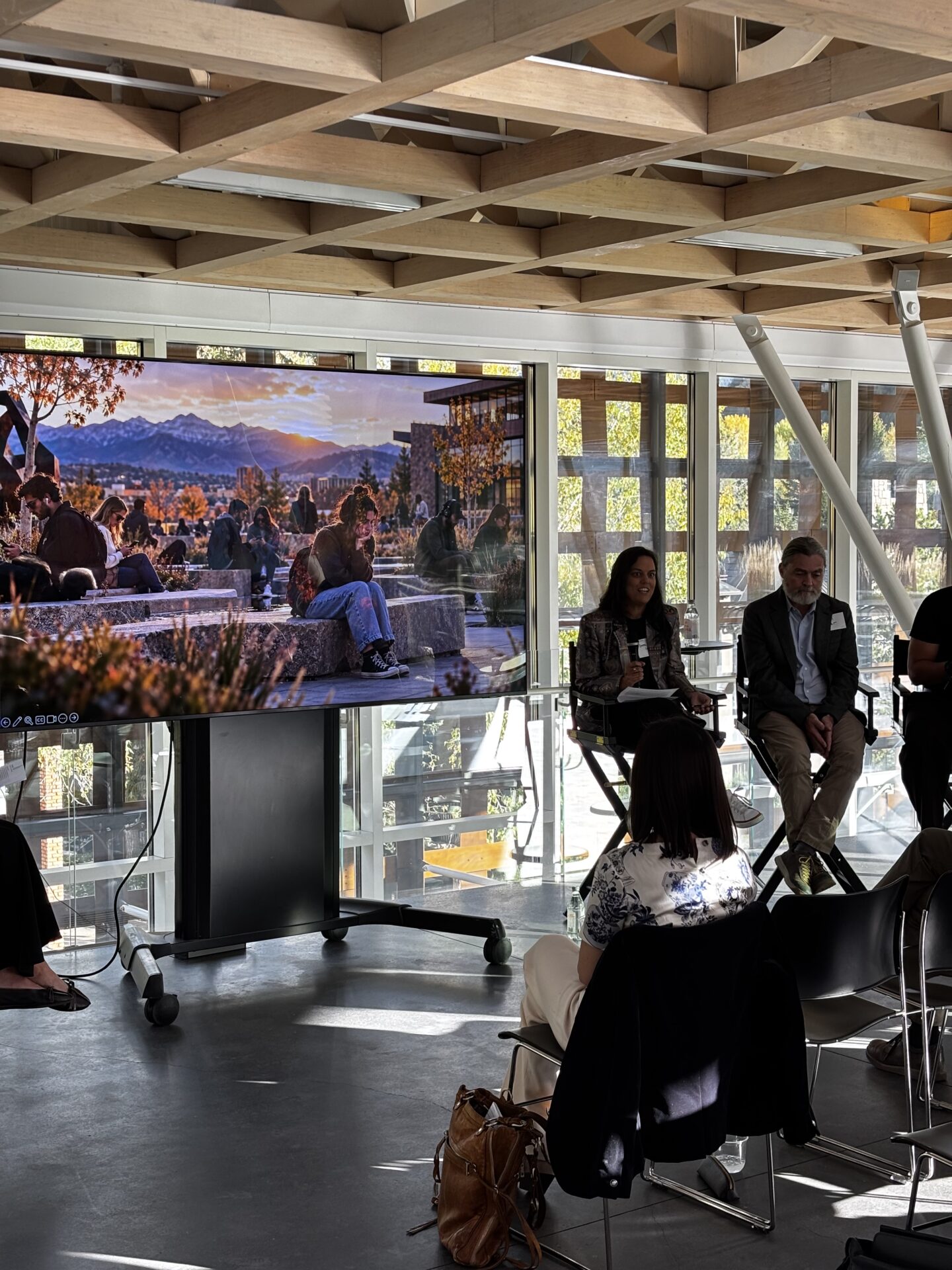
Sonya Shah, AIA, of Denver Public Library, asked where people will gather as the ways they connect continue to change. Her premise was both simple and consequential: People shape places, and places shape people.
Shah focused on spaces that are often treated as secondary to a building’s main function, including entries, lobbies, circulation routes, waiting areas, plazas, and support spaces. When designed with greater intention, these areas can become places of encounter, welcome, belonging, and community.
Her presentation suggested that the spaces between scheduled activities can become reasons to visit and stay. Public architecture can support civic life not only through its formal programs, but also through the everyday interactions it allows to happen.
Kari Lawson, AIA, of HDR, proposed that the systems communities depend on can also become common ground. Water, transit, energy, waste, food, and public services connect people, but the architecture supporting those systems is often hidden from public life.
Using the Pitkin County Solid Waste Center Scale House, Lawson invited the audience to reconsider the landfill as part of a shared landscape and a continuing civic responsibility. Mass timber, reclaimed materials, generous windows, gathering areas, improved circulation, and a form inspired by the surrounding cliffs connect a practical facility to its place and community.
The project raises a broader question about what architecture helps people notice, value, and care for. Infrastructure can do more than perform a technical function. It can make shared systems visible and encourage a deeper culture of stewardship.
Bill Turner, AIA, of HCM Design, connected community identity to places that remain useful across the day, the seasons, and generations. He considered what mixed use can mean not only in urban neighborhoods, but also in suburban and rural communities.
Turner also looked beyond individual buildings to the transportation and economic decisions that shape community life. Expanded passenger rail along Colorado’s major corridors could connect communities, employment, and recreation while creating new opportunities around stations. Municipal incentives could encourage developers to prioritize long-term architectural quality and sustainability instead of focusing primarily on initial costs.
His presentation emphasized that lasting places depend on decisions made at many scales. Buildings, streets, transportation, policy, and economic development all contribute to whether a community retains its identity and remains vital over time.
Jenny Trumble, AIA, of CCY Architects, responded to changes such as a warming climate and artificial intelligence by focusing on the cultural experiences that make people feel connected.
Inspired by live music and the informal energy of a house party, Trumble argued for places that support exchange, local expression, learning, and shared experience. Her examples included transforming a vacant biker bar into a community arts center in Big Sky, adapting a historic armory into a food hall intended to support emerging chefs, and planning an education and conservation center around historic agricultural buildings.
Together, these projects demonstrate how adaptive reuse and new gathering spaces can preserve memory while making room for new communities and activities. They also show that architecture’s social value often comes from allowing people to shape a place over time.
Jarrett Andrés Hardy, Assoc. AIA, with HKS, explored how community advocacy and computational craft can preserve cultural identity within Colorado’s changing landscape. Through his work with Denver’s Latino Cultural Arts Center, he demonstrated how digital fabrication and community-led design can create an adaptable setting where layered identities coexist and evolve. Drawing inspiration from the Andean khipu, an ancient woven system for recording information, Hardy challenged architects to create resilient cultural spaces that recognize community contributions, strengthen civic memory, and allow people to shape their own futures.
Designing toward what could go right
The program concluded with an audience question-and-answer session that brought the two conversations together.
The discussions made clear that Colorado’s next chapter will not be shaped by buildings alone. It will be shaped by the relationships architecture supports, the systems it reveals, the risks it helps communities navigate, and the possibilities it makes easier to imagine.
Homes must provide safety and resilience while supporting joy, freedom, and belonging. Public and civic spaces must welcome both planned activities and informal encounters. Infrastructure must function effectively while helping people understand their shared responsibilities. Professional and regulatory systems must support affordability, local knowledge, design quality, and long-term value.
Colorado’s architectural legacy offers an important foundation, but the work of the next 150 years is already underway. The challenge for architects is not only to respond to change, but to help communities picture a better future and begin building it together.
Colorado Architecture News | 10.07.26

News from the Colorado Chapter of The American Institute of Architects
10.07.26
In this Newsletter:
- Practice + Design Conference Breakout Sessions
- Business of Architecture: Design Build recap
- Architects in Wildfire Recovery recap
- Marketing for Architects: Winning the Work recap
- Design Like a Girl seeks mentors
- Health Horizons 26
- Funding Opportunity: Large Building Decarbonization Grants
- Oct 7 • AIA CRAN Industry Conversations
- Oct 8 • Architecture for the Next 150
- Oct 14 • Firm Visit: Stantec
- Oct 15 • South Section EP/YA happy hour
- Oct 21 • University of Colorado Anschutz Health Sciences Building tour
- Oct 22 • LAWS whiskey house tour
- Oct 27 • Cherry Creek North multi-site tour
- Oct 28 • CRAN Fall Home Tour
- Member Spotlight: Adam Harding, AIA
- Premier Partner Spotlight: IMEG
AIA COLORADO’S
NEWS
Breakout Sessions Are Set for The Work of Tomorrow
The full breakout session lineup for the 2026 Practice + Design Conference is now set. Across three breakout session blocks, attendees will choose from sessions exploring the questions shaping practice right now, from AI and firm leadership to climate, risk, resilience, embodied carbon, and the future of architectural education.
Build a conference experience around the ideas most relevant to your work and practice. Explore the conference schedule here.
The Expo Hall is officially sold out! If you’d like to connect your company with Colorado’s architecture community at this year’s conference, sponsorship opportunities are still available.
Regularly priced registration ends October 31st. Register today!
Business of Architecture: Design Build recap
At a recent AIA Colorado Business of Architecture discussion, architects, builders, landscape architects, and consultants shared lessons from decades of design-build experience. A special thank-you to our panelists, Greg Gidez, FAIA, John Kudrycki, AIA, and Mark Wilcox, for sharing their expertise and leading a thoughtful conversation about choosing the right partners, engaging builders and trades early, designing to the budget, protecting design quality, and building relationships grounded in trust and transparency. One message rose above the rest: “Build the team, and then build the project.” Read the recap here.
Architects in Wildfire Recovery recap
Architects and local government leaders recently shared lessons from wildfire response and rebuilding efforts in Colorado and California. Panelists Scott Rodwin, AIA, Kim Sanchez, Jessica Orlando, AIA, and Weston Burrer, AIA, joined moderator Nikolaus Remus, AIA, to discuss how architects can support affected residents, navigate regulatory and infrastructure challenges, and help communities pursue safer, more resilient recovery. Read the recap for key takeaways from the conversation here.
Winning the Work recap
What makes a client choose one architecture firm over another? In the second session of AIA Colorado’s Marketing for Architects series, developer Chris Viscardi joined architects Andy Rockmore, AIA, Wells Squier, AIA, and Steve Scribner, AIA, for a candid conversation about how firms build trust, communicate value, and secure meaningful projects. The panel explored what clients consider when selecting a team, how firms can differentiate themselves beyond design quality, the importance of relationships and referrals, the growing demands of construction administration, and how specialization and strategic partnerships can create new opportunities. Read the recap and watch the full conversation here.
Health Horizons 26
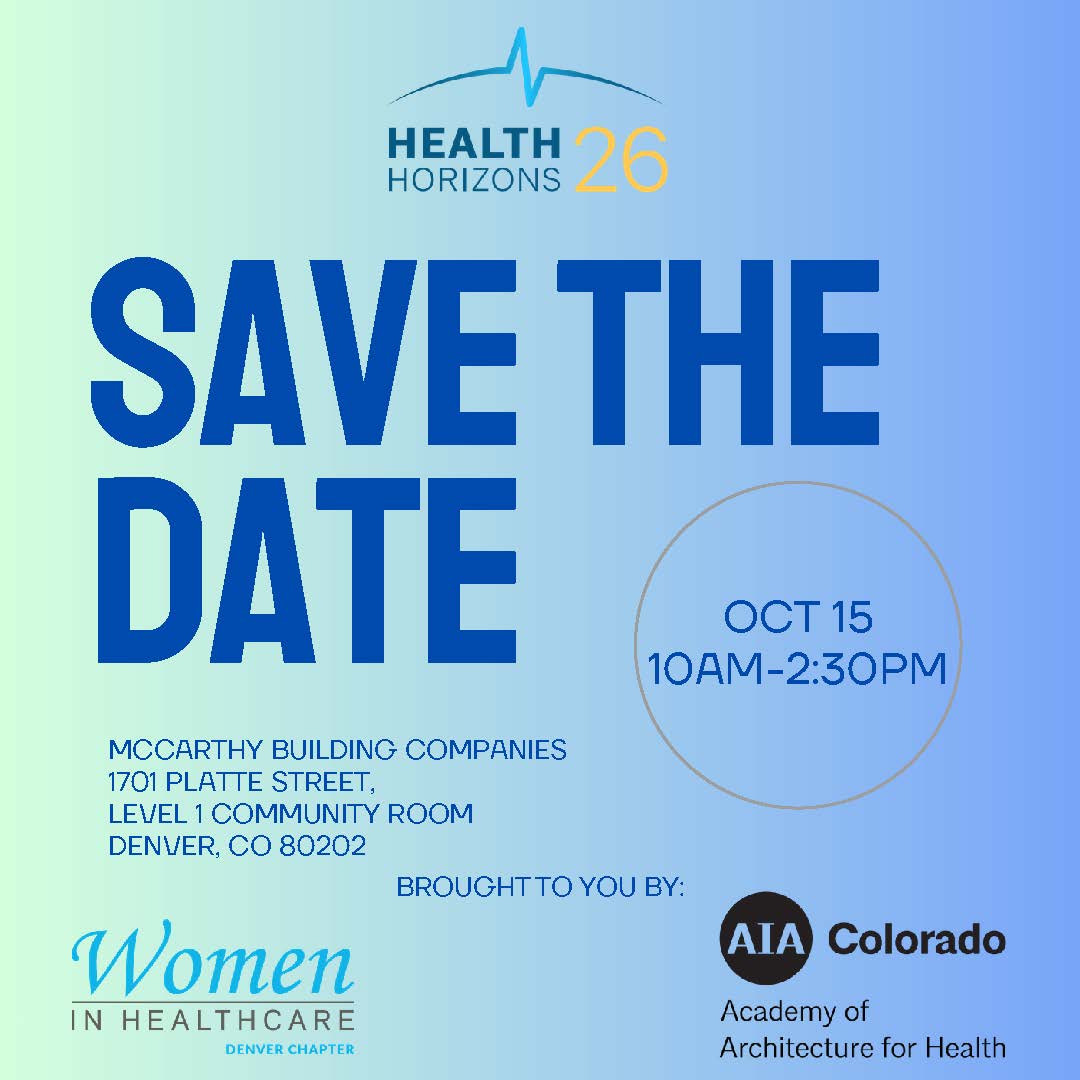
October 15th, from 10am – 2:30pm, at McCarthy Building Companies in Denver, AIA Colorado’s Academy of Architecture for Health Knowledge Community (AAH) and Women in Healthcare Denver present their third annual Healthcare Symposium, Health Horizons 2026. Oriented to both AEC & healthcare professionals, the event will explore technological advancements, emerging challenges facing clinicians, and the evolving healthcare landscape. Don’t miss this chance to connect with peers, share ideas, and envision the future of healthcare. Speakers include Donna Lynne, DrPH, President and CEO of Denver Health and Dr. Kati Peditto, Environmental Psychologist & Design Researcher. Lunch provided. Register or secure your sponsorship here.
Design Like a Girl seeks mentors
Design Like a Girl, a design mentoring program that introduces a diverse cohort of middle school girls to architecture and allied design professions, is seeking female-identifying design professionals and students to mentor a diverse cohort of middle school girls interested in exploring careers in architecture and allied design fields. Mentoring takes place across three full-day Friday workshops during the 2026–2027 school year. Participation in all three workshops is encouraged but not required. Partial-day shifts and other flexible volunteer options are available. Program Dates are Friday, October 30th, Friday, February 26th, and Friday, April 30th. Register by October 14th. More information here and sign up here.
Funding Opportunity: Large Building Decarbonization Grants
The Colorado Energy Office is accepting applications through October 23 for the second and final funding round of its Large Building Decarbonization (LBD) Showcase Grant Program supporting implementation-ready projects that help large buildings meet Building Performance Colorado targets ahead of their deadline or reduce emissions beyond their selected target.
Awards range from $500,000 to $2 million, with $8.5 million available in this round. Funding can cover 50% of implementation costs for standard buildings and 65% for under-resourced buildings. Eligible projects can include electrification of heating and water heating systems, high-efficiency electric HVAC and heating equipment, onsite renewable energy and energy storage, and other qualifying improvements.
AIA Colorado members are encouraged to share this opportunity with building owner clients who may have eligible projects. Even if your firm isn’t pursuing the funding directly, making clients aware of available resources is another way architects can provide value as trusted advisors.
Already working with clients on Building Performance Colorado upgrades? We’d also like to hear what you’re seeing. Are building owners moving forward with necessary improvements? What challenges are affecting their decisions or timelines? Share your experience with Nikolaus Remus, AIA, AIA Colorado’s Advocacy Engagement Director at nikolaus@aiacolorado.org. Learn more and review eligibility requirements here.
AIA COLORADO’S
EVENTS
Oct 7 • AIA CRAN Industry Conversations
Wednesday, October 7th, starting at 4:30pm, at Number 38 in Denver’s RiNO neighborhood, join Join the AIA Colorado Custom Residential Architects Network (CRAN) for an evening of connection, candid conversation, and shared learning. This facilitated, peer-to-peer gathering will bring custom residential architects together to exchange practical insights on the business challenges that shape their work. More info and RSVP here.
Oct 8 • Architecture for the Next 150
Thursday, October 8th, 4pm, at the Aspen Art Museum, join members of the AIA Colorado Board of Directors for future-focused conversations. We’ll explore what architecture can learn from the past, how housing can respond to changing needs, and how shared spaces can strengthen our communities. More info and RSVP here.
Oct 14 • Firm Visit: Stantec
Wednesday, October 14th, from 4:30 – 6pm, connect with members for an informal open house and happy hour to tour Stantec’s recently renovated office, learn about the projects they are currently working on, and hear directly from the team about their design philosophy and creative process. RSVP here.
Oct 15 • South Section EP/YA happy hour
Thursday, October 15th, at 4:30pm, at Red Leg Brewing Company, in Colorado Springs, join AIA Colorado South members and the EP/YA Council for a happy hour designed to connect emerging professionals. RSVP here.
Oct 21 • University of Colorado Anschutz Health Sciences Building tour
Wednesday, October 21st, at 4pm, join members for tour of the University of Colorado Anschutz Health Sciences Building, a 2023 AIA Colorado Design Award of Merit recipient. Designed by Anderson Mason Dale and ZGF Architects and completed in 2022, the Anschutz Health Sciences Building furthers the University of Colorado Anschutz Medical Campus’s trajectory as one of the leading medical care, translational research, and educational facilities in the world. Tour approved for 1.5 LU|HSW. More info and RSVP here.
Oct 22 • LAWS whiskey house tour
Thursday, October 22nd, at 5pm, join members for a tour of LAWS whiskey house, a 2025 AIA Colorado Design Award of Excellence recipient. Explore both the architecture crafted by BOSS architecture and the whiskey-making process that sets Laws Whiskey House apart. The tour culminates with a cocktail and unique Q&A session with owner representative and architects from BOSS. Tour approved for 1 LU|HSW. More info and RSVP here.
Oct 27 • Cherry Creek North multi-site tour
Tuesday, October 27th, at 4pm, join members for a guided architectural tour of two new commercial office projects in Denver’s Cherry Creek neighborhood: 2nd and Adams and 242 Milwaukee. The tours will explore the design and technical execution of contemporary five-story office buildings, with particular attention to how traditional masonry and high-performance glass systems balance structural demands, energy efficiency, daylight, and occupant well-being. Tours to be led by OZ Architecture and 4240 Architecture. Combined tours approved for 2 LU|HSW. More info and RSVP here.
Oct 28 • CRAN Fall Home Tour
Wednesday, October 28th, at 4:30pm, join AIA Colorado’s CRAN to explore a new Boulder home built following demolition of the previous residence. Melton Design/Buildarchitects Richard McSwain, AIA and Alex Parulis will share how the team balanced the homeowners’ goals with Boulder’s stringent zoning requirements and resolved structural, mechanical, and stormwater challenges. Limited to 16 AIA members. Tour to be submitted for 1 LU|HSW. More info and RSVP here.
MEMBER
NEWS
Member Spotlight: Adam Harding, AIA
Meet Adam Harding, AIA, founder and design principal of Adam Harding Architecture and the 2026 AIA Colorado Architect of the Year. Adam reflects on designing rooms people remember being in, what he learns from dining in his own projects, and why business knowledge and service to the profession are essential to a lasting practice. Read the Member Spotlight
Read the Member Spotlight here.
Congratulations to Joel Williams, AIA, on his promotion to Principal at Quattrocchi Kwok Architects. Williams will join the firm’s executive leadership team while continuing to lead QKA’s Denver office, which opened earlier this year.
HED announced the retirement of Bruce Larson, AIA, its principal-in-charge and national Pre K–12 education sector leader. Larson has practiced for more than four decades and contributed to the programming and design of more than 250 school facilities, including work for Denver Public Schools, Jefferson County, Aurora, Boulder Valley, Cherry Creek and other Colorado districts. Well done, Bruce!
CCY Architects was recently recognized by Architectural Record for this year’s Record Houses accolades, honoring the recently completed Orri Mountain Retreat as one of seven residences selected.
COMMUNITY
NEWS
Colorado Springs Fire Department quarterly meetings with architects
The Colorado Springs Fire Department would like to extend an invitation to local architects to attend a quarterly meeting for collaboration and discussion of pertinent topics. If you have specific topics that you would like to discuss, please email them to Senior Fire Inspector Jacob Watson at Jacob.Watson@coloradosprings.gov at least two days before the meeting. The next meeting will be Friday, October 23rd, from 9 – 11am, at the Fire Construction Services conference room at 2880 International Circle Colorado Springs, CO 80910.
Shaping the Denver Region’s Building Energy Policies: Industry and Technical Partner Input Sessions
October 23, from 9 – 11am, The Building Policy Collaborative, a program of PowerAhead Colorado, invites you to a virtual session about collaborating with local governments to develop a policy framework to improve energy performance in existing commercial and multifamily buildings. Your feedback will help inform the final regional model framework. The framework will serve as a model policy local governments can adopt to advance their building energy goals. Join them for a virtual session to learn about the draft policy framework and provide comments. Learn more and register here.
CAP’s Fall 2026 Lecture and Exhibition Series
All events are free, open to the public, and will be recorded unless otherwise specified. All lectures, unless specified, will start at 12 p.m. and be held on the Second Floor Gallery of CU Building, 1250 14th St, Denver, CO. View the full Fall schedule here.
- Monday, October 12 • Shin Bin Tan – Lee Kuan Yew School of Public Policy, National University of Singapore, Assistant Professor
- Thursday, October 22 • Kevin Hirth – CU Denver CAP, Associate Professor and Director of Undergraduate Studies, KEVIN HIRTH Co., Founder
- Tuesday, November 3 • Liaohui Guo – Atelier Guo, Principal Architect
- Thursday, November 12 • Annabelle Selldorf, FAIA – Selldorf Architects, Founder
CAREER CORNER
JOB BOARD UPDATES
AIA Colorado Job Board
Looking for your next career move? Explore fresh job listings updated daily. Hiring? Showcase your open position for 30 days and connect with top-tier talent.
Featured listings:
NEWA FROM
AIA NATIONAL
Women’s Leadership Summit 2026
Women’s Leadership Summit, powered by AIA, brings together the largest network of women in architecture, design, and the allied building industries. This year, the event will take place in Kansas City, MO, from November 1-3. Be part of the WLS community dedicated to advancing women’s leadership and empowerment. Learn more and register at AIA.
AIA COLORADO’S
PREMIER PARTNER SPOTLIGHT
With a history that dates back over 100 years, IMEG Corp. grew from several firms coming together under one uniting vision: people-centered engineering. As a national engineering and design consulting company IMEG intentionally localized a focus to serve carefully chosen regions and markets, allowing them to put relationships and communities first, without sacrificing expertise.
IMEG’s specialties are high-performing building systems, infrastructure, program management and construction-related services, but the secret to the success is found in a deep bench of 1,600 team members. For IMEG, people-centered engineering is about more than the people served — it’s representative of the engaged employee culture they’ve worked hard to create. IMEG believes in investing in their people and their professional futures through continuous training, community involvement and the ability to develop a niche specialty.
AIA COLORADO’S
ALLIED MEMBERS
Find the Right Expertise
Our Allied Members bring depth and diversity to Colorado’s design and construction community. These experienced professionals offer specialized knowledge that complements architectural practice and elevates project outcomes statewide.
Helpful Links:
2026 Practice + Design Conference
- Keystone Conference Center, Keystone, CO
- November 11 – 13
- Conference sponsorship information
- Expo Hall registration
Celebrate the 17 winning projects of the 2026 Design Awards and meet the eight recipients of this year’s Honor Awards here.
AIA Colorado Firm Directory
- Add your firm to the directory here.
Volunteer Opportunities:
Have news to share? If you or your firm have been featured in the media, published in a design outlet, received an award, or announced a major promotion, email AIA Colorado’s Communications Director Jon Bell.
Member Spotlight: Adam Harding, AIA

AIA Colorado Member Spotlight celebrates the architects who are shaping Colorado’s built environment and strengthening our profession. Through conversations about design, leadership, career paths, and the communities they serve, this series offers a personal look at the people behind the projects and the ideas that continue to move architecture forward.
AIA Colorado Member Spotlight
Adam Harding, AIA
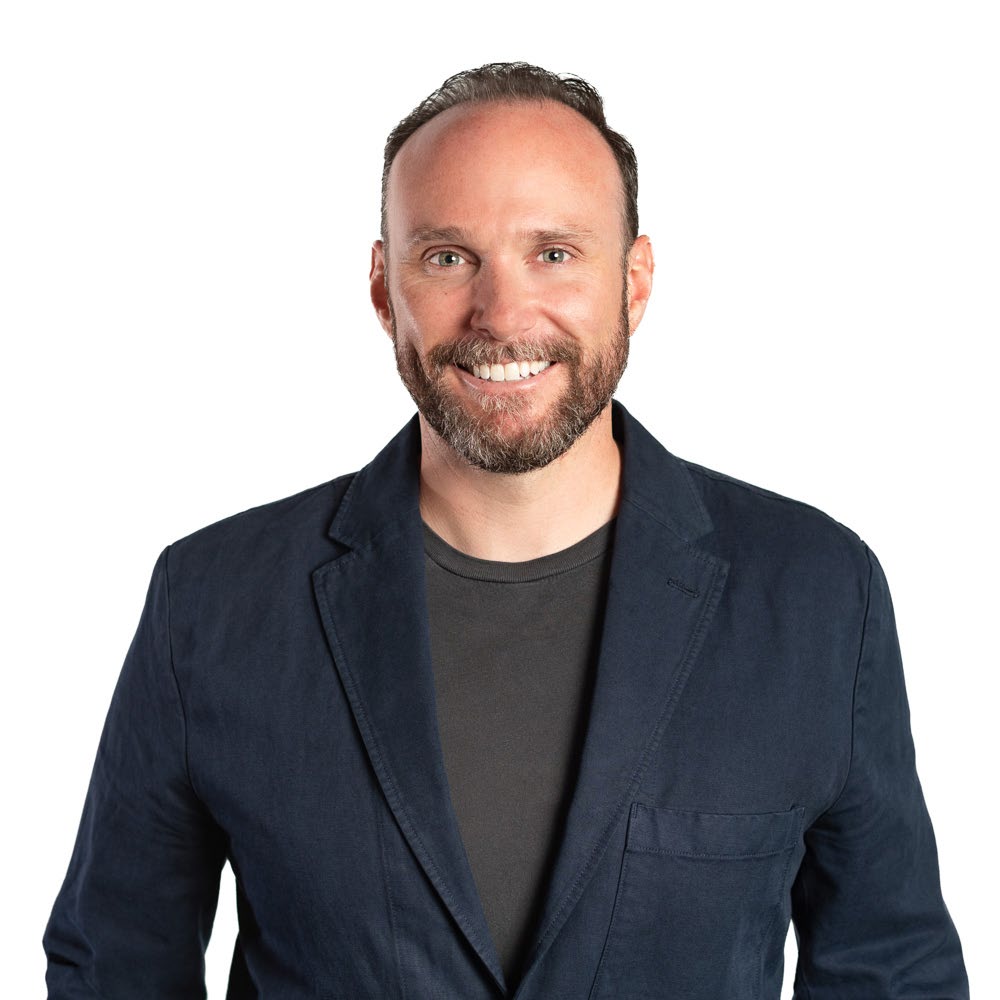
Title: Founder and Design Principal
Firm: Adam Harding Architecture
Location: Denver, CO
Years in practice: 22
Credentials: AIA, LEED AP, NCARB
Introduction
For Adam Harding, AIA, a defining moment in architecture came on a restaurant’s opening night. Standing in the back of a room he had spent a year and a half designing, he watched people lean toward one another, linger, and settle into the space. The experience changed how he understood his work: its value would be measured by how people occupied the room.
The 2026 AIA Colorado Architect of the Year, Adam is the founder and design principal of Adam Harding Architecture, a Denver studio he established this year after twenty-two years at Roth Sheppard Architects, most recently as Design Principal and Partner. His practice spans hospitality, restaurants, retail, wellness, residences, workplace, and adaptive reuse, with a focus on the rituals and experiences that give places meaning.
A 2021 AIA National Young Architects Award recipient, Adam also contributes through service with Colorado DORA, NCARB, and the Architectural Education Foundation. In this Member Spotlight, he reflects on designing for experience, learning from the least comfortable seat in a restaurant, the importance of business education, and a weather-writing habit that offers another way to observe the world.
The Conversation
What is a pivotal moment in your career that changed how you think about architecture?
Early on, I spent an opening night standing in the back of a restaurant I had drawn for a year and a half, watching the room fill. Nobody looked at the ceiling detail I had agonized over. But they leaned in toward each other, they lingered, and the room got loud in exactly the right way.
That was the moment I understood that the deliverable is not the drawing set; it is the behavior the room produces.
Since then, I have measured my work by how people occupy it: whether they slow down, whether they come back, whether the space still works on a Tuesday in February when it is half full. That reframing has shaped every project since, and it is why I keep returning to hospitality. The client’s business either works or it does not, and the room is part of the reason why.
How would you describe your design philosophy in a few sentences?
I want to design rooms people remember being in, not rooms they remember looking at.
That means organizing space, light, material, and sound around how a place makes someone feel, and treating the sequence a person moves through—how they arrive, what they discover, where they pause—as the actual design problem.
Compression and release, material transitions, acoustic zoning, concealed light: these are narrative instruments, not technical requirements. The aim is a place that is intuitive on the first visit and still revealing something on the fifth, and that reads as inevitable in fifteen years rather than photogenic for one.
“I want to design rooms people remember being in, not rooms they remember looking at.”
What is one tool, habit, or process you rely on that others might not expect?
I eat in my buildings. Repeatedly, at different hours, usually alone and sitting somewhere I would not normally choose: the seat by the service station, the two-top wedged against the corner, the last stool at the end of the bar.
Those are the seats that tell you the truth about a room. You feel the draft from the door, the glare at 6:40, the pinch point where servers and guests negotiate the same four feet.
It is not a formal post-occupancy process, and it does not produce a report, but it has corrected more of my assumptions than any software has. Every project I design carries something I learned from an uncomfortable chair in a previous one.
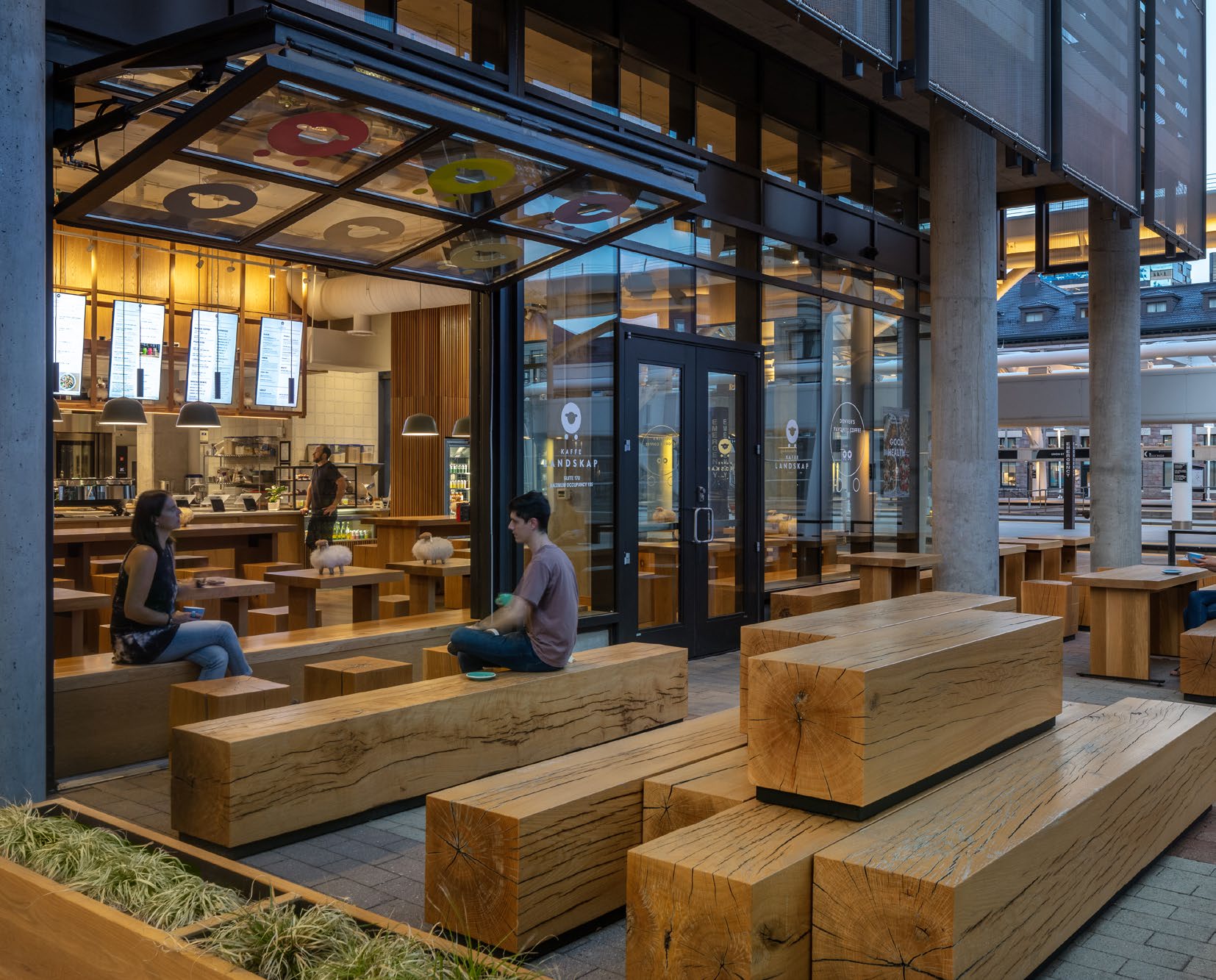
Kaffe Landskap.
Project completed during Adam’s tenure at Roth Sheppard Architects.
Photography: James Florio
Tell us about a project you are proud of. What made it meaningful?
Denchu Den—The Hidden Forest, completed in 2025 while I was Design Principal at Roth Sheppard Architects.
It is an 8,300-square-foot omakase restaurant and cultural dining experience, and the design is built around the Japanese principle of omotenashi: a quiet, almost withholding exterior that opens into a warm, tactile interior of wood, stone, filtered light, and deliberately narrow thresholds. You do not see the room until you have earned it.
What made it meaningful was the relationship behind it. This is the latest chapter with a client family whose restaurants have shaped how Denver eats, and that history raised the stakes. The work had to feel continuous with what came before without repeating it.
When a client trusts you with the thing their name is attached to, across multiple projects and many years, that is the highest compliment the profession offers.
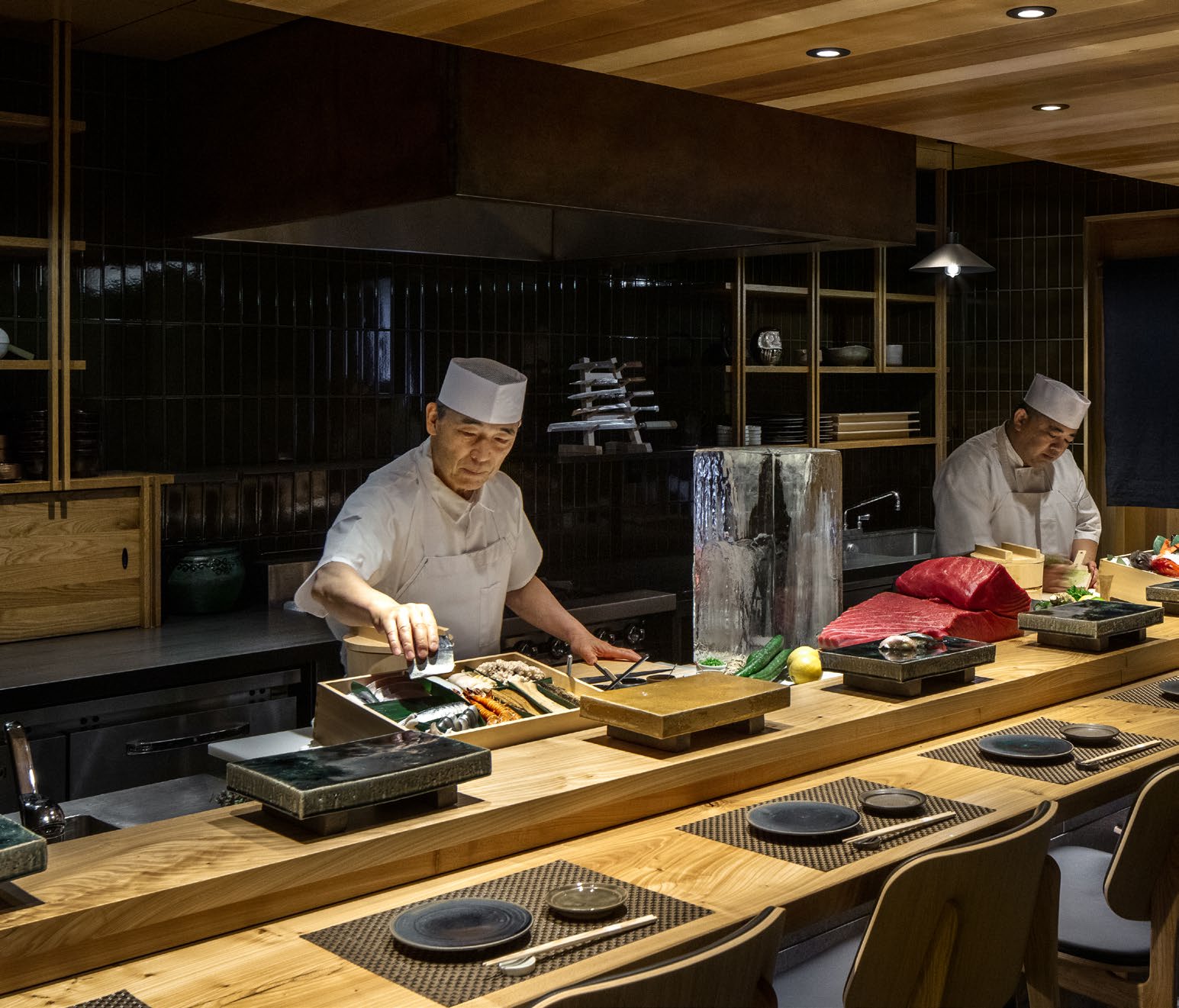
Denchu Den
Completed in 2025 while Adam served as Design Principal at Roth Sheppard Architects.
Photography: James Florio
What is one change you would like to see in the architecture profession?
I would like us to stop treating business acumen as something separate from—or beneath—design talent.
We are excellent at teaching young architects to draw and think, and nearly silent on how to build a durable practice. That gap costs the profession good designers, and it costs clients the continuity that comes from firms that survive.
It is also, quietly, an equity issue. The people who can afford to learn these things the expensive way are not a representative sample.
Talking about money is not a distraction from design. It is what makes sustained design possible.
“Talking about money is not a distraction from design. It is what makes sustained design possible.”
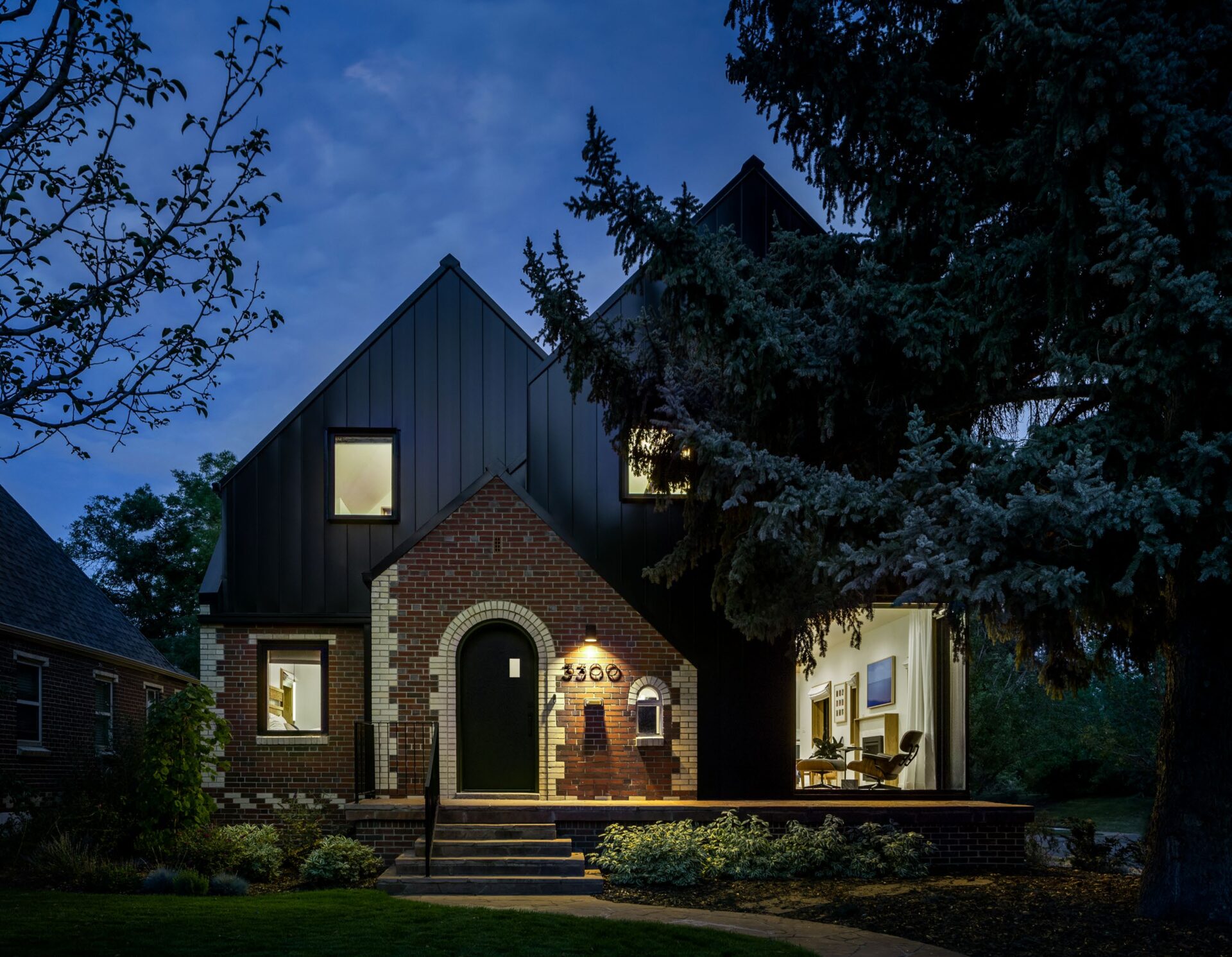
Rabbit House.
Project completed during Adam’s tenure at Roth Sheppard Architects.
Photography: James Florio
What advice would you give to emerging professionals in Colorado?
Go deep before you go broad. Early on, there is pressure to be conversant in everything; the architects I admire got there by staying with one building type long enough to learn what actually goes wrong in it. Pick something you find genuinely interesting and commit to it for a decade.
Second, get on site. The gap between what you drew and what the trades can build is where your judgment gets made, and you cannot close it from a desk.
Third, serve. I have spent years on the AIA Colorado board, on the state licensing board at DORA, as Colorado’s NCARB delegate, and with the Architectural Education Foundation, and none of it was a detour from practice.
It taught me how the profession actually works: how licensure moves, how policy gets made, how a scholarship changes whose kid gets to become an architect. The Education Foundation now awards $120,000 a year, and I would put that number up against anything I have built.
This is a small state. Be useful in it, and it will be useful to you.
What is something people might be surprised to learn about you?
I am an unreasonably serious weather person, and I have done something about it. I write and publish WeatherTime, a daily weather email that is short, genuinely useful, and completely unserious about everything except the forecast.
It has hand-drawn pigeons. It is not written for a professional audience, and I would not read it aloud at a board meeting. Just kidding, I probably would.
There is more overlap with architecture than it sounds: both are about reading systems, paying attention to conditions most people move through without noticing, and understanding that light, wind, and temperature are design materials whether or not you choose to treat them that way.
Colorado just happens to give you a spectacular amount to look at. weathertime.com, if you want your mornings improved.
Thank you to Adam Harding, AIA, for sharing his perspective on designing for experience, building a lasting practice, and serving the profession.
Congratulations on being named the 2026 AIA Colorado Architect of the Year!
Marketing for Architects: Winning the Work

Winning the Work
Relationships, Trust, and the Long Game
In the second installment of AIA Colorado’s three-part Marketing for Architects series, four panelists representing different sides of the selection process discussed what it takes to secure meaningful work in a competitive market.
Moderated by AIA Colorado Communications & Creative Director Jon Bell, the conversation featured:
- Chris Viscardi, principal, Kentro Group
- Andy Rockmore, AIA, principal and co-founder, SAR+
- Wells Squier, AIA, principal, Anderson Hallas Architects
- Steve Scribner, AIA, principal, Shape Architecture Studio
The panelists work across development, urban infill, affordable and workforce housing, civic architecture, historic preservation, national parks, custom residential, and high-performance community projects. Despite those differences, several themes surfaced repeatedly: relationships matter more than transactions, expertise must be relevant and credible, and the ability to listen may be one of an architect’s most valuable business-development skills.
Event Recap
Selecting the right architectural team
Chris Viscardi offered the client and developer perspective, describing how Kentro Group selects architects for projects ranging from commercial development to complex mixed-use and multifamily work.
For Kentro, architects are often engaged early to help test massing, density, programming, and the overall vision for a site. Relevant experience matters, particularly when a project combines complicated uses, but Viscardi emphasized that selecting a firm is ultimately about more than reviewing its portfolio.
Kentro wants to understand who will actually work on the project, not only the principals participating in the interview. The chemistry, experience, availability, and coordination of the day-to-day team can be more consequential than the reputation of the firm itself.
Viscardi also spoke about the value of established consultant relationships. Although owners may have preferred engineers or other specialists, he has learned that an architect’s existing team may produce better results because its members already understand how to work together.
Key points
- Bring architects into the process early enough to help shape the project’s vision and feasibility.
- Clients want to meet the people who will actually perform the work.
- A coordinated team with established working relationships can reduce risk.
- Firms approaching a new client should lead with a specific opportunity or relevant project insight rather than a generic request to “build a relationship.”
Highlighted quotes
“We’re not typically selecting on where the fee shakes out. Does it have to be fair? Sure. But it’s getting the right team for the project.”
“Every project is going to have some problem. As you develop a relationship with people, you create that trust.”
“There’s no substitute for experience and the most important thing is to work with the right people. If you achieve that, everything else has a way of working out.”
“It’s a small world and people don’t talk about what went right but word spreads quickly about bad experiences.”
Adapting to the market without losing your identity
Andy Rockmore, AIA, discussed how SAR+ has evolved alongside changes in Denver and the greater Rocky Mountain region. After completing significant market-rate multifamily work between 2010 and 2020, the firm responded to changing economic conditions and growing need by applying that experience to affordable and workforce housing.
For Rockmore, architects must recognize that they are service providers. Firms cannot operate independently from their clients or the market. They must understand where their expertise is relevant, follow changing needs, and apply their strengths in new contexts.
Much of SAR+’s work comes from repeat clients and referrals. When the firm meets a prospective client, the conversation is as much about evaluating compatibility as it is about winning the assignment. Because architects and clients may spend several years together, Rockmore said the relationship must work for both sides.
That client-centered outlook also shapes SAR+’s proposals and presentations. The firm avoids making the pursuit primarily about its own portfolio or identity. Its proposal covers focus on the client’s project, and the client’s logo is never subordinate to the firm’s. These details reinforce a larger message: the architect is there to understand and help solve the client’s problem.
Key points
- Firms must follow changes in their markets while finding new applications for their existing strengths.
- Repeat clients, referrals, and professional reputation are foundational sources of work.
- Prospective clients should be evaluated for fit just as carefully as architecture firms are evaluated.
- A proposal should focus on the client and the client’s problem—not simply showcase the architect.
Highlighted quotes
“Don’t do a bad project. Ever.”
“The foundations of business are relationships. It certainly helps to have good work, but it’s the relationships.”
“It is dating in every essence of the term, and it better be right for both of you because you’re about to spend two or three years together.”
“We are all doing business development everyday by the way we carry ourselves, speak, listen, act, work and show up.”
Differentiating a public-sector practice
Wells Squier, AIA, described a pursuit environment shaped heavily by requests for qualifications, formal shortlists, interviews, public accountability, and risk management.
Anderson Hallas focuses on public-sector work, including libraries, municipal buildings, public-safety projects, parks, national parks, preservation, and adaptive reuse. The firm balances contemporary new construction with deep historic-preservation expertise.
In a qualifications-based selection, every shortlisted firm may appear capable of completing the work. Differentiation happens when a team demonstrates that it understands the client’s particular circumstances: the project’s purpose, its stakeholders, its pressures, and the problems keeping the client awake at night.
This becomes especially important for public clients who may undertake only one major building project in a decade. They must use public funds responsibly while selecting a team during a relatively short interview. Architects therefore need to communicate both their commitment to the client’s vision and their ability to manage risk.
Squier also described the extensive groundwork behind public-sector business development. Anderson Hallas monitors capital-improvement plans, attends market-specific conferences, pursues on-call contracts, maintains relationships with municipalities, and watches procurement platforms for opportunities. Sometimes the firm has time to position itself in advance; at other times, an ideal RFP appears with an immediate deadline.
Key points
- Technical qualifications are the entry requirement, not the final differentiator.
- Public-sector interviews require architects to quickly establish trust and demonstrate an understanding of the client.
- Capital-improvement plans can provide early insight into upcoming public projects.
- Firms will not win every pursuit, and losing should not automatically be treated as a personal rejection.
Highlighted quotes
“It’s knowing your prospective client to the degree you can research and understand what their challenges are, what their heartaches are, and what the ultimate need of their project is.”
“You’re not going to win every job. You might not be the right fit for every client or every client group.”
“We choose the work we do because it adds value to the world and gets us out of bed every morning.”
Building a practice around high-performance design
Steve Scribner, AIA, discussed how Shape Architecture Studio has built a recognizable niche around high-performance, low-energy design.
The firm’s portfolio includes custom residential work as well as mixed-use, commercial, renovation, and community projects. Scribner cited the Bluff Lake Nature Center as an especially meaningful commission because it combined sustainability, community, nature, and net-zero aspirations. Shape’s work in Leadville has similarly grown through local relationships and projects that contribute to the community.
Shape’s early involvement with organizations including the Colorado Green Building Guild and Passive House Rocky Mountain helped the firm secure its first passive-house projects and establish credible expertise. That clarity now helps prospective clients find the firm.
Scribner described the strongest niche as an intersection of expertise, passion, and viable work. For Shape, sustainability is not an added service or marketing claim; it is part of the firm’s mission. But winning a project still requires the architects to meet clients where they are.
Some clients arrive with extensive knowledge of passive-house principles. Others are more interested in comfort, indoor-air quality, durability, health, or long-term savings. Shape’s role is to listen, understand those priorities, and connect its technical expertise to what the client already values.
Builders also play a central role in Shape’s referral network. Because relatively few homeowners build multiple houses, successful relationships with builders can generate a continuing stream of well-aligned clients and projects.
Key points
- A clear niche helps prospective clients understand why they should approach a firm.
- Sustainability can be communicated through benefits such as health, comfort, resilience, air quality, durability, and lower energy use.
- Education is most effective when it begins with the client’s priorities.
- Builder relationships can be especially valuable in residential and small commercial practice.
Highlighted quotes
“If we can make a really cool passive house and people say, ‘That’s what I want,’ that’s how we’re going to change the world.”
“It’s all about empathy and listening and understanding where they’re coming from.”
“Don’t take it personally. Do the work, put your best foot forward and keep moving.”
“We looked the Jim Collins Venn diagram of what you are passionate about, what you can be best at and where you can make money.”
“There was no choice but to hit it out of the park every time.”
Construction administration and delivering on the promise
The discussion eventually moved from winning a commission to delivering the work after the contract is signed.
Viscardi emphasized constructibility and responsiveness. A detail may make sense conceptually but still present challenges in the field. When that happens, owners need architects who respond quickly, collaborate with the broader team, and keep the project moving.
He also described the current challenge of getting projects financed and started. In a difficult capital market, cost conversations affect every member of the project team. Architects who understand that context can become more effective partners in finding a viable path forward.
The architects described construction administration as an increasingly significant portion of their work. Rockmore estimated that as much as 30 percent of a project’s total effort may occur during construction. Digital project-management tools have made it easier to generate RFIs, but responding to those questions can place substantial demands on architectural teams, particularly when answers already exist in the documents.
Squier noted that public-sector firms may have to propose fees before knowing the likely construction duration. An inaccurate assumption about the number of site meetings or length of construction can significantly affect the fee and the firm’s ability to compete.
Scribner said residential and small commercial clients may not initially understand why the architect should remain involved after the drawings are completed. Bringing a strong builder into the process early can reduce conflict, improve coordination, and allow the architect to address options before they become expensive problems.
Key points
- Architects, owners, and contractors should clarify their respective responsibilities before construction begins.
- Construction administration requires more time and resources than many clients, and some architects, anticipate.
- Early builder involvement can improve pricing, constructibility, communication, and problem-solving.
- Responsiveness during construction is part of the reputation that leads to future work.
Highlighted quotes
“We want our designers to be ingrained and answering the questions. They’re the expert, and that’s where it’s all coming together.” — Chris Viscardi
“If a project takes 10,000 hours, 3,000 of those could be in the field getting it built.” — Andy Rockmore, AIA
“We’re committed to the projects. We need to see them through, and often we’re extending ourselves beyond what we originally assumed in the CA phase.” — Wells Squier, AIA
Growing into new kinds of work
The panel closed by considering how smaller and emerging firms can overcome two common barriers: limited experience and a limited network of relationships.
Viscardi stressed the importance of reputation. Developers and other clients talk to one another, and both positive and negative experiences travel quickly. Firms build credibility by doing what they promise, communicating honestly, and handling difficulties responsibly.
Squier advised firms to be persistent and use each successful project as a stepping stone. A small renovation or addition can establish the experience needed to compete for a larger ground-up project. That new project can then create referrals within a specialized client community.
Rockmore endorsed partnering with firms that have complementary experience. Strategic partnerships can help a firm enter a new sector, meet new clients, learn different methods, and develop qualifications it could not establish alone.
Scribner described growth as a combination of opportunity and execution. Shape’s work with prefabricated-home manufacturers opened doors to new project types, but each opportunity also carried significant pressure to perform. A fortunate introduction may create the opening; what the firm does with that opening determines whether it leads to lasting growth.
Key points
- Reputation grows from following through, communicating honestly, and doing strong work.
- Smaller projects can become credentials for larger opportunities.
- Strategic partnerships can provide experience, relationships, and entry into unfamiliar markets.
- Opportunities sometimes begin with luck, but firms must be prepared to perform when those opportunities arrive.
Highlighted quotes
“The best way to earn business is the referral network. You can’t burn bridges, and you have to be upfront and execute what you say you’re going to do.” — Chris Viscardi
“Be persistent. Do the best you can with each project you get and use that as your stepping stone.” — Wells Squier, AIA
“Join with other architects and partner on a project in which you have less experience. You learn a lot, good things and bad things, about how other firms work.” — Andy Rockmore
“Every time we got one of those chances, we felt like we had to knock it out of the park.” — Steve Scribner, AIA
The central takeaway
The conversation covered several distinct markets and methods of winning work, but it returned repeatedly to the same principle: successful business development is built on trust.
Portfolios, qualifications, fees, proposals, and presentations all matter. But clients also want to know who will do the work, whether the team will listen, how it will respond when something goes wrong, and whether the relationship can withstand several years of difficult decisions.
For architecture firms, winning better work begins long before the interview and continues long after the contract is signed. Every project, relationship, construction-phase decision, and fulfilled promise becomes part of the case for why a client should choose the firm again.
Marketing for Architects
From Project to Publication
Great architecture deserves to be seen, but great design alone rarely earns media coverage.
That was the central message of AIA Colorado’s first Marketing for Architects session, From Project to Publication, where editors, journalists, storytellers, and content creators shared an inside look at how projects make their way into magazines, newspapers, websites, and social media.
While each panelist approaches storytelling differently, they agreed on one fundamental point: architects need to think about publication long before a project is complete.
Architects in Wildfire Recovery
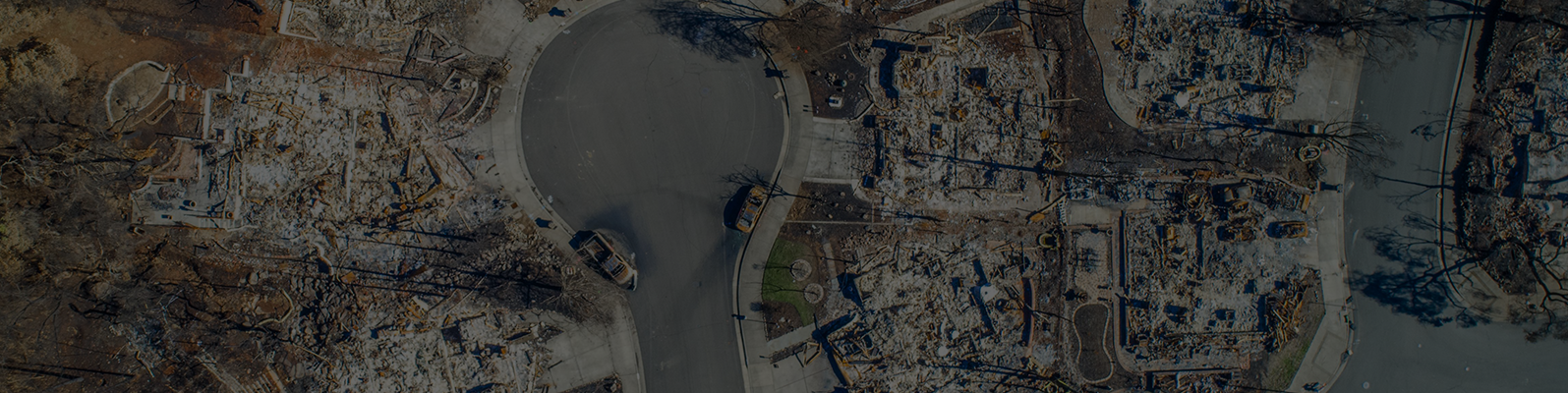
Architects in Wildfire Recovery
Lessons From Colorado and California
Wildfire recovery begins long before the first replacement home is permitted and continues years after the flames are extinguished.
During AIA Colorado’s recent webinar, Architects in Wildfire Recovery: The Architect’s Evolving Role in Wildfire Disaster Response and Rebuild Efforts, architects and local government officials from Colorado and California shared lessons from three very different disasters: the 2021 Marshall Fire in Boulder County, the 2025 Los Angeles-area fires, and the recent Aspen Acres Fire in Pueblo County.
Panelists:
- Scott Rodwin, AIA; Boulder, CO residential architect involved in the 2021 Marshall Fire rebuild effort
- Kim Sanchez; Boulder County Deputy Planning Director who oversaw Marshall Fire home rebuilds in unincorporated county areas.
- Jessica Orlando, AIA; AIA Pasadena & Foothill 2026 President and lead on the chapter’s efforts after the 2025 Los Angeles area fires.
- Weston Burrer, AIA; Pueblo County staff architect, who is coordinating local government efforts for the 2026 Aspen Acres Fire in Beulah, CO.
- Moderated by Nikolaus Remus, AIA; AIA Colorado Advocacy Engagement Director
Their experiences revealed an expanding role for architects after disaster. Beyond designing replacement buildings, architects can help people understand where to begin, navigate insurance and permitting, evaluate builders, make informed decisions about rebuilding, and create homes and communities that are more resilient to the next wildfire.
Recovery starts by listening
Boulder County Deputy Planning Director Kim Sanchez helped lead the County’s response after the Marshall Fire destroyed 157 homes in unincorporated Boulder County and approximately 1,000 structures overall.
One of the County’s earliest actions was also one of its simplest: listen.
Less than two weeks after the fire, Boulder County convened residents and design professionals, not initially to present solutions, but to understand what people actually needed.
Take the time to step back and listen to what your community needs are
Kim Sanchez, Planning Director, Boulder County
What officials heard helped shape the County’s recovery policies. Regulations were streamlined for rebuilding, permit fees were reduced for three years, homeowners received greater flexibility in rebuilding footprints, and accessory dwelling units were permitted in certain circumstances to help homeowners offset rebuilding costs.
The County also assigned each affected homeowner a specific staff contact to help navigate the rebuilding process.
That approach points toward an important distinction: expedited permitting does not necessarily mean eliminating review. Instead, it can mean removing unnecessary obstacles, increasing staff attention, and creating a clearer path through an already complicated process.
Architect Scott Rodwin, AIA, saw the results firsthand. A process that could ordinarily take months was sometimes reduced to weeks, or even days, for Marshall Fire rebuilds.
Sometimes the architect’s most valuable service is answering, “Where do I start?”
After the Marshall Fire, Scott Rodwin, AIA, and his Boulder design-build firm received approximately 70 inquiries from homeowners interested in rebuilding, roughly what he described as 10 years of potential work arriving in a single year.
His firm made an early decision to accept only six homes.
That restraint, he argued, was essential. Firms that take on more disaster recovery work than they can reasonably deliver risk compounding the trauma homeowners have already experienced through delays, poor service, or abandoned projects.
But Rodwin did something else: he spent roughly an hour talking with nearly every homeowner who contacted him, including dozens whose projects his firm knew it would never accept.
Those conversations addressed fundamental questions: How much might rebuilding cost? How long could it take? How should someone interview an architect or contractor? What happens first?
For architects accustomed to clients who have spent years imagining a new home, disaster recovery reverses the normal relationship. These clients have not chosen to undertake a building project and may have no idea how architecture or construction works.
The single most important function that we as architects were providing was helping them answer the question, ‘Where do I start?’
Scott Rodwin, AIA, Rodwin Architects
That knowledge can itself become a form of disaster assistance.
Architects can help communities navigate the information gap
Following the January 2025 Los Angeles fires, AIA chapters throughout the region mobilized more than 200 architect volunteers.
Jessica Orlando, AIA, 2026 President of AIA Pasadena & Foothill, described an effort that began by learning from architects who had already experienced disaster response. Within weeks of the fires, local chapters connected with AIA Maui to understand lessons from the Lahaina recovery.
The chapters then began preparing architects to help.
Training included California’s Safety Assessment Program, insurance policy education, and legal guidance for architects volunteering their services. The chapters also developed public resources explaining rebuilding, contracts, project delivery, and the different professionals homeowners might encounter.
Their flagship Ask an Architect initiative placed architects at more than 25 community rebuilding events while also creating a virtual matching program connecting residents with licensed architects. More than 400 community members participated.
The chapters eventually created a simple Roadmap to Rebuilding and a more comprehensive California disaster recovery guide.
The underlying need was strikingly basic: people needed a reliable place to start.
Orlando described the missing piece as a “single source of truth” that could explain the rebuilding process to someone encountering it for the first time.
Recovery looks different from one community to another
The recent Aspen Acres Fire demonstrates why disaster response strategies cannot simply be copied from one community to another.
Weston Burrer, AIA, a staff architect with Pueblo County, described a fire that burned across more than 100,000 acres and affected communities ranging from more developed areas to rural mountain properties.
Beulah was particularly hard hit. Many of the structures lost there were smaller homes and cabins built generations ago, some dating back 80 to 100 years. Unlike many Marshall Fire homeowners, some residents had little or no insurance and lack the financial resources necessary to rebuild.
That changes the question from simply “How do we rebuild?” to “What is realistically possible to rebuild?”
Pueblo County has been examining reduced demolition fees, expedited permitting, and possible zoning flexibility while simultaneously dealing with damaged infrastructure and flooding within the burn scar.
For architects, Burrer sees an opportunity to help residents consider construction methods that could make replacement structures more resilient and potentially more insurable, including different exterior materials, roofing systems, and construction assemblies.
But better construction can cost more.
How are we not only helping to rebuild, but also, could we suggest a better way of building?
Warren Burrer, AIA, Staff Architect, Pueblo County
That question exposes one of the central challenges of wildfire recovery: resilience recommendations matter only if homeowners can afford to implement them.
The architect can also become an advocate
Insurance emerged repeatedly during the discussion.
Rodwin described widespread underinsurance following the Marshall Fire and an important role architects and builders can play before homeowners accept an insurance settlement.
An architect may be able to reconstruct the essential characteristics of a destroyed home from photographs, existing plans, and owner information, develop preliminary specifications, and work with a builder to produce an “as-was” estimate of what rebuilding the previous home would actually cost.
That professional documentation can give homeowners information they otherwise may not have when discussing a settlement with their insurer.
Architects can play a similar protective role during construction.
Disasters create enormous and sudden demand for construction services. Both Rodwin and Orlando described inexperienced, unqualified, or unscrupulous providers entering affected markets. Architects can help homeowners vet contractors and designers, review payment applications, monitor construction, and understand contracts.
In those circumstances, traditional construction administration becomes something more: a layer of consumer protection for people making enormous financial decisions while recovering from a traumatic event.
Rebuilding better requires partnerships
No speaker attributed successful recovery to architects alone.
Marshall Fire recovery brought together local governments, architects, builders, utilities, community organizations, and groups including the Colorado Green Building Guild. Xcel Energy incentives helped some homeowners pursue greater energy efficiency while rebuilding.
Los Angeles-area AIA chapters worked with government agencies, community organizations, and hundreds of volunteers.
Pueblo County is now coordinating among local government, FEMA, infrastructure teams, and affected communities while the recovery is still in its earliest stages.
The common lesson was collaboration.
As Rodwin observed of the Marshall Fire response:
It wasn’t just architects. It was the entire community working together.
Scott Rodwin, AIA, Rodwin Architecture
Designing for the next fire
The conversation eventually shifted from recovery toward preparedness.
Defensible space remains critical, but the panel emphasized that wildfire resilience extends to the building itself. Strategies discussed included ignition-resistant exterior materials, eliminating combustible materials immediately adjacent to buildings, protecting attic and crawl-space openings from embers, reconsidering roof geometries that collect debris, using Class A roofing, and improving window assemblies.
Rodwin also noted an important connection between wildfire resilience and high-performance design. Better insulated envelopes and higher-performing windows can contribute to both energy performance and protection from extreme heat and ignition.
The result is a broader way of thinking about resilience: not as a specialty added to a project, but as another dimension of good building design.
A profession with a role before, during and after disaster
Perhaps the strongest lesson from the discussion was that an architect’s role in wildfire recovery does not begin when someone signs a design contract.
Architects can prepare before disasters by learning safety assessment procedures, understanding resilient construction, and building relationships with government agencies and community organizations. Immediately afterward, they can help assess damage, answer questions, and translate an unfamiliar rebuilding process. During recovery, they can help homeowners navigate design, permitting, insurance, and construction. Through every rebuilding project, they can help communities prepare for what comes next.
For some homeowners, rebuilding will be the right decision. For others, it won’t be. Sanchez noted that several Marshall Fire survivors chose to sell their property or move rather than undertake a lengthy and expensive rebuilding process.
That, too, changes how recovery should be measured.
The goal isn’t simply to reconstruct every building that was lost. It is to give people enough information, support, and agency to determine what recovery looks like for them, while helping the communities that emerge become better prepared for the future.
2026 Architect of the Year • Adam Harding, AIA
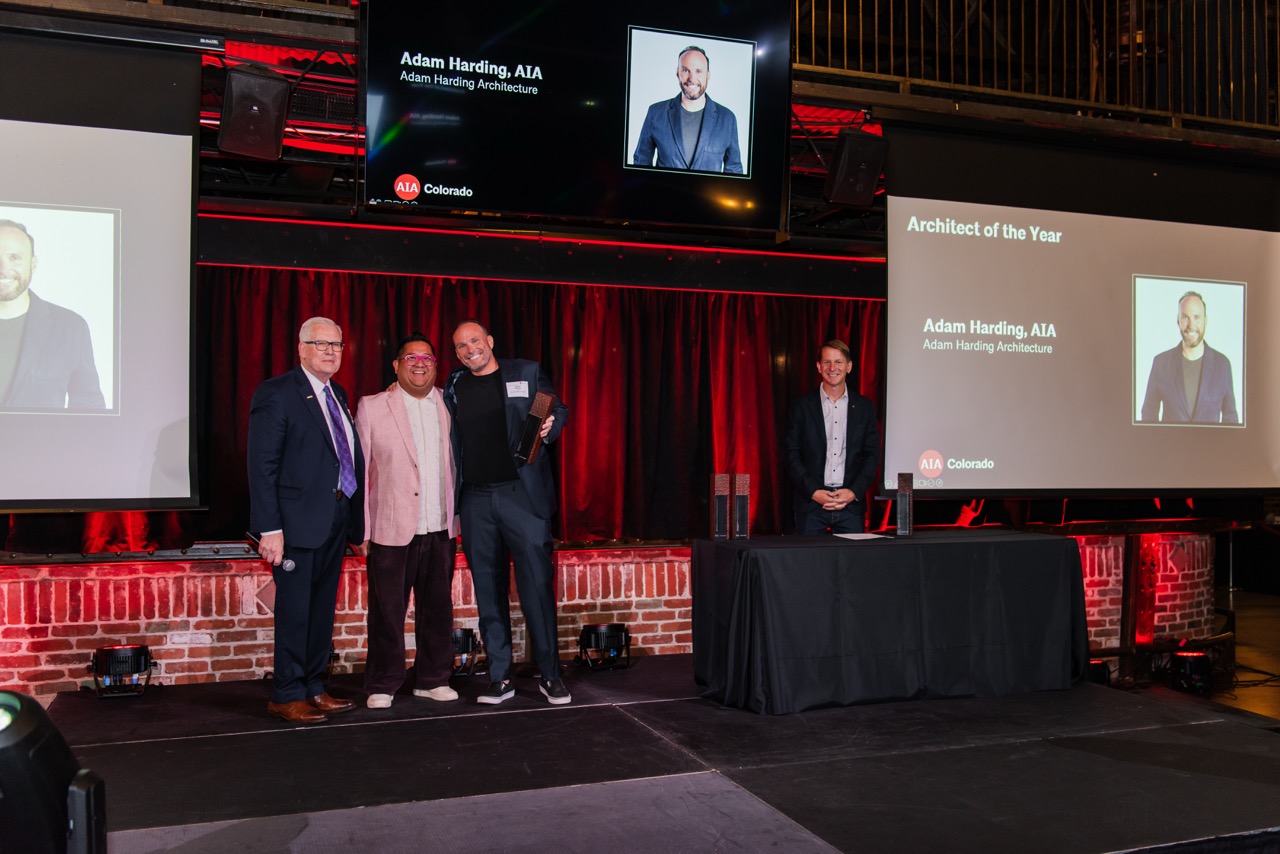
Congratulations to 2026 Architect of the Year
Adam Harding, AIA
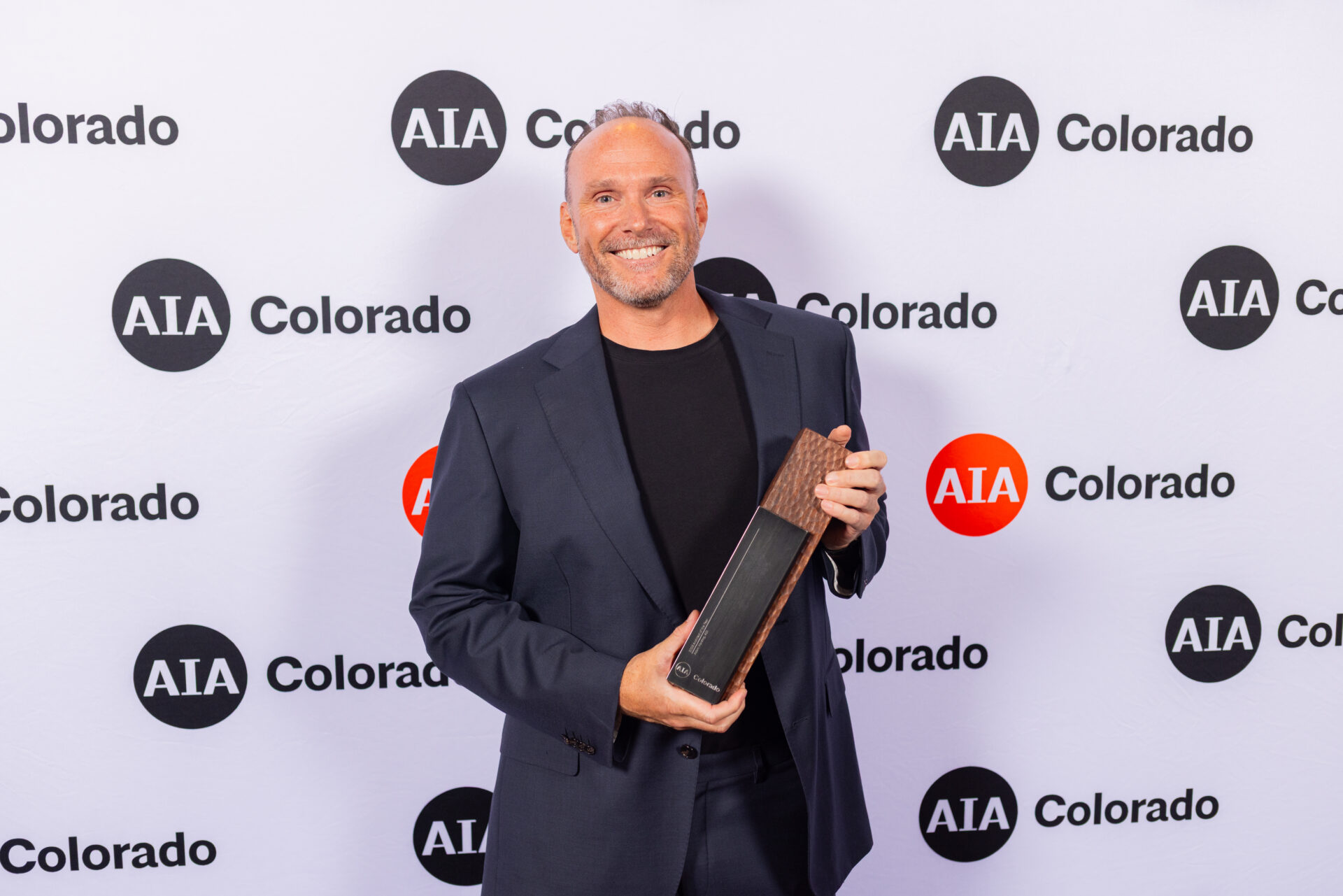
The Award
This award recognizes an individual architect who has made significant impact on the profession of architecture in Colorado. The criteria state they have developed a portfolio of notable, creative, and meaningful architecture that has positively impacted Colorado, they have pushed architecture toward the future while also honoring its past, become widely known for the quality of their work by architects, designers, educators, and the public, have advocated for fellow architects and advanced the community through their service and leadership, and have helped to address current issues in Colorado by using their expertise as a design professional.
Presented by Kevin Nguyen, AIA
Owner, Regular Architecture
2025 AIA Colorado Architect of the Year
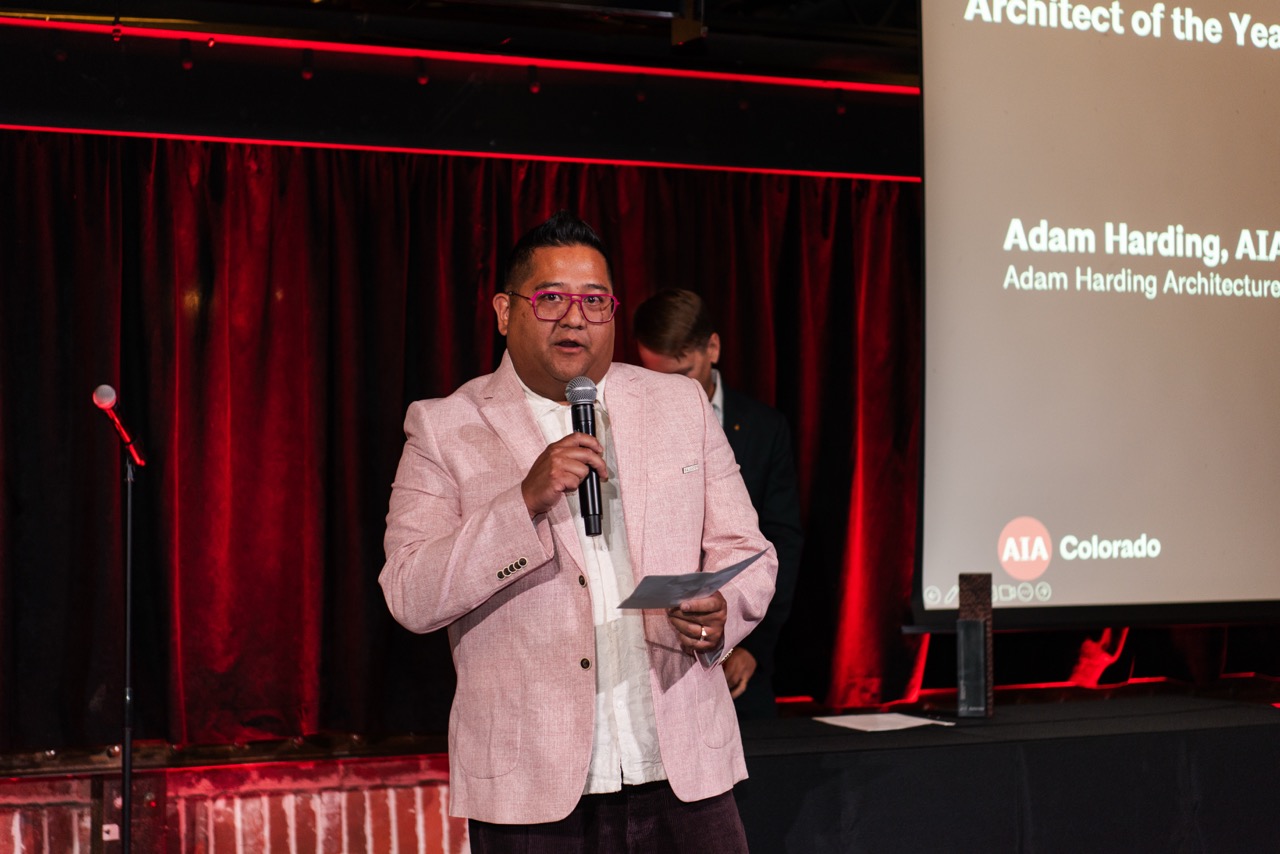
Adam Harding, AIA, Founder & Design Principal at Adam Harding Architecture
Adam Harding represents the architect as designer, mentor, advocate, and public servant, and demonstrates how those roles can strengthen one another.
As a partner and design principal, Adam has developed an award-winning portfolio of hospitality, civic, adaptive-reuse, and mixed-use work that elevates everyday experience and contributes meaningfully to Colorado’s built environment. His projects reflect clarity of concept, careful craft, and a belief that architecture is a civic act capable of fostering culture, belonging, and long-term community value.
Adam’s influence extends well beyond his own projects. He has led AIA Colorado, helped guide the organization through strategic change, supported architectural education through the Architectural Education Foundation, and invested consistently in students and emerging professionals. His service on Colorado’s architecture licensing board carries significant responsibility and helps shape the standards, public trust, and future pathways of the profession.
For the breadth of his design work and his sustained commitment to the systems, institutions, and people that support architecture in Colorado, the jury is honored to recognize Adam Harding as the 2026 AIA Colorado Architect of the Year.
Congratulations!
Why the jury selected Adam:
- Built a sustained, award-winning Colorado portfolio across hospitality, civic, adaptive-reuse, and mixed-use work.
- Approaches architecture as a civic act that can strengthen culture, belonging, and quality of life.
- Combines design ambition with careful craft, technical rigor, and long-term community value.
- Has practiced continuously at Roth Sheppard Architects since 2004 and now serves as partner and design principal.
- Led AIA Colorado as president-elect, president, and past president during a period of strategic organizational development, serving as President in 2020.
- Serves on Colorado’s architecture licensing board, taking on substantial responsibility for professional standards and public protection.
- Connects Colorado to broader regulatory conversations and emerging approaches to architectural practice and licensure.
- Co-leads the Architectural Education Foundation, expanding support for scholarships, mentorship, and future architects.
- Invests consistently in students and emerging professionals through teaching, juries, lectures, and direct mentorship.
- Presented the strongest overall balance of distinguished design, service to AIA, education, advocacy, and public leadership.
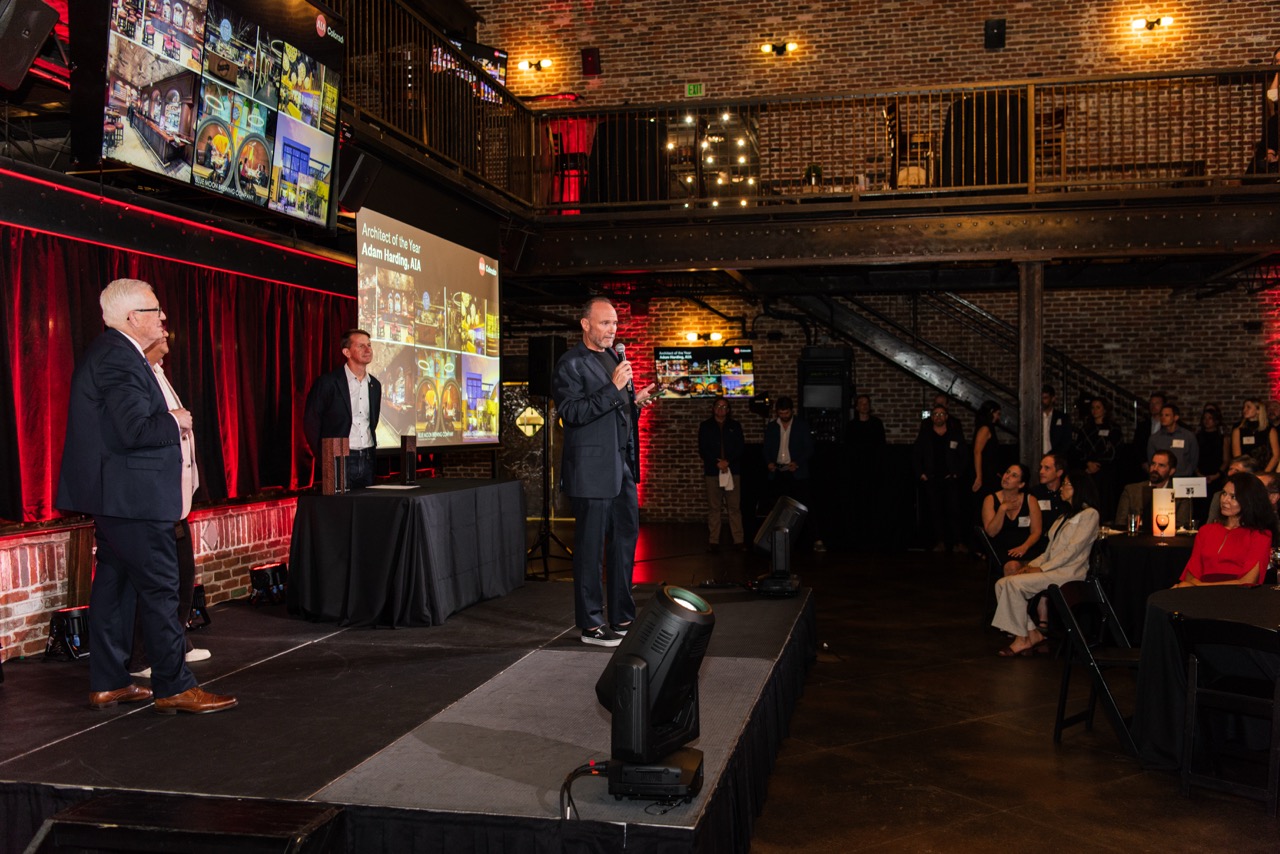
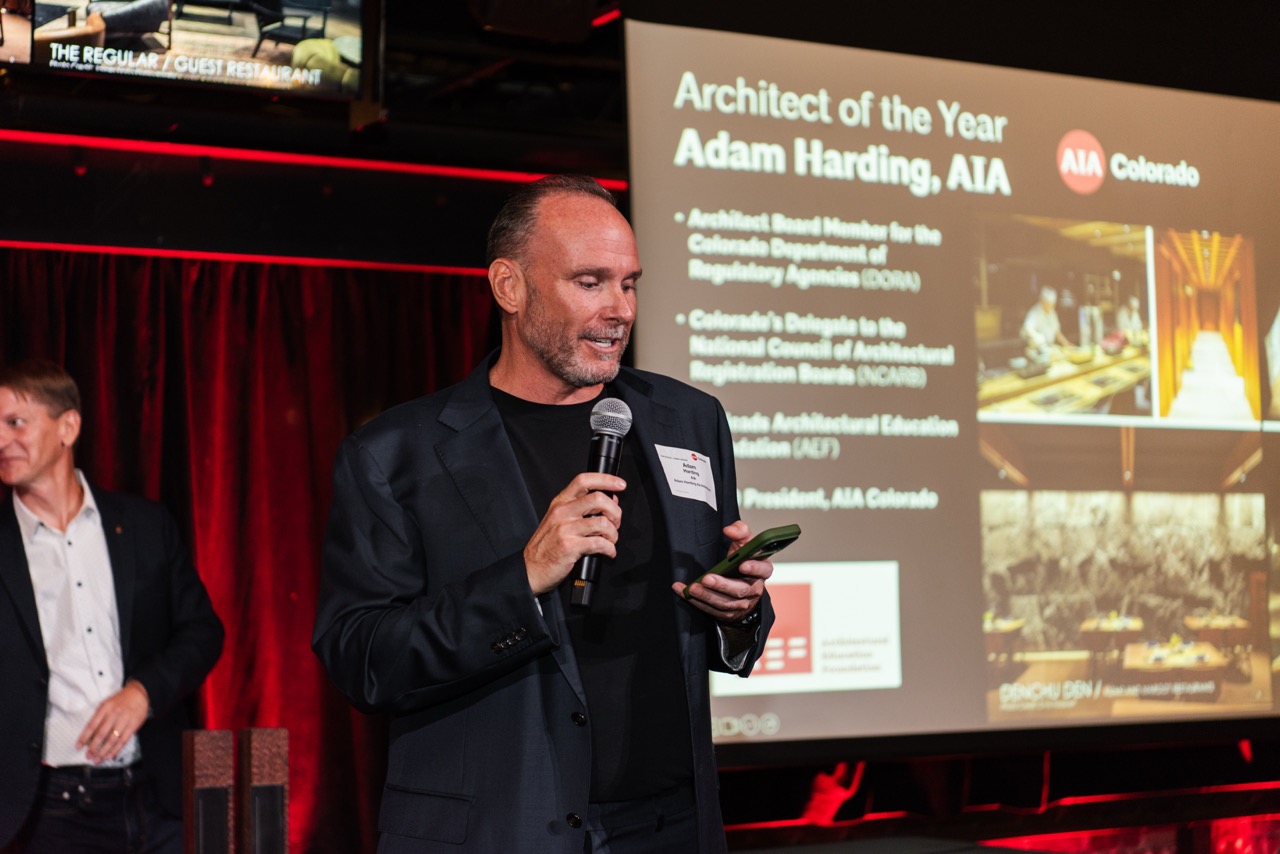
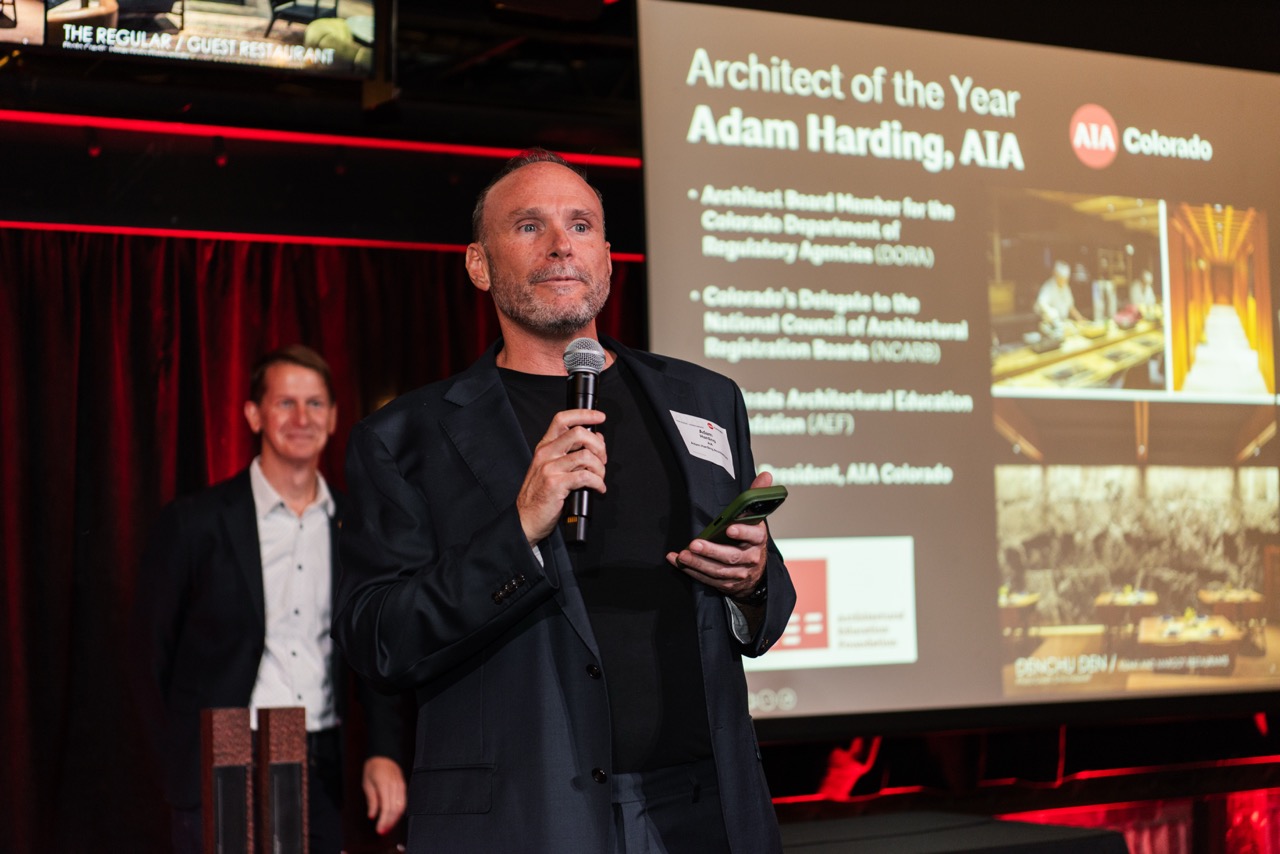
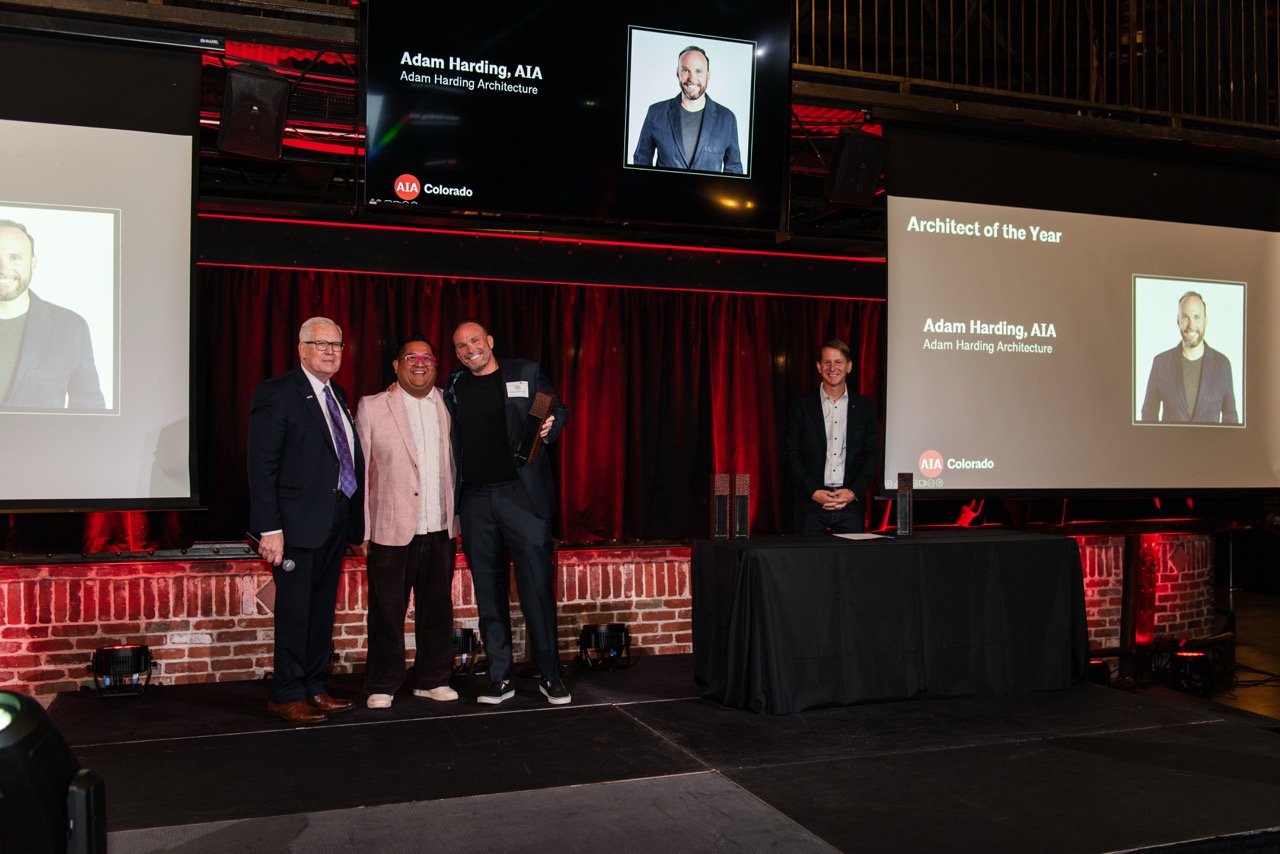


The annual AIA Colorado Awards honor the outstanding work of members and their firms, reinforce the value of great architecture, and highlight member contributions to positive change.
2026 Young Architect of the Year • Katie Coyle, AIA
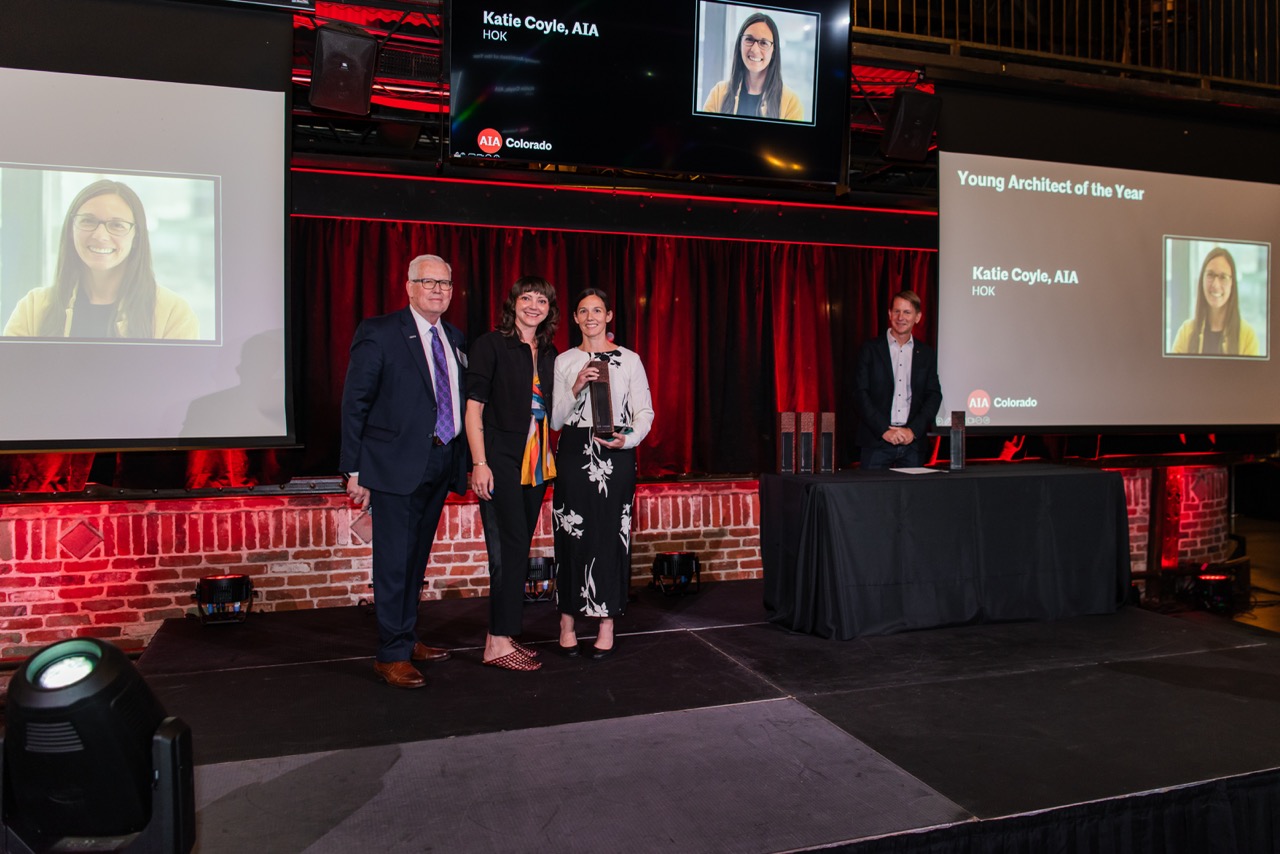
Congratulations to 2026 Young Architect of the Year
Katie Coyle, AIA

The Award
The AIA Colorado Young Architect Award recognizes the individual achievements of a young architect licensed to practice architecture fewer than 10 years. This individual will have demonstrated exceptional leadership and made significant contributions to the architecture profession early in their career.
Presented by Kaylyn Kirby, AIA
Associate Principal, Semple Brown
2025 AIA Colorado Young Architect of the Year
Katie Coyle, AIA, NCARB, WELL AP, Senior Associate, Senior Architect, HOK
This year’s Honors Award Jury had the privilege of reviewing an incredibly talented group of emerging architects but are delighted to recognize Katie Coyle for her technical excellence and her meaningful impact to her community and the architectural industry.
Katie is a Senior Associate with HOK, where she helps lead major sports projects including the Denver Broncos Training facility and the North Carolina Panthers Stadium. With a background that spans many project types, including sports, education, and office, she has a clear passion and aptitude for designs that build community connections.
One aspect of Katie’s application that really stood out was how her letters of recommendation, across clients, colleagues, and contractors, all highlighted the same qualities: her ability to listen authentically, balance the complexities of the project while maintaining the bigger vision, and her ability to lead forward through creative design solutions. She does all of that with humility, leading through curiosity and respect for others.
Her impact goes far beyond the buildings, as she is a champion of sustainability, equity and inclusive design, and mentorship through her professional work and as a dedicated member of many industry organizations.
For her technical excellence, her commitment to the industry, and the meaningful leadership she is already bringing to our profession, it is our honor to recognize Katie Coyle as the 2026 AIA Colorado Young Architect of the Year.
Congratulations!
Why the jury selected this recipient
- Demonstrates exceptional technical leadership alongside strong design judgment.
- Contributes to major public, recreation, collegiate, sports, and community-focused projects.
- Leads important work on the Denver Broncos training facility and team headquarters.
- Connects exterior design, interior planning, documentation, building systems, sustainability, and construction execution.
- Clearly articulated her personal responsibilities and contributions on complex, multidisciplinary projects.
- Presented an especially well-organized packet using drawings, wall sections, graphics, and project narratives to show both thinking and execution.
- Mentors colleagues and connects staff with professional-development opportunities.
- Advances sustainable and wellness-focused design through professional engagement and project work.
- Helps build an inclusive studio culture in which team members are encouraged to contribute their voices and expertise.
- Offered the jury the strongest overall combination of project quality, technical depth, mentorship, community impact, and clarity of submission.
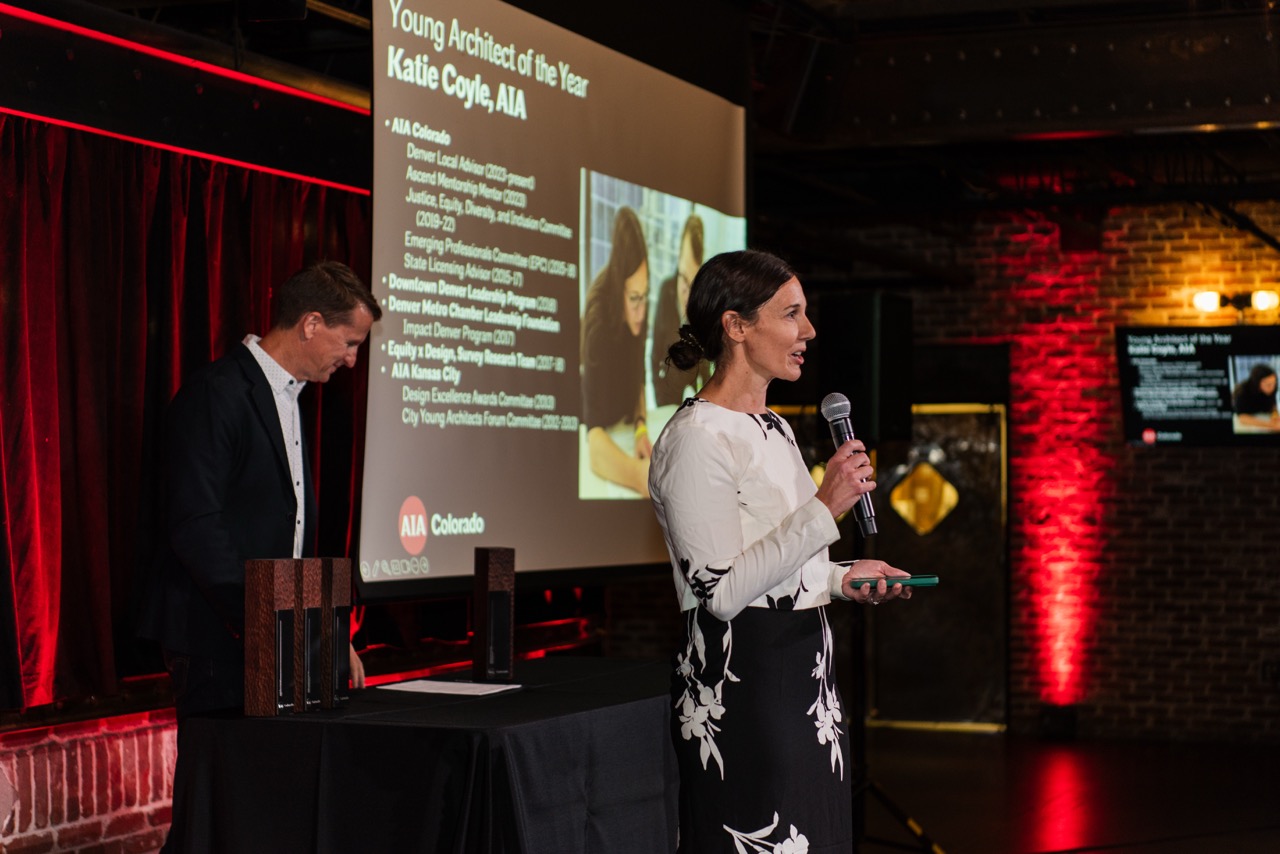
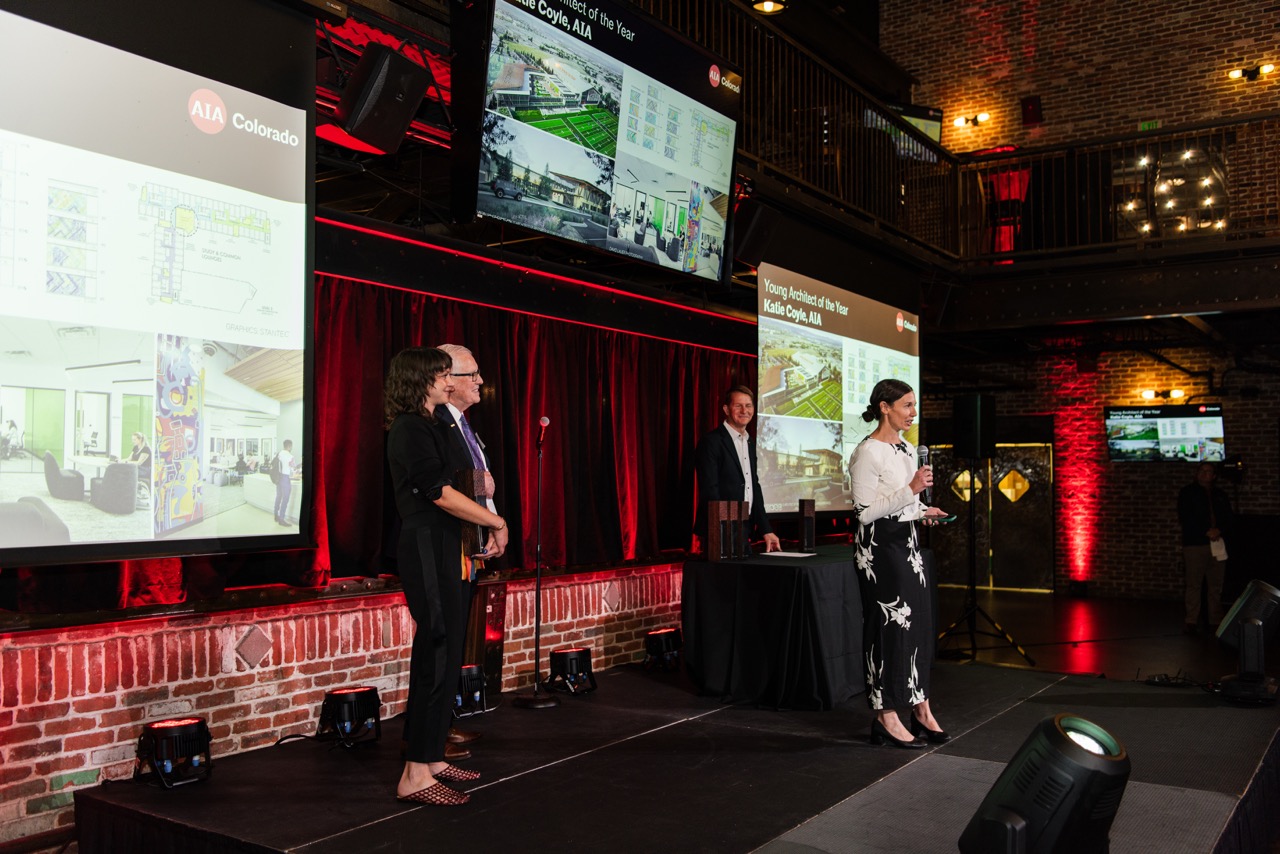
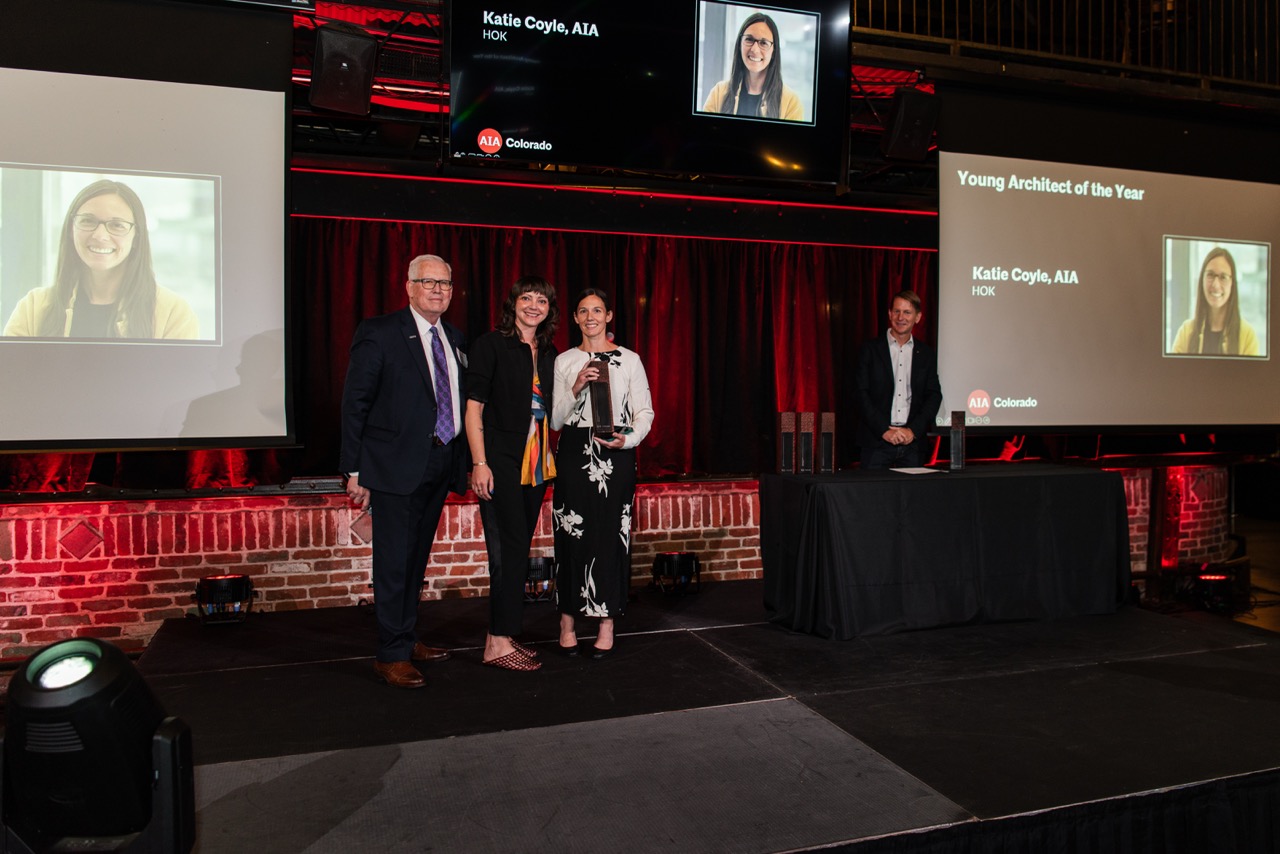
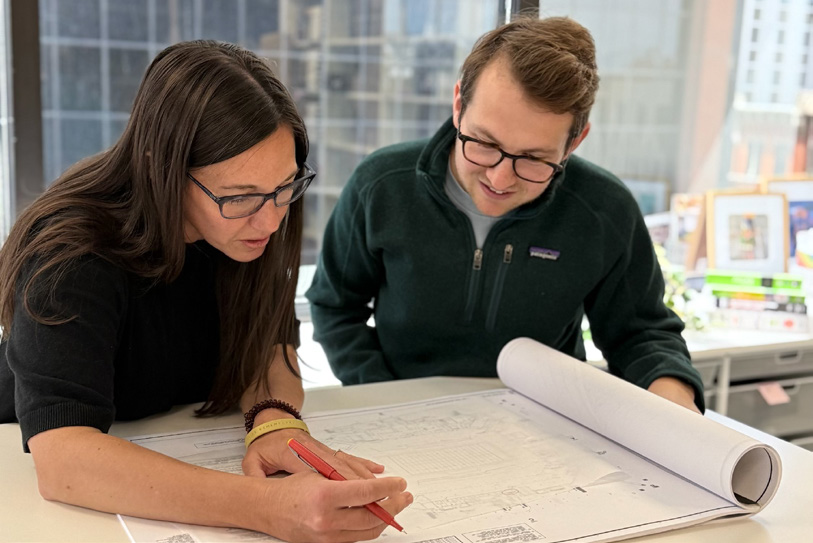

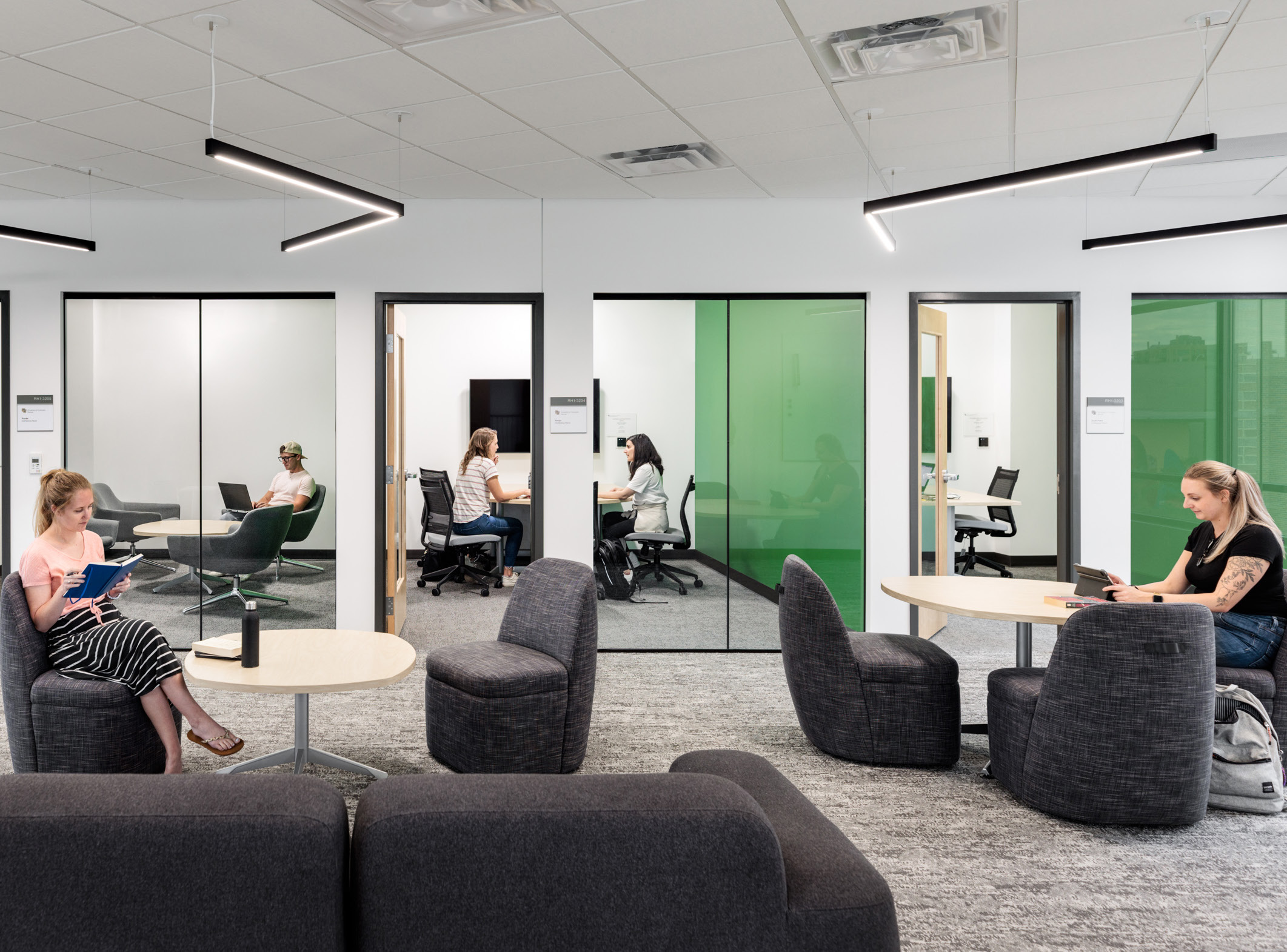
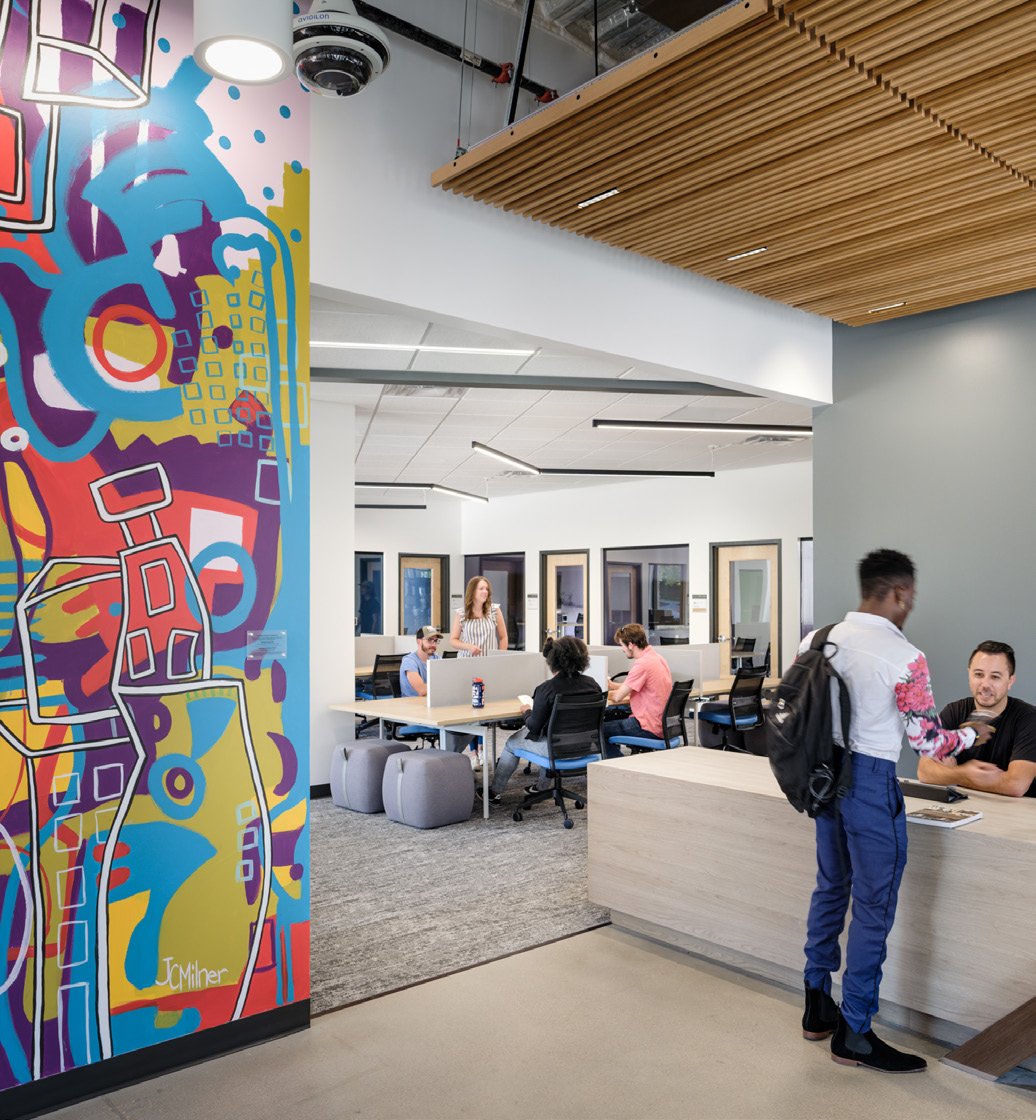
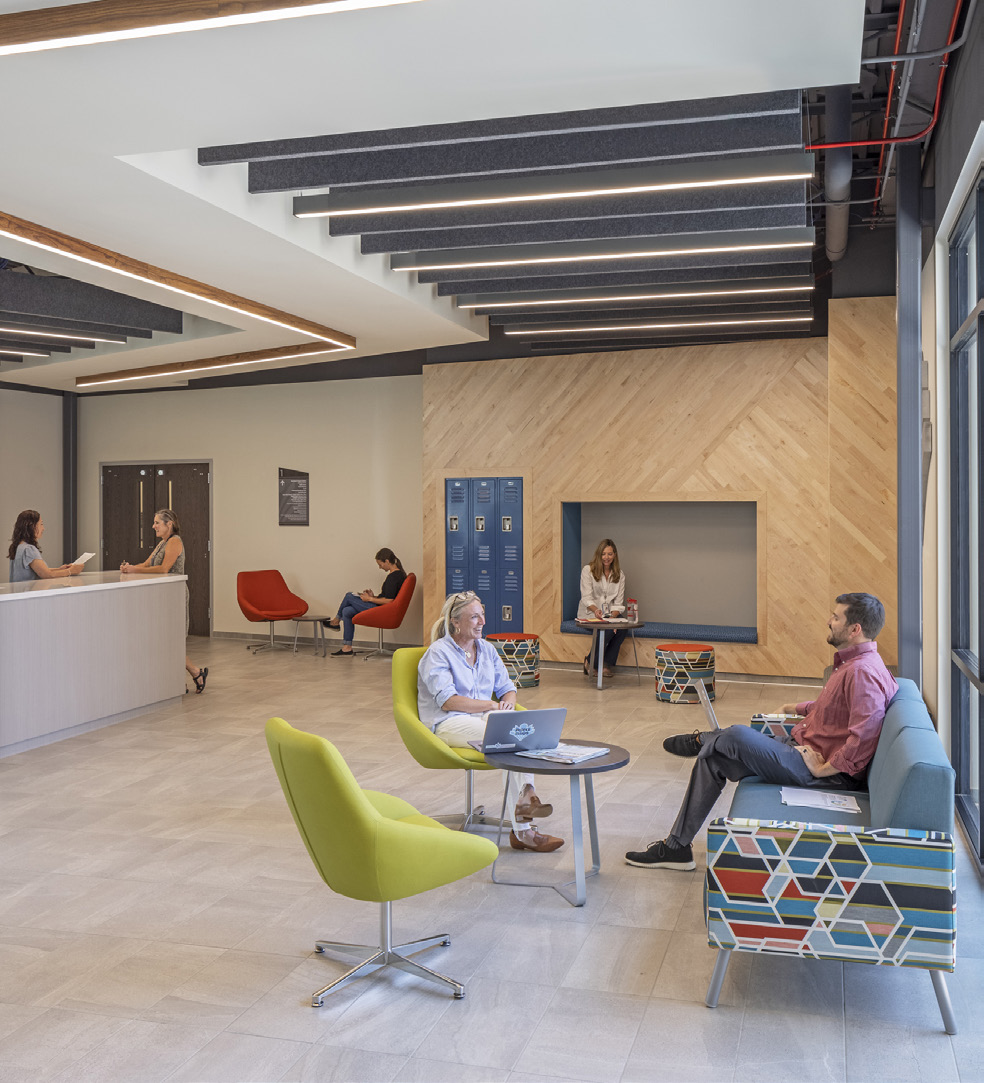
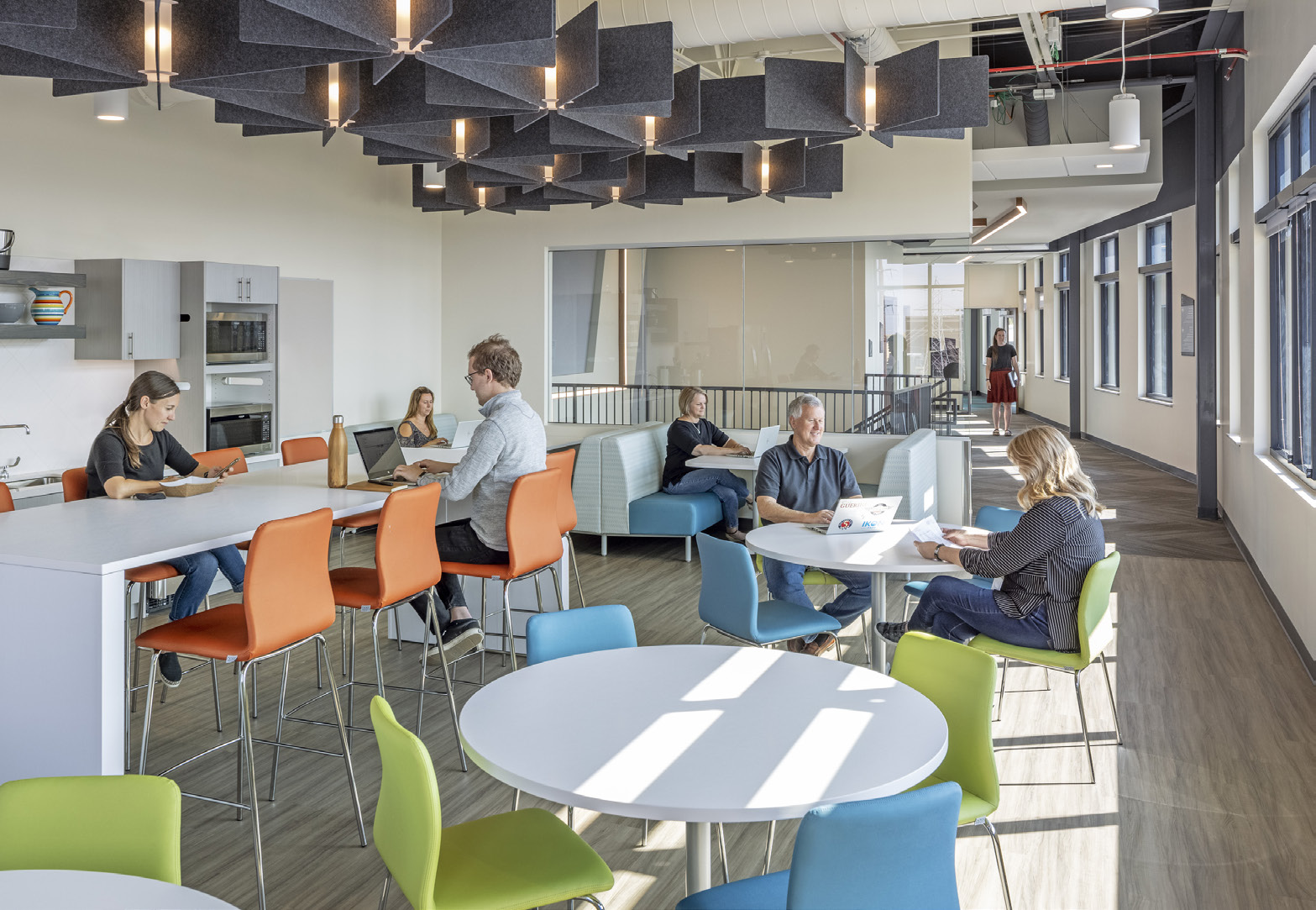
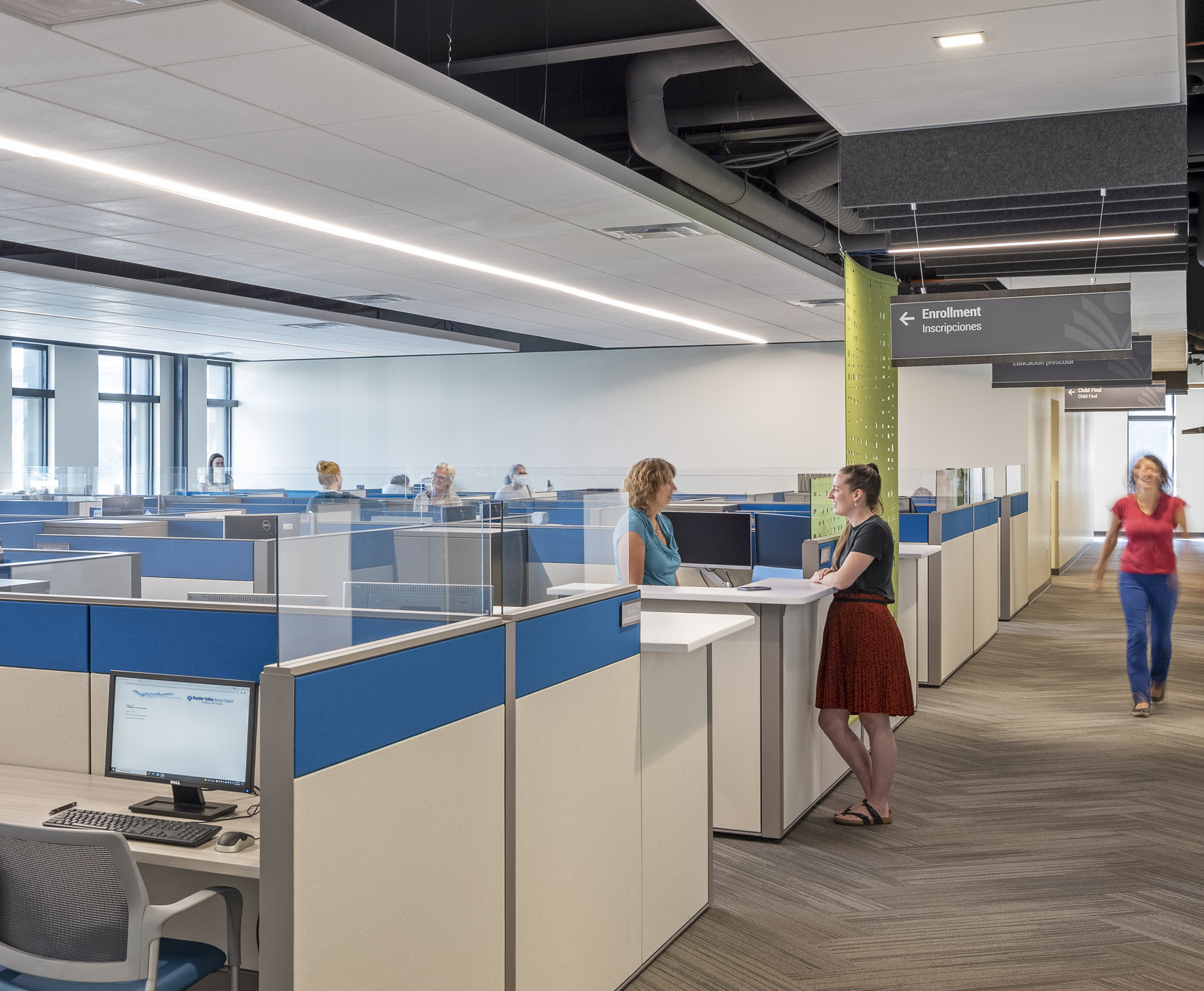
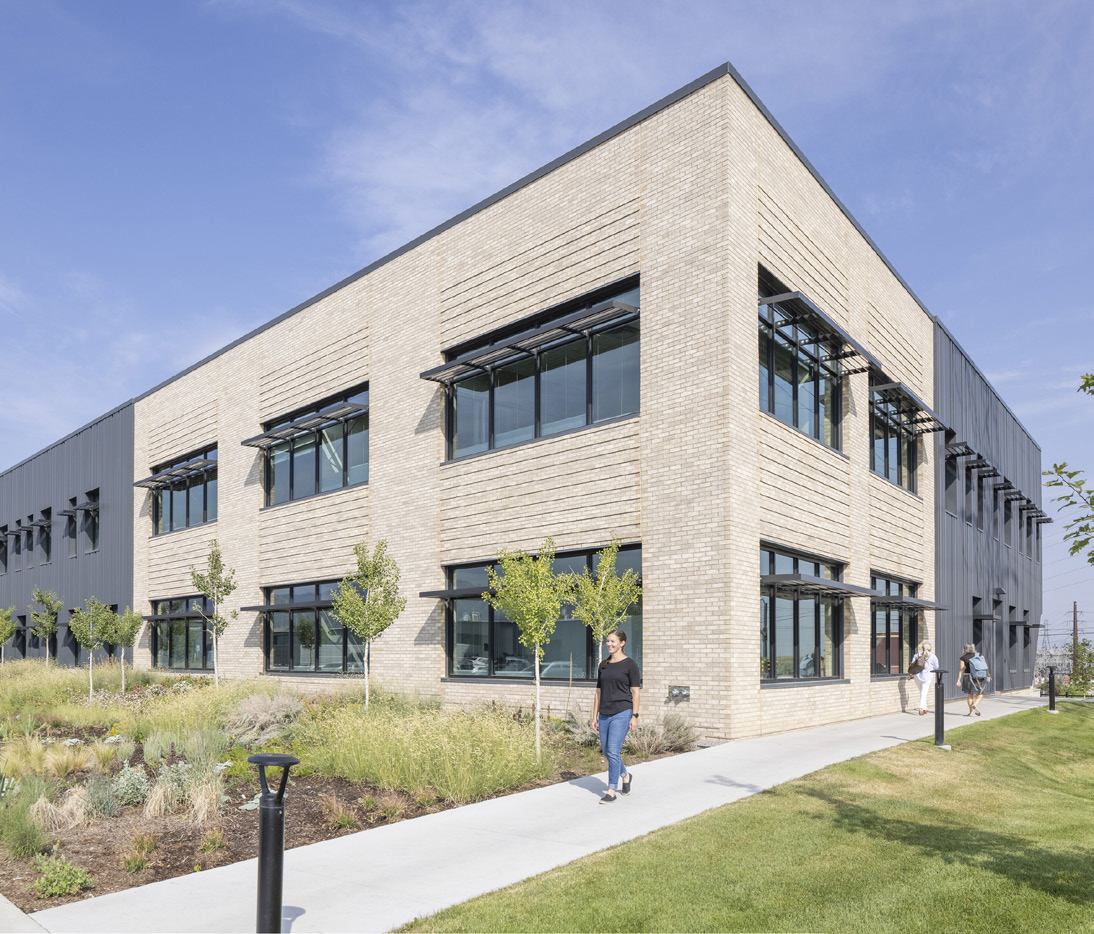
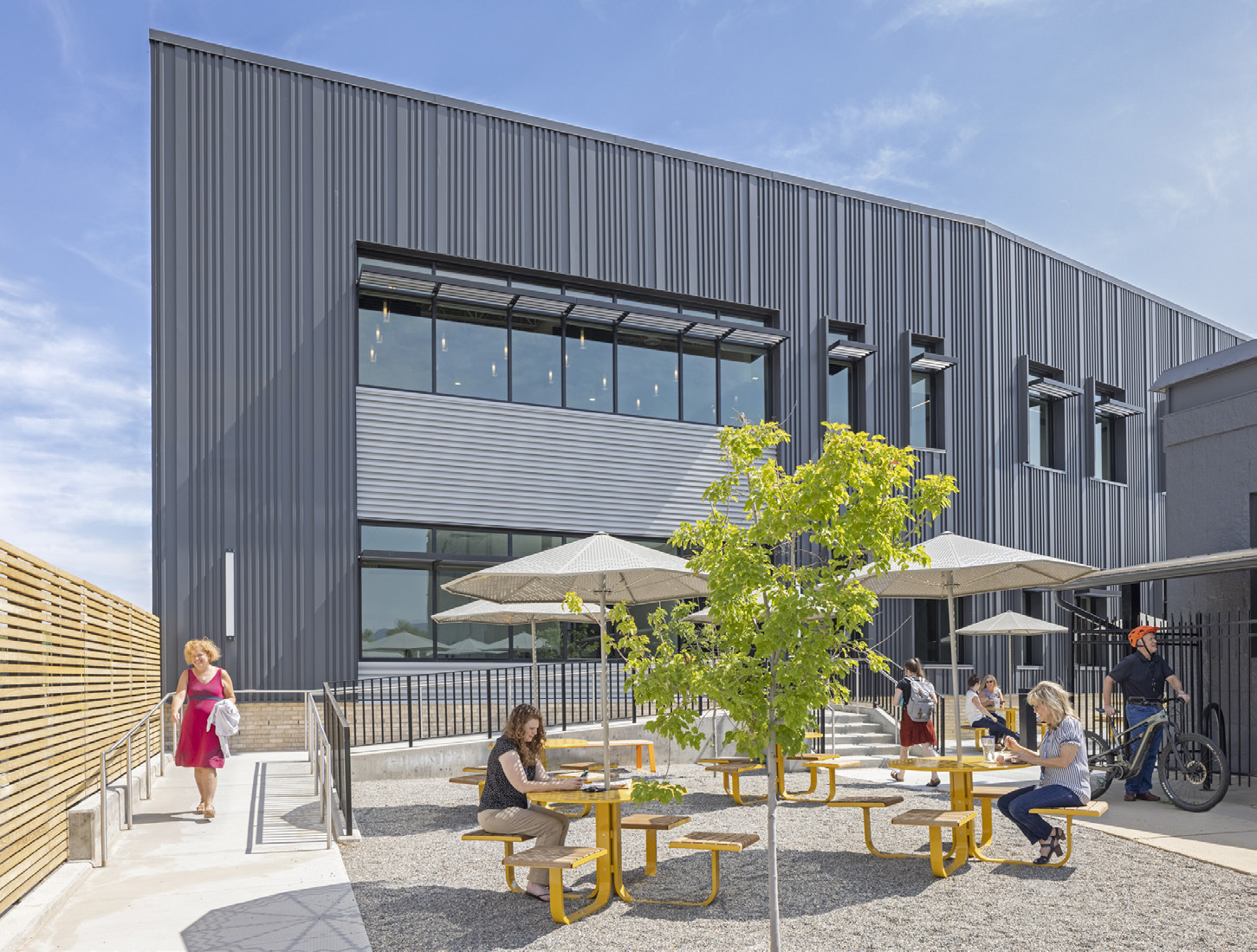
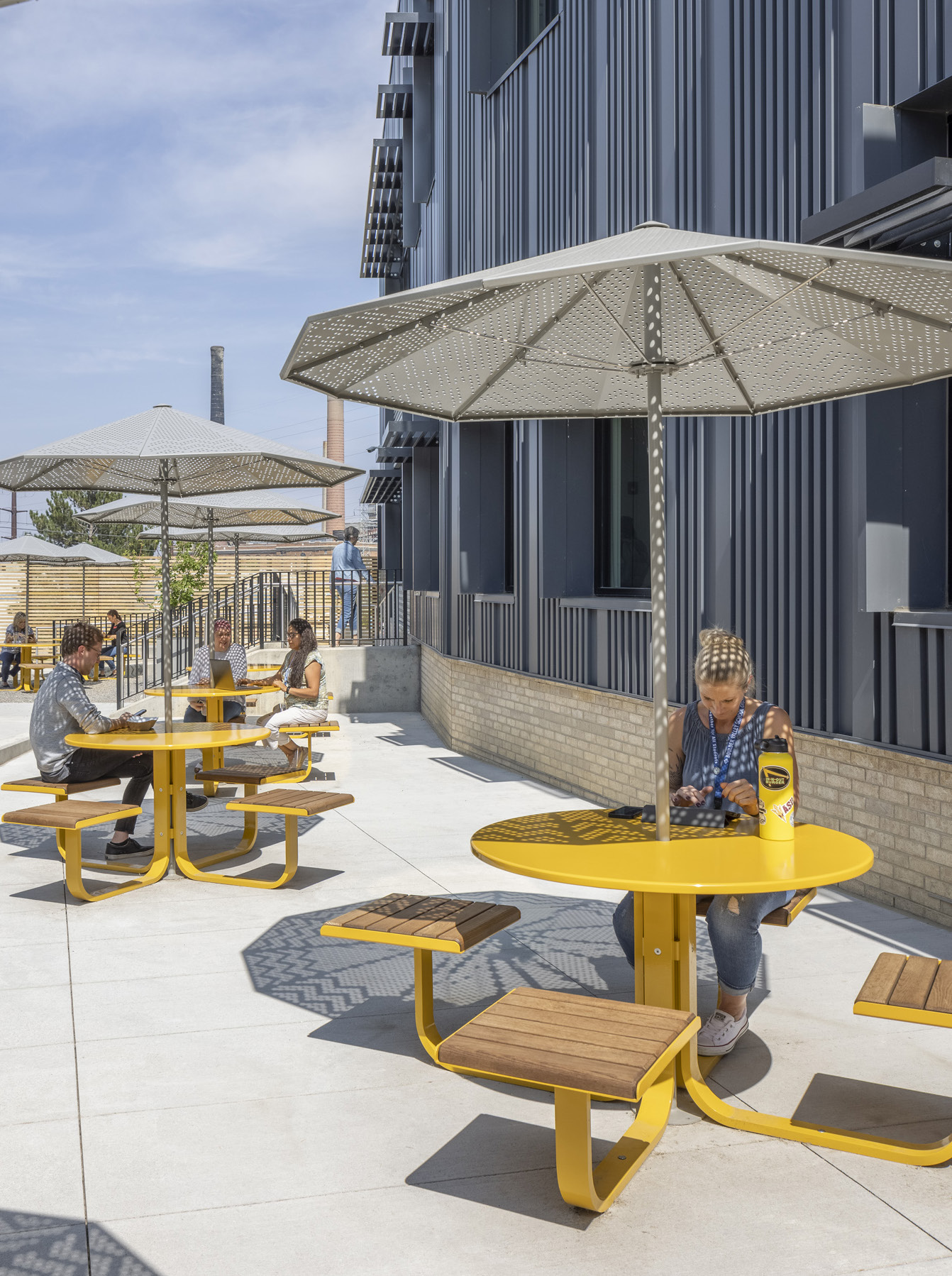
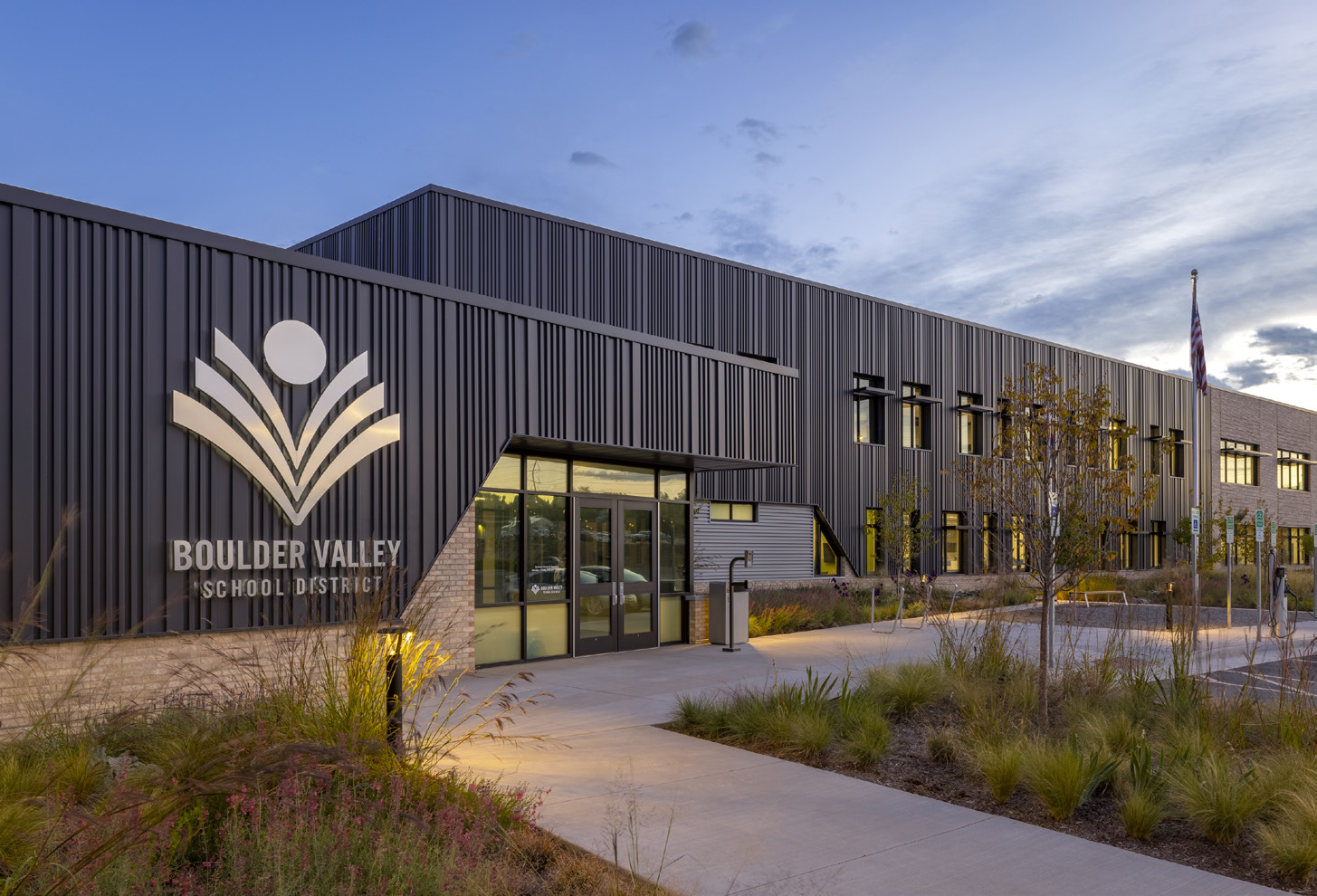
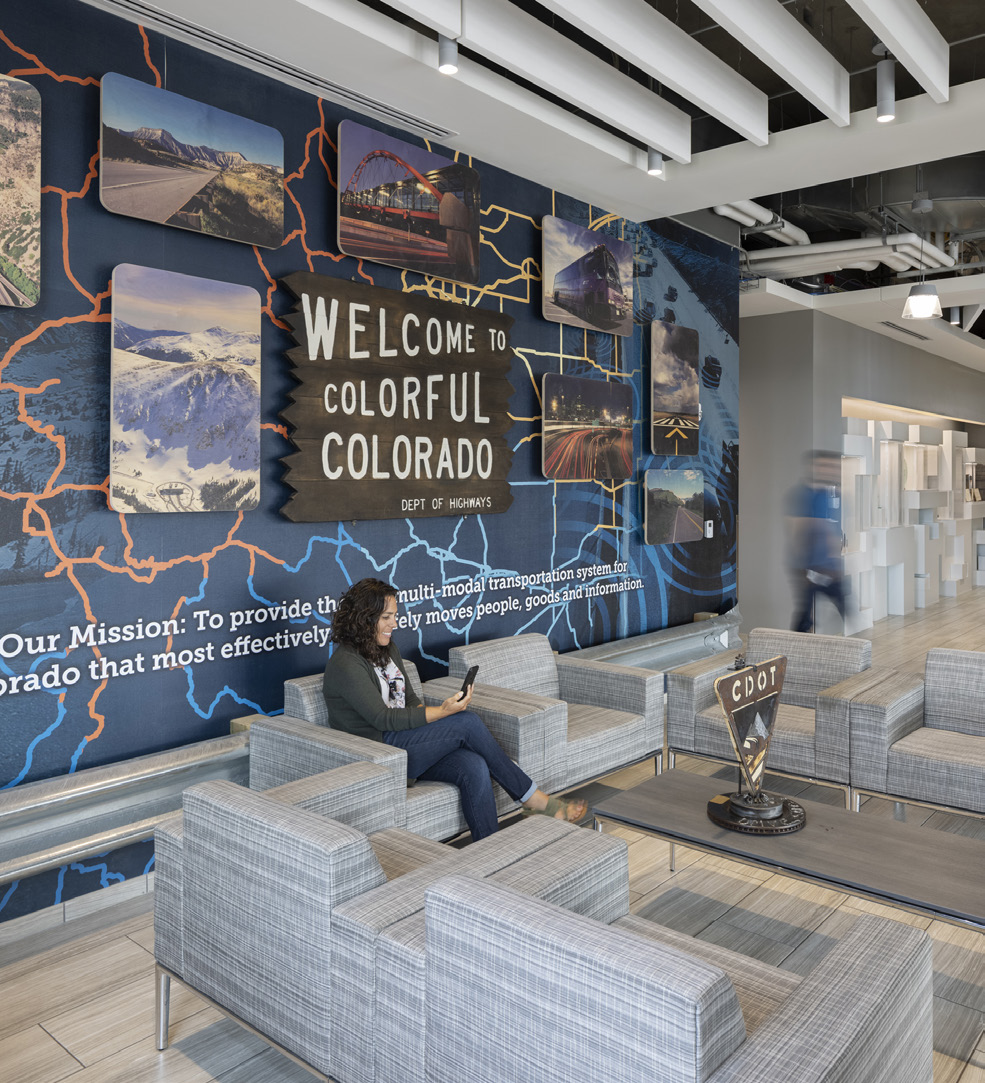

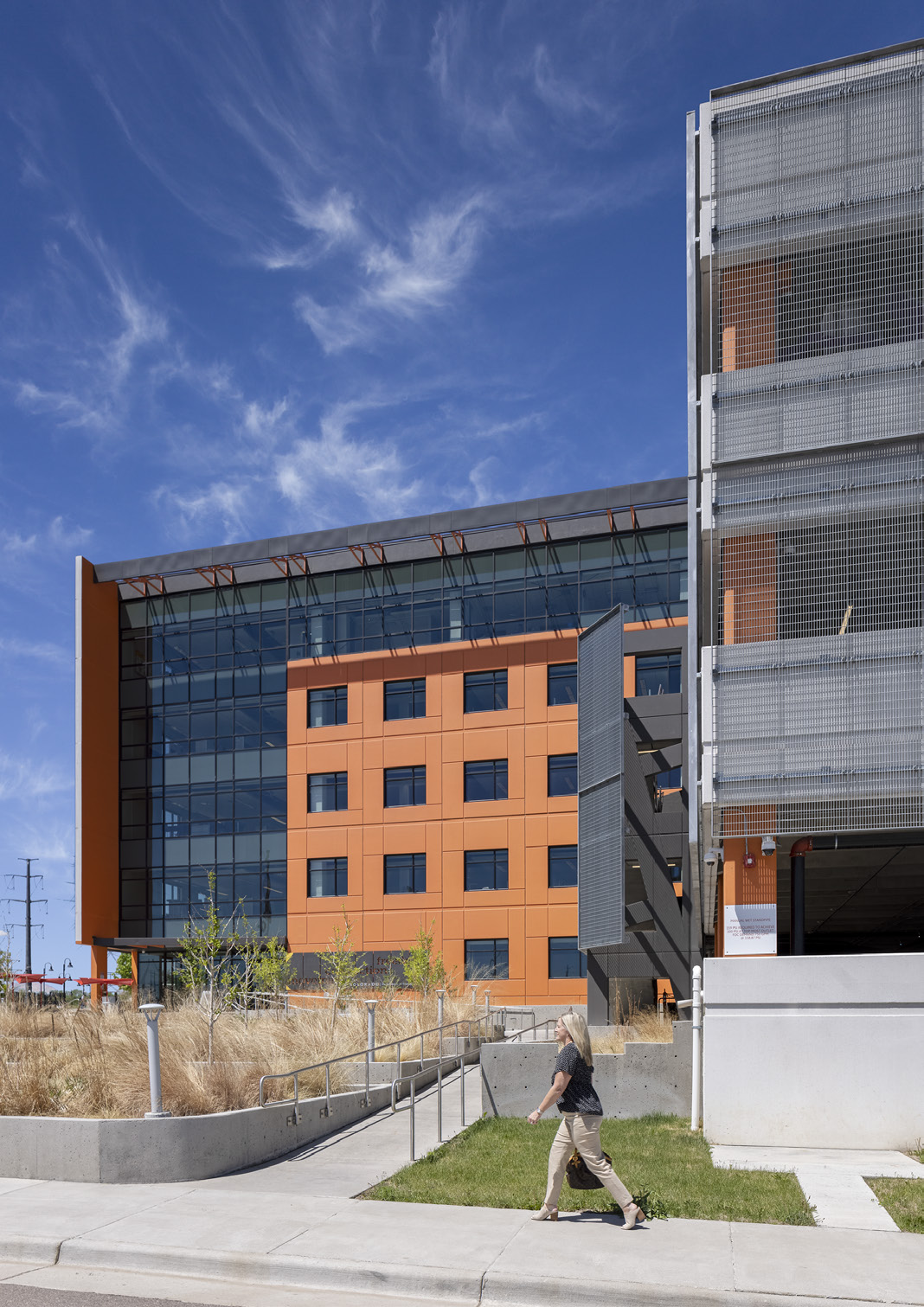
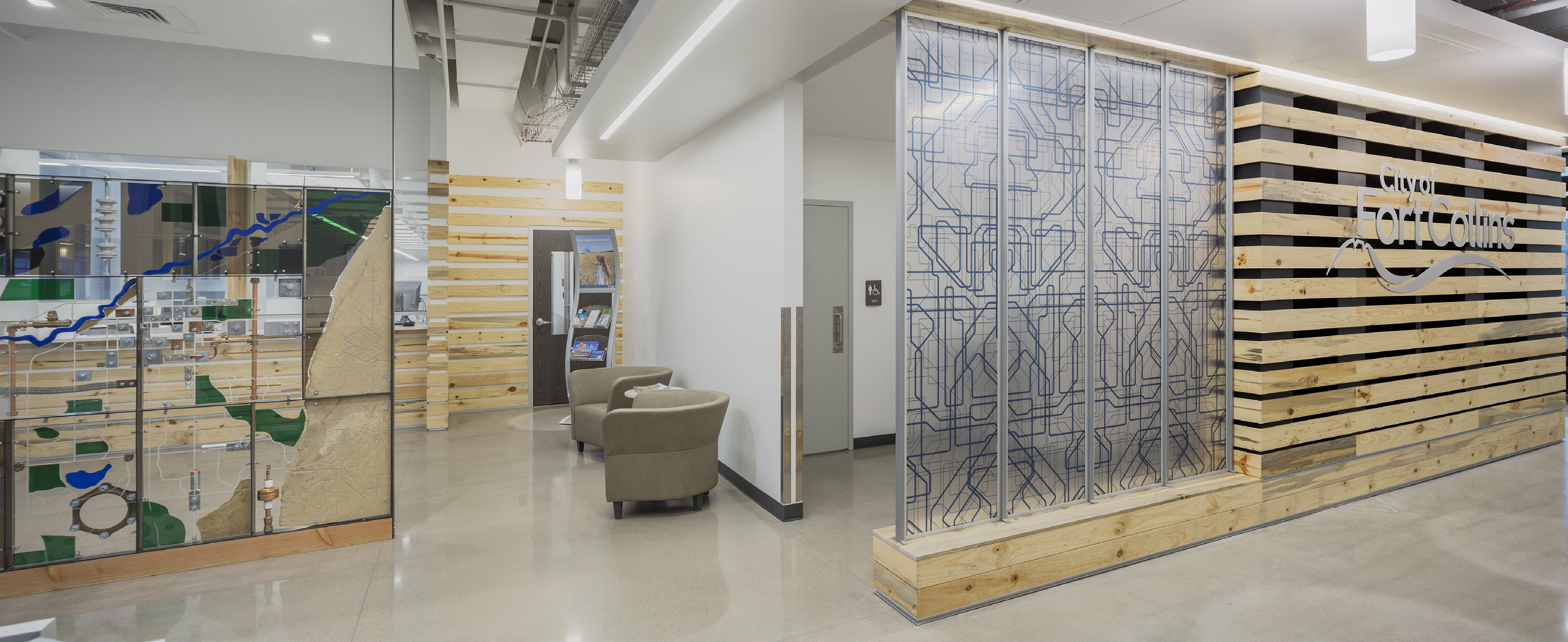
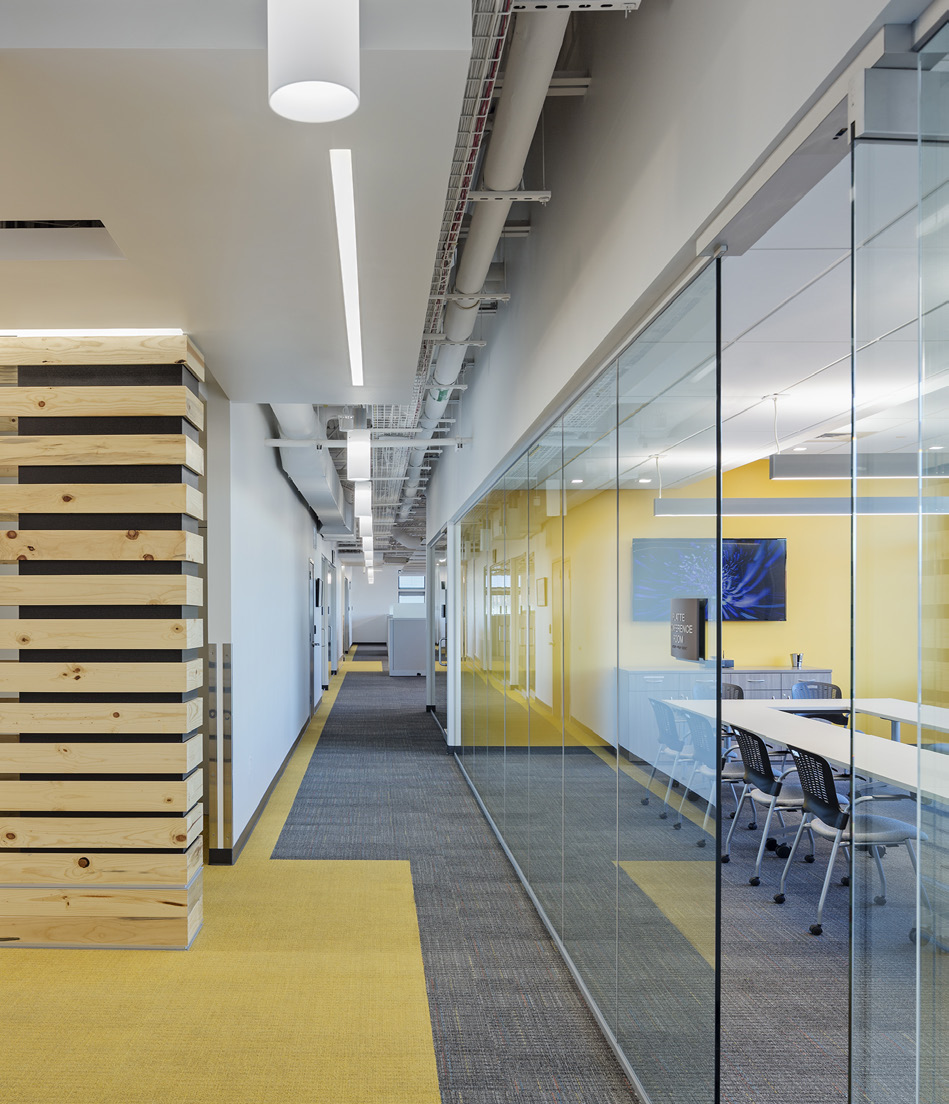
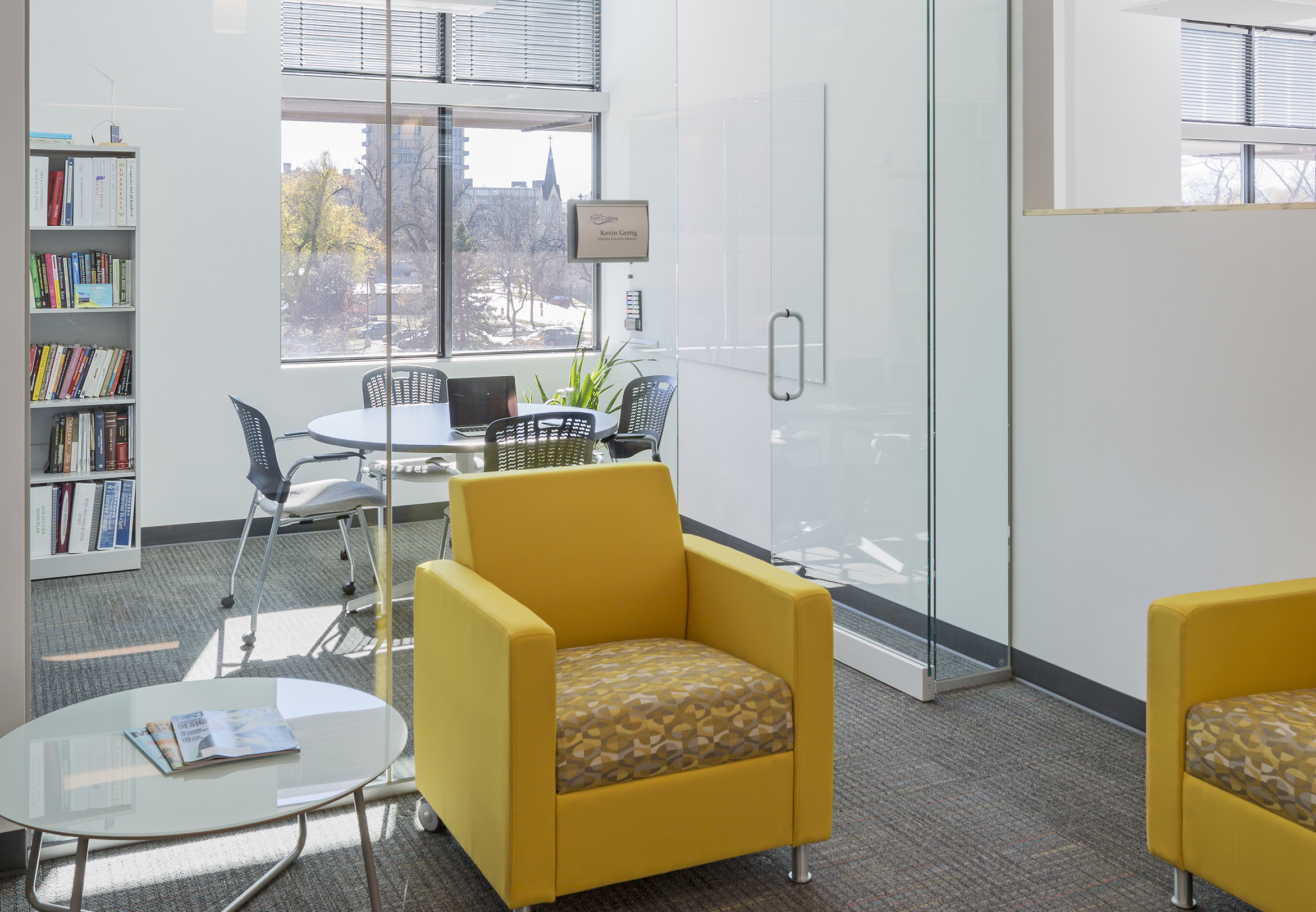
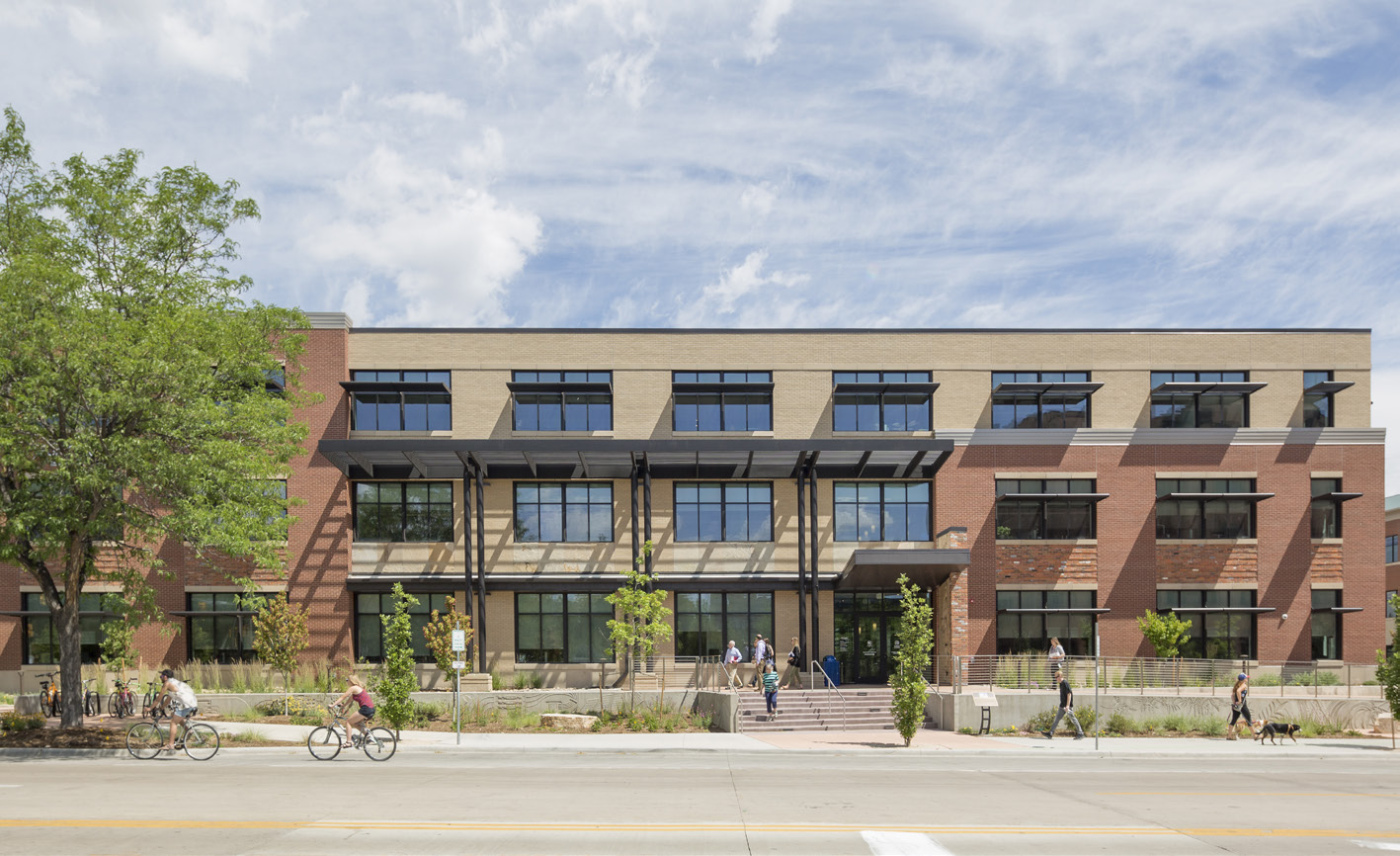

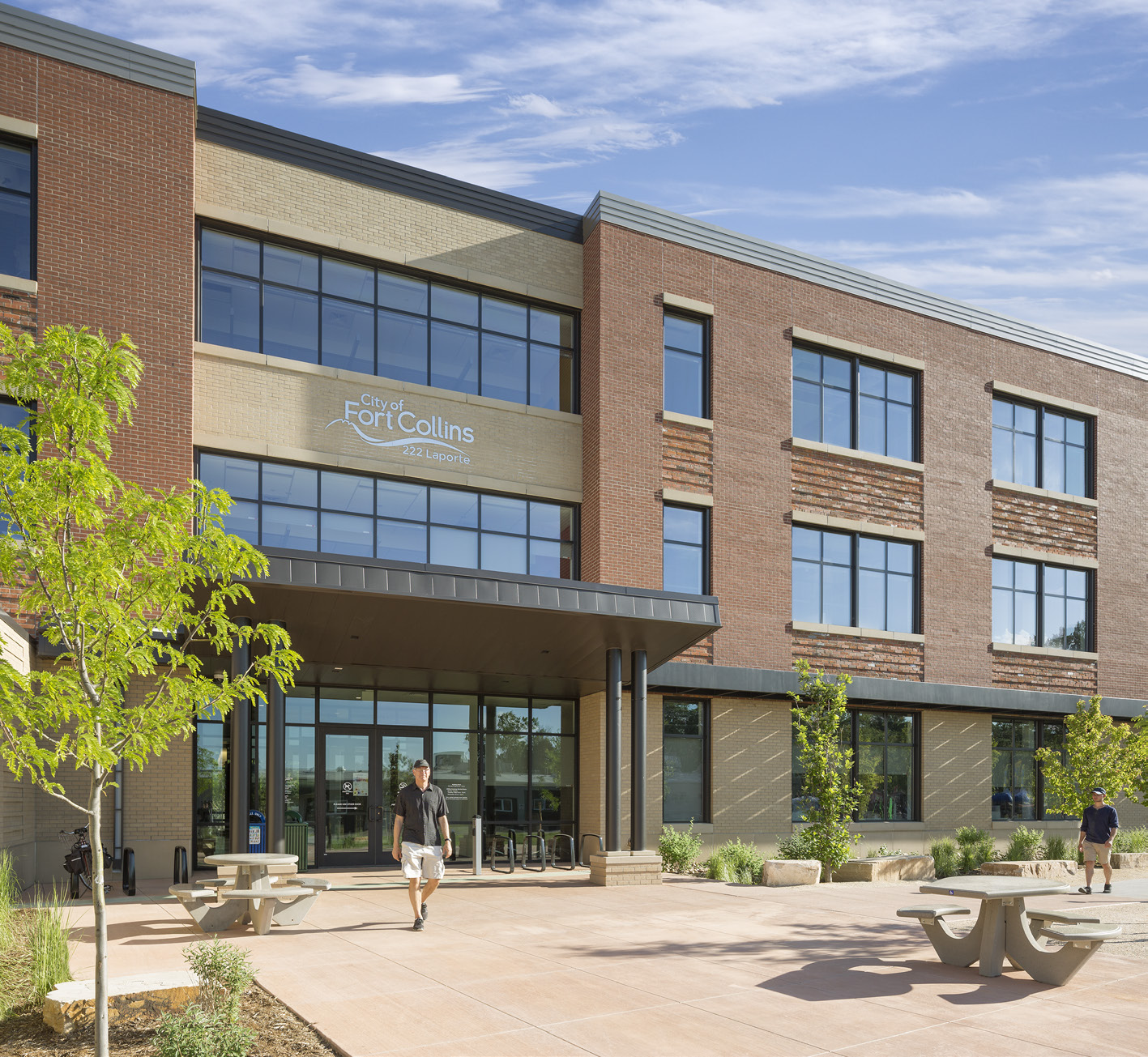
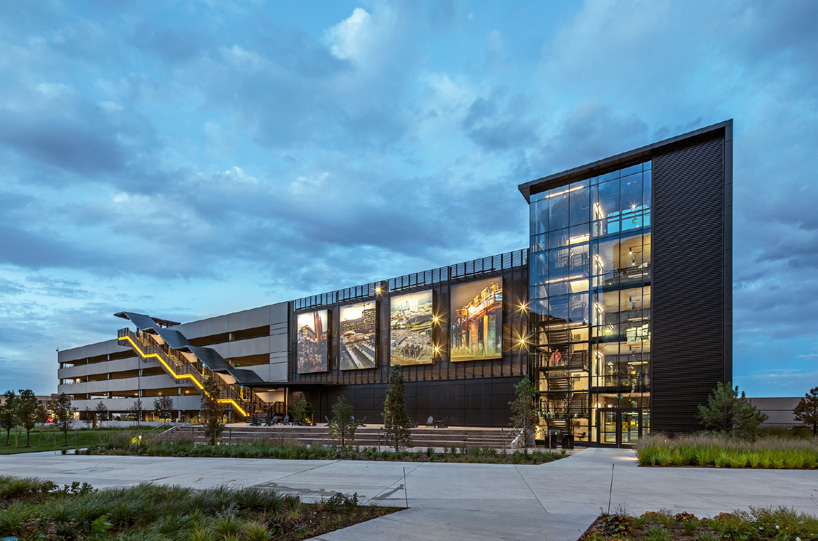
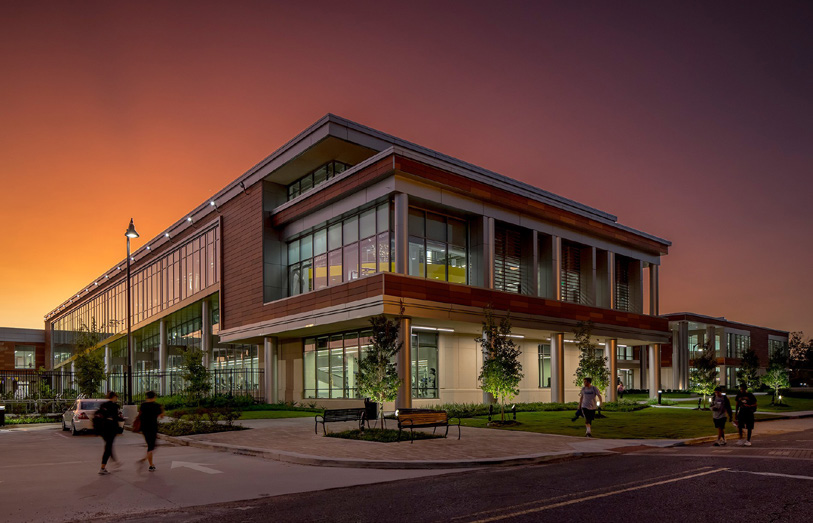
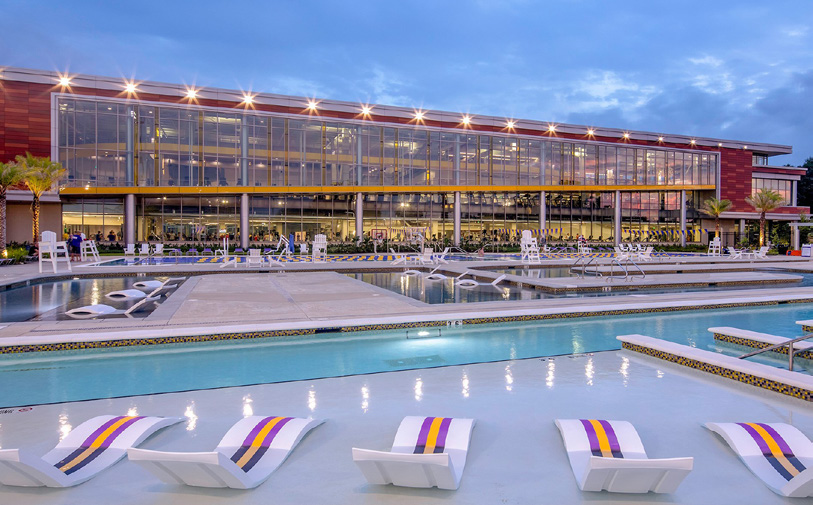
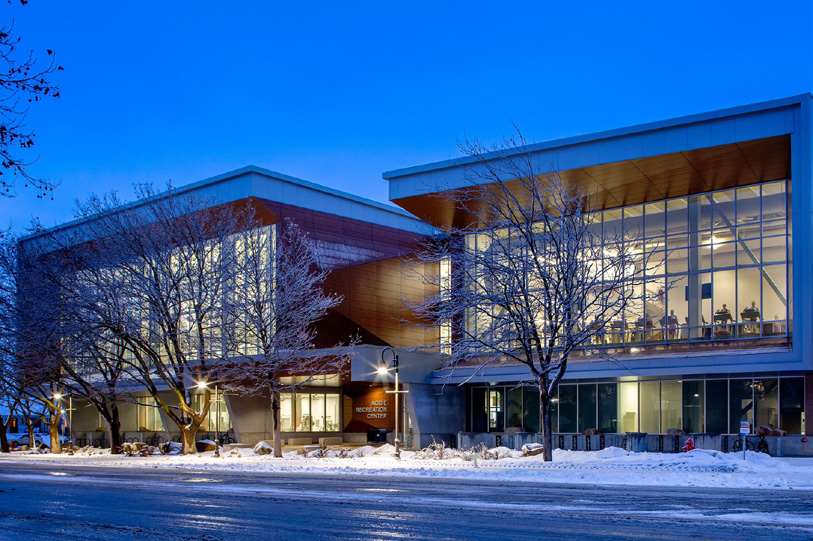

The annual AIA Colorado Awards honor the outstanding work of members and their firms, reinforce the value of great architecture, and highlight member contributions to positive change.
2026 Firm of the Year • HDR
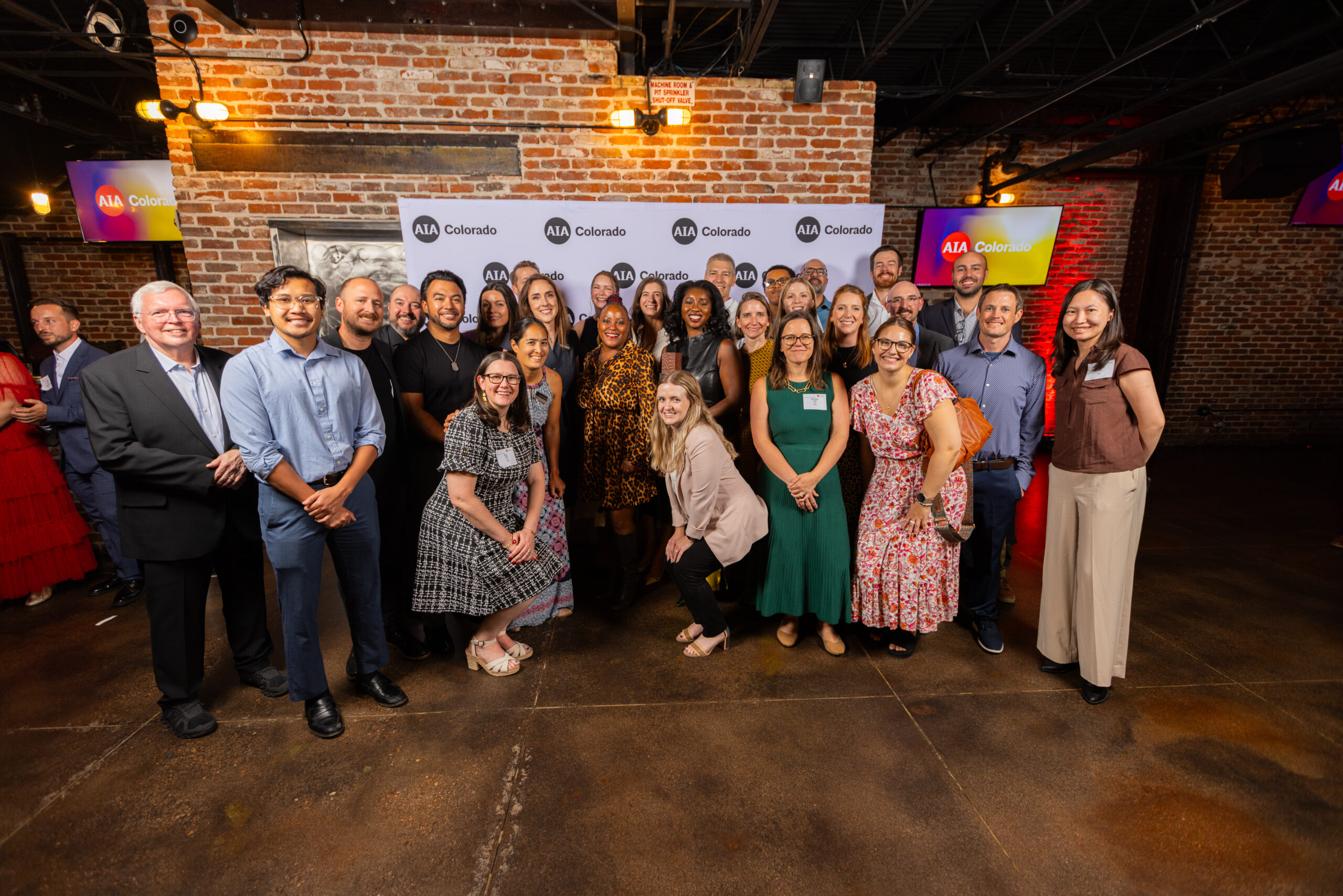
Congratulations to 2026 Firm of the Year
HDR
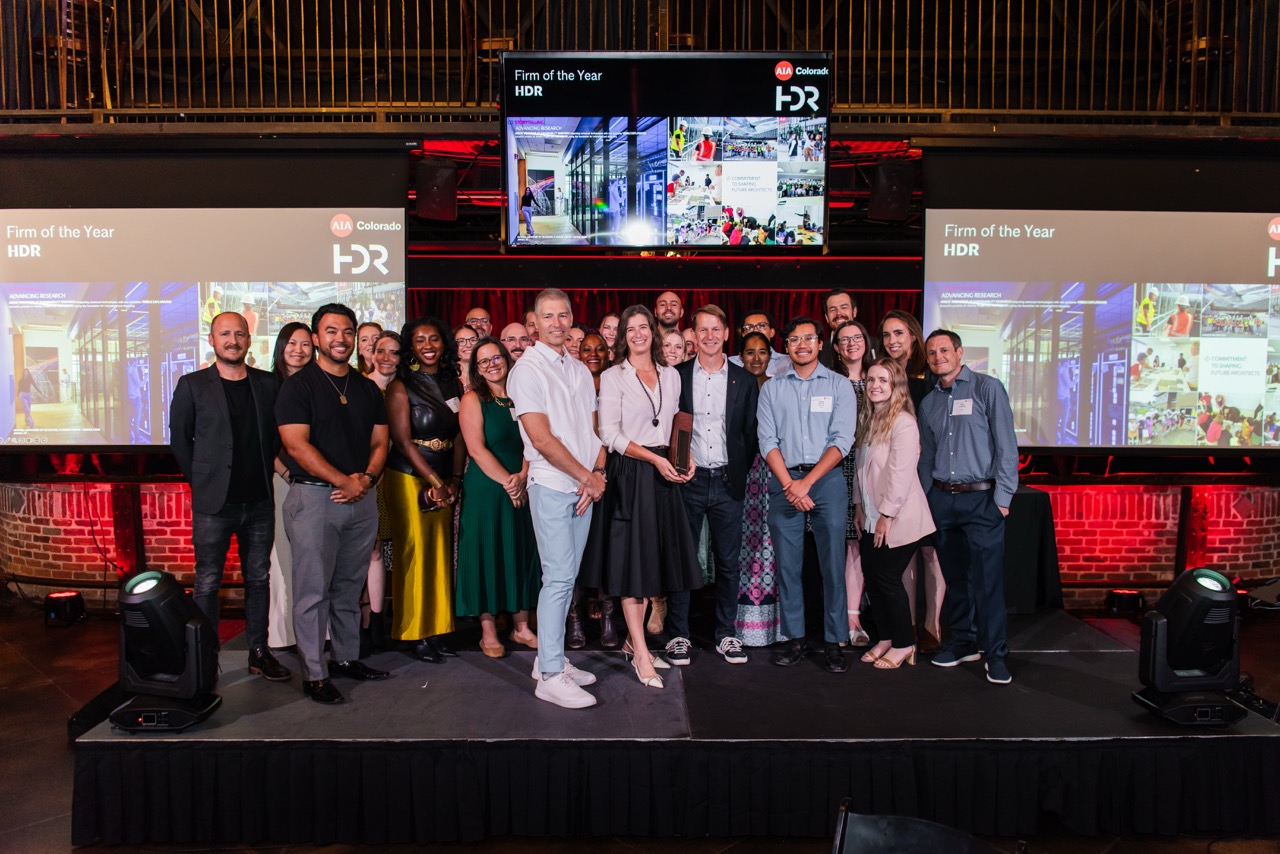
The Award
This award recognizes the outstanding achievement of a firm that has produced notable architecture for at least a decade. Award-winning firms have set an example both in design and leadership in the state. Criteria include an outstanding portfolio as a product of the firm’s collaborative environment. Through its work it has made a significant impact on its community and/or the architecture profession. Demonstrates a commitment to training future architects. Additionally, they exhibit a culture that embraces diversity and is widely known for the quality of its work, ability to work with clients and collaboration as a team by architects, designers, educators, and the public. They are known for the application of innovative technologies and/or progressive methodologies and developed works to achieve resilient and sustainable design goals.
Presented by Jim Childs, AIA
AVP – Project Director, HNTB
2026 AIA Colorado President-Elect
HDR
HDR demonstrates how a firm with global reach can remain genuinely invested in Colorado’s people, places, and professional community.
Across six Colorado offices, HDR pairs broad interdisciplinary expertise with a strong local presence. Its work supports communities through healthcare, research, civic, educational, transportation, and public-service projects, while its design culture emphasizes listening, collaboration, and respect for the people each project serves. The jury recognized a substantial body of high-quality work, a long-standing commitment to sustainable design, and an ability to bring national resources to distinctly local challenges.
Equally important is the firm HDR has built around that work. Its employee-owned model, mentorship culture, support for AIA participation, investment in emerging professionals, and commitment to inclusive practice create meaningful pathways for architects to grow and lead. By combining design excellence with professional development, community engagement, and future-focused practice, HDR sets a strong example for firms throughout Colorado.
The jury is proud to recognize HDR as the 2026 AIA Colorado Firm of the Year.
Congratulations!
Why the jury selected HDR
- Maintains a meaningful Colorado presence through six offices and decades of service in the state.
- Pairs local knowledge with integrated national and global expertise across architecture, engineering, planning, interiors, landscape architecture, and research.
- Demonstrates a broad, high-quality portfolio serving civic, healthcare, research, education, transportation, and community needs.
- Has pursued high-performance and sustainable design for decades and actively supports the AIA 2030 Commitment.
- Uses an employee-owned model that encourages shared responsibility, collaboration, and long-term investment in the firm.
- Supports AIA involvement by reimbursing membership dues and encouraging staff participation and leadership.
- Invests in mentorship, internships, education, and professional development for emerging architects.
- Builds multidisciplinary teams around each project while centering local context and stakeholder voices.
- Demonstrates community engagement, including pro bono support and partnerships grounded in lasting trust.
- Meets the award’s expectations for design quality, firm culture, sustainability, client service, and professional leadership.
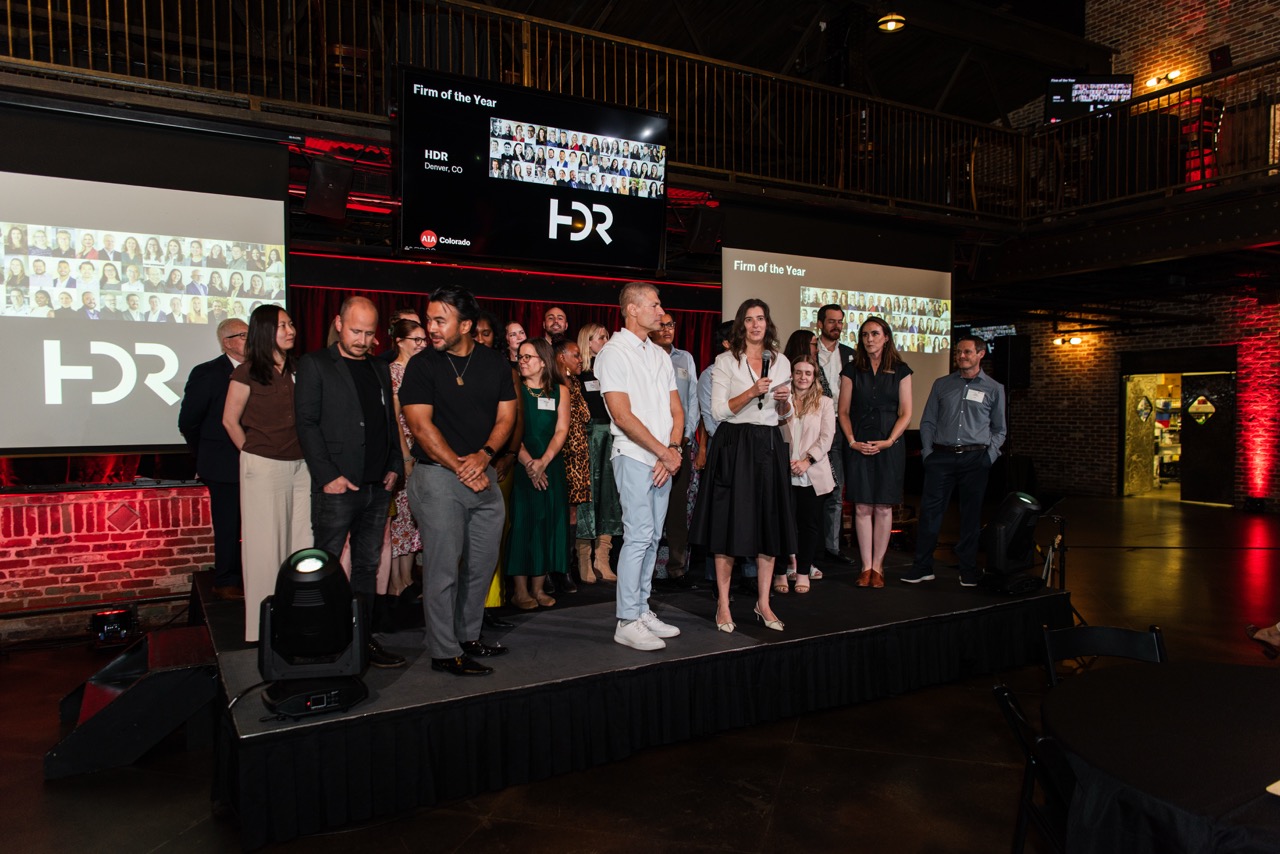
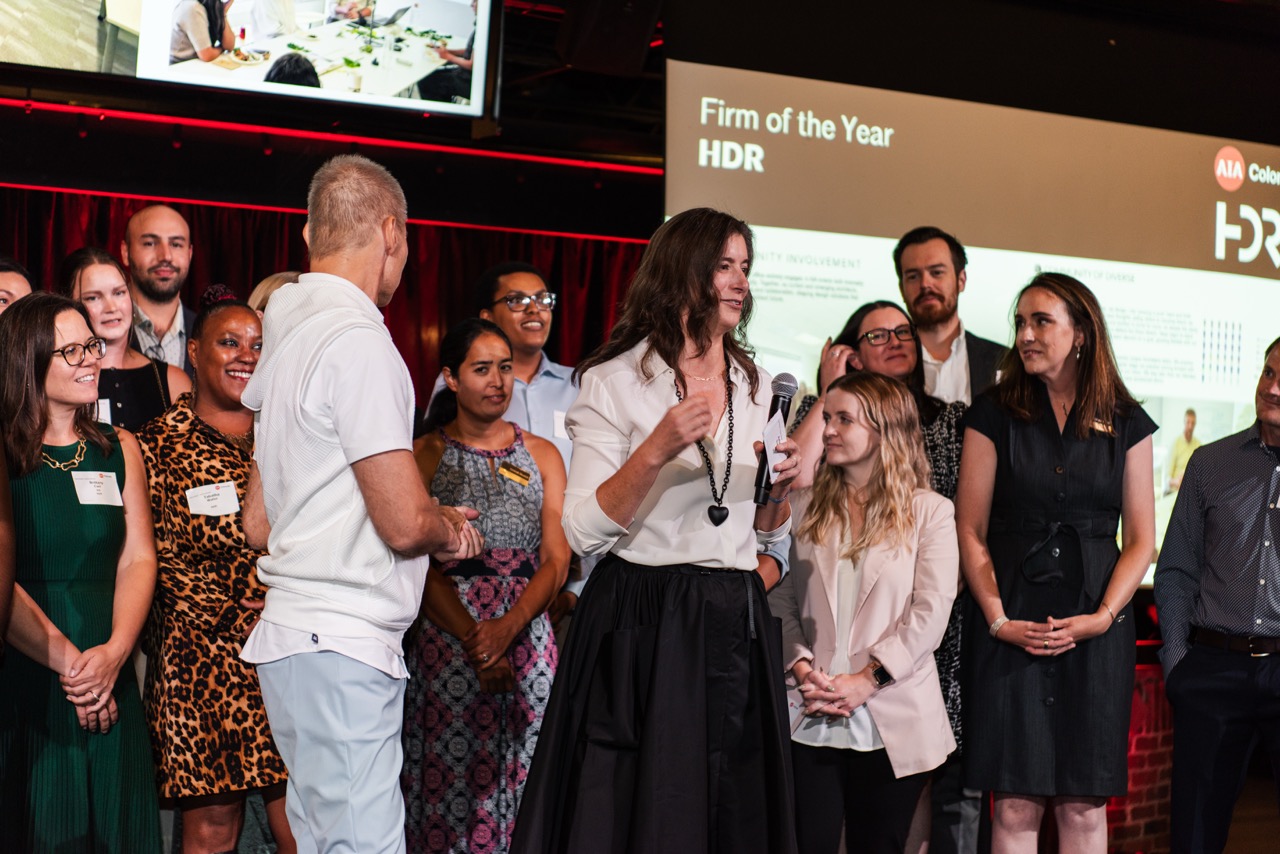
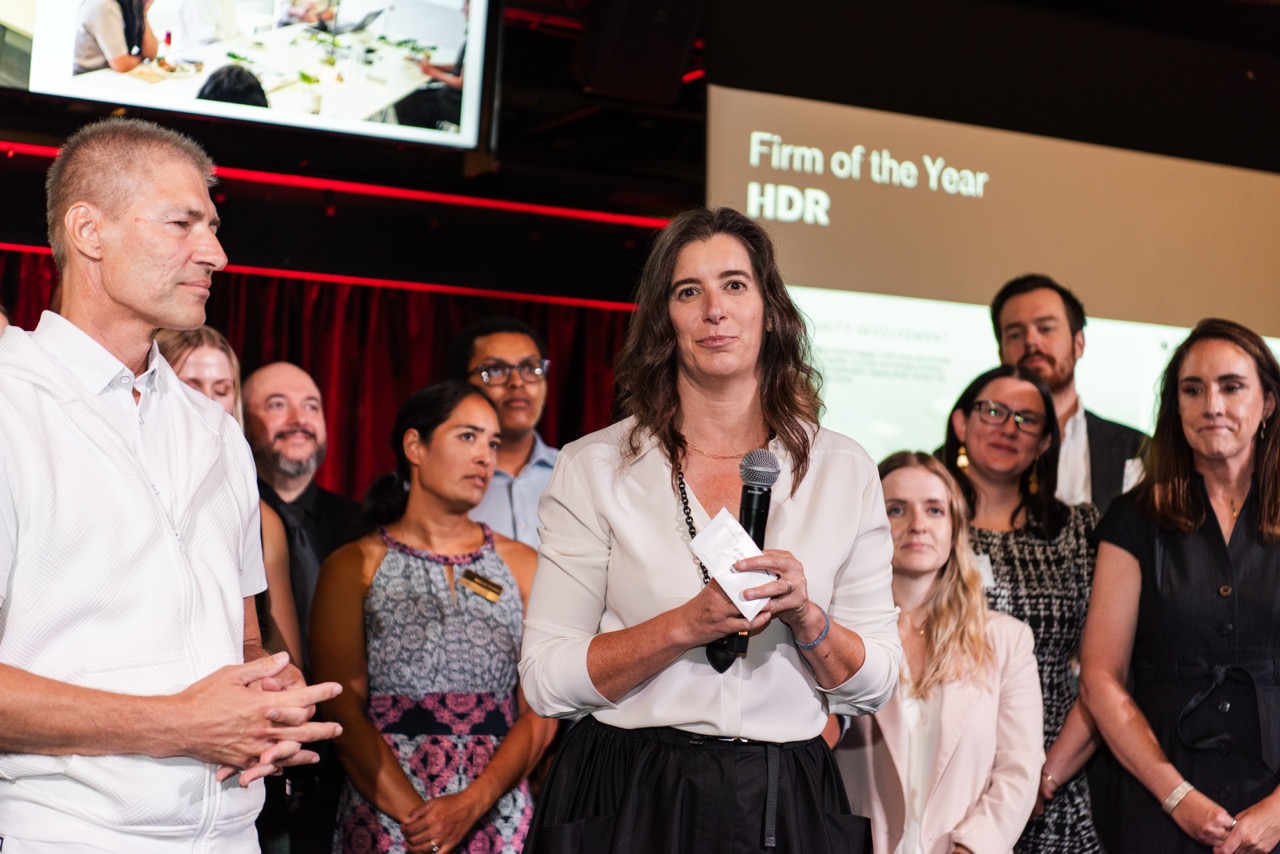
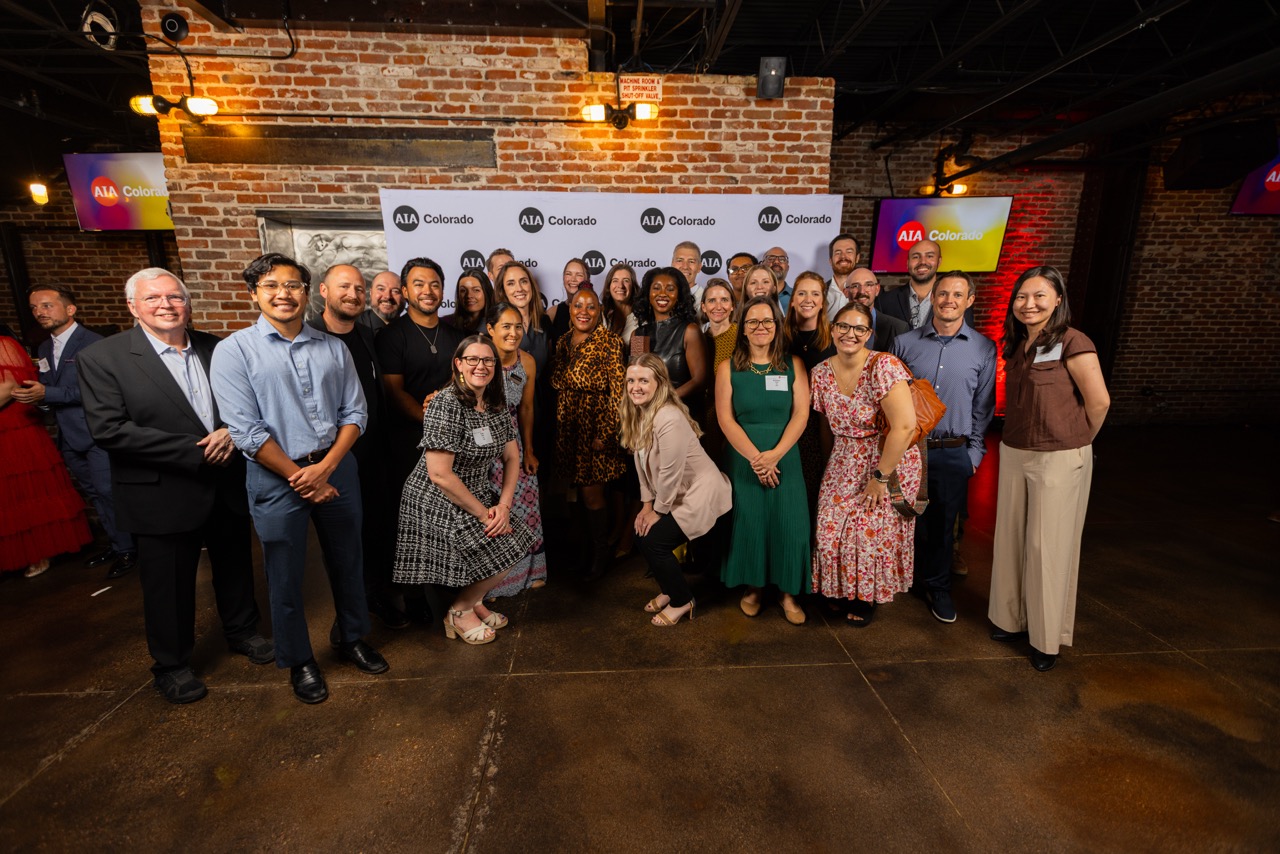
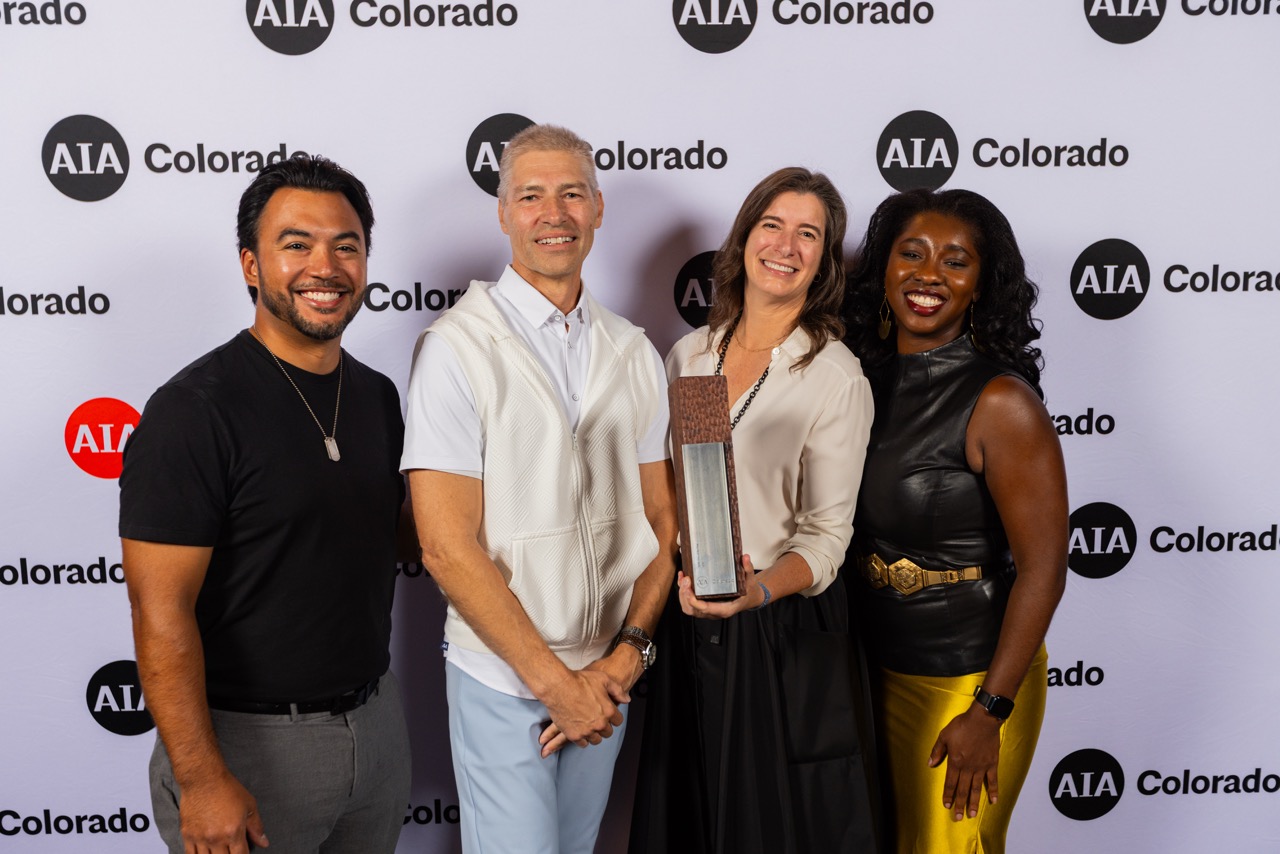

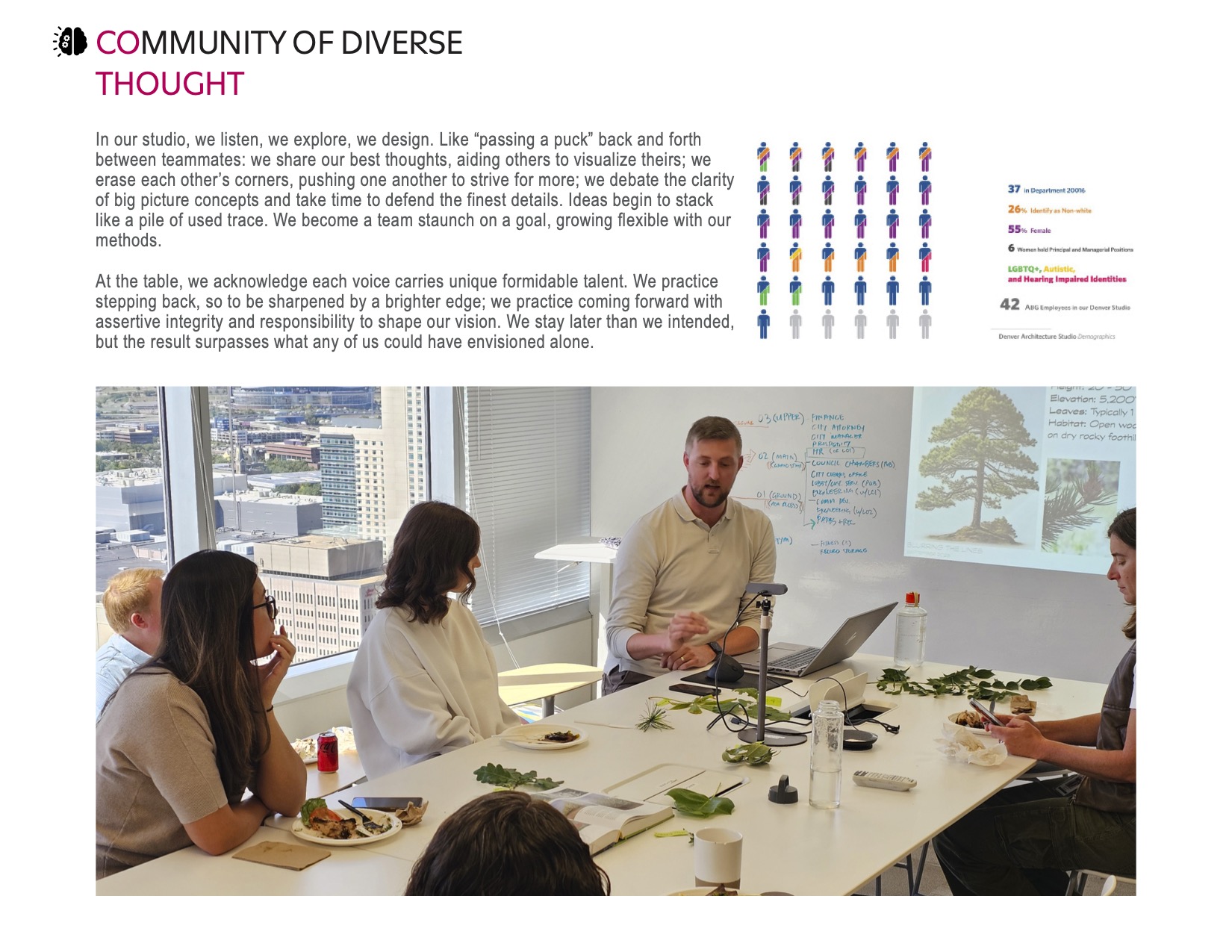
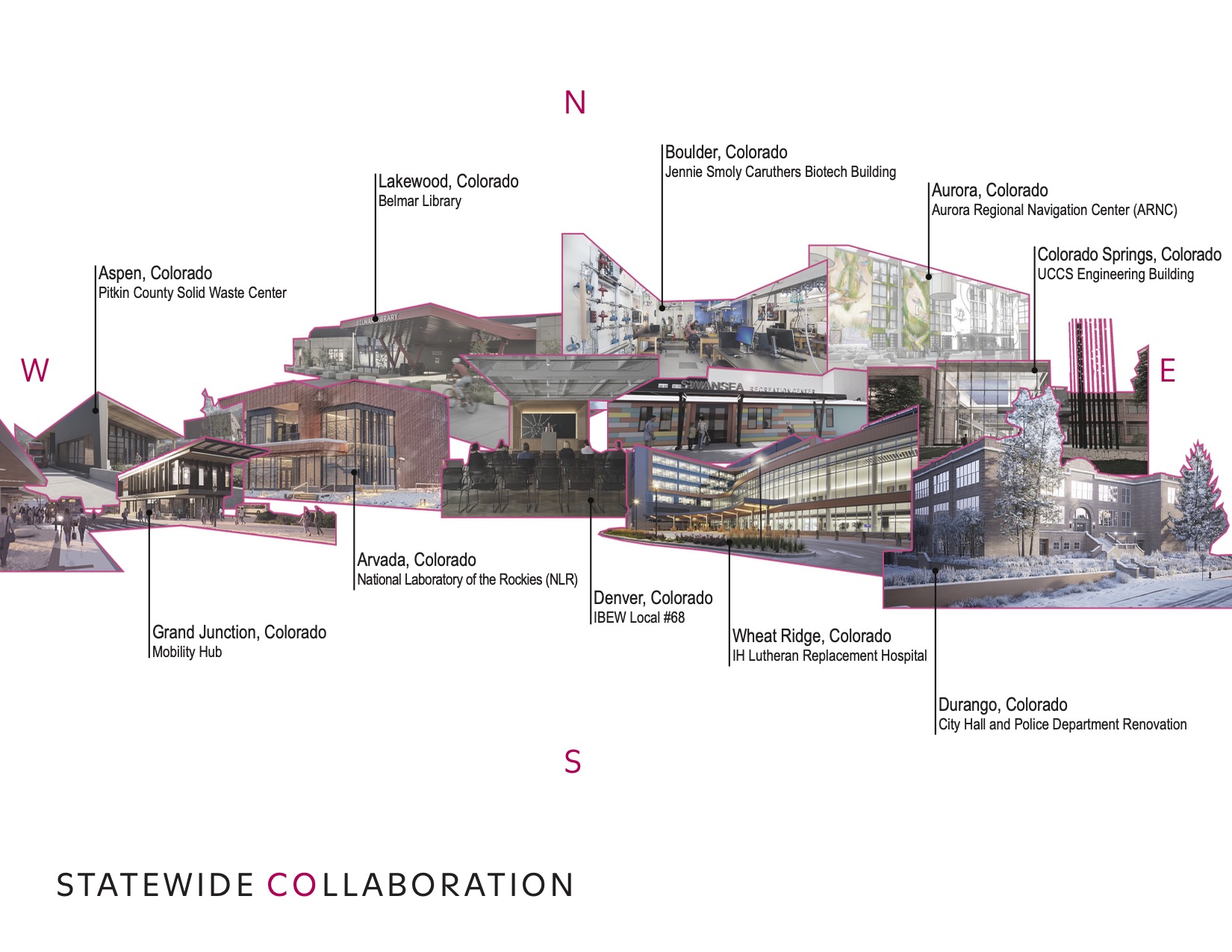


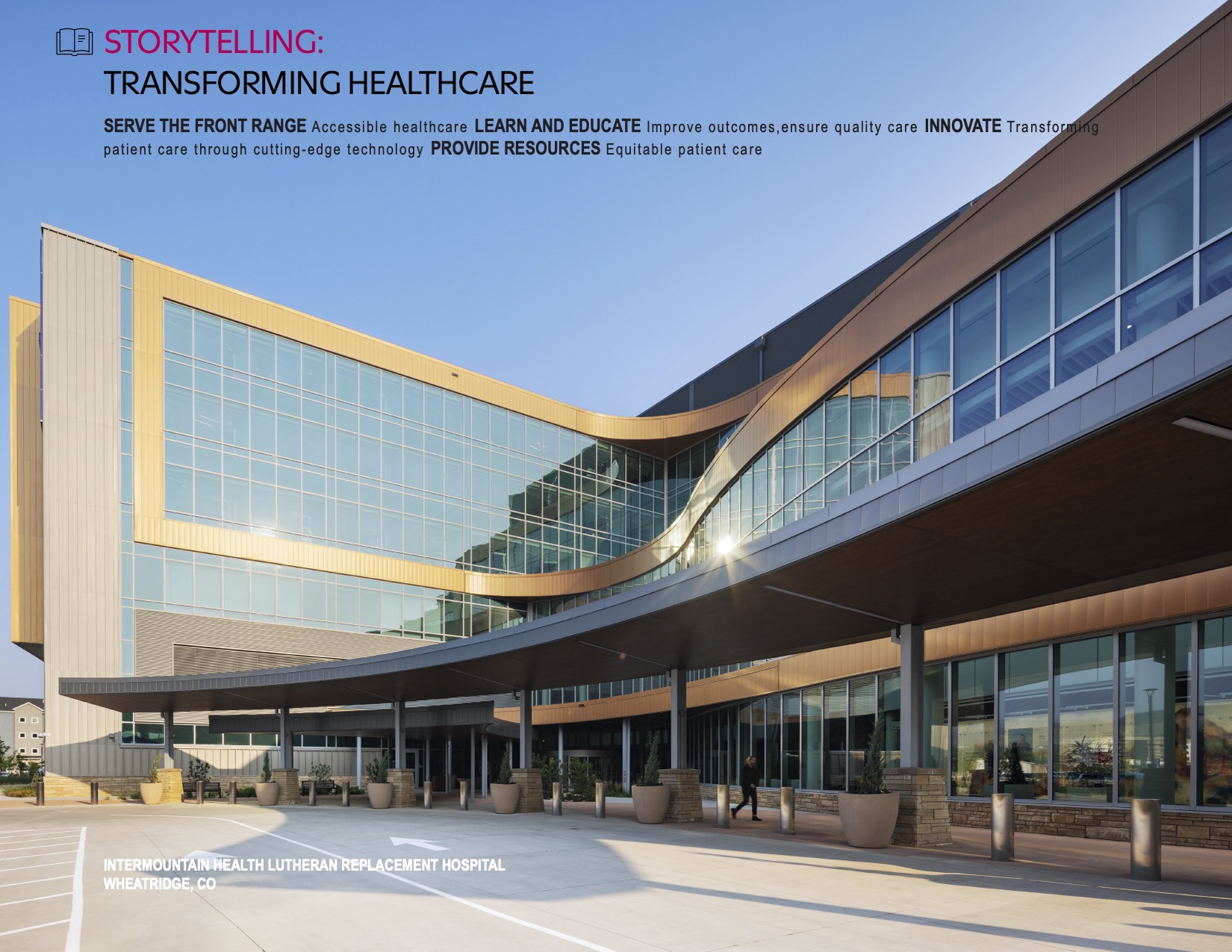


The annual AIA Colorado Awards honor the outstanding work of members and their firms, reinforce the value of great architecture, and highlight member contributions to positive change.