CKLDP 2025 Spring Recap


AIA Colorado’s Christopher Kelley Leadership Development Program provides participants the opportunity to form a cohort with other emerging professionals in the field of architecture (sixteen are selected each year from a group of well-qualified applicants), developing their skills on several focused topics in the once-a-month sessions throughout the year. The program honors Christopher Kelley’s legacy, an influential architect in the Washington D.C. community and an advocate for furthering the profession through mentorship. The program originated in Washington D.C., however local chapters now exist across the country, with additional chapters continuing to be established each year (Colorado’s first program year was 2017). 

The program is well underway in its ninth year, with Opening Ceremony, Sessions 1, 2, and 3 having occurred, where participants engaged in knowledge sharing from industry experts, team building and collaborative activities, and overall improving upon their professional skills. See below for a summary and highlights of the events thus far. 

Session 1

Management & Mentorship

SESSION DATE: 3/14/2025
LOCATION: McCarthy Building Companies
HOSTED BY: Noelle Wilhite, AIA & Lyris Sanchez
WRITE UP BY: Amanda Hansen, AIA & Jenni Lane

Presenters

Managing Interdisciplinary TeamsRick Sommerfeld, AIA, Architect, Associate Professor, and Directorof ColoradoBuildingWorkshop at the University of Colorado Denver

Leadership & Management Panel + Q&A. Panelists:

Mentorship + Support Challenge ExerciseIsiah Leyshon, CAGE Civil Engineering

OZ Architecture Mentorship ProgramKiley Baham, OZ Architecture

Session Description

Management and mentorship play crucial roles in the development of an emerging professional in order to gain awareness of the current state of the industry and guidance through project role advancement. Scholars engaged with professionals who work in the education, architecture, and consultant industries to gain their perspectives on managing interdisciplinary teams, firm sizes and management structures. Scholars learned about what makes a good mentor-mentee relationship, how to have difficult conversations, and how to be on track to becoming a successful leader.

Key Takeaways

  1. A successful mentor-mentee relationship relies on the proper balance of challenge and support.
  2. A good leader must prioritize RelationshipsCommunication, RespectPatienceInclusion, and Reflection.
  3. People come first. The power of a mentor relationship starts with understanding their why, and above all what truly works for them.
  4. Embarrassment is the cost of entry…to learn to grow and become the mentor, one must be willing to take the chance and make mistakes in order to get outside of your comfort zone and gain mastery and resilience.
  5. Give perspective, not advice, and meet disagreements with curiosity.

Session 2

Equity, Diversity, & Inclusion

SESSION DATE: 4/18/2025
LOCATION: TAXI Community, Flight Building
HOSTED BY: Gwendoline Albright Ndikumagenge, Assoc. AIA, & Monica Mong
RECAP BY: Noelle Wilhite, AIA, & Lyris Sanchez

Presenters

Design in Mind: Psychology for Neuroinclusive EnvironmentKati Peditto, PhD, EDAC, DLR Group

Cultural Proficiency in Times of Change: Strategies for LeadersPaola Baglietto, Inclusive Culture LLC

Energize Denver: Putting the Human Touch on Building DecarbonizationBerenice El Gharamti, CAS

Voices of Change: Shaping Equity, Diversity & Inclusion in Our Professions and our Communities Panelists:

Session Description

The Equity, Diversity, and Inclusion (EDI) session introduced three keynote speakers and a panel with four professionals within the architecture industry addressing a series of topics including unconscious bias in design, neuroinclusive design, strategies for fostering inclusive workplaces, and ensuring equitable hiring and leadership representation. Scholars learned how to include the minority voice with highly involved real-world case studies. Scholars gained an understanding on how to engage culturally sensitive topics with leadership and provide productive paths to move forward. Through this course scholars learned that community engagement can give a deeper understanding to different perspectives, privileges, and lifestyles that people identify with and perhaps apply these topics within design.

Key Takeaways

  1. Acknowledging that privilege is a special advantage within social classes.
  2. Empathy is the first step in putting yourself in other people’s shoes to understand their struggle and inform your leadership decision.
  3. Equity is how well your practices align with the reality of people’s lives, while it may seem unattainable, we can strive to improve social economic factors.
  4. Understanding bias contributes to “social norms” and how we constantly judge people and make decisions on them. This a?ects hiring practices and should educate those on bias.
  5. As a professional, be open to inviting leadership to co?ee for the opportunity to learn about each other and gain useful experiences if struggling with a problem.

Session 3

Community Engagement

SESSION DATE: 5/16/2025
LOCATION: Perkins&Will
HOSTED BY: Quinn McFadden & Zach Rowley
RECAP BY: Gwendoline Albright Ndikumagenge, Assoc. AIA & Monica Mong

Presenters

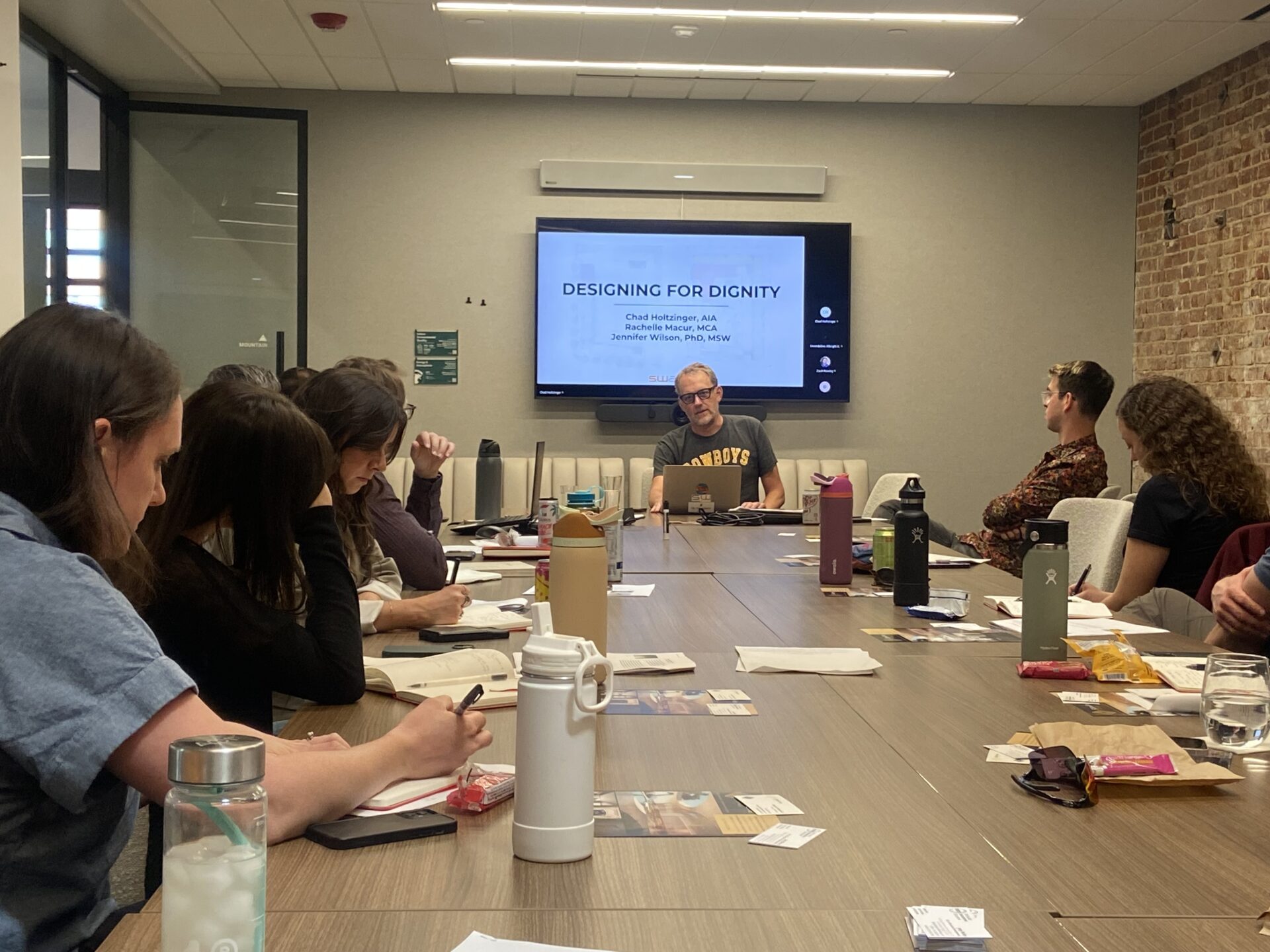
Community-Centered Design: Engaging Partnerships for Accessible Healthcare and Housing. Panelists:

Empowering Through Art: LCAC’s Mission of Culture and Community Engagement Alfredo Reyes, Executive Director, Latino Cultural Arts Center

Access to HousingChad Holtzinger, AIA, President, ShopWorks

Civic Leadership 101 – Plugging In & Standing OutAmy Tarczynski, Dr. of Civic Engagement & Development, Downtown Denver Partnership

Session Description

This session on Community Engagement offered scholars a rich and multi-dimensional look at how design, leadership, and civic participation intersect to support equitable, inclusive, and resilient communities. Through a panel discussion and individual speaker presentations, scholars explored the nuanced distinctions between placemaking and placekeeping, emphasizing the importance of designing with communities—not just for them. Case studies such as the Sun Valley redevelopment and 655 Broadway highlighted how collaboration between design professionals and local organizations can transform public housing, healthcare access, and wellness facilities.

From practical engagement strategies to a deeper understanding of community-rooted design, scholars left with actionable tools, a renewed sense of purpose, and an invitation to action. The session reminded all attendees that effective leadership begins with listening, showing up, and building spaces that reflect the needs, values, and pride of the communities they serve.

Key Takeaways

© AIA Colorado 2026
Skip to content