Imperative Deep Dive: Equity, Diversity, and Inclusion

Ask an Architect: Career Hour with AIA Colorado

Ask an Architect
Career Hour via Zoom
Friday, October 16 | Noon-1 p.m.
Free with Registration Below

gravityform id=”79″ title=”false” description=”true”

Resources on Race: September 16 Edition

The Equity, Diversity, and Inclusiveness Committee is bringing to you a new biweekly series on racial equity in architecture. From podcasts to film to Instagram accounts worth following, we’re rounding up the best in relevant resources to keep working toward a more equitable profession.

TO READ

Design for Healing, Dignity & Joy

Research done by Shopworks, Group 14 Engineering, and the University of Denver Center for Housing and Homelessness Research on trauma-informed design to guide an approach to promoting physical health, mental health, and wellbeing.

TO LISTEN

ARCHITECT: No Judgment Here: Starting the EDI Conversation

Questioning the need for equity, diversity, and inclusion initiatives should not spark controversy or guilt, says Samantha McCloud, director of community involvement, diversity & inclusion at GastingerWalker& in this podcast episode.

TO FOLLOW

@Counter_Canon

Instagram feed that is working to “reshape the boundaries of our collective architectural memory.” Nominations welcome and there is a survey on the feed on who you think should be included in the canon.

TO MAKE YOU THINK

NCARB by the Numbers

NCARB has been releasing this data publication since 2012. This year’s NCARB by the Numbers includes breakdowns of race and gender representation and in addition, includes a preview of results from a survey conducted with NOMA on equity, diversity and inclusion.

TO-DO

Register to Vote

If you are not already registered to vote, don’t miss the deadline!

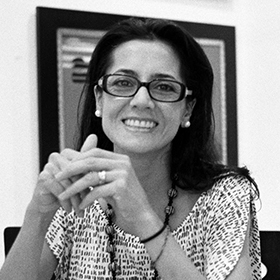
Equity in Architecture: A Frank Conversation with Annicia Streete

Annicia Streete

“Every generation has a responsibility to the next generation—and accountability to the previous.”

By Amy Dvorak, Assoc. AIA

Annicia Streete is an architecture and construction practitioner at Catena Construction and Sprocket Design+Planning. She’s an adjunct faculty member of the College of Architecture and Planning at the University of Colorado, serves as a faculty advisor for the American Institute of Architecture Students, served in the ACE Mentorship Program, and is on the founding team of the Colorado Chapter of the National Organization of Minority Architects. She’s also a Black immigrant.

With statistical odds against her—there are just 17 registered Black architects in the state of Colorado—Streete emigrated from Trinidad and Tobago in 1998 to pursue her education and career in architecture. And she’s done quite well. She remains committed to improvement and enhancement through education and opportunity, as demonstrated through her service in the ACE Mentorship Program and her recent participation as a panelist for the AIA Colorado event, “Let’s Talk About Race.” 


Afterwards, we caught up with Streete to discuss ways to achieve a more equitable profession. Read on as she dives deep on representation in architecture, accountability, and the racism that still exists in our state today. 


Representation in architecture: Why is it so important? 

Michelle Obama gave a quote at the AIA Conference in Architecture in 2017: “You can’t be an architect if you don’t know architects exist.” For me, that is so specific in what the intent is there. How would we know what we can be if we don’t have an example? 


In Trinidad and Tobago, there were no female architects designers—no influence for me, mostly men. My father was in construction, and my uncle was in engineering. Particularly looking at younger generations, those are formative years to anyone who’s been where you want to be to figure out how to get there. 
 

How has the architecture profession built roadblocks to participation for people of color? 

When I think about pursuing basic opportunities when first starting my journey into the profession, for me I always have a student’s perspective. Even before higher ed, giving students in communities with lesser access to resources that might exclude them is a hindrance and it trickles all the way up to the profession. I say that because the profession has resources to reach communities. If we expect the profession to be fed by communities, we must nurture communities. 


Some other things that have been noted is that licensing—being able to do that in a timely manner, access to study materials, cost of licensure—it’s a hindrance to some. When some get into the practice world, they’re not making enough to even cover normal or daily expenses. Compensation rates when I first entered the field didn’t seem at all commensurate after doing due diligence toward a degree. 
 

What needs to change in the architecture profession to better combat systemic racism?

It should be cyclical. What as a profession can we give into the community so that they’re nurtured, so the product—the students—can be fed back into the profession? It’s extending resources at the community level, making sure there’s adequate mentorship and scholarships for upcoming practitioners and designers. 


The thing not so tangible is the relationships, especially for minorities in the field, so that they have an equitable position in the practice. One of my mentors said, “We’re in the business of architecture, construction, or design. But we’re basic human beings, so we have to be able to relate on a human standard with each other.” It’s not always business as usual.
 

Why is it that we’re so uncomfortable talking about race?

A lot is systemic. Usually when I hear words like systemic racism—and now more frequently—I try to stay rooted in what the words actually mean. There is a system put in place that people have been taught to treat another race differently. Some don’t know how to engage or interact with another race. When that’s been engrained, how would you expect someone to engage on a basic human level if you haven’t been taught that? 


There’s not so much of a willingness to understand another perspective or culture, so the instinct is to shy away versus engage. Some people don’t want to go there. There are three different types of people: Some see themselves as allies. Some see themselves as racist, some as non-racist. And many people are non-racist but don’t have the courage to speak up. You have these systemic factors and some are more personal in how they engage with other people.
 

What opportunities do you see for those who want to create change but aren’t in leadership positions?

Start by adopting activities of not just mentorship but empowerment. You can be mentored in a firm, but the next step is empowerment. Give opportunity for those you mentor to exercise their skills, and there needs to be accountability with that, where you don’t leave someone out to dry. 


I had a good mentor on a well-known project in Denver. During a client meeting, he was tired from talking and he asked me to run the next part of the meeting. I was an intern. He empowered me. By the time I was done with the meeting, I felt proud and accomplished. Just one experience changed the whole outlook on empowerment. 


You have to recognize that you’ve been given a platform and opportunity to make way in  industry, and that has to be redeposited into the industry. If we’re talking about equity, everyone deserves the opportunity to have knowledge passed on. 
 

A lot of pressure has unfairly been put on BIPOC to create the necessary change. Whose duty is it to make firms more equitable?

All of us—but not all of us have the same opportunities or the same platforms. 


It should come from a position of conscience, from responsibility, to see your fellow designer succeed so the entire field can succeed. When someone is oppressed for so long, fighting and fighting for so long, chances are you want people who have been oppressing to take some action and responsibility. 


Part of the exhaustion comes into play. When being an ally and approaching someone to see how they’re doing, making sure you’re being aware, you might not get the response you think you’d get. You can’t take it personally. There’s so much you might not know about what that person has been through and is different in how everyone handles certain levels of pressure. 
The word that keeps coming to me: needed. 
 

In response to the panel discussion—a prompt for the architecture community to have a conversation on racial inequities—someone commented, “Too late. Action is what’s next.” How do you respond to that? 

Any discussion is always good as a way to make sure you’re putting out the right messages and being heard. I partly agree; action is what is needed. When you think about the amount of years of oppression, we’ve been talking. When I think about people who are not aware, I always give people the benefit of the doubt. That’s my approach as a human being. If you show me respect, expect to get that. People who are unaware, we have to educate and inform. So the discussions become a starting point that should have happened and been acted on years ago. But as a catalyst, let it work as a catalyst, not as an escape that might be used. 


When we think of where we are as a society, we’re late. We’re a few hundred years late. And while it’s never too late to do anything I believe, you have to back it up with action, you have to acknowledge that you’re late. Nothing wrong with acknowledging it using words like listen and engage. 


If your intentions are sincere from the beginning, even if you don’t know what the next step is, you need to understand there is action that can come behind your fence. It’s not that everyone is taking the same action or the same scale of action, whether donating or skills-related or protesting and being present, there are different scales of support to be lent, but to me it’s the core of your intentions. 


I want everyone to be aware. If you realize that this is an ever present battle and stigma. Just because it’s not on news, that doesn’t mean it’s not history. People need to understand that this is an ever present issue. That’s why it’s systemic. It’s been 400 years, 500 years, and still today in modern times, we are still faced with the issue. This isn’t just going to go away. 
 

What concerns you for the future of the profession? 

I had a run-in with a white gentleman who took something away from me. He used the N-word and said, “Trump is gonna get all you out of this country.” I was getting gas in Capitol Hill. He grabbed the hose from me and just went off—in my own neighborhood. Here I thought I had security. This happened first thing in the morning on my way to work. I thought, I have to stand up to this. I spoke intelligently, said what I didn’t appreciate, and asked what examples he was setting for the kids he had in his car. I’m not even safe in my own domain, my own neighborhood, place of work. Then I got to thinking about my family, my students, my black colleagues—are they experiencing the same treatment? 


It’s hard to shut down my brain at night. I try not to live with too much fear. Scriptures are something I really hold onto. One speaks about fear and not letting it take over, but overcoming fear. That helps me calm the mind and think about possibilities.


I think about those kids, sitting there, hearing that. They absorb everything. That’s systemic.


It’s a loaded general concern for loved ones, for friends and family, how they’re going to not just move forward, but also how they may thrive in society as it is right now. 
 

What else do you want those in the profession to know?

We need to just love and understand each other and treat each other for basic human respect. Take steps that promote each other in being able to succeed. Some firms need to have training on diversity on how to be able to do that. And people need to show up. By your actions, we can tell. If your actions don’t align, then I can’t see you in a certain light that you’re an ally or committed to seeing change. 


If you’re white, and you’re seeing these stories on the news, don’t be in such a position of opposition just because it’s being publicized. I see some very non-understanding responses, and it’s unfortunate and unfair, and some of it is disgusting. If I asked you to put the same scenario on yourself, you’d want me to be understanding. 
Every generation has a responsibility to the next generation—and accountability to the previous. 

On Architecture and Representation

One perhaps small symptom of the pervasive and systemic racism people are now protesting in the wake of George Floyd’s murder is something most architects experience every day they show up to their office, at least pre-pandemic. That is the conspicuous lack of peers of color, particularly black and indigenous (including indigenous Latinx) peers, known by the acronym BIPOC (black and indigenous people of color).

The dramatic underrepresentation of architects like myself—I’m a biracial African American—is certainly not as urgent a problem as police killings of unarmed black people. However, our profession’s lack of racial inclusivity—however unplanned—is not inconsequential. It is a cog in the larger machine of social injustice that makes police brutality such a common occurrence.


Let me start with a few numbers*:

  • Hispanic/Latino population in Colorado: 21.7%
  • Hispanic/Latino-identifying AIA members: 3%
  • Black/African American population in Colorado: 4.6%
  • American Indian/Alaska Native population in Colorado: 1.6%
  • Combined Black and American Indian-identifying AIA members: fewer than 1%

In a state where more than a quarter of the population are Latinx, black and/or indigenous, fewer than 4 percent of AIA professionals are. While the number is slightly higher when you also factor in black/African American architects who are not AIA members—for a combined  total of a mere 17 according to The Directory of African American Architects—we’re more than a little behind the curve. We need more than 6 times the current amount of BIPOC in architecture for our profession to represent the public we serve. National demographics in architecture play out similarly, a fact that should surprise few in the field.


How does this matter in the broader fight against racial injustice? The answer is that the built environment—and the policies and practices behind its development—have been one of the systemic factors in cementing and reproducing deep racial inequities in policing, health, wealth and other factors. Architects have worked hand-in-glove with urban planners, developers and real estate professionals on mass projects of racial inequity, including redlining, de facto segregated suburban development, a massive and hugely unjust network of prisons, and the gentrification and displacement of low-income communities of color. BIPOC communities have had little to no influence in these projects due to the overwhelming whiteness of the built environment professions. While significant progress has been made from a time when representation was even more dismal than today, it’s worth asking how far we’ve really come since Civil Rights Movement leader Whitney Young, Jr. spoke at the 1968 AIA Convention. “You are not a profession that has distinguished itself by your social and civic contributions to the cause of civil rights, and I am sure this has not come to you as any shock. You are most distinguished by your thunderous silence and your complete irrelevance.”


Our demographics produce a huge blind spot when it comes to advancing racial justice in our otherwise progressive-leaning profession. There is no substitute for having black, indigenous and Latinx architects (and planners and developers) at the table to have a fighting chance of overcoming decades of planned and unplanned racist outcomes. That’s part of why I work on AIA Colorado’s Equity, Diversity and Inclusiveness Committee, to work with my fellow professionals on creating a profession that attracts, retains and supports architects of color. I believe architects sincerely want their profession to be much more inviting and empowering for BIPOC than it currently is. But it’s going to take serious commitment and hard work to get there, including examining our own unconscious biases and changing our workplace cultures.


The AIA has recently produced a fantastic resource: the Guides for Equitable Practice. If you want to do something about injustice in your own backyard, make reading these guides a priority of your professional development this year. Critically, the guides contain far more than dry policy details; they include actual voices of a diverse range of architecture professionals sharing their experiences in the field. These guides, developed by AIA’s Equity and the Future of Architecture Committee, are an indispensable toolkit for taking concrete steps toward more equitable architecture offices and a more equitable profession.


Year after year, architecture programs are graduating the most diverse classes this profession has ever seen. Thanks to the hard work of our educational institutions, the cohort of BIPOC architecture professionals is steadily growing. But we can’t thrive in the profession—and won’t recommend it to other architects of color—unless we find a culture where we feel supported in sharing our voice and creating the change we need to see in the built environment. We can’t increase sixfold the number of Colorado BIPOC architects overnight, but we can proactively make our firms and our profession welcoming and supportive and give architects of color a platform to help shape our society for the better.
 
*The Colorado Department of Regulatory affairs does not collect information about the race/ethnicity of licensed architects, so AIA Colorado statistics are one of the limited few offering a window into the profession’s demographics in the state.

Virtual Connect: Let’s Talk About Race

The Diversity Pipeline: Don’t Mind the Gap, Change the Gap

Amy Dvorak, Assoc. AIA

Seventy-five percent. That is the staggering number of AIA members in Colorado who identify as white according to the most recent AIA Colorado Membership Report—and another 70 percent who are male. As a profession whose focus is client service and shaping our built environment, what work is being done to ensure diverse representation within the communities we serve?

The education and pipeline task force of the AIA Colorado Justice, Equity, Diversity, and Inclusion Committee set out to identify just that. The committee convened stakeholders in academia, nonprofits, and human resources to assess Colorado’s pipeline to practice. So, how do we measure up? Read on for four takeaways from the discussion and ways you can contribute toward creating—and sustaining—a more equitable practice.
 

  1. There are many considerations when it comes to diversity. 

Gender, ethnicity, sexual orientation, and disability are just a few characteristics that lead to more diverse perspectives in the workplace. Yet so does life circumstance. In addition to increasing the number of diverse youth entering the profession, we must also consider “those off-ramped from profession,” said Sarah Goldblatt, AIA, who is a member of the AIA Colorado Equity, Diversity, and Inclusiveness (EDI) Committee. “We want to bolster the profession and bring back women and men who have left for various life reasons.”
It’s why many companies like RTD are going beyond compensation to recruit diverse candidates. “The focus has changed to things like work/life balance and what we are doing for the community,” said Andrew Gale, Senior Human Resources Manager, RTD. To adapt, the company focuses on flexibility, not just pay, and works to include photos of women and minorities in nontraditional roles in their recruiting material. “It is important for people to see themselves in these roles,” he said.

  1. Colorado leaders are working hard to carve their own paths to inclusion.

In Jefferson County, teacher Kathy Nightengale launched a PBL, or project-based learning program. She pairs students in Kindergarten with those in sixth grade to tackle solutions. For a recent project, students were tasked with designing a house based on the story of Goldilocks, which involved drafting, material sourcing, roof design, and more. “I see a lot of validation in being able to teach that way instead of just a lecture, where the students aren’t thinking for themselves,” she said. “PBL opens doors for these opportunities. We’re hoping that once they get to college, they’re so ingrained, they want to continue regardless of finances even if they’re struggling.”
Downtown, the University of Colorado Denver College of Architecture and Planning partners with the ACE Mentor Program, a 25-year-old, free program for high school students. Professionals in the built environment mentor students weekly from the Denver metro area to Manitou Springs, Fort Collins, and beyond to learn about architecture, engineering, and construction through hands-on activities, office tours, videos, and field trips. “Students may not understand the profession, so this is an opportunity to learn about careers,” said Leo Darnell, who serves as the University’s Assistant Dean of Academic Services and Extended Studies. By hosting the program on campus, it allows them, “to consider programs as opportunities,” he said.


Across the street at Community College of Denver, nontraditional students can find even more resources. The school offers flexible options, including certificates in areas like Sustainable Design and Digital Design Media, advantageous for those changing focus or returning to the workforce. The programs also offers a two-year AAS program, a more affordable pathway to a four-year professional degree. In the program, 65 percent of students identify as minority.


On the nonprofit side, the American Council of Engineering Companies of Colorado created a foundation that funds $40,000 of scholarships to AEC students. They also administer the Colorado High School Bridge Building Competition, introducing students to engineering. In addition, the Denver Architecture Foundation (DAF) has been operating its Cleworth Architectural Legacy (CAL) Project for 20 years. The program pairs students with architects, engineers, and design professionals, striving for half to be Tier 1 schools. “We find that when we’re able to do that, the program is really effective with that population,” said DAF Executive Director Pauline Herrera Serianni. “Teachers want it year after year.” Unfortunately, there is not enough capacity to meet the demand.

  1. There is a gap between resources and needs.

Among all mentoring programs discussed, the lack of resources was unanimous. Nightengale cites it as her top problem at Edgewater Elementary School, where she teaches in Jefferson County. “Getting mentors is a huge challenge,” she said, as is, “getting community involved and in the school and having a liaison between community organizations.” The universities also struggle with recruiting mentors, particularly diverse professionals who can identify with the students. “We want to bring in more professionals to teach as adjuncts,” said Mark Broyles, AIA, Assistant Professor and Chair, Architectural Technology at Community College of Denver. “But we want adjuncts to reflect more diversity—more role models—not another old white guy. We want our community to reflect the diversity we see in students.”


In addition, socioeconomic realties stunt success in mentoring programs. “When they live in Edgewater City, they don’t get exposure,” said Nightengale. “They can’t afford it. But they don’t have to work at Target or King Soopers. Being able to mentor, we can show them they can be an architect or engineer and get out of roles they have been pegged into.” In addition, high school students who are expected to contribute financially to the household may have limited time to partake. The issue is even more prevalent come college with “students financially disadvantaged and working 40 hours a week,” said Broyles. “Helping students stay in class and focus on programs is a chronic issue.”

Julia Alvarez, CEO of Point b(e) Strategies, who works with DAF, agreed. “How are we preventing drop out?” she asked. “In communities of color and marginalized communities, retention is huge.”
And this is where the Equity, Diversity, and Inclusiveness Committee is starting to change the gap.

  1. There is not just hope, but a plan.

Beginning with this data, the EDI Committee is developing a centralized repository linking students to resources. “Our main purpose is to create a platform to make resources stronger and make them systematic,” said Margarita Gonzalez, Assoc. AIA, who sits on the EDI Committee. “We believe that in the state of Colorado, we will be stronger, more diverse, and more equitable.” Echoed Marisa Pooley of AIA Colorado, “Many in this room are already doing work in this space and initiatives are working well. The goal is not to replicate these things. Now is time to explore what is in community and who is doing great work and amplify and partner with that.”


But this tool is just a small start to a much larger problem of connecting students to opportunities. As Darnell put it, “the people at the table are pretty informed, yet are uninformed about half the programs we discussed.” And its success will take a village. “The most valuable resource shared is our people,” said Broyles, “particularly people interested in EDI. Figuring out how to manage and utilize and direct those resources to help populations is an opportunity.”


The onus to not just populate, but also to utilize the data the EDI Committee collects will fall to us all … mentors, educators, students, counselors, and architects. “Many families are living in cars,” said Nightengale. “The goal is to teach students you don’t have to do this—but you have to work for it.”


Interested in helping? If you know of resources or administer a program, please submit and help us build our database. Submit.


Diversity Pipeline Roundtable Discussion Participants
Education / Nonprofit / Practice

  • Kathy Nightengale, Jefferson County Schools
  • Pauline Herrera Serianni, Denver Architecture Foundation
  • Leo Darnell, University of Colorado Denver College of Architecture and Planning
  • Julia Alvarez, Point b(e) Strategies
  • Heidi M. Gordon, American Council of Engineering Companies of Colorado
  • Mark Broyles, AIA, Community College of Denver
  • Andrew Gale, Regional Transportation District

AIA Colorado Staff

  • Marisa Pooley, APR,  AIA Colorado

AIA Colorado Equity, Diversity, and Inclusiveness Committee

  • Ignacio Correa-Ortiz, AIA, Regional Transportation District
  • Sarah Goldblatt, Assoc. AIA,
  • Margarita Gonzalez, Assoc. AIA, O & G Properties
  • Amy Dvorak, Assoc. AIA

Tips for finding the right civic engagement opportunity

Architects engage with our communities every day through the work we do. Clients, contractors, building occupants, local governments, and neighborhood residents are just some of the some of the groups we interact with, educate, and inform.

These skills that we bring to all our projects also create opportunities to be leaders in our communities beyond the practice of architecture. There are numerous ways that members of the architecture profession can really make a difference, no matter what stage of our careers.

Whatever your motivation is, there are both personal and professional benefits to local civic engagement. It can be a networking opportunity to meet potential clients. You can build better relationships with local governments and elected officials. You can develop leadership skills to bring back to your professional life. You can gain better insight on the issues that matter to residents. You can help develop more sophisticated public policy and city ordinances. You can get involved simply to make your neighborhood a better place.

So what should AIA Colorado members go out and do? How can we be most effective? Here’s are some suggestions on how to find the right opportunity for you!

  1. First and foremost, find something based on your personal interests. Civic engagement can be more than community service or supporting a charity. It’s about using your expertise in a way that positively impacts the community.
  2. Figure out a realistic time commitment. We’re all already busy at work and at home. Don’t burn yourself out. Sure, it would be great if there were an architect member on every city council, but be realistic about your commitment. If all you have is one evening a month to attend your neighborhood association meeting, they’re still better off for having an architect involved.
  3. Stick to your time commitment. Easier said than done sometimes, but make a conscious effort to follow through. Your efforts and ideas will go a lot farther as someone who’s regularly engaged.
  4. Be active, not just present. Speak up when you’ve got something to contribute. Earn trust. Lead when there’s an opportunity.
  5. Move on to something new when the time is right. This goes back to point number two, but you’re not making a lifelong commitment to a single effort.
© AIA Colorado 2026
Skip to content