This website uses cookies to improve your experience. We\'ll assume you\'re ok with this, but you can opt-out if you wish. Read More
Generative AI can remove much of the effort required to produce an image, a description or a set of options. Where does that leave the slow work of deciding which options are worth pursuing? Jeremy Ehly, AIA, a CU Boulder educator who teaches generative AI in design, proposed tackling that question in “Friction by Design: Where Slowness Belongs in an AI-Assisted Practice” at AIA Colorado’s 2026 Practice + Design Conference.
Ehly’s proposal distinguishes between the time it takes to carry out a task and the time it takes to understand it. He points to years of observing students working with generative tools. A fluent result can arrive before the designer has worked through the problem closely enough to recognize what is missing. His framing gives firms a question they can apply within their own workflows: which moments of difficulty are helping a designer notice something, test a premise or take responsibility for a choice?
Key takeaways
- Distinguish production time from thinking time. Generative AI can speed up the work of producing an image or option. Deciding which option addresses the problem still requires a designer to understand the brief, site, and constraints.
- Ask what polished output leaves unanswered. Ehly’s proposal draws on watching students work with generative tools. A result can arrive looking resolved before the designer has worked through what it misses.
- Keep the points in the workflow where judgment develops. Deliberately make time to test a premise, explain a choice, or revisit an early assumption. Decide where review and iteration belong before speeding up the surrounding tasks.
That friction was labor, and shedding it was productive gain.
Jeremy Ehly, AIA, describing earlier drafting and coordination tools.
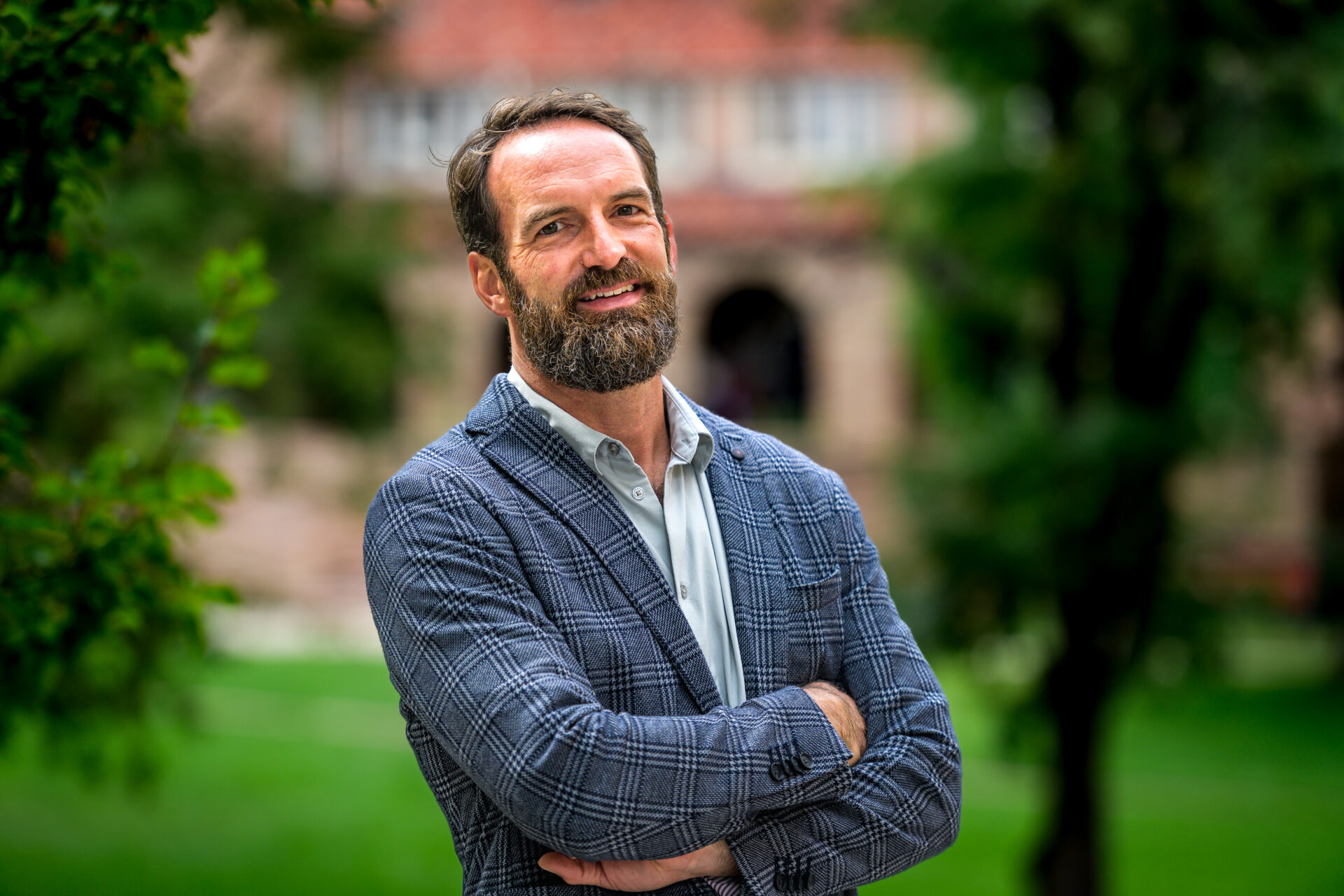
Jeremy Ehly, AIA, LEED AP, is a licensed architect, holds a Master of Architecture from the Illinois Institute of Technology, and is an Associate Teaching Professor of Environmental Design at the University of Colorado Boulder, where he teaches design theory and ethics and has taught interdisciplinary design for sixteen years across architecture, landscape architecture, urban planning, and product design. He created and teaches Lassoing the Robots, CU Boulder’s first generative AI design course, and has spent the past several years observing how roughly 200 students design with these tools across nine studios. He co-developed CU Boulder’s campus AI policy on authorship and academic integrity and was selected to the university’s AI Literacy Ambassador leadership team for 2026 to 2027. His professional practice includes MVRDV in Rotterdam, Arch 11, Davis Partnership Architects, and RNL, with work recognized by the AIA Award of Excellence, the Architecture MasterPrize, and the Denver Mayor’s Award. Since 2023 he has led AI workshops for architecture firms including Andersen Mason Dale, Studiotrope, and Rodwin Architects.