AIA Colorado Member Spotlight celebrates the architects who are shaping Colorado’s built environment and strengthening our profession. Through conversations about design, leadership, career paths, and the communities they serve, this series offers a personal look at the people behind the projects and the ideas that continue to move architecture forward.
For Adam Harding, AIA, a defining moment in architecture came on a restaurant’s opening night. Standing in the back of a room he had spent a year and a half designing, he watched people lean toward one another, linger, and settle into the space. The experience changed how he understood his work: its value would be measured by how people occupied the room.
The 2026 AIA Colorado Architect of the Year, Adam is the founder and design principal of Adam Harding Architecture, a Denver studio he established this year after twenty-two years at Roth Sheppard Architects, most recently as Design Principal and Partner. His practice spans hospitality, restaurants, retail, wellness, residences, workplace, and adaptive reuse, with a focus on the rituals and experiences that give places meaning.
A 2021 AIA National Young Architects Award recipient, Adam also contributes through service with Colorado DORA, NCARB, and the Architectural Education Foundation. In this Member Spotlight, he reflects on designing for experience, learning from the least comfortable seat in a restaurant, the importance of business education, and a weather-writing habit that offers another way to observe the world.
The Conversation
What is a pivotal moment in your career that changed how you think about architecture?
Early on, I spent an opening night standing in the back of a restaurant I had drawn for a year and a half, watching the room fill. Nobody looked at the ceiling detail I had agonized over. But they leaned in toward each other, they lingered, and the room got loud in exactly the right way.
That was the moment I understood that the deliverable is not the drawing set; it is the behavior the room produces.
Since then, I have measured my work by how people occupy it: whether they slow down, whether they come back, whether the space still works on a Tuesday in February when it is half full. That reframing has shaped every project since, and it is why I keep returning to hospitality. The client’s business either works or it does not, and the room is part of the reason why.
How would you describe your design philosophy in a few sentences?
I want to design rooms people remember being in, not rooms they remember looking at.
That means organizing space, light, material, and sound around how a place makes someone feel, and treating the sequence a person moves through—how they arrive, what they discover, where they pause—as the actual design problem.
Compression and release, material transitions, acoustic zoning, concealed light: these are narrative instruments, not technical requirements. The aim is a place that is intuitive on the first visit and still revealing something on the fifth, and that reads as inevitable in fifteen years rather than photogenic for one.
“I want to design rooms people remember being in, not rooms they remember looking at.”
What is one tool, habit, or process you rely on that others might not expect?
I eat in my buildings. Repeatedly, at different hours, usually alone and sitting somewhere I would not normally choose: the seat by the service station, the two-top wedged against the corner, the last stool at the end of the bar.
Those are the seats that tell you the truth about a room. You feel the draft from the door, the glare at 6:40, the pinch point where servers and guests negotiate the same four feet.
It is not a formal post-occupancy process, and it does not produce a report, but it has corrected more of my assumptions than any software has. Every project I design carries something I learned from an uncomfortable chair in a previous one.
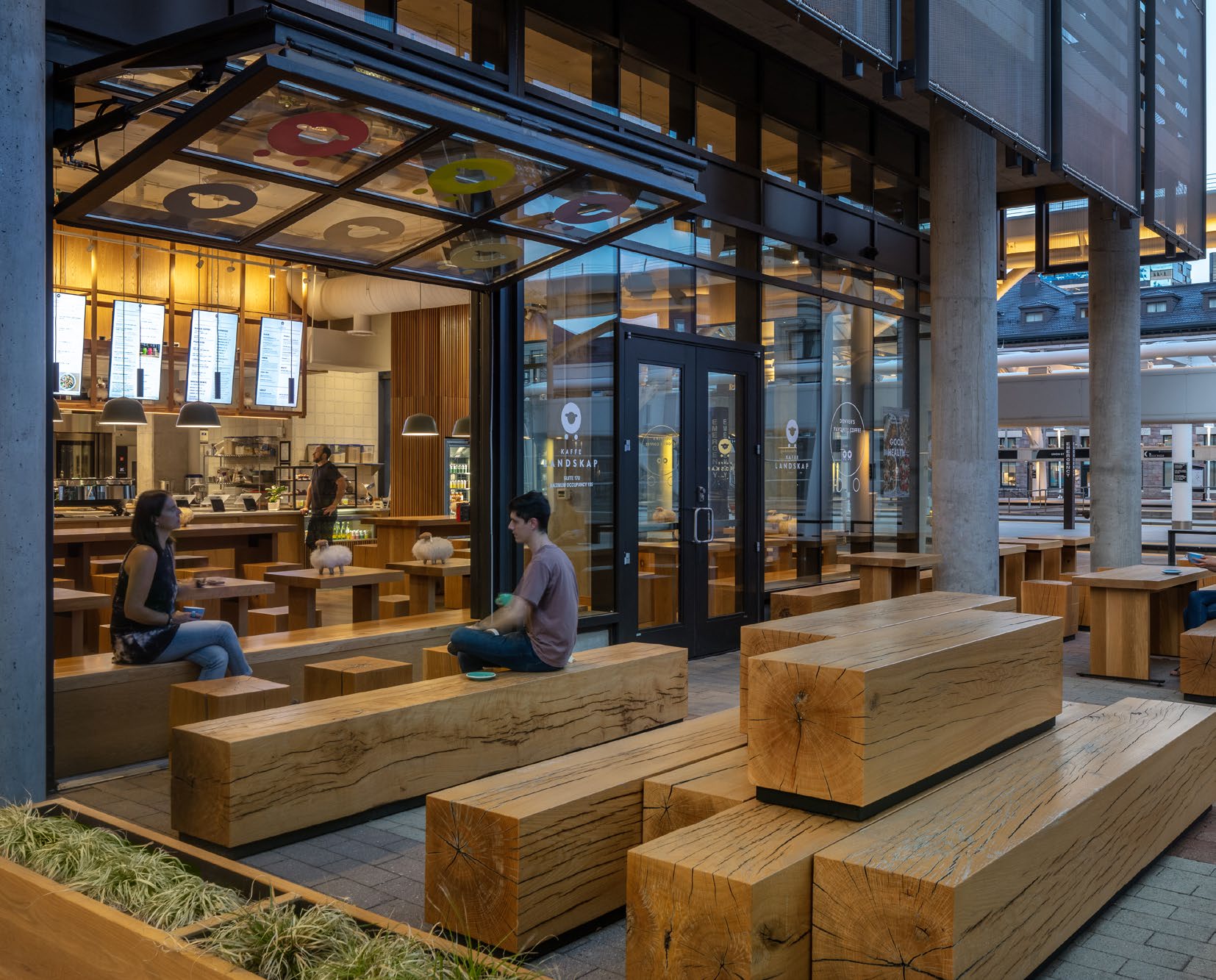
Kaffe Landskap.
Project completed during Adam’s tenure at Roth Sheppard Architects.
Photography: James Florio
Tell us about a project you are proud of. What made it meaningful?
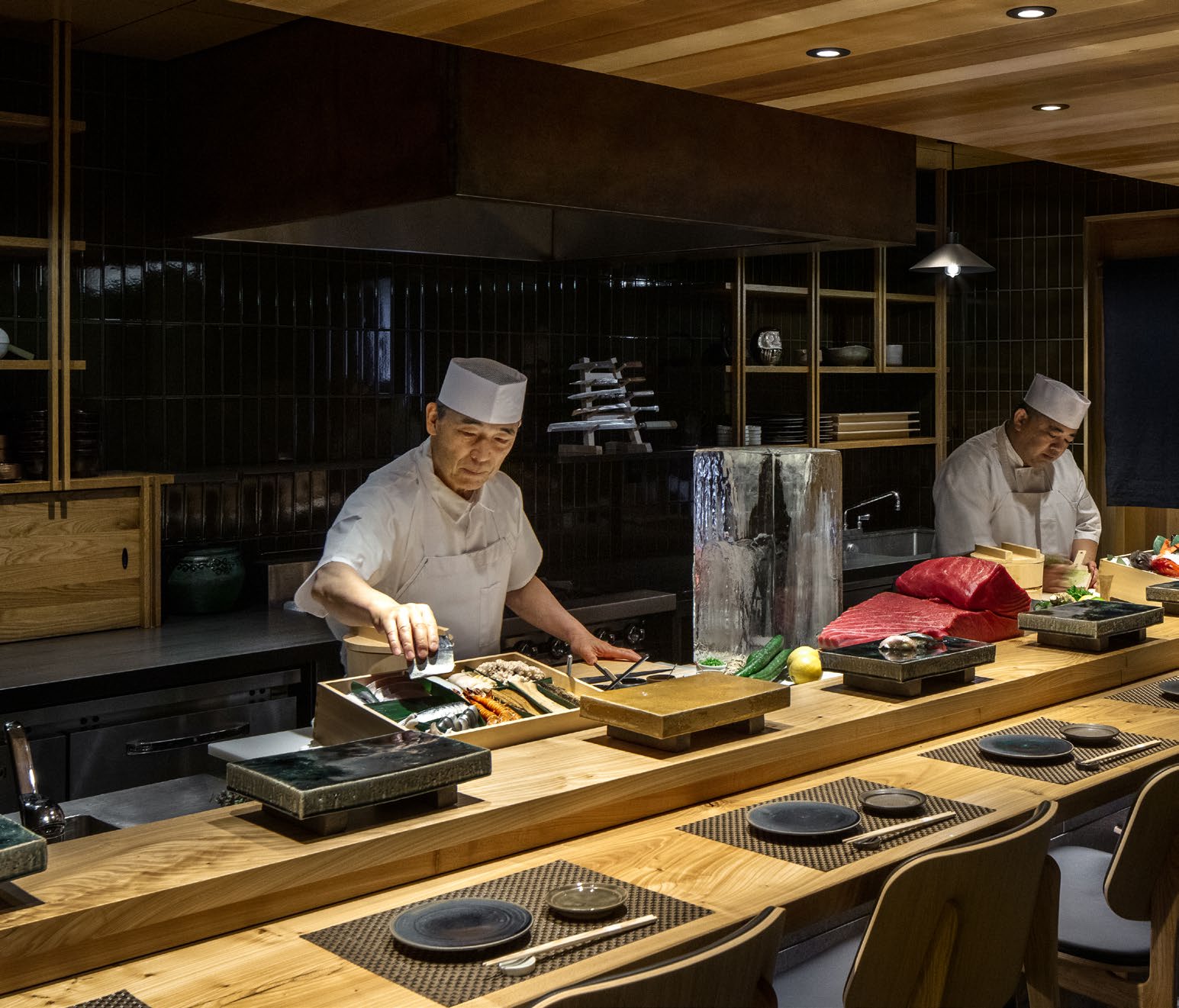
Denchu Den—The Hidden Forest, completed in 2025 while I was Design Principal at Roth Sheppard Architects.
It is an 8,300-square-foot omakase restaurant and cultural dining experience, and the design is built around the Japanese principle of omotenashi: a quiet, almost withholding exterior that opens into a warm, tactile interior of wood, stone, filtered light, and deliberately narrow thresholds. You do not see the room until you have earned it.
What made it meaningful was the relationship behind it. This is the latest chapter with a client family whose restaurants have shaped how Denver eats, and that history raised the stakes. The work had to feel continuous with what came before without repeating it.
When a client trusts you with the thing their name is attached to, across multiple projects and many years, that is the highest compliment the profession offers.
Denchu Den
Completed in 2025 while Adam served as Design Principal at Roth Sheppard Architects.
Photography: James Florio
What is one change you would like to see in the architecture profession?
I would like us to stop treating business acumen as something separate from—or beneath—design talent.
We are excellent at teaching young architects to draw and think, and nearly silent on how to build a durable practice. That gap costs the profession good designers, and it costs clients the continuity that comes from firms that survive.
It is also, quietly, an equity issue. The people who can afford to learn these things the expensive way are not a representative sample.
Talking about money is not a distraction from design. It is what makes sustained design possible.
“Talking about money is not a distraction from design. It is what makes sustained design possible.”
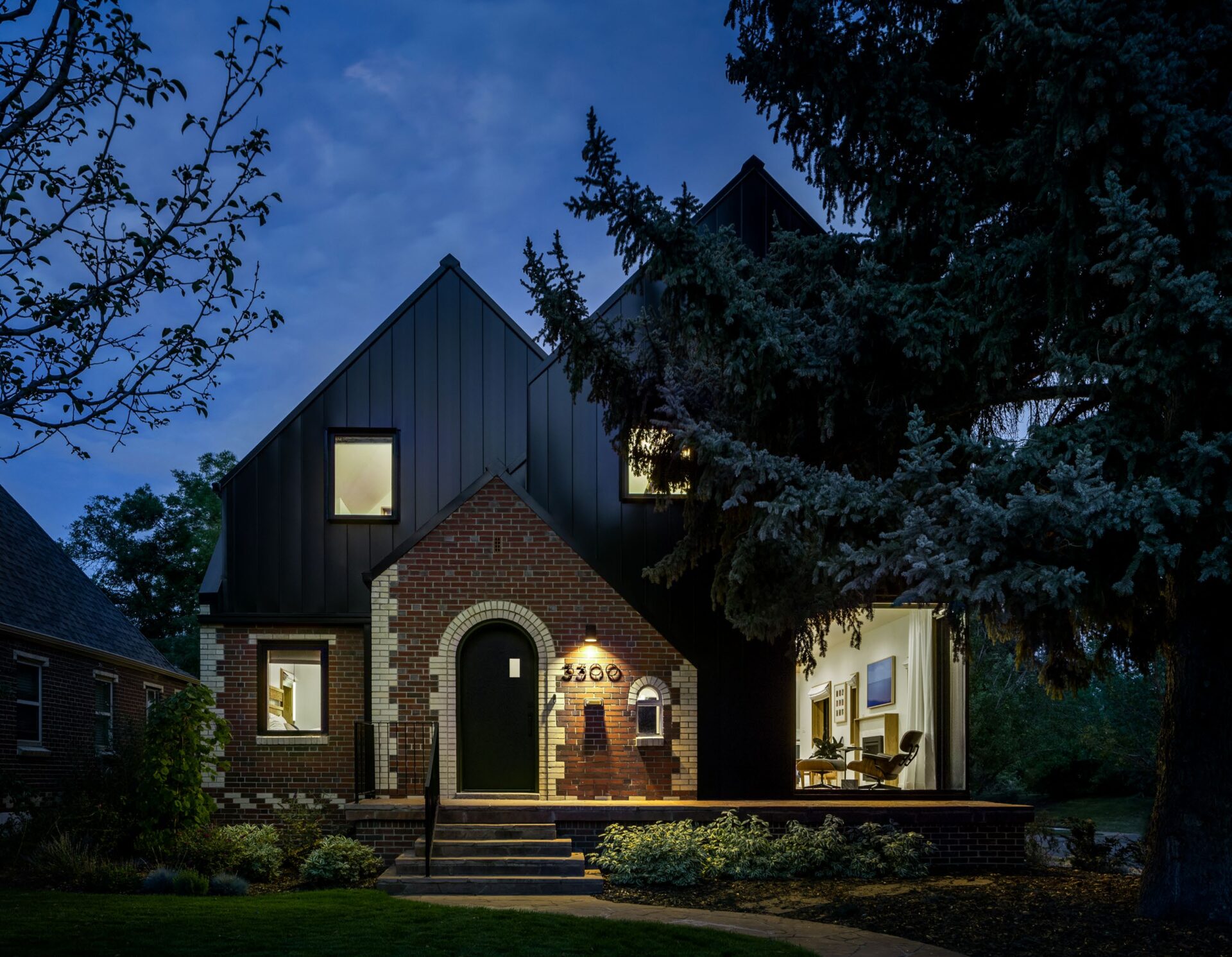
Rabbit House.
Project completed during Adam’s tenure at Roth Sheppard Architects.
Photography: James Florio
What advice would you give to emerging professionals in Colorado?
Go deep before you go broad. Early on, there is pressure to be conversant in everything; the architects I admire got there by staying with one building type long enough to learn what actually goes wrong in it. Pick something you find genuinely interesting and commit to it for a decade.
Second, get on site. The gap between what you drew and what the trades can build is where your judgment gets made, and you cannot close it from a desk.
Third, serve. I have spent years on the AIA Colorado board, on the state licensing board at DORA, as Colorado’s NCARB delegate, and with the Architectural Education Foundation, and none of it was a detour from practice.
It taught me how the profession actually works: how licensure moves, how policy gets made, how a scholarship changes whose kid gets to become an architect. The Education Foundation now awards $120,000 a year, and I would put that number up against anything I have built.
This is a small state. Be useful in it, and it will be useful to you.
What is something people might be surprised to learn about you?
I am an unreasonably serious weather person, and I have done something about it. I write and publish WeatherTime, a daily weather email that is short, genuinely useful, and completely unserious about everything except the forecast.
It has hand-drawn pigeons. It is not written for a professional audience, and I would not read it aloud at a board meeting. Just kidding, I probably would.
There is more overlap with architecture than it sounds: both are about reading systems, paying attention to conditions most people move through without noticing, and understanding that light, wind, and temperature are design materials whether or not you choose to treat them that way.
Colorado just happens to give you a spectacular amount to look at. weathertime.com, if you want your mornings improved.
Thank you to Adam Harding, AIA, for sharing his perspective on designing for experience, building a lasting practice, and serving the profession.
Congratulations on being named the 2026 AIA Colorado Architect of the Year!
This website uses cookies to improve your experience. We\'ll assume you\'re ok with this, but you can opt-out if you wish.
Read More
Cookies are small text files that can be used by websites to make a user\'s experience more efficient. The law states that we can store cookies on your device if they are strictly necessary for the operation of this site. For all other types of cookies we need your permission. This site uses different types of cookies. Some cookies are placed by third party services that appear on our pages.
Necessary cookies help make a website usable by enabling basic functions like page navigation and access to secure areas of the website. The website cannot function properly without these cookies.
Marketing cookies are used to track visitors across websites. The intention is to display ads that are relevant and engaging for the individual user and thereby more valuable for publishers and third party advertisers.
Preference cookies enable a website to remember information that changes the way the website behaves or looks, like your preferred language or the region that you are in.