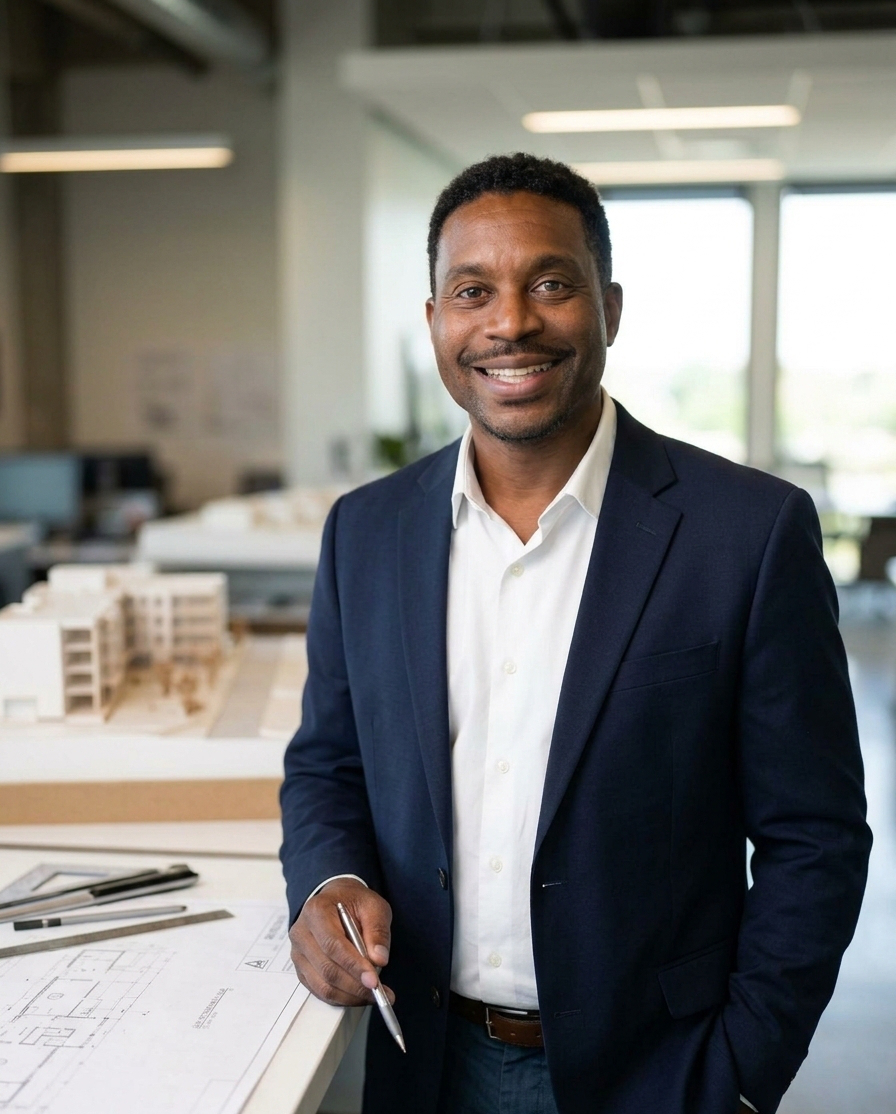
AIA Colorado Member Spotlight celebrates the architects who are shaping Colorado’s built environment and strengthening our profession. Through conversations about design, leadership, career paths, and the communities they serve, this series offers a personal look at the people behind the projects and the ideas that continue to move architecture forward.
Growing up in a military family, Alexander Person, AIA, CNU-A, NOMA, became accustomed to new cities, new landscapes, and new ways of understanding a place. From the civic monuments of Washington, D.C., to the shaded arcades of Panama City and brick warehouses of Omaha, those experiences sparked a curiosity about what buildings reveal about the people who create them.
Today, Alexander is a Project Manager and Associate at SmithGroup in Denver, with 23 years of experience and a practice spanning higher education, science and technology, housing, and urban design. His commitment to places that feel intuitive, enduring, and deeply human also informs his involvement with NOMA Colorado and AIA Colorado, where he contributes through leadership and mentorship.
In this Member Spotlight, Alexander reflects on the places and mentors that shaped his approach, a healthcare project close to his heart, the human qualities he believes will define architecture’s future, and why AIA Colorado offers opportunities to practice being an architect.
The Conversation
Tell us about your journey to becoming an architect. What shaped you along the way?
As a military brat in the 1980s, I saw much of the United States and two other countries by the time I could drive. Every few years brought a new city, a new landscape, and a new collection of buildings that quietly told stories about the people who lived there.
In Washington, D.C., I was surrounded by the permanence and symbolism of neoclassical monuments and civic buildings. The architecture spoke the language of democracy and national identity, crafted from stone and marble to project endurance, order, and aspiration. Even as a child, it was hard not to feel that these buildings were trying to say something bigger than themselves.
In Panama City, Panama, I encountered a city shaped by connection. Its architecture reflected centuries of cultural exchange and economic opportunity. The colonial character of Casco Viejo spoke to the city’s historical roots, while its skyline embodied its aspirations. Tropical conditions encouraged shaded arcades, balconies, and buildings designed to capture breezes and shelter people from intense sun and rain. Panama City taught me that architecture can be both an archive and a forecast, preserving the memory of a place while revealing its aspirations for the future.
In Omaha, Nebraska, I found a landscape built from the optimism and grit of the American heartland. Brick warehouses, sturdy commercial buildings, and unpretentious neighborhoods reflected the city’s growth as a railroad and agricultural hub. The architecture wasn’t concerned with grandeur as much as usefulness, craftsmanship, and community, values that continue to resonate with me today.
Looking back, I realize I wasn’t just noticing buildings. I was becoming curious about why places looked the way they did and what they revealed about the people who created them. Those early moves taught me that architecture is never simply about shelter; it’s a physical expression of geography, culture, history, and human ambition.
That curiosity eventually led me to architecture. More than two decades into the profession, I still find myself asking the same question I did as a kid staring out the car window in a new town: “What story is this place trying to tell?” Fortunately, I’ve managed to turn that habit into a career.
“What story is this place trying to tell?”
How would you describe your design philosophy in a few sentences?
Early in my career, I worked under three phenomenal architects, Joe Lear, Lupe Canto, and Arne Emerson, who all influenced my philosophy of architecture.
They taught me that great design is manifested in the moments that aren’t obvious, that designing with constructability in mind is nonnegotiable, and that architecture responds to political and economic climates as well as geographic ones. They also showed me that interrogating the program can reveal inspiring solutions.
How do you approach the balance between creativity and constraints such as budget, code, and client needs?
Recently, speed to market has been king, and my projects have used design-build or construction manager at risk delivery methods, which create interesting opportunities.
In this mode, creativity expands to include the constraints of budget and schedule early in the project. Bringing construction expertise into the conversation allows us to collaborate on real-world constraints and adjust before becoming deeply invested in a particular direction.
I believe code should be framed as hard-won design intelligence. It allows creativity to be focused where it matters most, including spatial experience, daylighting, context-appropriate design, and ergonomics.
Tell us about a project you are proud of. What made it meaningful?
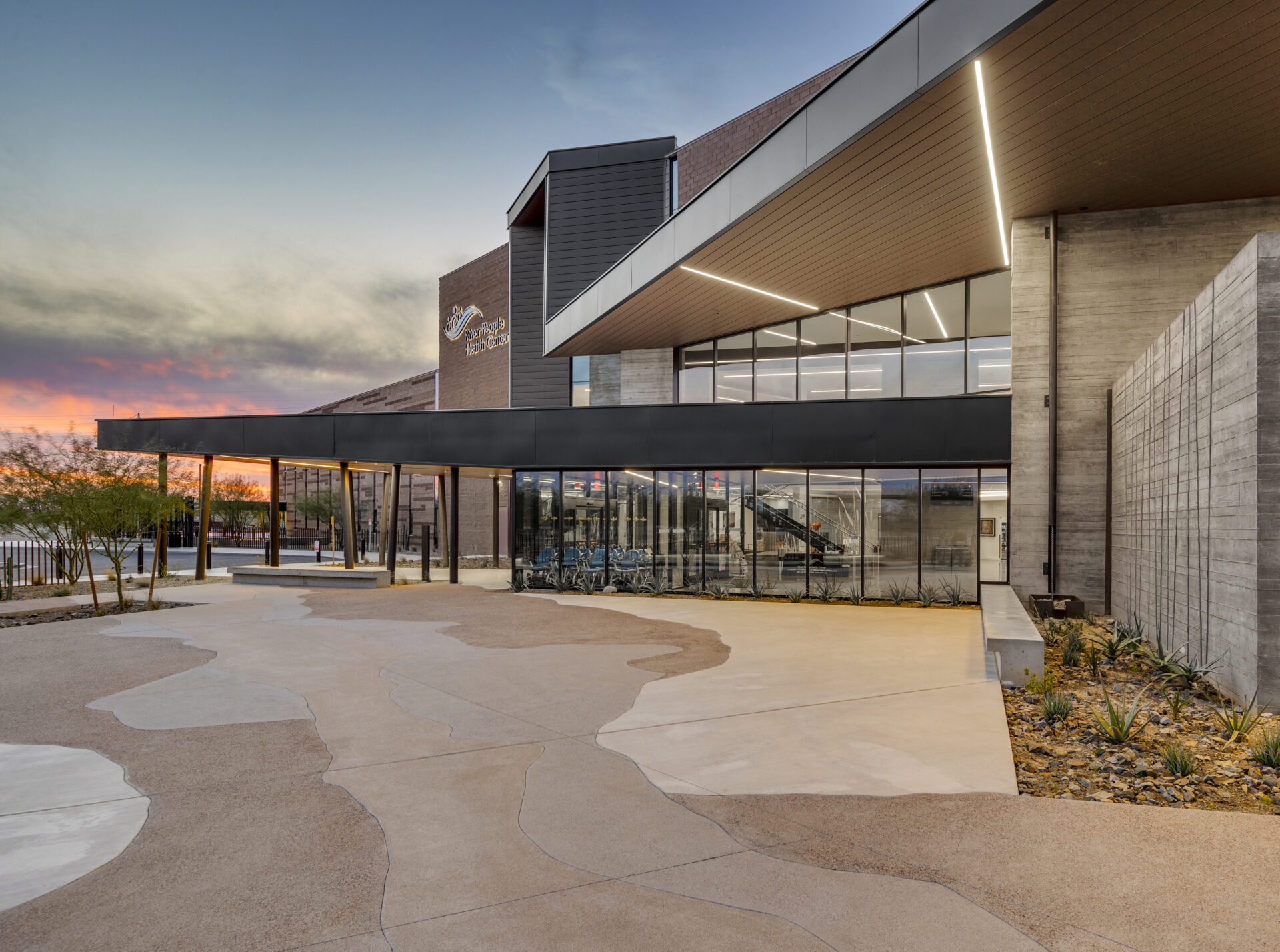
The River People Health Center remains one of the projects closest to my heart. It brings together two things I care deeply about: architecture that serves people and architecture that belongs to its place.
The design draws its meaning from the Salt River Pima-Maricopa Community’s relationship to land, water, and wellness, yet its purpose is wonderfully straightforward: helping people heal.
When architecture can honor a culture, support a community, and improve lives without becoming a theme park of symbols, that’s a pretty good day at the office.
River People Health Center, Scottsdale, AZ.
Photographer: Kevin C. Korczyk
How do you measure success in your work?
Success is often visible, but impact is what endures. One is measured by recognition; the other by the difference we leave behind.
Where do you see the future of architecture heading in the next 5 to 10 years?
Art has always moved in cycles between technical mastery and human expression. I believe architecture is approaching a similar inflection point.
As AI and algorithms become increasingly capable of generating and analyzing buildings, architects will spend less time producing drawings and more time interpreting the human condition. Technology will continue to make us more efficient, but our greatest value will remain our ability to translate culture, memory, emotion, and community into built form.
The future isn’t less architecture; it’s more humanity in architecture. Technology will help us design buildings faster, but architects will remain essential because people don’t remember algorithms. They remember how a place made them feel.
“The future isn’t less architecture; it’s more humanity in architecture.”
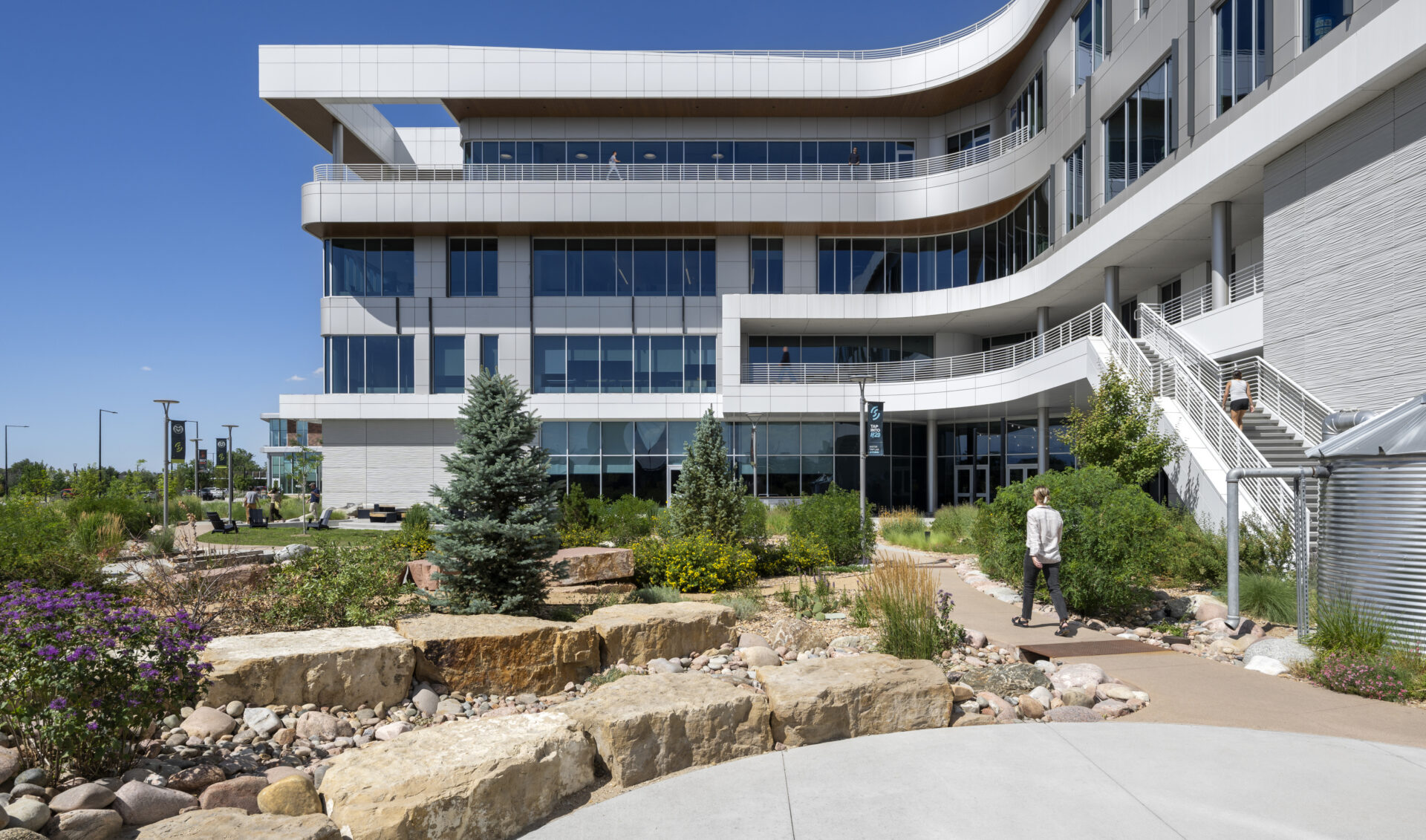
CSU Hydro Building at the Spur campus, Denver, CO
Photographer: Wade Griffith
Why are you a member of AIA Colorado?
My firm gives me plenty of opportunities to practice architecture; AIA Colorado gives me opportunities to practice being an architect.
That means leadership, mentorship, advocacy, intellectual exchange, and a community of peers who understand both the joys and challenges of the profession. And, admittedly, I’m never going to turn down a good building tour.
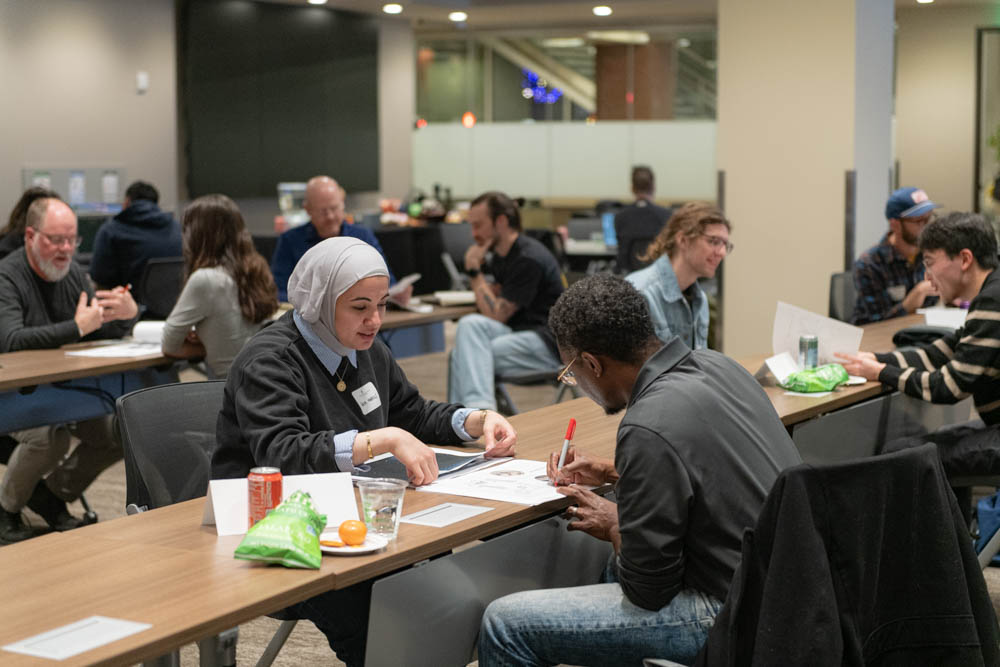
Investing in the future of architecture at CU Denver College of Architecture and Planning Portfolio Review Night.
Image courtesy of CAP VRC
What inspires you outside of architecture?
My creative fuel comes from a somewhat eclectic combination of motorcycles, microchips, mountain trails, mindfulness, and modern art.
Motorcycling teaches perspective, hiking encourages observation, technology sparks possibility, self-care cultivates empathy, and modern art challenges convention. These pursuits reinforce my commitment to human-centered design and a belief that the best architecture emerges from curiosity, empathy, and a deep appreciation for how people experience the world.
What are you currently reading, listening to, or learning?
I’m reading Man’s Search for Meaning by Viktor Frankl. As I wrote this, I was listening to Ellie Goulding. I’ve also been learning how to do standing core exercises.
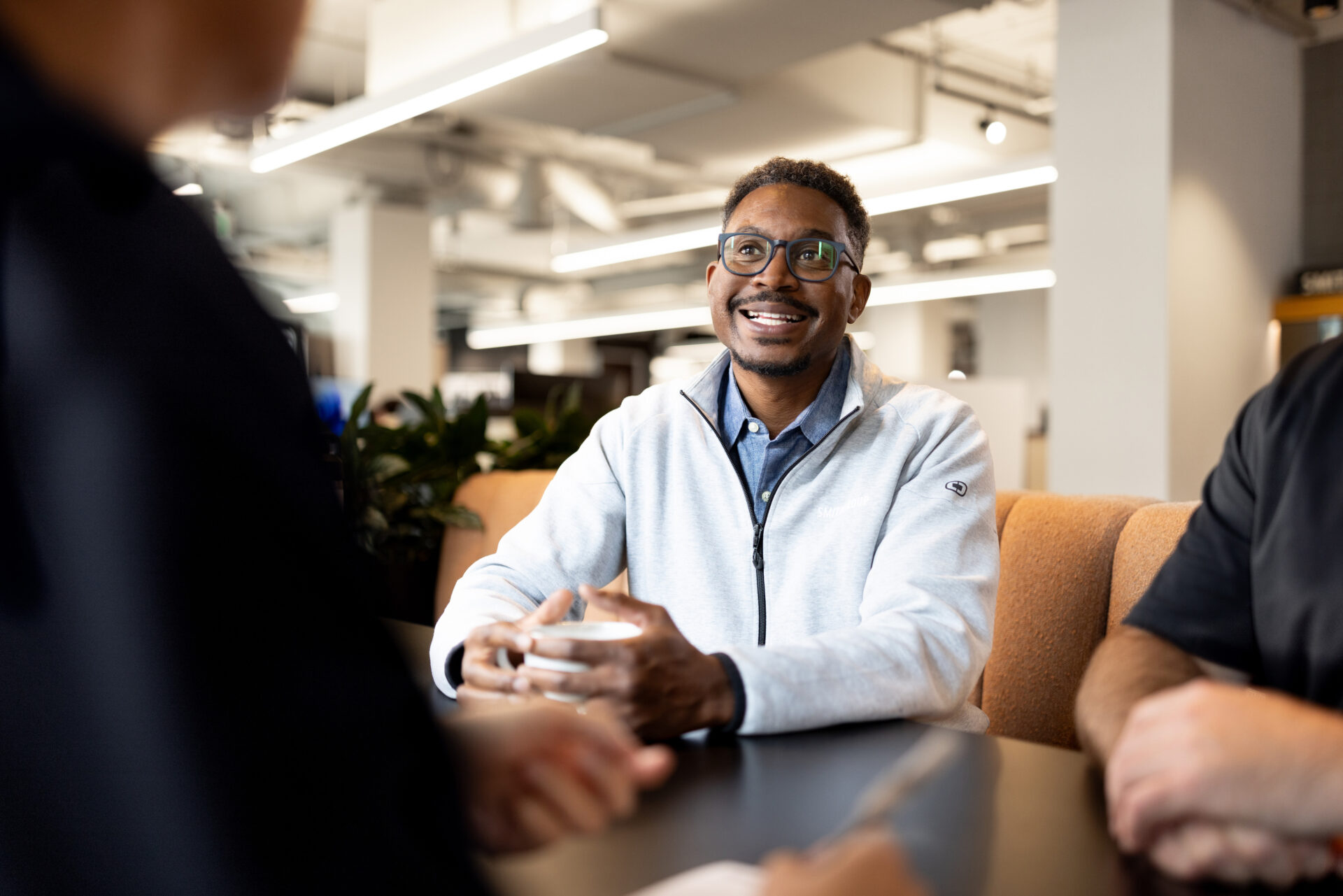
Conversations in the breakroom with my colleagues are truly inspiring and make my I-25 commute well worth it.
Photography: Gray Box Studios
Thank you to Alexander Person, AIA, CNU-A, NOMA, for sharing his story, perspective, and reflections on the places, people, and experiences that shape his approach to architecture as part of the AIA Colorado Member Spotlight series.
This website uses cookies to improve your experience. We\'ll assume you\'re ok with this, but you can opt-out if you wish.
Read More
Cookies are small text files that can be used by websites to make a user\'s experience more efficient. The law states that we can store cookies on your device if they are strictly necessary for the operation of this site. For all other types of cookies we need your permission. This site uses different types of cookies. Some cookies are placed by third party services that appear on our pages.
Necessary cookies help make a website usable by enabling basic functions like page navigation and access to secure areas of the website. The website cannot function properly without these cookies.
Marketing cookies are used to track visitors across websites. The intention is to display ads that are relevant and engaging for the individual user and thereby more valuable for publishers and third party advertisers.
Preference cookies enable a website to remember information that changes the way the website behaves or looks, like your preferred language or the region that you are in.