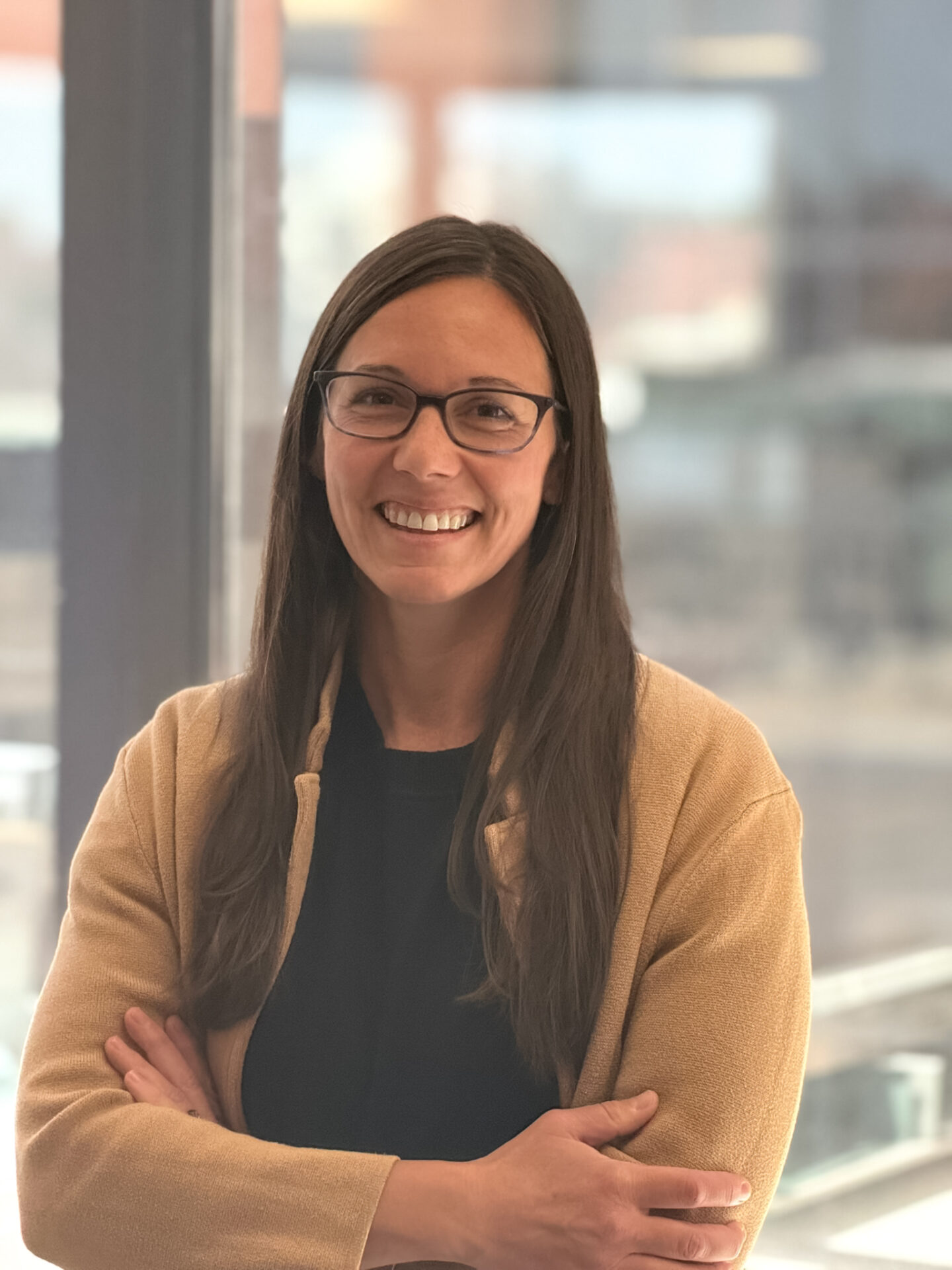
AIA Colorado Member Spotlight celebrates the architects who are shaping Colorado’s built environment and strengthening our profession. Through conversations about design, leadership, career paths, and the communities they serve, this series offers a personal look at the people behind the projects and the ideas that continue to move architecture forward.
Katie Coyle, AIA, came to architecture through studies in studio art and Asian studies, seeking a field that combined creativity, problem-solving, and an interest in people and places. Experiences studying abroad and working across cities, project types, and teams helped shape an approach grounded in curiosity, collaboration, and the relationships behind the work.
AIA Colorado’s 2026 Young Architect of the Year, Katie is a Senior Project Architect and Senior Associate at HOK. Since moving to Colorado in 2014, she has built connections within the architectural community while contributing to projects across civic, higher education, corporate and workplace, and sports and recreation sectors. Her recent focus on sports architecture includes work on the Denver Broncos training facility.
In this Member Spotlight, Katie reflects on the connection between design and technical execution, the team behind a complex project, the value of finding community through AIA Colorado, and a backcountry New Year’s tradition that brings friends together.
The Conversation
Tell us about your journey to becoming an architect. What shaped you along the way?
I didn’t study architecture as an undergraduate, but through my studies in Studio Art and Asian Studies, I realized I was looking for a field that combined creativity, problem-solving, and my interest in people and places. By my junior year, I knew I wanted to pursue architecture and began looking toward graduate school.
When choosing a graduate program, I was drawn not only to a school known for design excellence, but also to one that offered opportunities to study abroad. I had studied abroad as an undergraduate and had seen firsthand how valuable it was to step outside what was familiar to me. Continuing to experience architecture in different places and cultural contexts broadened my understanding of how much our surroundings shape the way we live, and how architecture is shaped by, while also responding to, people, place, and culture.
My professional experiences continued to broaden that perspective. I’ve had the opportunity to work with teams across the country, while moving to Denver also gave me the chance to develop stronger connections within the local and regional architecture community.
Working across different places, teams, and project contexts has reinforced for me that architecture is fundamentally collaborative. The best work comes from bringing together different perspectives, expertise, and experiences around a shared goal.
My path hasn’t necessarily been linear, and I think that has been one of its strengths. Moving between different project types, cities, and roles has continually pushed me outside what I already knew. Each stage has shaped the way I practice today. Staying curious, being open to perspectives different from my own, and valuing the relationships behind the work have become just as important to me as the architecture itself.
How would you describe your design philosophy in a few sentences?
I believe the strongest architectural solutions come from understanding a project’s goals and parameters early and using them to inform and strengthen the design. I embrace the iterative nature of the process, knowing that the best solution doesn’t always come immediately.
My approach involves listening to different perspectives, understanding the priorities behind them, and synthesizing those ideas into a clear path forward. I also believe design and technical execution are inseparable; a strong idea becomes more meaningful when it is thoughtfully resolved and responsive to the people who will ultimately experience it.
Through exploration, collaboration, and open dialogue, constraints can become opportunities to challenge assumptions and arrive at solutions that are thoughtful, technically sound, and achievable.
I also believe design and technical execution are inseparable; a strong idea becomes more meaningful when it is thoughtfully resolved and responsive to the people who will ultimately experience it.
Tell us about a recent project you are proud of. What made it meaningful?
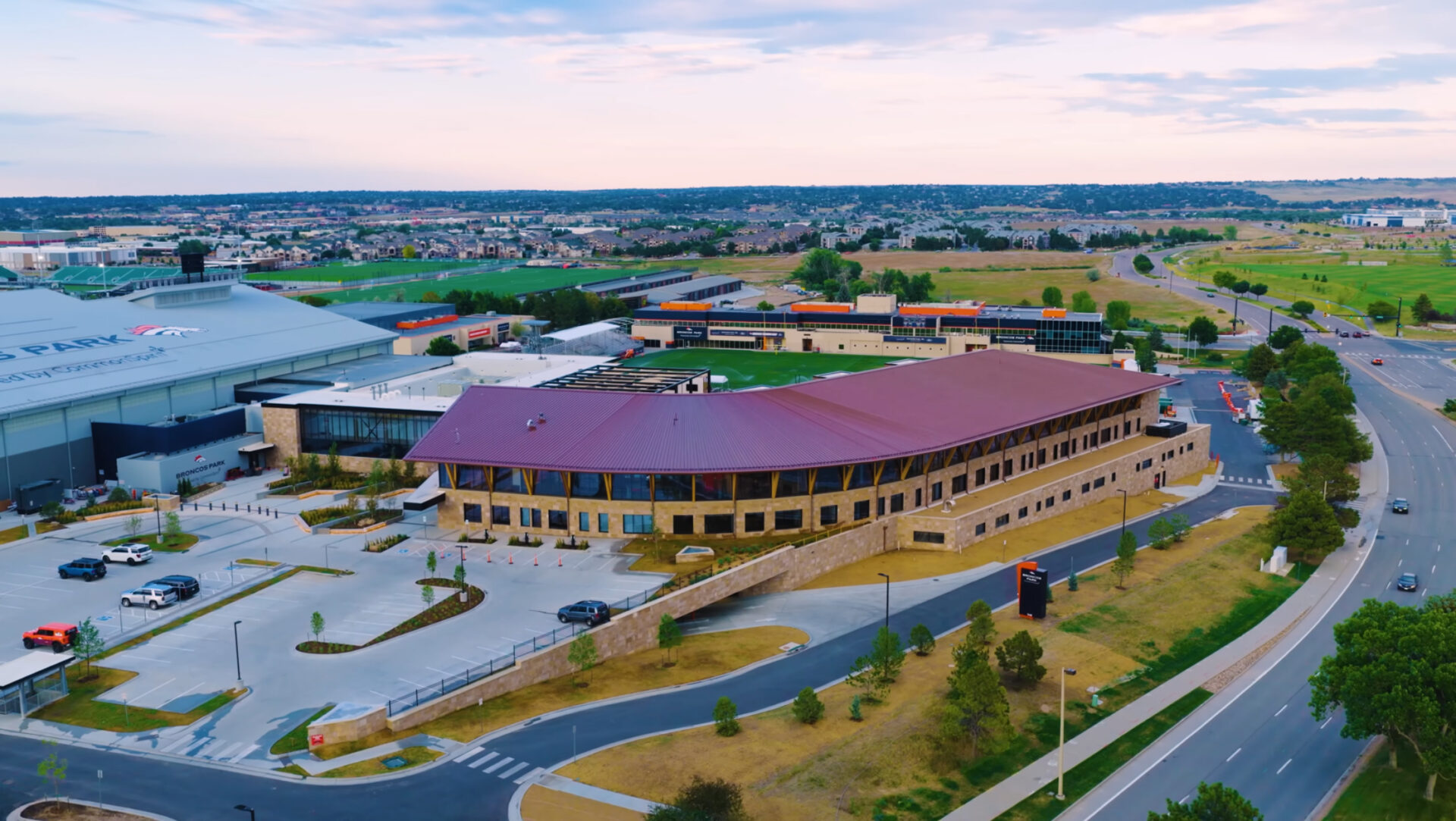
The Denver Broncos training facility has certainly been a project highlight. It was my first NFL project, so there was a tremendous amount to learn, and the scale and complexity continually challenged me and our team to think differently and solve new problems.
What made it most meaningful, though, is the people. It was the first major ground-up project, coupled with a renovation, where a significant portion of the team was based in our HOK Denver office, while also collaborating closely with colleagues from other offices.
Large, complex projects require a tremendous amount of trust, communication, and problem-solving, and it has been rewarding to see both the project and our team grow through that process.
There is something especially satisfying about looking back and seeing not only a finished building, but also the relationships, knowledge, and stronger team that came out of creating it. Seeing the facility have an impact on the Broncos organization while also contributing to the growth of our Denver office made the experience especially meaningful.
Denver Broncos Training Facility, exterior view
Project firm: HOK
Photography: Denver Broncos
How is your work responding to issues such as sustainability, resilience, or equity?
Sustainability, resilience, and equity are fundamental considerations in good design rather than separate goals to address later in the process. My work has taught me the value of bringing these conversations into a project early, when there is the greatest opportunity to influence the outcome.
That means collaborating closely with engineers and other disciplines to understand how decisions about building systems, envelope performance, energy use, and material choices support long-term performance, while also listening carefully to the people who will use the building.
Whether through programming and user engagement, integrated design, or tools that help us evaluate equitable and inclusive outcomes, I try to understand the broader impact of the decisions we make.
Ultimately, I think our responsibility is to create architecture that performs well environmentally, adapts over time, and welcomes and serves the people who use it. The best solutions are often the ones where those goals reinforce one another rather than compete.
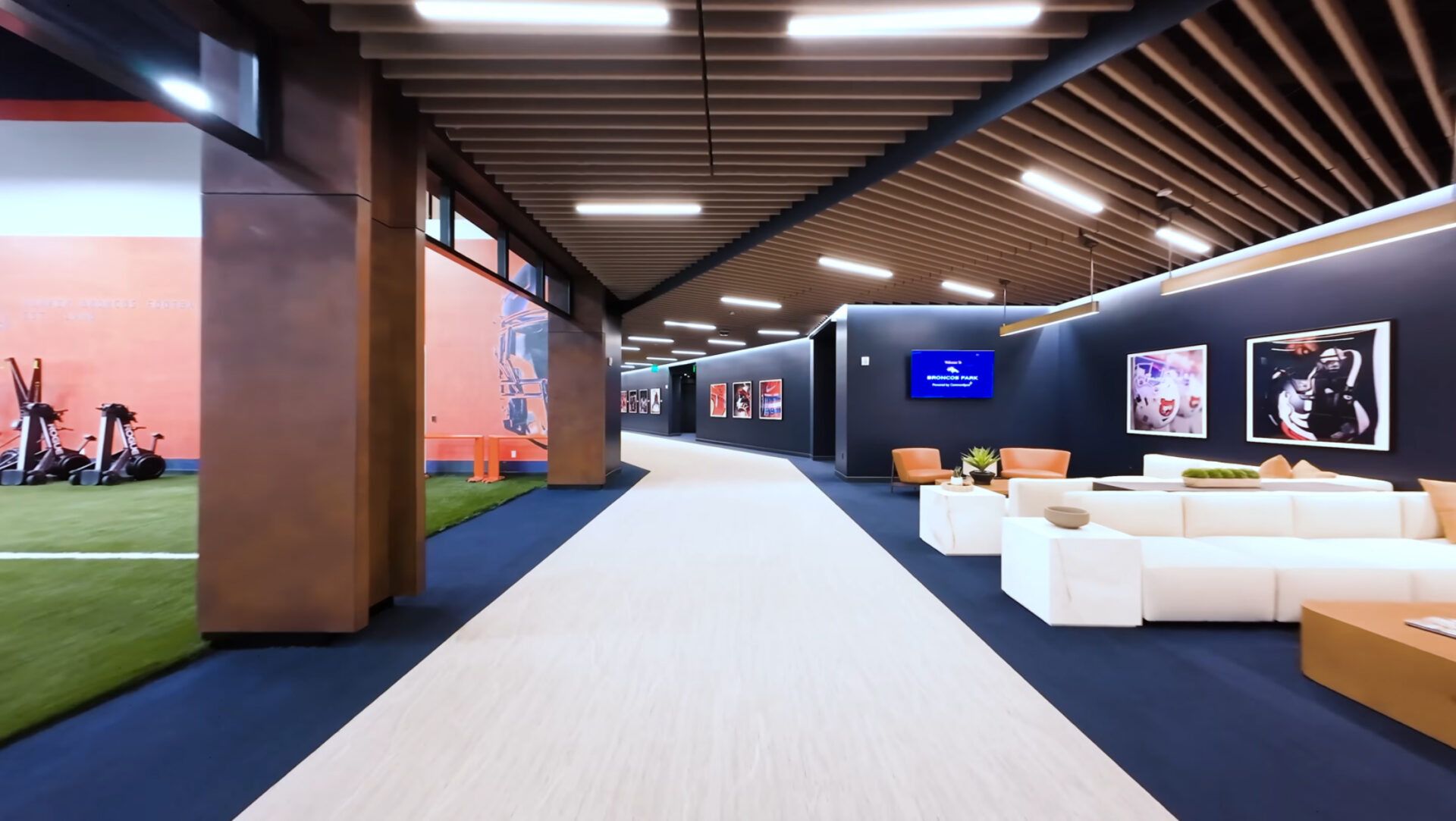
Denver Broncos Training Facility, interior player trail
Project firm: HOK
Photography: Denver Broncos
Why are you a member of AIA Colorado?
I joined AIA Colorado when I moved to Denver because I wanted to find a connection to the architecture community in my new city. I had really enjoyed the people and relationships I built through AIA Kansas City, and becoming involved with AIA Colorado gave me an opportunity to build that same sense of community here.
Over the years, I’ve served on several committees, attended the Practice + Design Conference, and taken part in programs that have introduced me to people and perspectives I might not encounter in my day-to-day work.
I’ve especially valued getting to know architects across different firms, career stages, and areas of practice and having opportunities to exchange ideas and learn from one another.
That is really what AIA Colorado means to me: a way to stay connected, keep learning, and be part of a broader community of people who care about architecture and the places and communities we help shape.
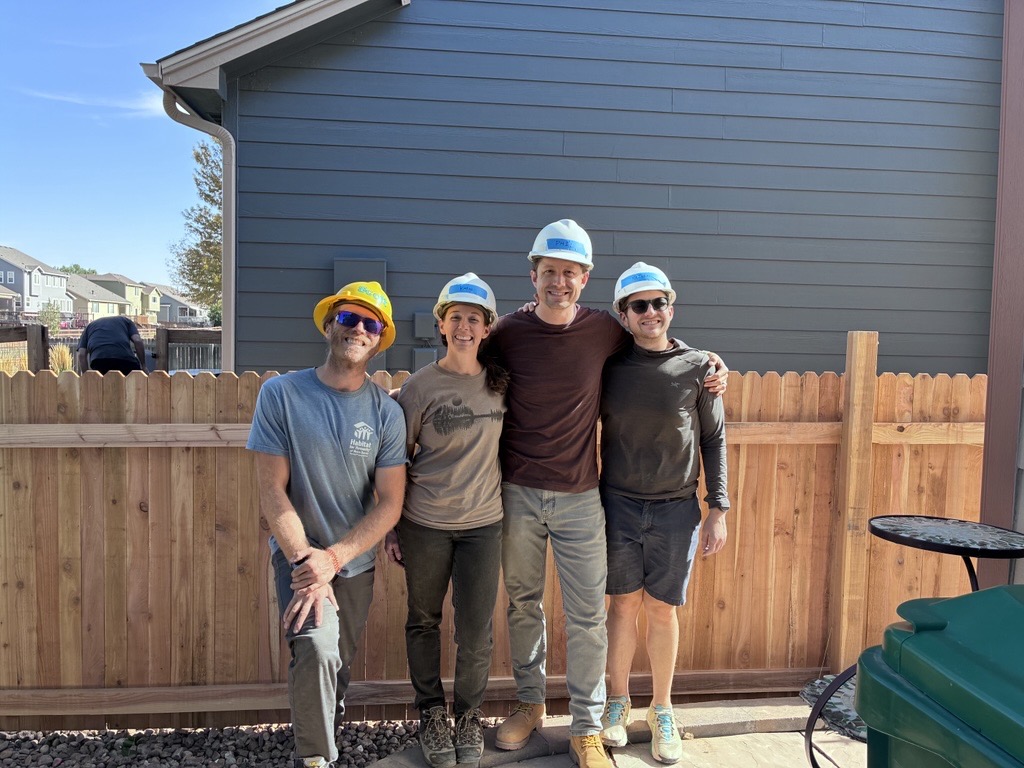
The HOK Denver office participates in a Habitat for Humanity volunteer day.
What advice would you give to emerging professionals in Colorado?
My advice would be to stay curious, ask questions, and build relationships. One of the things I’ve appreciated most about practicing in Colorado is how welcoming the architecture community is and how willing people are to share their time, knowledge, and experience.
Take advantage of that. Get involved, seek out mentors, meet people outside your own firm and discipline, and be open to learning from people at every stage of their careers.
We all bring different experiences and perspectives to the table, and there is a lot we can learn from one another regardless of where we are in our careers. Be willing to seek advice, but also be confident in contributing your own ideas and perspective.
Architecture is a collaborative profession, and the relationships you build along the way can be just as valuable as the technical skills you develop. You don’t have to navigate the profession alone, and you also don’t have to wait until later in your career to make a meaningful contribution to it.
You don’t have to navigate the profession alone, and you also don’t have to wait until later in your career to make a meaningful contribution to it.
What is something people might be surprised to learn about you?
People might be surprised to learn that one of my favorite New Year’s traditions involves putting on skis and heading into the backcountry. For several years, a group of friends and I have celebrated by skiing into one of Colorado’s 10th Mountain Division huts.
With little to no cell service, it’s an opportunity to disconnect, spend time together, and enjoy being outside. Some years the early-season snow is great, and we spend hours outside skiing and exploring. Other years, we settle into hut life, playing cribbage—a favorite of mine—working on puzzles, playing games, and cooking for one another.
We inevitably spend time recounting the challenges and adventures of getting to the hut, especially the years we’ve had kids in tow, which has become part of what makes the tradition so memorable.
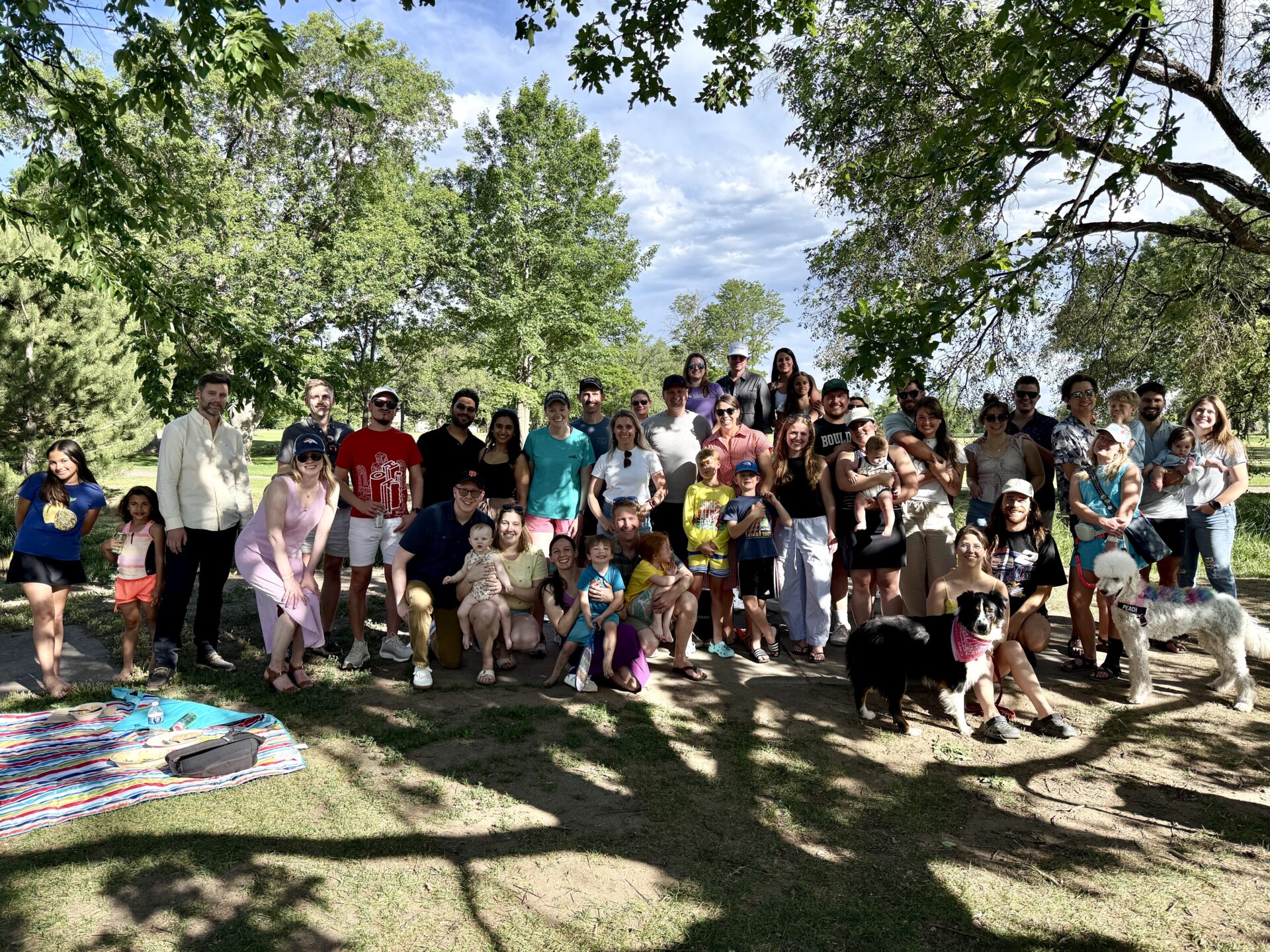
The HOK Denver office gathers for a friends and family picnic.
Thank you to Katie Coyle, AIA, for sharing her story and reflections on collaboration, curiosity, and the relationships that strengthen architectural practice.
Congratulations on being named AIA Colorado’s 2026 Young Architect of the Year!
This website uses cookies to improve your experience. We\'ll assume you\'re ok with this, but you can opt-out if you wish.
Read More
Cookies are small text files that can be used by websites to make a user\'s experience more efficient. The law states that we can store cookies on your device if they are strictly necessary for the operation of this site. For all other types of cookies we need your permission. This site uses different types of cookies. Some cookies are placed by third party services that appear on our pages.
Necessary cookies help make a website usable by enabling basic functions like page navigation and access to secure areas of the website. The website cannot function properly without these cookies.
Marketing cookies are used to track visitors across websites. The intention is to display ads that are relevant and engaging for the individual user and thereby more valuable for publishers and third party advertisers.
Preference cookies enable a website to remember information that changes the way the website behaves or looks, like your preferred language or the region that you are in.