This website uses cookies to improve your experience. We\'ll assume you\'re ok with this, but you can opt-out if you wish. Read More
AIA Colorado Member Spotlight celebrates the architects who are shaping Colorado’s built environment and strengthening our profession. Through conversations about design, leadership, career paths, and the communities they serve, this series offers a personal look at the people behind the projects and the ideas that continue to move architecture forward.
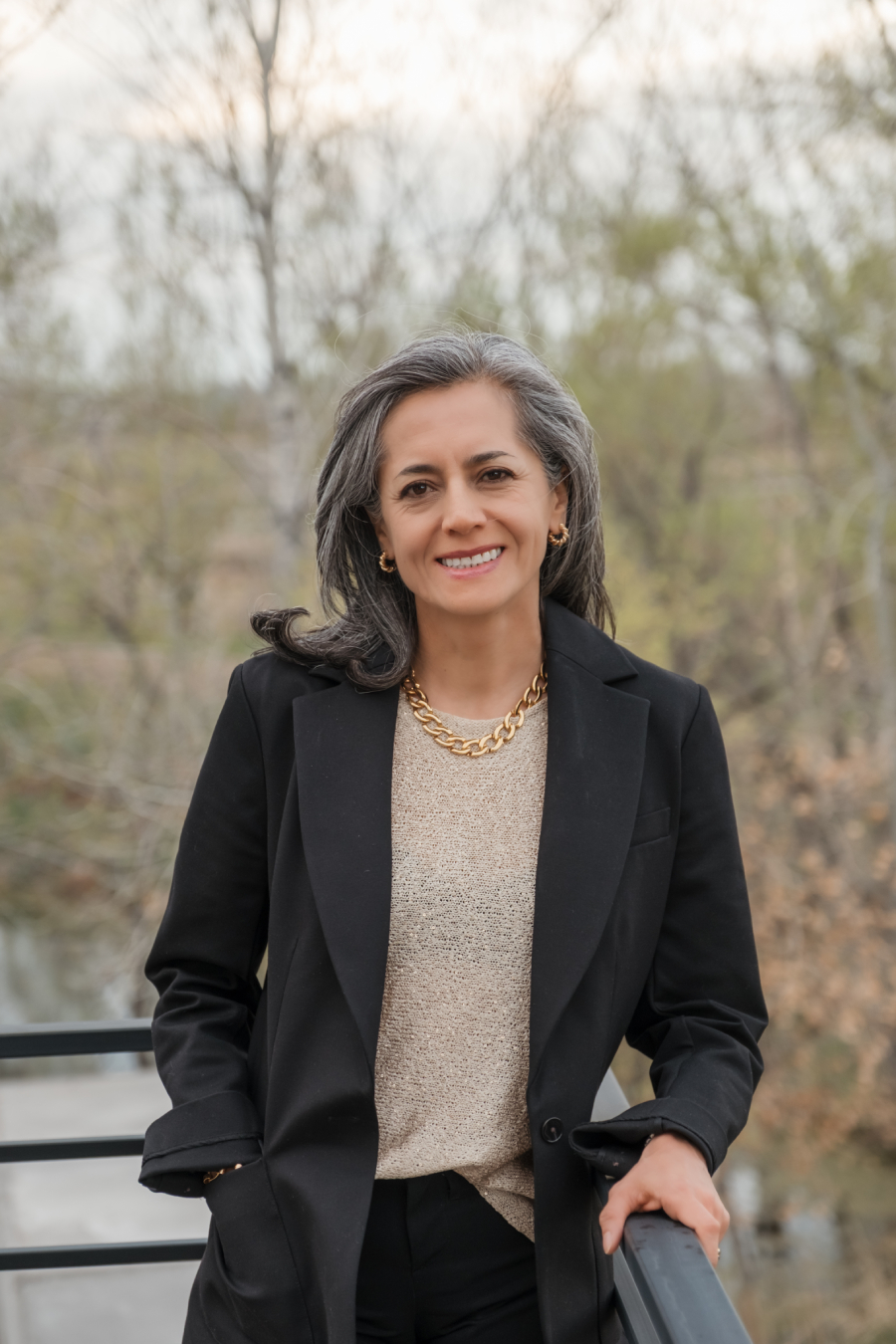
Margarita Gonzalez, Assoc. AIA
Introduction
For Margarita Gonzalez, Assoc. AIA, architecture began with watching her father work at his drafting table. That early fascination with thinking through drawings grew into a career spanning countries, cultures, classrooms, and practice, with a lesson that continues to guide her work: listen before you design.
AIA Colorado’s 2026 Associate of the Year honoree, Margarita is the founder and principal of Minidwell, a Denver practice focused on residential design. An internationally trained architect with a Master’s in Architecture and PhD earned in Paris, she brings 26 years of experience and a global perspective to her work in design and education.
In this Member Spotlight, Margarita reflects on establishing a practice in a new country, helping students find their place in architecture, the sense of belonging she found through AIA Colorado, and what it means to design for a shared planet.
The Conversation
Tell us about your journey to becoming an architect. What shaped you along the way?
My father is a civil engineer, and I grew up watching him work at his company and draw at his drafting table. I fell in love with the idea of thinking through drawings, and that early fascination led me to architecture.
I have since lived, practiced, and taught architecture across different countries and cultures. That experience taught me that architecture is never universal. It is shaped by culture, economics, traditions, climate, and, most importantly, the people who inhabit it. What may seem obvious to a designer can mean something completely different to someone else.
Above all, my journey has taught me to listen: to places, cultures, stories, and people. Architecture has been my way of discovering not only how we build, but how we live and belong.
Above all, my journey has taught me to listen: to places, cultures, stories, and people.
What is a pivotal moment in your career that changed how you think about architecture?
When I moved to Denver, I expected to continue teaching architecture, as I had in Saudi Arabia and France. But without the credentials to join a university faculty, I had to reinvent myself in practice. I also had to learn a new system, Colorado’s zoning, codes, and way of practicing, which pushed me to become more independent and eventually establish my own practice.
That experience changed how I see architecture. I discovered that practicing can be even more rewarding than teaching: there is something powerful about seeing a building come to life and become part of people’s everyday lives.
Taking that risk, with the guidance of an excellent mentor, taught me to approach architecture with an open mind and embrace unexpected opportunities. Sometimes, the doors that close are the ones that lead us somewhere new.
In your view, what role should architects play in shaping Colorado’s communities?
We have to remember that we are building for the people who live in Colorado today, and for those moving here tomorrow.
Someone moving from New York may have very different expectations than someone coming from Florida or another country, yet once here, we all share the same climate, landscape, and place.
As architects, we have a responsibility to listen before we design: to understand who our communities are, where they come from, and what they need. We should challenge the idea of a “Colorado architecture” and instead create architecture that reflects the many people who now call Colorado home.
Our role is not simply to design buildings, but to help shape communities where people feel represented and have a sense of belonging.
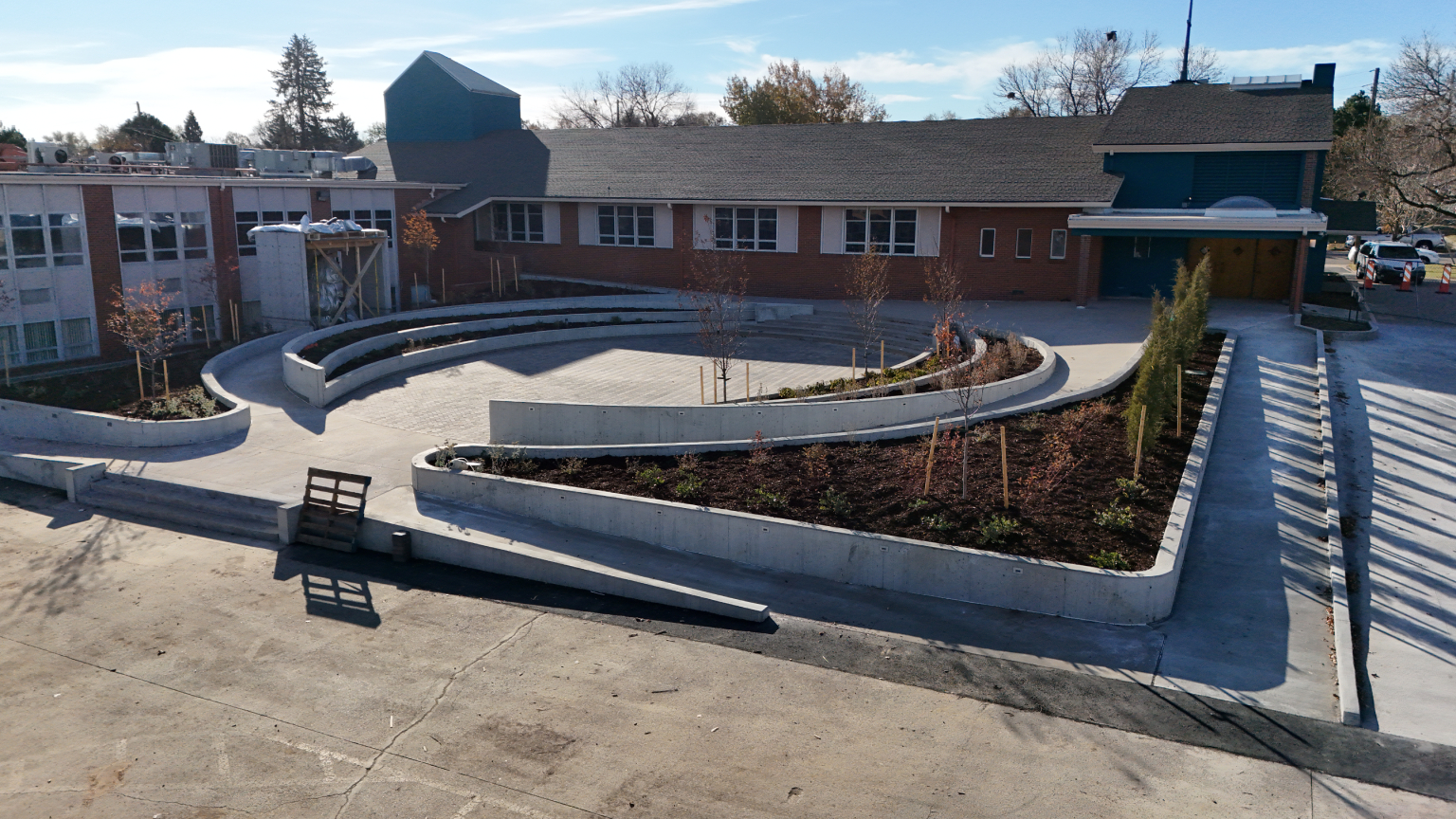
The Notre Dame Parish and School Plaza was a community-driven effort to create a safe gathering space for the church and an outdoor classroom for students during school hours. Designed for Faleide Architects.
Photography: Horizon Builders
Where do you see the future of architecture heading in the next 5 to 10 years?
I became involved in education because I wanted to help open the door for more diverse voices in architecture. Some of my students are now finishing their bachelor’s degrees, and seeing them enter the profession gives me great hope.
I believe the future of architecture in the United States will be more diverse, bringing new perspectives and new ways of imagining the spaces we inhabit. This could transform how we design schools, senior living, housing, and communities, while encouraging us to rethink how we adapt existing buildings, respond to climate change, and use new technologies.
What excites me most is that the future does not have to look like the past. We may even begin to explore what it means to inhabit environments beyond Earth, which could challenge our understanding of architecture and humanity itself.
I believe the next generation will bring experiences and ideas that our profession has not always made room for, and they will help us create architecture that is more inclusive, inventive, and responsive to the world around us.
I am certain the future is bright, not because we know exactly where architecture is going, but because we have the opportunity to imagine something we have never seen before.
Why are you a member of AIA Colorado?
I joined AIA as soon as I arrived in Denver because I wanted to become part of the architectural community in my new home. I started by volunteering with the Design Conference Committee, which opened the door to other committees and showed me how much impact we can have when we participate beyond our individual practices.
At the time, AIA Colorado had created a Task Force for Equity, Diversity, and Inclusion. The conversation was gaining momentum nationally, influenced by movements such as #MeToo, but it was also driven by something more fundamental: the recognition that our profession does not yet reflect the communities we serve. I saw an opportunity not simply to diversify the profession, but to help shape what the next generation of architecture could look like.
AIA gave me something I deeply valued as an architect who came to this country from elsewhere: a sense of belonging. I found a community that was willing to listen to my experiences, challenge my ideas, and make space for my voice. In return, I found ways to contribute my own perspective.
For me, membership is not simply about belonging to a professional organization; it is about helping build the profession we want to inherit. I hope to remain a member as long as I can, because I believe architecture becomes stronger when more voices are invited to shape it.
AIA gave me something I deeply valued as an architect who came to this country from elsewhere: a sense of belonging.
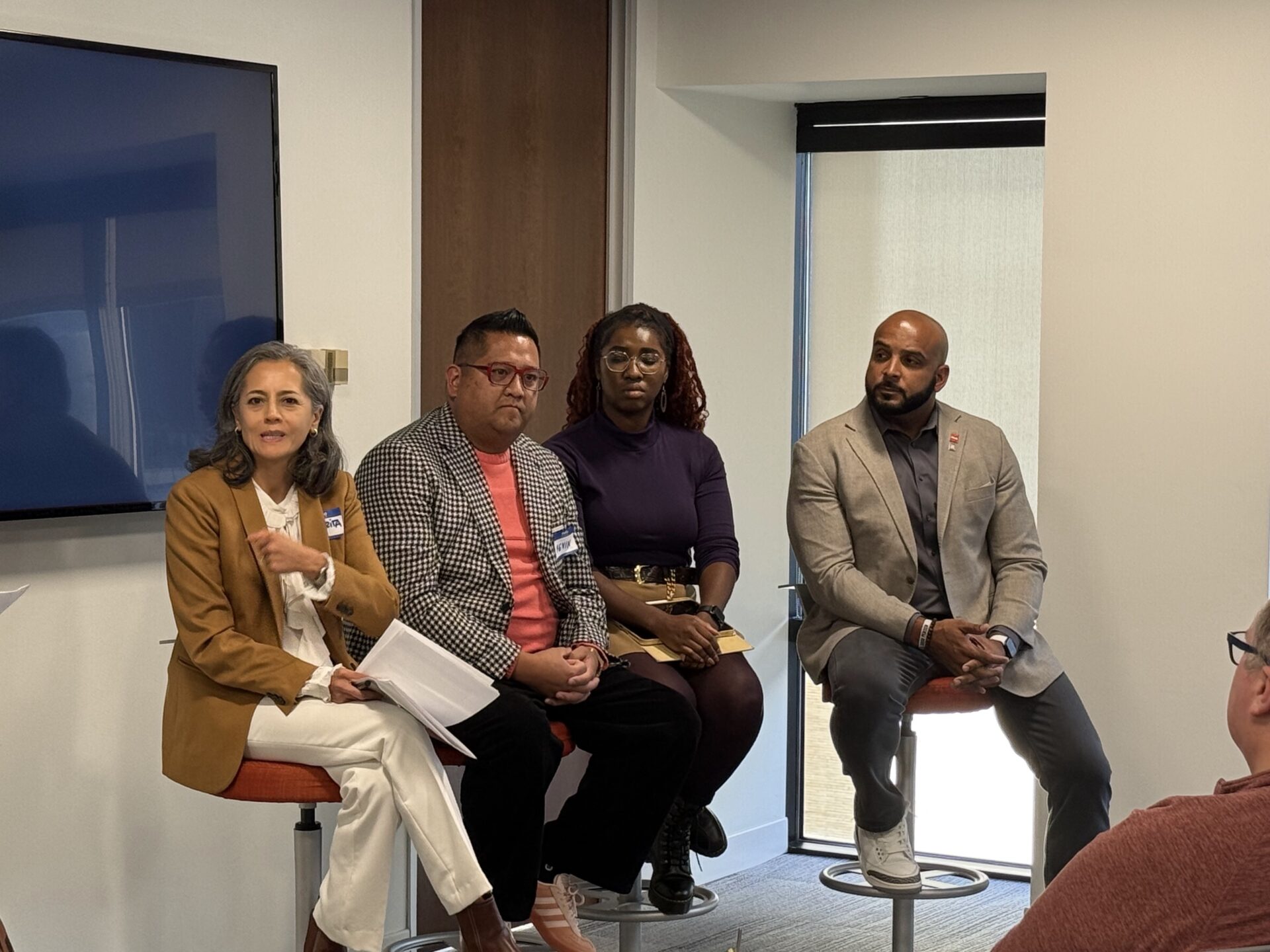
At the State of DEI Conference in Denver, the J.E.D.I. Committee organized a panel discussion addressing federal policies challenging diversity, equity, and inclusion in the workplace.
Photography: Sarah Morasso, AIA
What advice would you give to emerging professionals in Colorado?
I teach college-level architecture courses to high school students, and when I introduce them to the path of becoming an architect, they are often surprised by how long and demanding the journey can be. Many young people are drawn to architecture without fully understanding the commitment it requires, and perhaps that is why some lose their way along the journey.
I recommend not looking for an easier path. Being an architect carries a great responsibility, and I believe that responsibility is part of what makes the profession meaningful.
The beauty of the journey is in the process: seeing a building come to life and watching people make it their own. Along the way, an architect develops a passion for building not only buildings, but places where people can live, explore, play, and enjoy their lives.
When you finally see that joy in someone’s face, you realize that all the challenges and sacrifices along the way were worth it.
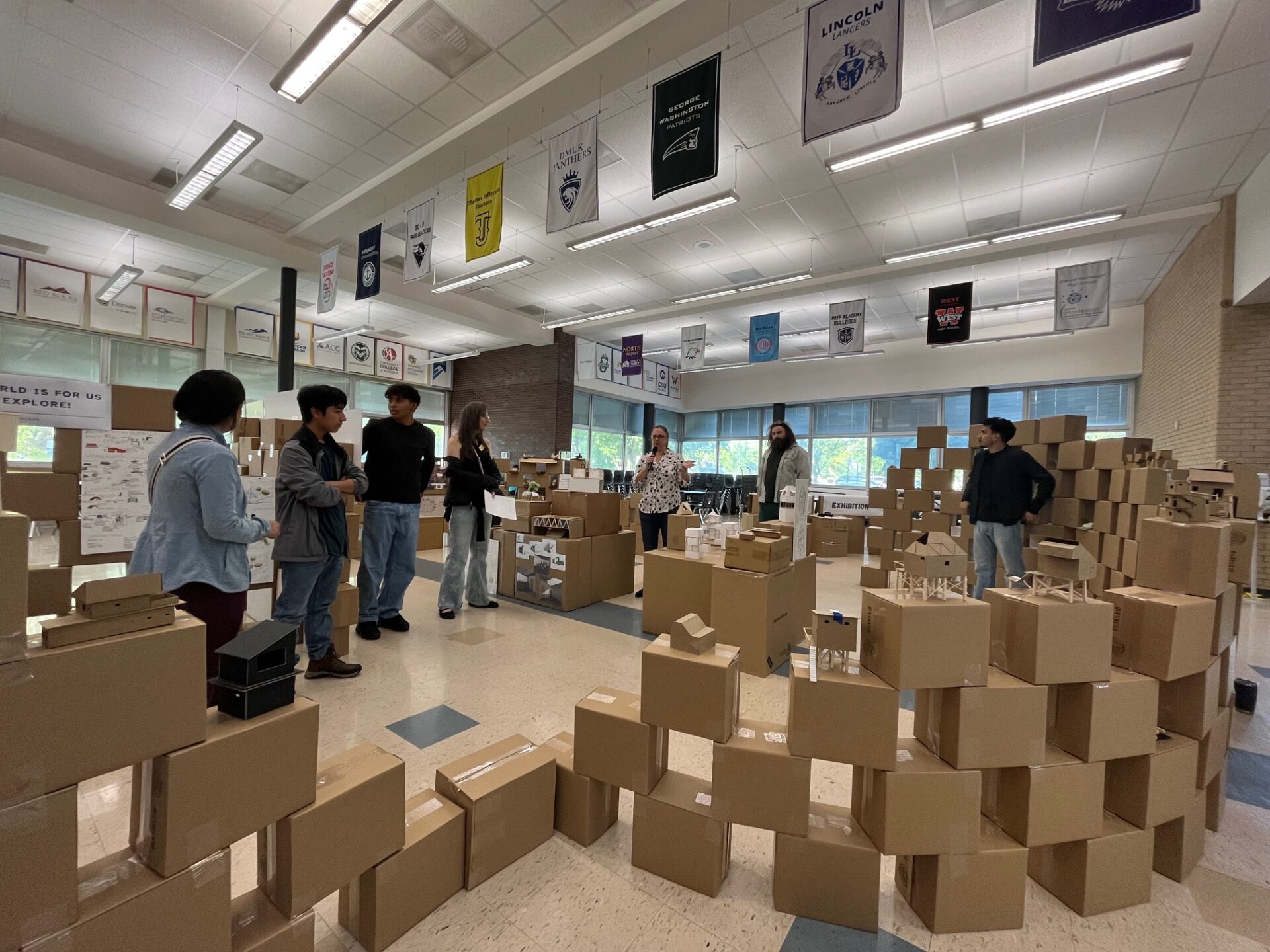
We organized an exhibition at the Career Education Center to showcase our students’ projects and give them an opportunity to demonstrate their creativity, skills, and knowledge. At this Early College, many of our students come from low-income and historically underrepresented communities, making it especially meaningful to create a platform where their talent and potential can be recognized.
Photography: Margarita Gonzalez, Assoc. AIA
What are you currently reading, listening to, or learning?
Over the summer, I joined a book club reading Orbital by Samantha Harvey. The book follows six astronauts circling Earth, physically separated from it and reflecting on humanity, our planet, and what it means to belong.
Their descriptions of Earth from orbit made me think about how much we take for granted: from that distance, there are no borders, races, or religions, only one planet and one shared home. It reminded me that we don’t simply inhabit buildings; we inhabit a planet. For me, architecture is therefore not only about creating shelter, but also about strengthening our relationship with the place that makes life possible.
At the same time, Orbital offers a nostalgic view of our planet and makes us ask: How can we improve our living conditions while reducing our impact? And shouldn’t we architects lead the way?
I’m also fascinated by the possibility of life beyond Earth. If we were to inhabit Mars, we would first have to recreate many of the conditions Earth provides naturally: air, water, shelter, and a livable climate.
This raises an exciting question for architects: What happens to architecture when the environment itself becomes part of what we have to design? I’m fascinated by what this next chapter of humanity could mean for how we live, adapt, and imagine the future.
Thank you to Margarita Gonzalez, Assoc. AIA, for sharing her story and reflections on listening, belonging, and opening doors for the next generation.
Congratulations on being recognized as AIA Colorado’s 2026 Associate of the Year!