AIA Colorado Member Spotlight celebrates the architects who are shaping Colorado’s built environment and strengthening our profession. Through conversations about design, leadership, career paths, and the communities they serve, this series offers a personal look at the people behind the projects and the ideas that continue to move architecture forward.
AIA Colorado Member Spotlight
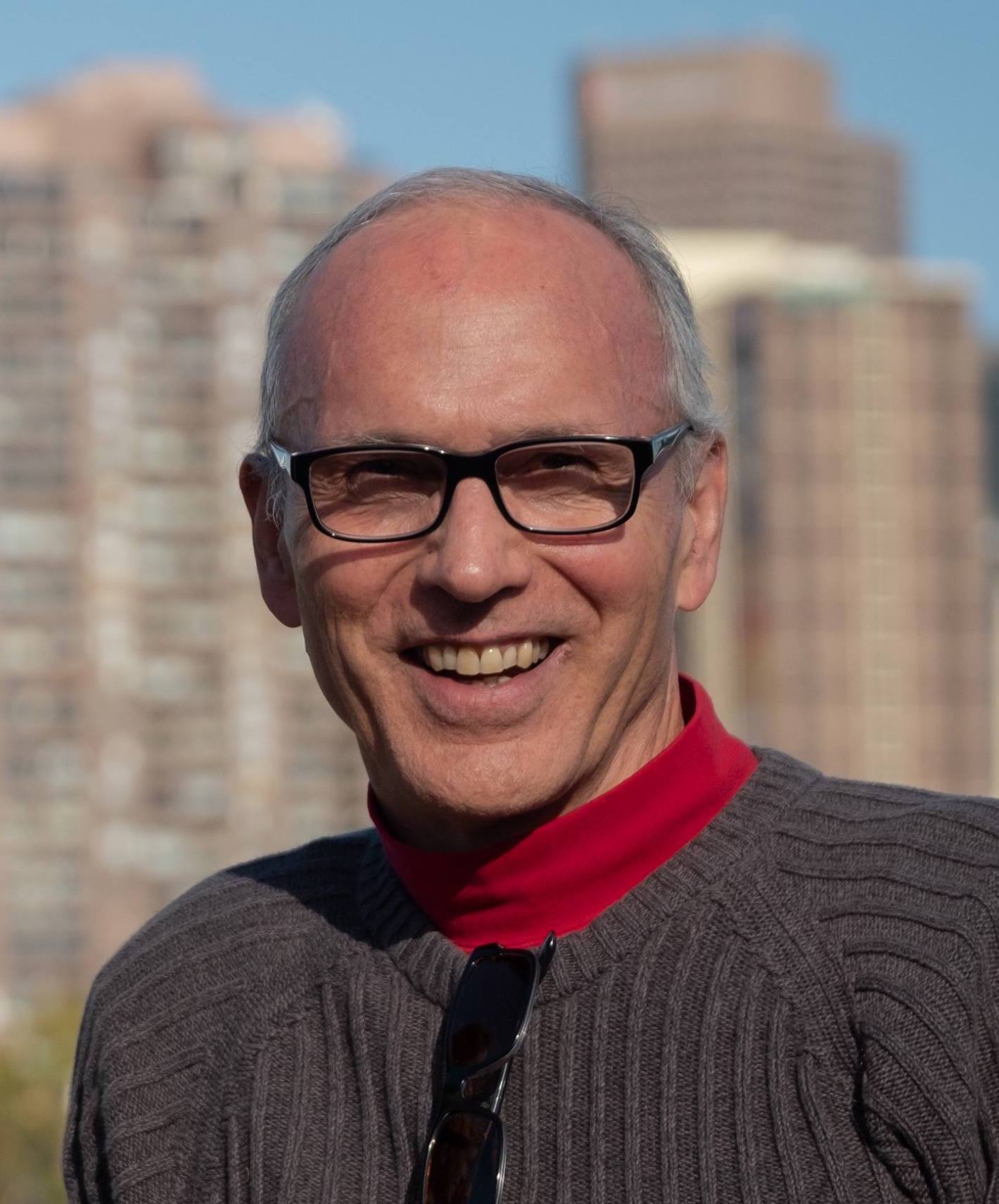
Mark Broyles, AIA
Title: Former Chair and Professor, Architectural Technology; Current Adjunct Instructor
For Mark Broyles, AIA, architecture began with drawing—a childhood fascination that became a career spanning design practice, urban design, and architectural education. Along the way, mentors and experiences working across the United States and in London shaped his belief that meaningful architecture grows from an understanding of place, an openness to questioning assumptions, and a willingness to keep learning.
AIA Colorado’s 2026 Educator of the Year, Mark served as Chair of the Architectural Technology program at the Community College of Denver for 13 years before retiring from full-time teaching in 2026. He continues as an adjunct instructor, bringing decades of professional experience to his work with students. His practice has included residential and school design, work on the initial Denver Union Station master plan team, and masterplanning for the National Trust at Sutton Hoo in the United Kingdom.
In this Member Spotlight, Mark reflects on the mentors who shaped his approach, the responsibility of caring for historic places, his hopes for a distinctly Coloradan architecture, and the advice he continues to pass along: never stop drawing.
The Conversation
What drew you to architecture, and when did you know it was the right path for you?
Drawing, drawing, and drawing—since I was very small. I never could stop and needed to find a way to draw that could provide a decent living.
That, and a sense of wanting to participate in the search for a utopian ideal that’s so compelling in the drawings and work of people like Frank Lloyd Wright, Alvar Aalto, and Le Corbusier.
Who or what has most influenced your approach to design?
Several mentors in particular: Robert Vickery, an influential professor and my first employer in Charlottesville, Virginia, who always encouraged us to search for the right questions; and Jack Rinehart, AIA, whose attention to detail and drawing skills were transformational.
Robert Hoshide, AIA, and Jack Williams, AIA, my bosses in Seattle, taught me flexibility, tolerance, negotiating skills, and a sense of humor about the practice of architecture.
Mark Johnson of Civitas taught me to never lose a more global perspective of any design problem. And Georgina Livingston, my boss in London, brought me into the world of landscape architecture and a deep appreciation for the natural world and its potential to support human-centered design.
What is a pivotal moment in your career that changed how you think about architecture?
My nearly five years in London working in a landscape architect-led practice dramatically changed my mindset about the importance of site design and environmental accommodation in architecture.
It also gave me the firm belief that practice in the United States has much to learn from contemporary practice in other parts of the world that we are not as attuned to as we might be.
How would you describe your design philosophy in a few sentences?
I think the best design flows from challenging expectations, particularly when they are rooted in a fossil-fueled conception of the built environment.
I think real, lasting beauty is inextricable from a design’s success in providing utility and affordances, and needs to arise from the genius loci, or spirit of the place—its climate, material resources, ecology, and human culture—if it is to have any degree of authenticity.
Any aspect of what we might think of as contributing to that quality of beauty—symmetry, style, ornament—if applied simply for its own sake, is destined to produce a superficial architecture that will be short-lived.
What is a project that challenged you, and what did you learn from it?
The work we did at Livingston Eyre and Associates in London for the National Trust at Sutton Hoo, an Anglo-Saxon royal burial site, really challenged us to consider how to masterplan a place with nearly 1,500 years of layered history.
What layers should remain visible and part of the historic narrative? Which might be made invisible, either through conscious design or inadvertently through hubris or carelessness?
The process impressed on me and our team the responsibility of stewardship and a big helping of humility in order to do the best job we could of passing along an important place to future generations.
In your view, what role should architects play in shaping Colorado’s communities?
We need to find a truly Coloradan design ethos. Too much of what we have done over our first 150 or so years could be anywhere.
We have such a unique environment and such a precious ecology that is not yet truly reflected in how we build here. Denver should be one of the most unique urban places in the United States.
Our relationship to the sun is the place every building design in Colorado should start with. Any building in Colorado a visitor encounters should produce an “ah, only in Colorado” kind of mental response.
Our relationship to the sun is the place every building design in Colorado should start with.
How is your work responding to issues such as sustainability, resilience, or equity?
Those three issues are our Job One. And we won’t get to any one of these three without the other two.
To do so, we have to take a sledgehammer to 70 years of public preconceptions about what architecture should do or should be about.
Why are you a member of AIA Colorado?
It’s where I can extend my support of architectural education into the profession, along with our colleagues in NOMA.
What advice would you give to emerging professionals in Colorado?
What Robert Vickery wrote in my Introduction to Architecture journal: Never Stop Drawing.
By hand, that is.
Never Stop Drawing.
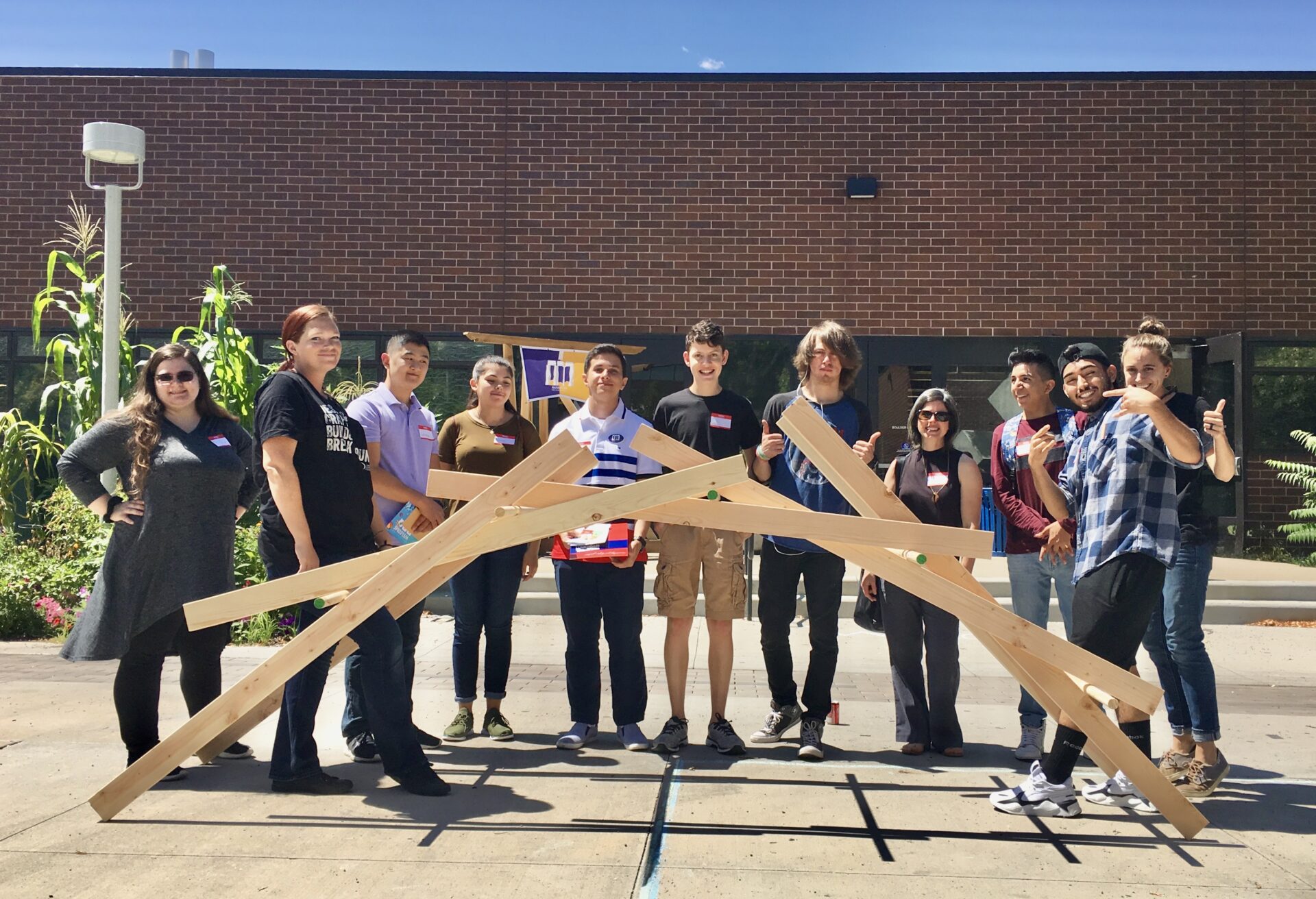
Community College of Denver students building a Da Vinci bridge.
What inspires you outside of architecture?
Music! As an amateur musician—and I DO mean amateur—I nevertheless have an appreciation for the connections between music and architecture: the inspiration for movement, ritual, harmony, proportion, and synchrony, and the commonality of their immediacy juxtaposed with their ephemerality.
What are you currently listening to?
Keb’ Mo’, Ralph Vaughan Williams, Ottorino Respighi, and Bruce Springsteen.
If you were not an architect, what would you be doing?
Probably spending more time trying to be a better musician!
What is a place in Colorado that continues to inspire you?
Garden of the Gods, very definitely!
What is something people might be surprised to learn about you?
I have four trumpets and a flugelhorn…
Thank you to Mark Broyles, AIA, for sharing his perspective on drawing, design, stewardship, and architectural education. Congratulations on being named AIA Colorado’s 2026 Educator of the Year!
Thank you to Mark Broyles, AIA, for sharing his perspective on drawing, design, stewardship, and architectural education.
Congratulations on being named AIA Colorado’s 2026 Educator of the Year!
This website uses cookies to improve your experience. We\'ll assume you\'re ok with this, but you can opt-out if you wish.
Read More
Cookies are small text files that can be used by websites to make a user\'s experience more efficient. The law states that we can store cookies on your device if they are strictly necessary for the operation of this site. For all other types of cookies we need your permission. This site uses different types of cookies. Some cookies are placed by third party services that appear on our pages.
Necessary cookies help make a website usable by enabling basic functions like page navigation and access to secure areas of the website. The website cannot function properly without these cookies.
Marketing cookies are used to track visitors across websites. The intention is to display ads that are relevant and engaging for the individual user and thereby more valuable for publishers and third party advertisers.
Preference cookies enable a website to remember information that changes the way the website behaves or looks, like your preferred language or the region that you are in.