This website uses cookies to improve your experience. We\'ll assume you\'re ok with this, but you can opt-out if you wish. Read More
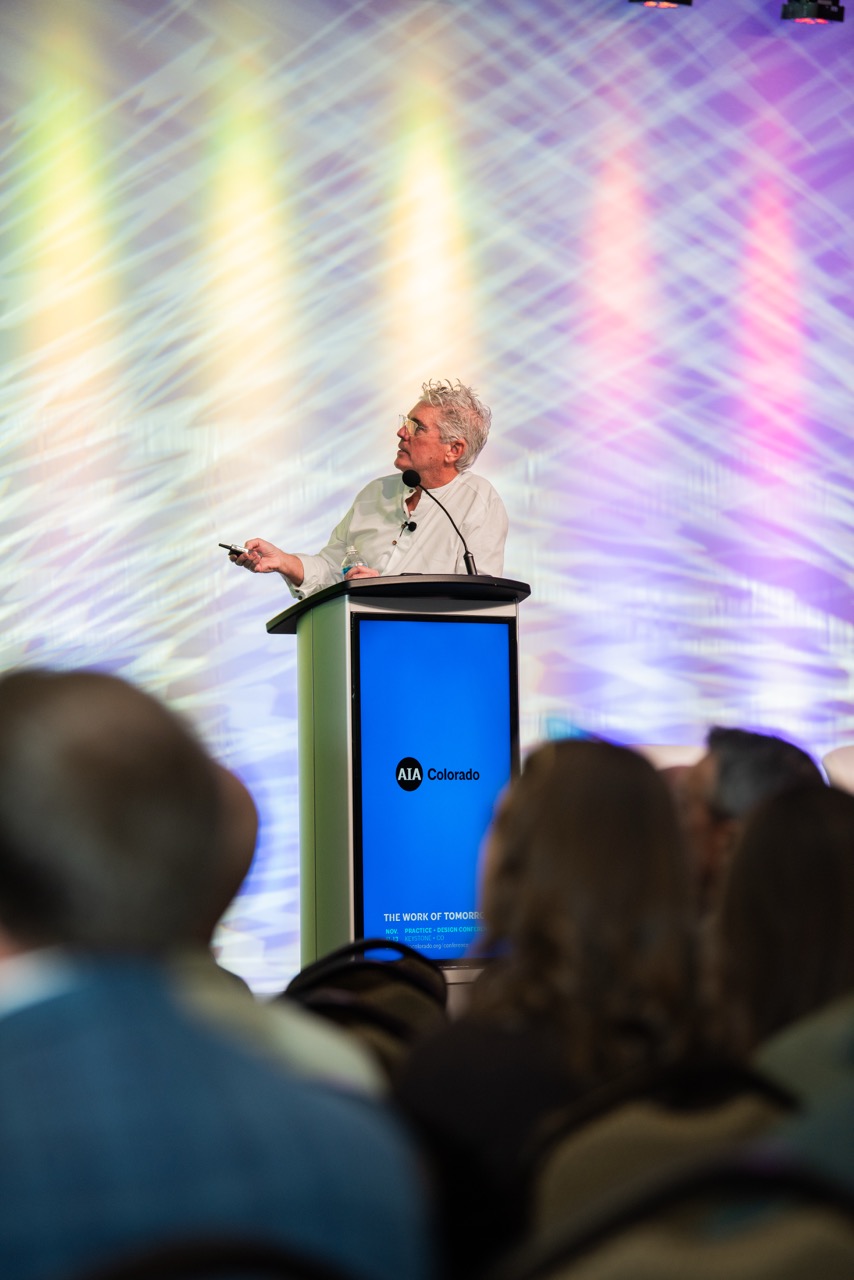
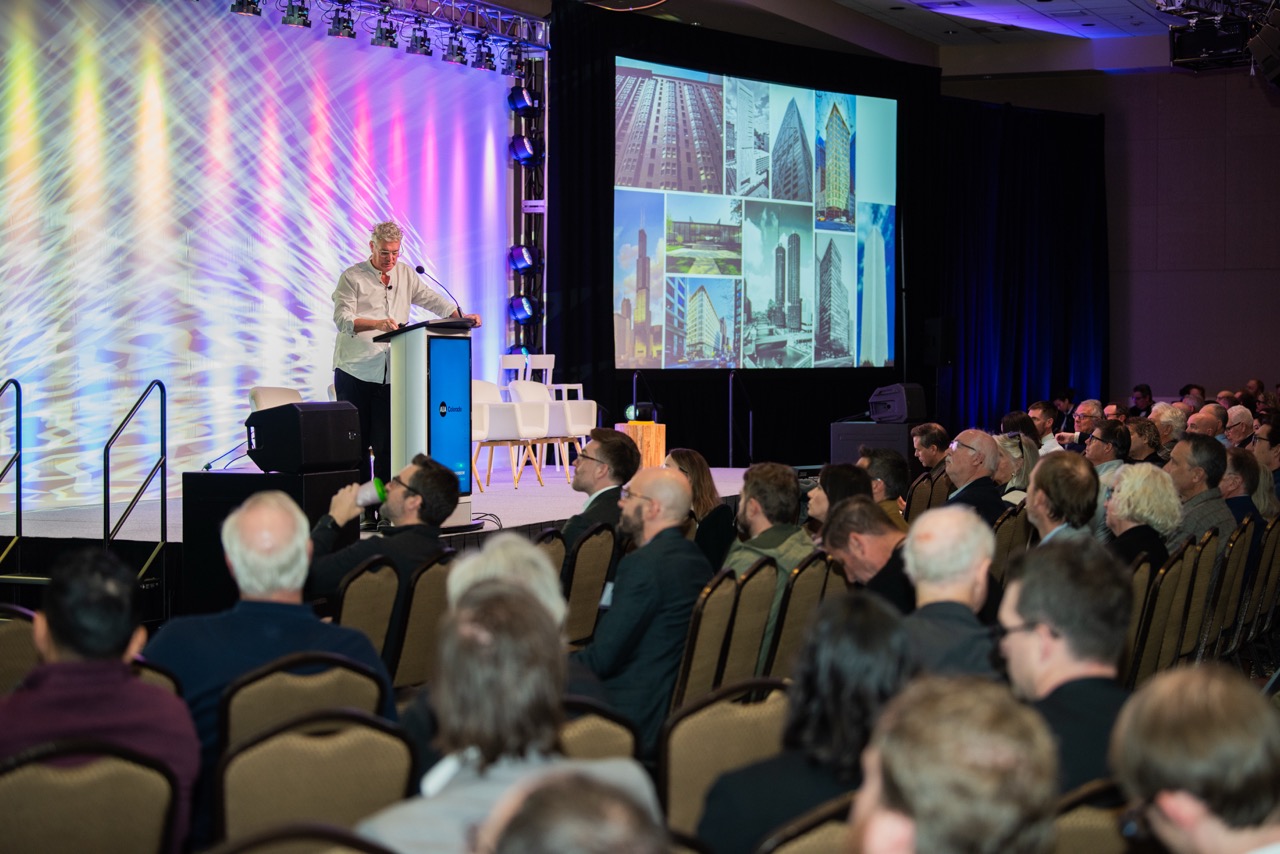
A narrow passage off a Chicago street opens into a garden. Across it, the library of the Poetry Foundation comes into view. At AIA Colorado’s 2026 Practice + Design Conference, John Ronan, FAIA, used that sequence to show how an everyday act of entering a building can prepare someone to listen, read and pay attention differently. His keynote, “Out of the Ordinary,” began with the practical building types that made Chicago’s architectural reputation and asked how much more they could do.
At the University of Michigan, that question began with a former automotive-parts factory. Ronan’s team kept the building’s industrial character and made the new ramp, mezzanine and other interventions legible within the old shell. At the Illinois Institute of Technology’s innovation center, the team took a different kind of inheritance, the campus’s 24-foot structural grid, and used it to make room for a cycle of group work, making and iteration. A responsive ETFE envelope and radiant decking made the building itself part of the experiment.
At the Chicago Park District headquarters, the project returned a former industrial site to public use and found roles for reclaimed Chicago common brick and ash salvaged from the city’s parks. A limited palette and repeatable assemblies gave the design a better chance of surviving a low-bid public procurement process. At the Independence Branch Library and Apartments, a branch library shares the site with 44 affordable senior homes. Ronan described balcony colors as a way for residents to recognize and claim their own address from the street.
The proposed Fallen Journalists Memorial in Washington, D.C., brought the discussion back to perception. In Ronan’s tests, the same cast glass could read as clear, distorted or opaque depending on where the viewer stood. The glass made a question about how facts come into focus something visitors could encounter by walking around it.
Key Takeaways
Key Takeaways
- Make arrival part of the architecture. At the Poetry Foundation, a narrow passage gives way to a garden before the library comes into view. That sequence turns the ordinary act of entering a building into a transition from the street to a place for reading and listening.
- Use what’s already there to give a project its identity. At the University of Michigan, a new ramp and mezzanine are clearly legible within a former factory. At the Chicago Park District headquarters, reclaimed Chicago common brick and ash salvaged from city parks tie a new civic building to familiar local materials.
- Make structure and building systems serve the way people work. At IIT’s Innovation Center, the campus’s historic 24-foot grid organizes spaces for collaboration, fabrication, and iteration. A weather-responsive ETFE facade and radiant decking help the building adapt to changing conditions.
- Test ambitious details and make them repeatable where possible. Full-scale mockups let Ronan’s team work through unconventional materials and connections. At the Park District headquarters, a limited palette and repeatable wall assemblies made design intent easier to carry through low-bid construction.
- Design affordable housing so residents can recognize their own front door. At the Independence Branch Library and Apartments, 44 affordable senior homes share a site with a public library. Details such as distinct balcony colors give residents a way to pick out their own home from the street.
- Let material behavior tell part of the story. In the proposed Fallen Journalists Memorial, cast glass shifts from clear to distorted to opaque as visitors move around it. The changing view gives physical form to the difficulty of bringing facts into focus.

John Ronan, FAIA, is an architect, writer, and educator based in Chicago and Founding Principal of John Ronan Architects where he serves as Lead Designer.
Known for his abstract yet sensuous work exploring materiality and atmosphere, John holds a Master of Architecture degree with distinction from the Harvard University Graduate School of Design and a Bachelor of Science degree from the University of Michigan. His work has been exhibited internationally and covered extensively by the international design press. He has lectured widely and there are three publications on his firm’s work. John’s writings have appeared in books, architecture journals and Poetry magazine, and his firm is the recipient of numerous honors, including multiple National AIA Architecture Awards. In 2016, his firm was one of seven international finalists for the Obama Presidential Center and his Poetry Foundation building was included in Architectural Record’s list of the best 125 buildings of the past 125 years. In 2017 John received the American Academy of Arts and Letters Architecture Award and in 2024 his firm was named winner of the competition to design the Fallen Journalists Memorial on the Mall in Washington. He is currently the John and Jeanne Rowe Endowed Professor of Architecture at the Illinois Institute of Technology College of Architecture.