Keynote: Mithun: Design for Positive Change

ENGAGE 2023 PRACTICE + DESIGN CONFERENCE: KEYNOTE
Mithun: Design for Positive Change
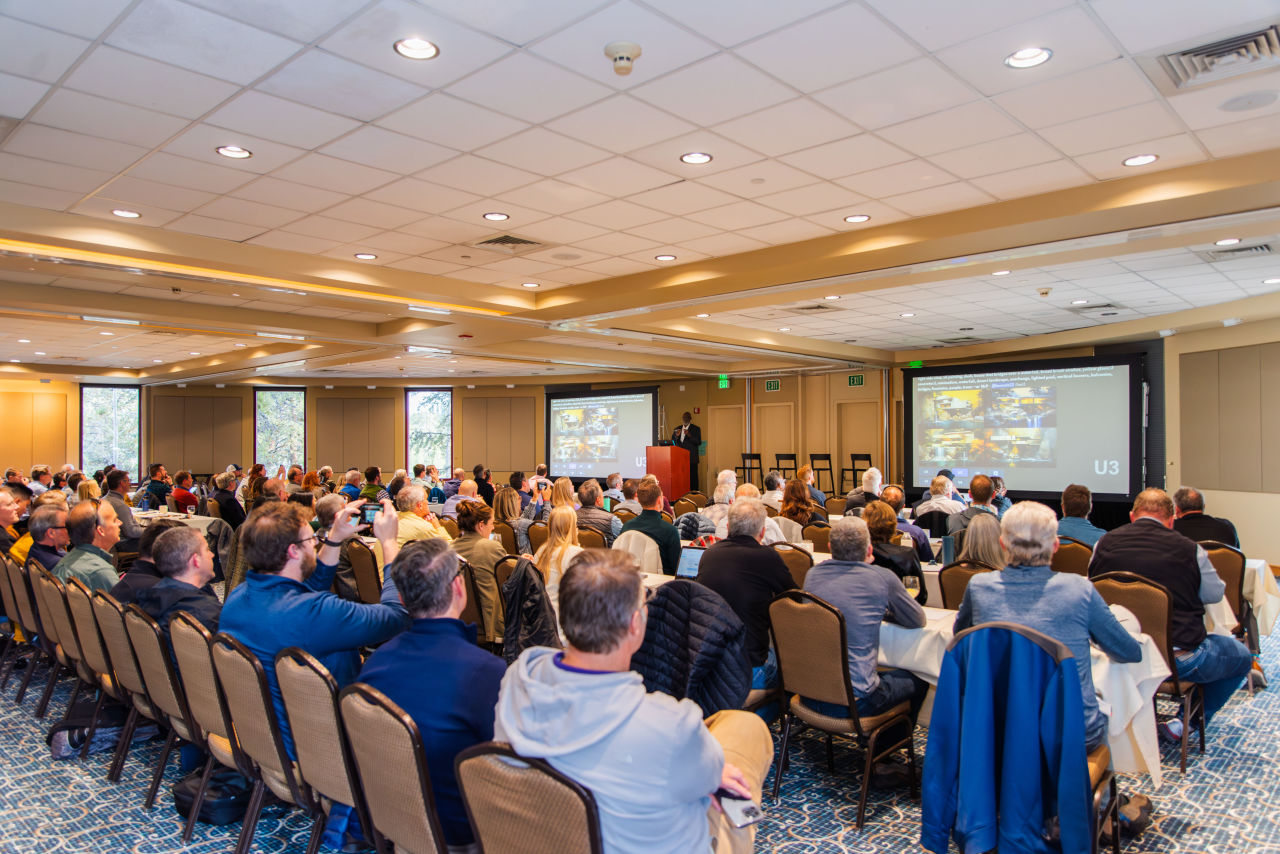
Presented by David Goldberg, FAIA, President, MITHUN, at ENGAGE 2023 Practice + Design Conference.
The second keynote speaker of the 2023 AIA Colorado Practice and Design Conference was Dave Goldberg from the architecture firm Mithun. As president of the practice, Dave presented the projects and approach to architecture that led to the firm’s selection as the 2023 AIA Architecture Firm of the Year.
Mithun was founded in 1949 by Omer Mithun in the Pacific Northwest and is now considered to be in its fourth and fifth generations of leadership. Dave focused on the evolution of the practice and their arrival at today’s mission of “Design for Positive Change.”
Based on a spirit of design, education, environment, urban-placemaking, and civic engagement, the firm is notably structured as an interdisciplinary design practice that embraces collaboration. To make a bigger impact on the world, Mithun evolved from an architecture-centric practice to a collaborative interdisciplinary, project-centric practice that succeeds by integrating multiple design disciplines into the design process. Today, in addition to architecture, their integrated design model includes landscape architecture, urban design, planning, and research and development.
Dave presented the four pillars of the Mithun design firm: Collaborative Interdisciplinary Model, Centering Equity, Sustainable Design Leadership, and Innovative Research.
Collaborative Interdisciplinary Model
Meant to dispel the myth of the “all-knowing genius designer,” the new paradigm of architecture is to “collaborate, listen, and lead the process.” For Mithun, all disciplines having a “seat at the table” is both figurative and literal. In addition to each collaborator contributing input during design, the firm has been amplifying collaboration for years by embracing the laptop so that all team members can sit around the “big table” and screen to work together.
Centering Equity
While acknowledging the majority-white led firm and profession in general, Mithun is committed to using design to combat racism, bias, and discrimination in all forms. In addition to work on affordable housing projects and work with tribal and underserved communities, Mithun provides pro-bono design services by contributing approximately 1% of their net revenues annually.
Sustainable Design Leadership
Wide-ranging evidence of Mithun’s leadership in sustainability includes their early adoption of the 2030 Challenge, carbon-neutral operations since 2004, and seven AIA COTE design awards. Additionally, the firm helped develop the LEED Neighborhood Development program, Sustainable Sites Initiative, and created a Build Carbon Neutral online calculator to estimate the embodied carbon of construction projects.
Innovative Research
In 2016, Mithun formalized their R+D efforts to build upon past research and innovation success. Mithun R+D was created to sponsor internal project research, external partnerships, and intellectual research pursuits. Since the R+D formalization, the firm has funded over $1 million and 10,000 hours of research, with the participation of more than 100 Mithun staff.
Concluding the presentation, Dave shared their Louisiana Children’s Museum project that embodies the values and firm mission of “Design for Positive Change.” An AIA COTE Top Ten Plus Award winner, the project creates an outdoor learning laboratory for the children of New Orleans that exemplifies the triple bottom line of social well-being, environmental health, and a just economy. “Growing out of the trauma of Hurricane Katrina, the project became a model of resilience, integration of landscape, and bioclimatic design.”
See more ENGAGE 2023 Practice + Design Conference coverage at aiacolorado.org/conference.
Also, keep an eye out for Dave’s conversation with Adam Wagoner on the Architect-ing podcast to be released in the coming weeks.
Keynote: The Future of Cities

ENGAGE 2023 PRACTICE + DESIGN CONFERENCE: KEYNOTE
The Future of Cities
Presented by Carol Ross Barney, FAIA, HASLA, Principal, Ross Barney Architects, at ENGAGE 2023 Practice + Design Conference.
Carol Ross Barney was a refreshing start to the final day of the conference. I don’t know what I was expecting, but the breadth of the history of Chicago, the impact of cities on the environment, and how we can make an impact one project at a time, was not only informational, but also inspirational. Carol also delivered this with a great sense of humor that was much appreciated first thing in the morning.
Some striking statistics Carol shared to set the scene is that in 2000, 50% of the world’s population lived in cities, today that number has increased to 56%. By 2050 the urban population is expected to double, with 7 out of 10 people living in cities. That is some serious density. Cities are also hugely imperfect and have a significant impact on our environment. One third of energy and carbon consumption are generated by cities.
One way that Ross Barney Architects is hoping to improve on this situation is the revitalization and reconstruction of some of the Chicago (CTA) train stations that were demolished during the 1960’s and 70’s. We thought we had solved it all with the vehicle and interstates, and as such, we felt confident in demolishing critical infrastructure.
With the growth of cities and the environmental impact they have, infrastructure, especially mass transit, is extremely important. Ross Barney has been working with the City of Chicago on innovative ways to rebuild some of these lost stations, often with the lines remaining active. Through these projects, the team has addressed significant noise pollution issues (one station was above the OSHA approved decibel rating for a warehouse working environment), protection from the Chicago weather, and self-cleaning precast concrete solutions.
Carol also shared the firm’s resiliency work with McDonalds. Yes, you read that right. Ross Barney Architects designed the first ever LEED certified McDonalds in Chicago. Based on that success, McDonalds came back and asked for a Net Zero restaurant at Disney World in Orlando. Not only does the climate make that a difficult task, but also the significant energy consumption required for the cooklines.
The project utilized creative, automatic louvers for cross ventilation, a full roof of PV, and a cutting edge “stand by cook line.” Typically, cook lines are running constantly and thus consuming significant energy. For this project, Ross Barney and McDonalds worked with the manufacturers to develop a standby line; this allowed the energy consumption to be drastically reduced and the goal of net zero to be within reach. With the addition of passive cooling technology via the automatic louvers, building form, and the solar roof, the project was able to meet net zero.
A fun tidbit to the Disney World McDonalds was the lawyer’s requirement that the building have an audio notice prior to the louvers opening instructing the patrons that “the building is about to breathe; please keep fingers clear of the louvers.” ….the hot coffee incident really left a mark on their legal team.
Carol rounded out her presentation with some work the firm has been doing in smaller cities. One such project was the Railyard Park in Rodgers, Arkansas. This town of 75,000 people was once a “water stop” along the Frisco rail line. Their downtown was bordered by the abandoned loading space and previous site of the train depot; leaving a large swath of unutilized area. Ross Barney Architects designed a park within this space for the community to use, which was the product of many community engagement efforts. The city has adopted the park as their space and holds frequent events (up to four a week) within it. A previously underutilized space has been reborn as a gathering place for the community.
Carol’s presentation covered a lot of ground and a variety of project types and scales. The biggest take away for me was to not be overwhelmed with trying to fix whole cities at once. Focus on the individual project and what impact it can have on the city and the community. Collectively and over time, with thoughtful design, we can make meaningful change in our communities. Bonus points if you can do it with a little humor.
See more ENGAGE 2023 Practice + Design Conference coverage at aiacolorado.org/conference.
Also, keep an eye out for Carol’s conversation with Adam Wagoner on the Architect-ing podcast to be released in the coming weeks.
Keynote: Designing in Timber

ENGAGE 2023 PRACTICE + DESIGN CONFERENCE: KEYNOTE
Designing in Timber: a Collaborative Approach to Architecture, Engineering, and Construction
Presented by Laura Britton, AIA, Associate, Shigeru Ban Architects, Dean Maltz, AIA, Partner, Shigeru Ban Architects, and Greg Kingsley, PhD, PE, President & CEO. KL&A, Engineers & Builders at ENGAGE 2023 Practice + Design Conference.
Capping off the 2023 Practice + Design Conference, the fourth and final keynote presentation explored Shigeru Ban’s collaborative approach to architecture, engineering, and construction through a series of case studies representing the architects’ 38-year trajectory of work in wood.
Why Wood?
Wood is a renewable resource, it is often locally sourced, it provides biophilic design benefits, it helps achieve clean construction sites, and it is a high-performing material from a carbon sequestration and life-cycle analysis perspective.
What is mass timber?
Mass timber is solid wood building products, such as glulam beams and cross-laminated timber (CLT) panels that use small diameter timber to build up large structural elements. The small diameter timber provides the responsibly sourced material that can help manage forests. Additionally, timber is generally oversized to prevent burning by allowing the outer layer to char, and an example of a 1,300 year old Japanese temple was shown as evidence of the materials longevity.
Shigeru Ban Architect’s strength is how the material informs the building form and provides integrated structural and architectural solutions that portray a building’s authenticity. In many solutions, the structure is also the finish.
Because timber design and construction necessitate an interdisciplinary approach at the project’s outset, structural engineer Greg Kingsley was there to present ten key considerations for every timber project.
- Is timber the right solution? It is not right for every project!
- Establish your building type and understand the code requirements.
- What is your fire-resistance rating?
- Acoustic requirements (timber is inherently bad for acoustics)
- Establish your grid (deflection and vibration criteria)
- MEP strategy?
- Optimize for wood volume.
- Find potential suppliers.
- Connection design
- Erection strategy and tolerances
These code and engineering questions are all critical to the final architectural solution and need to be addressed early. Following these important considerations, the group presented a series of case studies that demonstrated successful and iconic timber projects and the practice’s design evolution in the building material.
Case Studies
GC Osaka Building – Feature: wooden fire protection around steel structure. This project demonstrated an early and innovative use of timber in construction. The building used a steel structure, but for the fireproofing Shigeru Ban tested and proved that a wood wrap will provide the necessary fire rating as well as the final wood finish.
Tamadic Nagoya – Feature: CLT concrete formwork left in place for wood finish and added strength. Similar to the GC Osaka project, concrete was required structurally, but CLT formwork was used as a leave-in-place form to influence the final look of the building.
Centre Pompidou Metz – Feature: laminated wood in hexagonal woven pattern. This project exhibited the strength of wood as a building material in the final architectural form, however, this earlier example still relied on elements of steel at the connection points of the grid.
Tamedia New Office Building – Feature: seven story rigid frame entirely out of timber without steel joints or braces. In this project, the integration of architecture and structure succeeded in a fully wood frame without the reliance of steel at the joints.
Aspen Art Museum – Feature: long-span timber space frame roof structure with woven wood panel façade. This building starts to show more sophistication by the wood-only connections and CNC curved truss webs that gradually increase in depth at column locations to withstand additional forces.
Swatch Omega / Omega Factory – Feature: timber grid structure that mirrored the precision, clean, and quiet construction of the watches created in the buildings. Because of its undulating shape, the timber structure in this project was built from a digital, parametric model rather than traditional construction drawings. It was also a highly integrated design which used contiguous perforated ceiling panels to allow low volume air distribution to meet clean room standards, ETFE roof cushions for daylight, glass, CLT solid panels, and PV panels. The entire volume of timber used (4,600m3) corresponds to 10 hours of growth of all of Switzerland’s trees.
Kentucky Owl Park – Feature: multiple timber structures in a park setting at one of the oldest whiskey distilleries in the U.S. The buildings showcased the distilling process and incorporated visual elements of the local bourbon-making process
The case study presentation provided an overview of Shigeru Ban’s design evolution, illustrating the progression from cardboard tubes to the sophisticated parametric digital fabrication of timber elements. Ban’s commitment to innovation and sustainability was evident throughout the trajectory of his career.
See more ENGAGE 2023 Practice + Design Conference coverage at aiacolorado.org/conference.
Also, keep an eye out for Laura and Dean’s conversation with Adam Wagoner on the Architect-ing podcast to be released in the coming weeks.
Pre-Conference: A.I. in Architecture
ENGAGE 2023 PRACTICE + DESIGN CONFERENCE: Pre-Conference Technology Deep Dive
Artificial Intelligence in Architecture Practice and Design: Navigating Technology’s Role In Our Future Workplace
Presented by Damon Leverett, AIA, Senior Adjunct Lecturer, University of Arizona, President, AIA Arizona at ENGAGE 2023 Practice + Design Pre-Conference.
In a thought-provoking lecture delivered by Damon Leverett, the intersection of Artificial Intelligence (AI) and architecture took center stage, with a specific focus on the fascinating avenue of Image to Text. This comprehensive primer, grounded in meticulous observations and studies, sought to demystify AI’s role in reshaping the architectural profession.
Leverett began by prompting attendees to confront a crucial question: What is your greatest fear about AI in the architecture profession? This introspective query set the tone for a discourse that aimed to address both the promises and perils of integrating AI into architectural workflows.
A pivotal historical context was provided, revealing that the American Institute of Architects (AIA) is no newcomer to technological advancements, tracing its roots back to a conference in 1956. Leverett highlighted the sporadic evolution of AI tools over the years, from the advent of Google assistance to the omnipresence of Alexa, search engines, autocorrect, and Grammarly. The evolution of these tools underscored the gradual incorporation of AI into our daily lives, laying the groundwork for its application in the field of architecture.
The lecture emphasized the contemporary relevance of AI in architecture, pointing to the evolution of cloud technology as a key enabler. Leverett noted that the capacity to handle vast datasets securely in the cloud has propelled AI into the forefront of architectural innovation. The lecture then delved into various AI pathways, including Text to Text with Chat GPT, Text to Image exemplified by Midjourny, and other applications such as Text to Code and Text to Speech.
One of the standout applications highlighted was the use of Drone LiDAR in architecture, showcasing its ability to identify errors in construction processes. Among the AI platforms discussed, Stable Diffusion, Leonardo, and Midjourny were examined, with Midjourny emerging as a frontrunner, outperforming others by a significant margin.
The mechanics of AI-generated images were elucidated, with a focus on Machine Learning, Text to Image processes, and Natural Language Processing. Leverett emphasized the importance of alignment in generating desired outcomes and explored the diffusion process, drawing an analogy from a ball to illustrate the transformation from possibility to certainty.
Practical insights into writing effective prompts for AI were shared, outlining a systematic approach that starts with the highest priority information and progressively adds details. The “magic word” concept, exemplified by terms like “molten glass” or “cubic,” showcased the ability of AI to produce visually stunning outcomes based on specific prompts.
Ethical considerations in AI-driven design were underscored, urging practitioners not to use living architects’ names in prompts and emphasizing the distinction between copying a building and emulating a style. Leverett signed his work with “+AI,” highlighting the collaborative nature of AI and human creativity. The lecture touched upon AI’s capacity to rapidly produce architectural precedents, a process that would traditionally require extensive global exploration.
The discourse then delved into the realms of Blending, Weighting, and Editing in AI, with a focus on techniques that were still in their infancy, including the combination of images and prompts. The concept of “Describe,” where AI generates textual descriptions of images, showcased the potential of AI in enhancing architectural communication.
Ethical considerations resurfaced, delving into questions surrounding copyright infringement and the use of living architects’ names. Leverett presented case studies, including an exploration of AI as an inspirational tool in a high school gym project and its role as a modeling and processing tool in a technology museum.
The lecture closed with a contemplation of the ethical dimensions of AI in the art world, particularly in a case where AI-generated art bore a resemblance to an artist’s work. Leverett urged caution, reminding attendees not to rely on AI results as absolute facts. The presentation acknowledged that the field is in beta, and while AI is a powerful tool for critical thinking in education, it will continue to evolve over the next 4-5 years.
In essence, Damon Leverett’s lecture provided a rich tapestry of insights, navigating the intricate landscape of AI in architecture. Attendees left with not only a heightened awareness of the transformative potential of AI but also a sense of responsibility to wield this technology ethically and thoughtfully in the pursuit of architectural innovation.
*Text composed by ChatGPT with the prompt: Write an 500-1000 word editorial summary for a lecture about AI in architecture. Use my notes: (human authored notes here).
See more ENGAGE 2023 Practice + Design Conference coverage at aiacolorado.org/conference.
Also, keep an eye out for Damon’s conversation with Adam Wagoner on the Architect-ing podcast to be released in the coming weeks.
Engaging Justice, Equity, Diversity and Inclusion (J.E.D.I.) Workshop

ENGAGE 2023 PRACTICE + DESIGN CONFERENCE: INNOVATION LAB
Engaging Justice, Equity, Diversity and Inclusion (J.E.D.I.) Workshop, a Collaborative Presentation by NOMA Colorado, EBECC (Equity in the Built Environment – A Colorado Coalition), and AIA Colorado’s J.E.D.I. Committee.
Presented on November 16, 2023, by Adriana Medina-López-Portillo, Ph.D., CPC, ELI-MP, Trainer and Consultant, Pangea Training, Jason Pugh, AIA, NOMAC, AICP, LEED AP, Global Director of Diversity, Equity & Inclusion, Gensler, Mei-Ling Krabbe, IIDA, NCIDQ, WELL AP, Workplace Strategist, Stantec, Raphael Chavez, AIA, NCARB, LEED GA, Project Architect, HDR, and Patricia Joseph Gill, AIA, NCARB, NOMA, NOMA President, The Abo Group at ENGAGE 2023 Practice + Design Conference.
This breakout session focused on five topics lead by 5 BIPOC facilitators in a small group setting. The room was set up with chairs in a circular configuration to share individual experiences and perspectives on each topic. The groups rotated twice during the time allotted.
Allyship: Facilitate by Mei-Ling Krabbe
Allyship is intentional, actionable commitment to speak up about bias. This discussion focused on barriers to being an ally that includes lack of awareness and empathy. In order to be a good ally one must be intentional, actionable and committed to continue allyship education.
Types of Bias: Facilitated by Jason Pugh, AIA
Bias is typically described in terms of racial, gender, age and implicit (unconscious bias) but this session explored other types of bias. Maternal bias occurs when women return from maternity leave and have to prove themselves all over again. “Prove it again” bias is when a group has to prove themselves more than others. Tightrope bias is when a group needs to be more politically savvy in order to succeed. And “tug-of-war” bias is where support or bias against a group can fuel conflict within that group.
Inclusivity: Facilitated by Patricia Joseph Gill, AIA
In this session, the group shared times in their life when they felt included. The sharing reflected empathy, recognition, and acceptance of differences, and support, care, and compassion. The group also shared times when they felt excluded. These were times when empathy and acceptance were not present.
Intercultural Competence: Facilitated by Adrina Madina-Lopez-Portilla
Intercultural competence is essential to creating an environment where talent from all backgrounds can thrive. A person’s experience of cultural differences both informs and constrains how the individual interacts with others. Moving beyond these person-specific constraints requires the development of intercultural competence.
Mentorship: Facilitated by Raphael Chavez, AIA
Being a good mentor means providing guidance, encouragement, feedback, and/or skills development to a student, an emerging candidate or professional. Successful mentoring programs create a supportive culture, establishes clear structures, and ensures accountability.
In summary, the participants in this session were challenged to be more Engaged in J.E.D.I. by adopting the following pledges:
- Focus on being a better ally.
- Using Mentimeter in my faculty meetings to include more voices.
- Publish and enable more diverse voices.
- Standing firm for the needs of myself and others.
- Encourage myself and others to be more aware of biases that we may encounter.
- To continue my personal growth of inclusion but to work harder at educating my peers as well.
- Being aware of my “excluded” moments to better move towards “inclusive” memories and actions with those around me.
- I pledge to advocate for inclusiveness for all underrepresented groups.
- I promise to interrupt and challenge bias in all forms when it shows up, both against me or others!
- Consciously providing more accessible designs and engaging more in local communities.
- Use my personal inclusive or exclusive feelings and experiences with my team so they feel included and connected.
- Making my practice a model of equity, diversity, and inclusion.
- Listen with an open heart before responding. Be aware of judgment and how it impacts the world broadly.
- Ally: Make sure students understand the different career options/pathways.
- Mentorship: Engage students in community design so the community can have a better understanding of what designers do.
- I plead to actively maintain a relationship with younger designers and architects in my office as a mentor.
- Continue to advocate for J.E.D.I. in the architecture profession and work towards diversifying the profession through increased opportunities to promote architecture as a career pathway for youth.
Drawn Out: Ideation + Sketch Solutions for Mental Health Environments

ENGAGE 2023 PRACTICE + DESIGN CONFERENCE: INNOVATION LAB
Drawn Out: Ideation + Sketch Solutions for Mental Health Environments
Presented Friday, November 17, 2023, by Stephen Parker, AIA, and Shahad Sadeq, Assoc. AIA, at ENGAGE 2023 Practice + Design Conference.
Elevate, Educate, Advocate
These are the three words that began the presentation on design strategies for mental health facilities. The question was asked: how can we as a profession use our collective knowledge and expertise to address the critical issue of mental health?
This workshop was conducted in two parts. Part one was to listen to a patient’s experience of checking in and residing in a mental health clinic. Part two was a hands-on sketching session that considered the experience of a woman with post-partum depression.
Listen
Shahad graciously told her experience of walking into the “best” psychiatric clinic in Dallas as she struggled with a nervous breakdown. She detailed personal, yet common, experiences of everyday life in a prototypical facility that falls short of the unique needs of a mental health patient. This included spaces, objects, and social dynamics which were both simple and complex such as: doors and door locks, temperature control, color and light temperature, food and exercise options for holistic health, and group spaces that can trigger sensitivities in other patients. These issues were all framed by acknowledging the challenge that mental health care facilities face in the form of budget and staffing shortages.
How do these challenges begin to be solved? It starts with “dignity driven” solutions that give patients agency in their experiences.
Sketch
After listening to a personal experience articulated the way many patients may not be able to, the audience was asked to break out into small groups and consider the following design strategies: empathy, experiential (right type/amount of stimuli), social integrators, recovery integrated, cultural competency (i.e. access to the sky is important for many indigenous cultures), patient autonomy, co-production, nature as therapy, play, voice and choice, art as therapy, reduced barriers between patient and care-giver, and care-giver burnout.
In small groups, while considering the design strategies above, the audience discuss, wrote, and sketched graphic solutions to the following four questions for a mother with post-partum depression:
- What does she say and do?
- What does she think and feel?
- What does she hear?
- What does she see?
This profound exercise where a collective group of people sit down with pen and paper to discuss, empathize, and consider what another human’s experience might look and feel like suggests a critical methodology that we as designers should follow to design dignified spaces for our vulnerable family friends, and neighbors. The sketch session then forced us all to graphically illustrate potential solutions that might be realized in the built environment as solutions, or at the least, provide a higher sensitivity to the patients that rely on these facilities.
The results of the workshop, in addition to providing a sense of discovery for the audience, also gave the presenters additional information and data for their evolving research. This diverse panel of nationally-recognized designers and planners continue to embark on their research, experiments, and prototyping that endeavor to synthesize new design solutions for the mental health built environment.

ENGAGE 2023 PRACTICE + DESIGN CONFERENCE: INNOVATION LAB
Designing to Meet and Exceed the New Energy Codes
Presented on November 17, 2023 by Elizabeth Gillmor, President and Founder of Energetics Consulting Engineers, LLC, at ENGAGE 2023 Practice + Design Conference.
Ms. Gillmor provided important information about current and upcoming energy codes that impact the design and operation of new and existing buildings throughout the state of Colorado. She reviewed the latest changes in the energy codes, the impact of energy codes on climate change, the different compliance paths for meeting energy code requirements, and what to look out for during design and construction phases. She included valuable guidelines and resources to help architects succeed in conforming to the state’s energy codes.
Both new and existing commercial and residential projects are affected by the changing energy codes, so staying current on state and local energy code requirements and amendments is important. Ms. Gillmor led attendees through state and local commercial and residential energy code requirements and compliance paths, including the variety of prescriptive and performance methods, and the residential ERI Method.
Attendees also learned about 2021 IECC Commercial C406 Efficiency Points, Residential R408 Efficiency Points, and EUI Targets. The “Colorado Model Electric Ready and Solar Ready Code” that became available in July 2023 will start coming into play in 2024 as jurisdictions adopt new codes. Three main parts of Colorado’s new code requirements are requiring buildings to be electric ready and solar ready, and provide electric vehicle charging stations. She also presented how one may avoid some of the electric ready requirements for large commercial buildings that demonstrate a substantial cost differential (>1% MEP costs).
Electric power, transportation, and buildings are the top three contributors to carbon emissions. Low emissions electricity is coming fast as Xcel Energy works on meeting 100% carbon-free electricity by 2050. Electric energy is the only path to zero emissions, and designing for all-electric or even electric ready buildings gets more fuel uses on an ever-improving grid. The more building electrification one includes in a project, the easier it is for a project to comply with the codes. Some requirements include meeting certain energy efficiency requirements by a certain date, so one must pay attention to upcoming deadlines to implement changes early enough to meet those deadlines.
Ms. Gilmor presented how to conform to energy code requirements successfully and efficiently during the SD and DD phases, permitting phase, and construction phase. She encouraged attendees to start discussions early with the design team about a project’s energy code requirements and other sustainability goals to evaluate which compliance path is best, identify potential architectural and structural impacts, plan for compliance, and make the topic a part of regular project meetings. If a design team has a good early plan, the permitting process is much easier.
Prior to submitting for permitting, it is important to check the design and specifications for compliance with new energy code requirements. One needs to keep energy compliance in mind during the construction phase as well, to protect the critical elements of compliance during submittal review and coordinate required testing and inspections with the contractor. For example, the 2021 IECC and beyond requires air leakage testing for almost all building types, commercial and residential.
A building’s size, type, age, and jurisdiction in which it resides all influence which energy code requirements apply to a project. It is important for architects to stay up to date on energy code changes and new requirements as they frequently change and improve. To design a building efficiently, one must identify all energy code requirements early in the design process to understand which requirements could impact the design and construction of a building and its systems.

ENGAGE 2023 Practice + Design Conference: Innovation Lab
Colorado’s First Zero Energy Outpatient Medical Center – RTA Architects
Presented on November 17, 2023 by Corey Chinn, LEED AP, Mechanical Engineer, Commissioning Manager, Farnsworth Group, Inc., Jessica Massie, IIDA, RA, NCIDQ, NCARB, CHID, Senior Associate, RTA Architects, and Kevin Gould, AIA, Principal Architect, RTA Architects, at ENGAGE 2023 Practice + Design Conference.
During Day 1 Innovation Labs, RTA Architects and Farnsworth Group presented a case study of the Pueblo Community Health Center’s New East Side Clinic. According to the New Buildings Institute (NBI), this project is the first verified Zero Energy outpatient clinic in North America. During the session, a joint presentation was given by RTA’s Kevin Gould and Jessica Massie and Farnsworth Group’s Corey Chinn to exhibit the collaboration and key strategies that led to the success of the project.
The Pueblo Community Health Center provides medical, behavioral health, dental services, and pharmacy services to the poor and underserved population of Pueblo. Determined to be an area of greatest need, Pueblo’s East Side planned to build a replacement facility starting in 2017.
At the project outset, three project pillars were identified: Board Vision, Community Vision, and the Business Case.
Board Vision
Evidence of climate change’s adverse effects on human health and health systems was presented from the New England Journal of Medicine, stating that substantial increases in morbidity and mortality could be expected as an effect of climate change and that vulnerable populations would be disproportionately affected.
Community Vision
As a city, Pueblo has established a goal of being powered by 100% renewable energy sources by 2035. They are only the 22nd city in the U.S. to commit to completely renewable energy sources.
Business Case
The Business Case started by setting goals while the evidence and solutions took shape while going through the design process.
The New East Side Clinic was designed as a replacement to the Colorado Clinic building, and it entailed 63,896 SF of space at a cost of $24 million. The original energy target for the project was to have a 50% energy-use reduction over the Colorado Energy Star Benchmarking. Using that target as a launch point, the team then described what it took to reach net zero. The following are the key take aways:
- Zero energy doesn’t have to be expensive or complicated. Sustainable design + energy efficiency + renewable energy = potential for a zero-energy project.
- For every step of the design process (i.e. pre-design through construction documents) the entire team should write down the vision and evaluate where they stand. The constant check-in will help create the downward trajectory of energy use.
- The whole is greater than the sum of parts – energy savings comes from every member of the team.
- Results equal real owner savings than can be reinvested.
Through the leadership of the design team, discipline-specific performance goals were set and tracked. This integrated approach to reach the energy goals was continuously modeled during the entire process to reach initial energy goals. With this approach beginning early in the project, reaching the energy goal was achieved with time to spare to exceed it.
Adding to an already energy efficient design, on-site renewable energy sources were then added to achieve zero energy. The two major applications included a photo-voltaic (PV) array and a ground source heat pump. The additional investments exemplified the take-ways list above. Although the ground source heat pump was an expensive initial investment, it eliminated roof top mechanical units which made room for additional PV. As a bonus, it reduced the amount of PV required due to the energy savings. Ultimately, the money saved by the owner in energy cost outweighed the initial investment, making a strong business case for the initial vision.
As a conclusion, the modeling revealed that Zero Energy building design cost 6.25% more than traditional construction, but it improved its ROI from the 13-year baseline down to a 7-year ROI. The result was a New Buildings Institute Zero Energy verification, not certification that has been supported by 12 months of utility bills to verify success.
This project has become a building of pride for the Pueblo community and has generated momentum for future building projects in the community.
Tech Connect 2024

“I’ve been a workplace designer for the last 24 years, I’ve seen more change in the last 24 months than in the whole of my career.”
— Architect Arjun Kaicker, co-owner of Zaha Hadid Analytics + Insights, or ZHAI, a five-person team that uses data and artificial intelligence to design workplaces, in The NY Times.

Register for Tech Connect and GENERATE 2024 Practice + Design Conference Today!
New this year, we’ve added a pre-conference event session focused specifically on the changing landscapes in artificial intelligence and its rapid impact on our profession.
The pre-conference session, taking place at Keystone Resort Wednesday November 15th, is geared for everyone curious to learn more about about AI and its future role in architecture, including attendees who are actively engaged with advanced technologies in their workplaces as well as those curious to learn more. Registration is a separate pass from conference registration and can be purchased at the ENGAGE 2023 Practice + Design Conference website.

Arjun Kaicker, Zaha Hadid Architects.
Damon Leverett’s presentation will focus on the basics of machine learning, leading artificial intelligence modalities in design, and prompt development. Architects will understand the workflow of design imagery using artificial Intelligence and how to get started with image-to-text tools. The ethical considerations surrounding artificial intelligence as a tool will be explored. Specifically, the focus will be on how individuals can vary in their approach to leveraging artificial intelligence capabilities while considering potential obstacles and intent-to-outcome limitations.
Damon Leverett, AIA, is an architect, artist, and educator based in the southwest region of the United States. He is currently a Senior Adjunct Lecturer at the School of Architecture and the College of Information at the University of Arizona, where he teaches architecture design, building technologies, installation design, and computing in the arts. A graduate of Lawrence Technological University, he served there as an Adjunct Instructor for its School of Architecture and Design from 1990 to 2001. He established further engagements as a Visiting Lecturer of Architectural Design at the University of Illinois Urbana/Champaign School of Architecture in 2012. Damon also holds a Master of Fine Arts in Web Design and New Media from the Academy of Art University in San Francisco.
Damon is currently the 2023 President of AIA Arizona and a past Director at the National Architectural Accrediting Board. He has over thirty years of experience working as a design leader, architect, and principal in the architecture and design industry. Damon has actively spoken about artificial intelligence in architecture and design, including the national, AIA Arizona: Artificial Intelligence in Architecture and Design webinar in May of 2023. A licensed Architect in Arizona and Michigan, his former professional and non-profit associations include the American Institute of Architects National component in Washington, DC, Albert Kahn Associates, SmithGroup, and Page/EYP. Originally from Detroit, Damon currently resides in Tucson, Arizona.
A licensed Architect in Arizona and Michigan, his former professional and non-profit associations include the American Institute of Architects National component in Washington, DC, Albert Kahn Associates, SmithGroup, and Page/EYP. Originally from Detroit, Damon currently resides in Tucson, Arizona.

Dr. Matias del Campo Presents
“Tectonics of the Latent Space: Designing with Artificial Intelligence”
In this lecture, Dr. Matias del Campo provides some thoughts on the ontology of Artificial intelligence and its relationship to architectural production. Oscillating between aspects of wicked problems (aesthetics, agency, authorship, inspiration, creativity) and tamed problems (analysis, feature recognition, prediction), this lecture paints a picture as of how architecture might operate in a future design environment.
Dr. Matias del Campo is a registered architect, designer, and educator. He is an Associate Professor at Taubman College of Architecture and Urban Planning, University of Michigan, director of the AR2IL – The Architecture and Artificial Intelligence Laboratory at UoM, and affiliate faculty member of Michigan Robotics and MIDAS (Michigan Institute of Data Science). Matias del Campo is the co-founder of the architecture practice SPAN. Their award-winning architectural designs are informed by advanced geometry, computational methodologies, and philosophical inquiry. Most recently, he published the AD Machine Hallucinations – Architecture and Artificial Intelligence with Wiley and his book Neural Architecture – Design and Artificial Intelligence with ORO editions.
2022 Practice + Design Conference Keynote Reflections

Not all of us could attend the 2022 Practice + Design Conference at Keynote, but thankfully a few AIA Colorado members are able to give us a glimpse into what it was like to attend three of the keynote presentations.


Keynote: “Catalyzing Connection: How Architecture Can Combat Loneliness,” Erin Peavey AIA
We’re Back! What a great feeling it is to engage with other Architecture professionals in one place! This is something that has been lacking the past few years and I’m sure I don’t need to tell you how hard these past few years have been. The Covid-19 pandemic has changed so much in our lives and has taken an extreme toll on all of us. None of us will get through this unchanged.
That’s why I was drawn to Erin’s presentation and was excited to hear what Erin Peavey had to say on the topic of loneliness. Erin has been featured in numerous notable publications, including Psychology Today, and she also hosts her own podcast “Shared Space” where she explores how our lives shape and are shaped by the designs around us.
One of the key take-aways from her talk was that “Design is never neutral; It either supports health or hinders it”. Those are powerful words to keep in mind when sitting down in front of your computer screen every day. We must remember that Architects are public health workers.
Studies show that ½ of all Americans feel lonely. While there’s a difference between social isolation (measured by actual number of contacts with others) and loneliness (a subjective feeling of being alone) proof exists that both are extremely bad for your health. Loneliness has become a national epidemic. The good news is that we can combat this with social connection, which reduces death by 50%…ahem… in person conferences!
We dove into a few interactive case studies that allowed us to review what works best at “Third Places”, or informal public settings such as your local coffee shop, city parks, street blocks, etc. We were asked to grade these based on accessibility, activation, choice, nature, human scale, and sense of place. Using these criteria, it was easy to understand what works for spaces around us and why other open spaces may fail at becoming activated.
Much of what we learned over the past few years is that we are social creatures and whether we are introverted or extroverted we all need human connection. It’s important for us, as Architects, to remember that our spaces must keep those who will be utilizing the space in mind. Additionally, we need to keep fully inclusive designs in mind.
We all come from different sizes, abilities, cultures, and desires and our designs should always incorporate these aspects. Erin’s presentation was a timely reminder that as we emerge from this pandemic, we still, cautiously sometimes, crave human connection. The spaces we design should encourage more honest and sincere human connection.
Caitlin Witte, AIA, NCARB
AIA Colorado J.E.D.I. Co-Chair
Project Architect, Hord Coplan Macht


Keynote: “Testing Biophilic Design,” Kelley Tapia AIA, Samskara Studio
Prior to the Conference, I was unaware of the work by keynote speaker Kelley Tapia, from Samskara Studio. Her approach and discussion about getting back to nature and imagining a brighter world for the future was inspiring and allowed for opportunities to get to know one another in our two different breakout discussions.
I was able to meet my neighbor and understand their “Why” for the importance of sustainability and in turn they recognized my “Why.” If you haven’t watched Annie Leonard’s video “Story of Stuff” it will give you a “Why” if you do not have one.
In our second break-out session we were put into groups of 5, to discuss our “Why” and to recognize the patterns amongst us. We were challenged to come up with a way for our group to change our routine in a way that will help sustain our world for a brighter future and assist the group’s “Why.” In doing so, we realized that you must give something else up to achieve this. For instance, if you bike to work, you need adjust your schedule. If you take the bus, you need to get up earlier. If you go to a farmer’s market over the conventional grocery store, you give up convenience, but in doing so you provide opportunities for small businesses, for locally sourced and in season produce, and less waste from overly packaged products.
I left thinking of the possibilities and the opportunity for regenerative design and the inspiration of working together, learning from the resilience of nature. I now have 5 additional reasons for my “Why” and learned that what was important to one of us, had commonalties between all of us.
Amanda Gonzales
Job Captain, Neenan Archistruction


Keynote: “The Architecture of Healthy Communities,” Katie Swenson, MASS Design Group
I am familiar with MASS Design Group’s work and general design approach from some years ago when I was in school but am not familiar with the speaker directly or any of their recent work. It was great to get reacquainted with their work and their message and I was quite surprised to see them on the schedule for the conference. Have always loved the way they approach design, generating design solutions from a very moral ground, aimed at directly aiding humanity through design.
Katie spoke about acting as a Community Architect. Referencing her books “Design with Love: At Home in America” and “In Bohemia: A Memoir of Love, Loss, and Kindness”, she focused on the power of shelter and the great comfort and healing that can come from having a home, having one’s own space for the people and the things that they love and cherish, as well as having a space that can protect and comfort us when we grieve.
Elaborating, she discussed how developers, municipalities, and architects typically approach Affordable Housing projects and how a subtle change in our definition of these projects, calling them “homes” instead of “housing”, can make a huge impact on the trajectory of the project. Not making the switch could be considered “the first step toward inequity”. It’s such a simple move to make that can really alter the direction of the project.
She implored us to think of other similar moves that are easy to make, ones that would help us start from a far more just and equitable place for all with minimal effort, knowing that these distinctions are much harder to insert retroactively on most projects.
I really appreciated her comment toward architecture as a whole (and I may be paraphrasing slightly), “It always hurts, or it helps. Architecture is never neutral.” This was quite a strong statement for me, and I will definitely be reminding myself of this in my own work.
She also suggested that “Design is fundamentally optimistic,” reminding us that we entered the profession for similar reasons: to do good. I am currently working on an affordable housing project, so all of this resonated quite strongly. We all want to do the most amount of good. There are often limitations and constraints that prevent us from doing this, which can be frustrating, but some good is still better than no good. Her statements were strong and resonated as a call to action for architects to “do better”. Not a bad way to start the first session of the day at 8AM! I was motivated and inspired for the rest of the day. It was a great session.
The need for architects was also discussed. Talking a bit about why are we necessary when a developer or builder can come along and create nearly similar work, likely for less cost. Possibly compounding that argument, architecture can often be viewed as a currency for the affluent. It can easily create more divide and injustice if we are not careful about how we design and how we uphold and project our design when we speak of it.
She then reminded us of our “fundamental optimism”, to remember the good that we can do, our potential, and how architecture and design can also so easily heal if wielded appropriately. She concluded with the affirmation that “we are needed, but we need to be better.” As most of our work is produced for affluent clientele, this hit close to home for me.
Zach Wilson, AIA, LFA
CCY Architects


Keynote: Inspired Design Keynote, Christopher McAnneny AIA, Heatherwick Studio
We were given a deep dive into the human-driven design of Google Bay View. One repeated theme for project success was collaboration. “The concept we developed, we couldn’t have done by ourselves”. Within the project, they had to collaborate with the solar roof tile manufacturer to create a new product specific to their needs. In the field, they utilized the contracting team to help develop innovative solutions for issues that arose during construction. And within the plan, they provided different experiences for different types of collaboration.
For the design, there was already a language in the area of long span structures and it became clear that is what the client needed. A canopy to house human scale, while bringing nature up to and into the building. By harnessing water runoff, they were able to create new natural habitat areas within the site. The building is a 100% fresh air system with geothermal used for the cooling loads.
The plan breaks the program down to house teams or a collection of teams on staggered plates that create different zones and keep connections to views of nature. Within the floorplan, different moments are designed to provide interest, intimacy and warmth. Human scale is achieved using different materials to denote different program elements of the building, and materials have two or three purposes to their selections.
Mark Bever, AIA, NCARB
rowland+broughton