Colorado Architecture News | 05.03.23

THE WEEK IN WORDS
This past week, Cities Summit of the Americas took place in Denver, bringing 3,500+ city leaders from countries all across the Americans and the World. Mike Waldinger, AIA Colorado CEO, attended the summit and shares the following quotes from his experiencs:
“We need more emphasis on placekeeping than placemaking.”
– At a Vibrant Cities Track panel discussion
“It’s great to have the AIA here.”
– At the Launch of the Cities Forward Initiative
2023 DESIGN + HONOR AWARDS
2023 Design + Honor Awards: Just 2 Weeks Remain to Submit Your Projects
The AIA Colorado Annual Design Awards honor the most outstanding work of AIA Colorado members and their firms, reinforce the value of great architecture and highlight members’ positive contributions to the community. Previous design award recipients have designed innovative schools, stunning custom homes, creative hotels, excellent community gathering spaces, and much more.
Additionally, the AIA Colorado Honor Awards recognize the people and teams who are making a difference in the architecture profession and their communities. They’re committed to continually growing as architects, value creating a strong team and recognize the power of architecture in our daily lives.
The deadline for both the Design + Honor Awards is May 19th. Full submission guidelines and instructions can found at the submission link.
AIA COLORADO NEWS
Housing Questionnaire
Housing is the biggest concern on the minds of Coloradans and the most debated issue in our legislature and city councils. Access to housing is no longer impacting only those of lower socio-economic standing, it affects everyone at every level of society.
AIA Colorado has made this our newest imperative and your Board of Directors want to know what you think. Please participate in this brief survey as we weigh how to make a positive impact. Replies requested by May 10th.
Are You an Associate AIA Member? Would You Like to Attend A’23 This June?
AIA Colorado has been given the unique circumstance of being able to gift 1 free Associate Member Silver Pass to A’23, AIA’s Conference on Architecture, to an Associate Member in good standing. Enter your name for the chance to win.


Members of the West enjoyed a great event last week in Eagle. Several Continuing Education courses were offered followed by a social hour.


Last week, members of the South toured Kinship Landing boutique hotel in Colorado Springs. Echo Architecture led the tour. Thanks to Editorial Committee member JP Arnold for the photos!
AIA COLORADO EVENTS

Denver Meet Up and Tour of New City Heights Resident Hall on Auraria campus
Join Denver Members on May 11th for a walking tour of the new City Heights residence hall on the Auraria campus followed by happy hour at Tivoli Brewing Co.
Happy Hour in Colorado Springs
On May 11th, join fellow AIA Colorado members and the AIA Colorado Board for a social hour at COATI.
National Western Center Tour
Join members from Denver and tour the National Western Center Livestock Exchange Building, Central Utility Plan & CSU Spur Building on June 1st.
AIA Colorado at A’23
Connect with fellow AIA Colorado members during A’23 AIA Conference on June 8th at HDR’s San Francisco office.
AIA COLORADO MEMBER NEWS
Joseph Poli, AIA, Architect, Design Principal, and co-founder of RATIO Design’s Denver Studio is moving into the role of Consulting Principal in June of this year. Congratulations!
PARTNER NEWS AND EVENTS
GESTEM Volunteers Needed
Girls Exploring Science, Technology, Engineering, and Math (GESTEM) is an exciting event that introduces middle school girls to the wide range of opportunities in potential careers in STEM fields through hands-on workshops and interactions with engineering professionals. Rocky Mountain Section hosts up to 1000 girls, at no cost to the girls to attend.
DBIA Rocky Mountain Region – Regional Conference
The Design-Build Institute of America is hosting their annual conference in Aurora June 8th. The theme for the conference is “Stronger, Together, Everybody’s In”. June 7th will also feature the Design-Build Awards Ceremony and Networking Reception.
Looking for a Volunteer Architectosaurus
The Friends of Dinosaur Ridge, in partnership with Jefferson County Open Space, is working on big capital improvement projects. Dinosaur Ridge is a National Natural Landmark and has close to 250,000 visitors a year and needs a new Visitor Center to provide the best experience for those visitors. The volunteer with architectural expertise will help to ask the right questions and provide the best input to Jefferson County Open Space. You may send a letter of interest and resume to Pallavi Jhaveri or Kermit Shields.
Telluride Art + Architecture Week
Taking place the week of July 10 – 16, Telluride celebrates a weeklong immersive art experience showcasing the architectural, landscape, interior design, and creative talent of Telluride. Join fellow architects Friday, July 14th, for Design Industry Day at the Madeline Hotel where Continuing Education courses will be offered followed by a social networking event.
NEWS AT NATIONAL

Getting in the Resilience Zone
The Community Disaster Resilience Zones Act creates and designates resilience zones which identify disadvantage communities that are most at-risk for natural hazards. Communities in the zones will have access to financial, technical, and planning support.
AIA advocated for the law, which President Biden signed late last year. This spring, architects and mayors have the chance to weigh-in on the designated regions. Learn about the resources for your community and hear from architect Joyce Owens, FAIA, whose projects have put resilience design to the test.
2023 COTE Top Ten Awards
AIA has recently announced the 2023 COTE Top Ten, highlighting projects that meet the AIA Committee on the Environment’s rigorous criteria for social, economic, and ecological value.
AIA Colorado member Kyleen Rockwell, AIA, reflects on her involvement helping to propel the UC San Diego North Torrey Pines Living Learning Neighborhood project, a place designed to promote physical and mental well-being, support the school’s environmental commitments, and foster community connections.
Women’s Leadership Summit
Taking place in Boston, this September 12-14, will be the Women’s Leadership Summit. Founded by AIA, this is a premier event that brings together the industry’s largest network of diverse women who are breaking down barriers, making themselves visible, and manifesting the careers they want—while making a difference in the world.
March Architectural Billings Index
Business conditions at architecture firms saw a slight improvement in March, following declining billings during the last five months.
Premier Partner Spotlight

We’re proud to highlight one of AIA Colorado’s Premier Partners, IMEG, and look forward to their ongoing support and involvement serving Colorado’s architecture community.
With a history that dates back over 100 years, IMEG Corp. grew from several firms coming together under one uniting vision: people-centered engineering. As a national engineering and design consulting company they have intentionally localized a focus to serve carefully chosen regions and markets, allowing them to put relationships and communities first, without sacrificing expertise.
Looking for Additional Resources?
AIA Colorado Member Reflects On The 2023 COTE Top Ten

AIA has recently announced the 2023 COTE Top Ten. AIA Colorado member Kyleen Rockwell, AIA, reflects on her involvement helping to propel the UC San Diego North Torrey Pines Living & Learning Neighborhood project, a place designed to promote physical and mental well-being, support the school’s environmental commitments, and foster community connections.
| UC San Diego North Torrey Pines Living & Learning Neighborhood
| UC San Diego North Torrey Pines Living & Learning Neighborhood
I was ecstatic when the AIA announced the 2023 COTE Top Ten Award Recipients to see that UC San Diego North Torrey Pines Living & Learning Neighborhood had been honored with an award.
From 2018-2021, I had the privilege of working on this project during my time with the great team at HKS. We were fortunate to have a client in UC San Diego who was committed to data driven design and the Framework for Design Excellence was ingrained in the design process from start to finish.
I was personally involved in the building performance analysis for the six buildings on the campus. I worked with the design team to integrate key massing analysis that focused on solar access and exterior thermal comfort, identified through annual daylight analysis strategies to maximize daylight levels while keeping glare discomfort within imperceptible thresholds, and had the opportunity to use dynamic energy simulations throughout the design process to track our predicted energy performance to target both a LEED platinum performance and the AIA 2030 Commitment.
The energy efficiency measures were a dream for a building performance analyst to bring to fruition:
- Natural ventilation controls that balanced energy efficiency, thermal comfort, CO2 levels, and confirmed no overheating occurred throughout the year.
- A central plant providing chilled water and hot water to the campus at high efficiency levels.
- On site renewable energy in the form of solar panels and a micro-anaerobic digester.
- Lightwells in the subterranean parking garage that reduced lighting power energy.
With my current position as a Sr. Building Performance Analyst at Interface Engineering, I am thrilled to be working at a company who has collaborated on multiple COTE Top Ten Award Projects and am hopeful to have the opportunity to work with other AIA Colorado firms on their projects to further optimize and push the boundaries of building performance.
— Kyleen Rockwell PE, AIA, LEED AP BD+C
Senior Building Performance Analyst
Interface Engineering, Inc.
| UC San Diego North Torrey Pines Living & Learning Neighborhood
| UC San Diego North Torrey Pines Living & Learning Neighborhood
Colorado Architecture News | 04.19.23
News from the Colorado Chapter of The American Institute of Architects | 04.19.23
THE WEEK IN WORDS
Our community has the ability, opportunity, and responsibility to advance:
- A culture of belonging marked by justice, equity, diversity, and inclusion.
- Environmental stewardship to mitigate climate impacts and protect resources.
- Attainable housing so our clients, our workforce and all our neighbors can live here.
AIA Colorado celebrates a new set of Imperatives to help guide and direct our attention and energies. Coupled with the new mission statement that more accurately and succinctly describes AIA Colorado’s purpose, we’re honored to share his with you.
2023 DESIGN + HONOR AWARDS
2023 Design + Honor Awards: New Design Size Categories and New Honor Award
New to the Design Awards are a refinement of size categories. The categories are now:
- 5,000 SF and under
- 5,000 SF – 15,000 SF
- Over 15,000 SF.
What was previously called “Renovation” has now been separated into “Historic Preservation and Restoration” and “Renovation and Remodel”. These new categories and classifications will help to show an even greater breadth of design excellence here in Colorado.
Additionally, there is a new Honor Award called the Impact Award. This new award “Recognizes a group or organization in Colorado that has made a positive impact on Colorado communities and significantly contributed to the advancement of architecture and/or enhanced the role of practitioners” and will be awarded by the AIA Colorado Board.
AIA COLORADO NEWS

SB23-213: Members Weigh the Pros and Cons of the Land Use and Housing Bill
This year’s legislative session has produced one of the most contentious bills we have ever seen that affects the architecture profession in SB23-213: Land Use. Read our new article to learn more about this bill, what’s changed since it was introduced, and hear member perspectives.
J.E.D.I. Education Pipeline Youth Engagement Opportunities
The J.E.D.I. Committee is tracking youth engagement opportunities, including classroom speaking opportunities, office tours, project site tours, and design camps and has opportunities for architects, architectural interns, and allied professionals to share their journey with students.
AIA COLORADO EVENTS

Tour of Kinship Landing in Colorado Springs
Join AIA Colorado’s South Members on Wednesday, April 26th at 4pm for a tour of Kinship Landing boutique hotel led by Echo Architecture.
Western Slope Architectural Event and Happy Hour
Join members from the West on April 27th at Alan-Bradley Window & Doors in Eagle for Continuing Education courses followed by a social happy hour. Choose 2 courses of Continuing Education from a variety of AIA CES providers offered. Please RSVP and sign up for courses in advance.
Academy of Architecture for Health Knowledge Community -Happy Hour at MOA Architecture
On May 2nd at 3pm, join the Academy of Architecture for Health Knowledge Community for a happy hour networking event hosted at MOA Architecture. Open to AIA Colorado members.
Tour the US Olympic & Paralympic Museum
On May 11th at 3pm, join the AIA Colorado Board and members from the South Section for a tour of the US Olympic & Paralympic Museum. Open to AIA Colorado members followed by a social happy hour at COATI.
AIA COLORADO MEMBER NEWS
We mourn the recent passing of Bill Deno, FAIA. He was an active member of our AIA and University of Colorado Boulder community.
“Bill was a steadfast guardian of architectural design standards at UC Boulder. The exceptional continuity and quality of the campus visual experience is his wonderful legacy.” – Gregory M. Friesen, FAIA
To learn more about Bill’s many accomplishments, please view his portion from the AIA History Committee Video.
PARTNER NEW AND EVENTS
NEXUS National Mentorship Program Applications Open for the Month of April
NEXUS’s goal is to support equity and access to architecture as a profession. If you are new to the field, have plateaued in your growth/development, or are an associated professional who has always wanted to be an architect, this program provides a wealth of resources to help navigate your career. Young professionals are connected with highly esteemed AIA Fellows who have practiced, researched, authored, and experienced the gamut of the field of architecture. More info and to Apply here
NEWS AT NATIONAL

A’23 in San Francisco June 7-10
We often talk about the future. This conference is where the AEC industry gathers to define it, design it, and connect across industries to build it. Join us in San Francisco—one of the West Coast’s premier destinations—to explore what it means to design a better world now, together. Visit the Conference Website to register, access the hotel block, and learn more.
What’s new at A’23?
These five things will have a big impact on your A’23 experience. Read more
Young Architects Forum April Newsletter
A newsletter from the AIA Young Architects Forum (YAF). Look out for important news, AIA updates, and ways to engage, no biggie. Read more
AIA honors cutting-edge designs with 2023 Education Facility Design Award
The American Institute of Architects’ (AIA) Committee on Architecture for Education (CAE) is recognizing 13 projects for state-of-the-art designs of schools and learning centers. Read more
Premier Partner Spotlight

We’re proud to highlight one of AIA Colorado’s Premier Partners, Humboldt Sawmill and Allweather Wood, and look forward to their ongoing support and involvement serving Colorado’s architecture community.
Humboldt Sawmill Company, LLC manufactures redwood and Douglas-fir dimensional lumber, timbers, and uppers at the company’s sawmill in Scotia, California. Allweather Wood, LLC is the largest waterborne preservative treated lumber and plywood manufacturer in the western United States with five manufacturing facilities, including a facility in Loveland, Colorado. View company website.
Looking for Additional Resources?
Colorado Architecture News | 04.05.23
The Week in Words
“The Foundation is a trusted partner with a long history of supporting our students. We look forward to making an even bigger impact in the future.”
Rachel Lee, AIA, Assistant Professor at the University of Colorado, Boulder, speaking at the annual scholarship selection committee meeting of the Architectural Education Foundation.

The Architectural Education Foundation, in partnership with AIA Colorado, offers traveling and professional development scholarships to support educational and experiential endeavors.
While academic awards will be announced by the respective campuses, we would like to congratulate the following recipients of the 2023 Architectural Educational Foundation Travel Scholarships:
- Ruichen Xu, Assoc. AIA – Hobart D. Wagener, FAIA, Scholarship
- Tiffany Vieth, AIA – Arthur & Florence Fisher, FAIA, Scholarship
- Chelsey Hume, AIA – Virginia & Robert Fuller, AIA, Scholarship
- Jose Ibarra – James M. Hunter, AIA, Scholarship, Virginia & Robert Fuller, AIA, Scholarship
2023 DESIGN + HONOR AWARDS

2023 Design + Awards: Call for Entries Now Open!
The annual AIA Colorado Design + Honor Awards recognize the most outstanding work of AIA Colorado members and their firms, reinforce the value of great architecture, and highlight members’ positive contributions to the community.
The call for entries for both the Design Awards and Honor Awards are now open and the deadline to enter both is May 19. Start planning your 2023 submission today!
Save the Date: 2023’s Design + Honor Awards Celebration will be at Mile High Station September 19.
AIA COLORADO NEWS

J.E.D.I Education Pipeline Youth Engagement Opportunities
On March 1st and 2nd, the AIA Colorado J.E.D.I Education Pipeline Committee and other AIA Colorado members participated in a Colorado Uplift Career Fair for middle school students at Lake Middle School and Colorado Sports Leadership Academy. Between the two schools, 497 students participated in the fair. The event continues the J.E.D.I. Education Pipeline’s efforts to introduce school-age students to architecture to expand career pathway exploration and diversify the profession.
The Committee is tracking youth engagement opportunities, including classroom speaking opportunities, office tours, project site tours, and design camps and has opportunities for architects, architectural interns, and allied professionals to share their journey with students.
AIA COLORADO EVENTS

Tour of Kinship Landing in Colorado Springs
Join AIA Colorado’s South Members on Wednesday, April 26th at 4pm for a tour of Kinship Landing boutique hotel led by Echo Architecture.
Western Slope Architectural Event and Happy Hour
Join members from the West on April 27th at Alan-Bradley Window & Doors in Eagle for Continuing Education courses followed by a social happy hour. Choose 2 courses of Continuing Education from a variety of AIA CES providers offered. Please RSVP and sign up for courses in advance.
Academy of Architecture for Health Knowledge Community -Happy Hour at MOA Architecture
On May 2nd at 3pm, join the Academy of Architecture for Health Knowledge Community for a happy hour networking event hosted at MOA Architecture. Open to AIA Colorado members.
AIA COLORADO MEMBER NEWS
Michael Quirk, Assoc. AIA, was recently featured in Dwell for his micro cabin project: “A Net-Zero Micro Cabin in Colorado Makes a Big Statement About Construction Waste”. Read more and see photos here.
PARTNER NEW AND EVENTS
Apply to join the Denver Downtown Design Advisory Board
The Downtown Design Advisory Board is a nine-member board with review oversight of proposed projects. The board meets at 10:30 am the second and fourth Tuesday of every month, as needed. Board members should have knowledge of fundamental urban design principles and be able to apply them to conceptual situations. Members should be comfortable reviewing projects from different design and community perspectives that relate to the downtown context and address the functionality and vibrancy required for a successful urban environment. Applications are due by 5 p.m. on April 15. Apply here.
Architecture Lecture: Spirit of Place with Chad Oppenheim
Join architect Chad Oppenheim at Aspen Art Museum’s Rooftop Café, Friday April 7th at 5 pm, as he takes guests on an immersive journey through his firm’s work and philosophy that aims to realign and reconnect us to the world around us. His award-winning firm, Oppenheim Architecture, is known for architecture that celebrates the natural world and the inherent power of each site. RSVP here.
Attend a live taping of the Architect-ing podcast
Join Architect-ing on Wednesday April 12th at 7pm for a live podcast interview with Alan Golin Glass, FAIA, at Kephart (2555 Walnut Street, Denver). Free for members and non-members.
Colorado State University’s Architectural Virtual Library
Colorado State University’s Architectural Virtual Library will be presented from 6pm – 7:30 pm Thursday, April 13. Maria Delgado, Assistant Professor in CSU’s Department of Design and Merchandising, will highlight the online library featuring architectural historic buildings. The CSU-AVL depicts 36 scanned buildings across the state, and a customized legend guides viewers through a virtual tour. RSVP to attend.
Marshall Fire Rebuild Expo
A Marshall Fire Rebuild Expo will be held April 15 from 10 am – 3 pm at Ascent Community Church in Louisville (550 McCaslin Boulevard). The exhibition is hosted by the Home Builders Association of Metro Denver and the volunteer Marshall Fire Task Force. The exhibition at the church, is free and open to the public. More than 40 exhibitions on builders, contractors, financial institutions, lumber and materials vendors, and other businesses dedicated to the rebuilding effort will be at the event.
2023 Landscape Architecture 8×8
The College of Architecture and Planning at CU Denver is excited to host the second annual Landscape Architecture 8×8 on April 17 at 6pm at the Lawrence Street Center. This year’s event features presentations by 8 inspiring mid-level architects. This signature Landscape Architecture Department event provides up-and-coming landscape architects a platform to discuss their work, their ambitions, and even the challenges they’ve faced in their careers. More info here.
NEXUS National Mentorship Program Applications Open for the Month of April
NEXUS’s goal is to support equity and access to architecture as a profession. If you are new to the field, have plateaued in your growth/development, or are an associated professional who has always wanted to be an architect, this program provides a wealth of resources to help navigate your career. Young professionals are connected with highly esteemed AIA Fellows who have practiced, researched, authored, and experienced the gamut of the field of architecture. More info and to Apply here.
CAREER CORNER
NEWS AT NATIONAL

Future Focused
Celebrating women in architecture, their work, leadership, and the pathways created for the next generation, AIA’s weekly 60-second “Future Focused” video series shares female architects and designers’ favorite work, as well as their leadership, mentorship, and vision they are pursuing for an increasingly diverse and equitable profession. Watch here.
New Survey Results Highlight Evolving Trends in Kitchen and Bathroom Design
Homeowners are moving toward electric appliances and looking for long-term “value” adds. Read more.
February 2023 Architectural Billings Index Released
More architecture firms reported a decline in billings in February, indicating an extension of a recent downturn in design activity according to a new report released today from The American Institute of Architects (AIA). Read more.
A’23 in San Francisco
A’23 – AIA Conference on Architecture is heading to the Bay Area June 7-10, 2023. Registration is now open and Early Bird pricing ends today! Visit the Conference Website to register, access the hotel block, and learn more.
Premier Partner Spotlight

We’re proud to highlight one of AIA Colorado’s Premier Partners, Humboldt Sawmill and Allweather Wood, and look forward to their ongoing support and involvement serving Colorado’s architecture community.
Humboldt Sawmill Company, LLC manufactures redwood and Douglas-fir dimensional lumber, timbers, and uppers at the company’s sawmill in Scotia, California. Allweather Wood, LLC is the largest waterborne preservative treated lumber and plywood manufacturer in the western United States with five manufacturing facilities, including a facility in Loveland, Colorado. View company website.
Looking for Additional Resources?
Colorado Architecture News | 03.15.23

THIS WEEK IN WORDS
We’re excited to share that AIA Colorado has a new mission statement:
“Elevating the architecture profession to design a more equitable, sustainable, and beautiful Colorado.”
New AIA Colorado Mission Statement
We’re looking forward what this revised statement can mean for the organization’s present and future. Follow the link to learn more about the process and why each of these words were chosen.
2023 DESIGN + HONOR AWARDS

2023 Design Awards: Call for Entries Now Open!
The annual AIA Colorado Design + Honor Awards recognize the most outstanding work of AIA Colorado members and their firms, reinforce the value of great architecture, and highlight members’ positive contributions to the community. The 2023 Design Awards call for entries is now open! Learn more about submission requirements at the link below.
The 2023 Honor Awards will open for submissions March 29th. The deadline to enter for both the Design + Honor Awards is May 19.
Save the Date: 2023’s Design + Honor Awards Celebration will be at Mile High Station September 19th.
AIA COLORADO NEWS

An Update on the Marshall Fire Recovery Efforts
On March 2nd, the AIA Colorado Board of Directors heard from Kim Sanchez, Boulder County Deputy Director of Planning and Zoning, and were updated on the ongoing rebuilding efforts in Boulder County following the Marshall Fire of December 2021. Editorial Committee member Anna Friedrich was also in attendance and shares what she learned.
AIA COLORADO EVENTS
Join the West Section for an Architectural Open House Event in Eagle on April 27
Join members from the West on April 27th at Alan-Bradley Window & Doors in Eagle for Continuing Education courses followed by a social happy hour. Choose 2 courses of Continuing Education from a variety offered. Please RSVP and sign up for courses in advance.
2023 CALL FOR APPLICATIONS
Considering AIA Fellowship?
Fellowship is the highest recognition, other than the gold medal award, given to architects recognizing their work, their service, and volunteerism. It is not an award for longevity in the profession, but for merit and effort. As we engage 2023 and evaluate professional goals for the coming year, we invite you to learn more about and consider AIA Fellowship. Preliminary submittals for the nominating committee to review as they assist our members interested in Fellowship are due by March 27th.
AIA COLORADO MEMBER NEWS
Anderson Hallas has a new location, just a short walk from their old office in Golden.
News to Share? Does your firm have news that you’d like to share with the AIA Colorado community? If so, please send to jon@aiacolorado.org for consideration and inclusion.
PARTNER NEW AND EVENTS
University of Colorado’s Design Review Board Seeks A Licensed Architect and a Professional Landscape Architect
The mission of the University of Colorado DRB is to provide review and advice to parties charged with the design and development of capital projects at all campus properties under the control of the Board of Regents. Posting will be live through March 24th. Apply here.
CAP Lecture Series: Geostories with Rania Ghosn
How does the architectural imagination make sense of the Earth at a moment in which the planet is presented in crisis? In Geostories: Another Architecture for the Environment, DESIGN EARTH deploys the speculative project to make visible and public the climate crisis. The talk is organized into three parts—terrarium, aquarium, planetarium—each of which revisits a media device—respectively expounded through drawing, model, and material archive— to reassemble publics around representations of the Earth. This lecture is free and open to the public and will also be livestreamed and recorded. Learn more and RSVP to attend.
NEWS AT NATIONAL

Share Your Story. How Has the Rolling Clock Impacted You?
The American Institute of Architects celebrates the recent decision and encourages you to share your story of how you have been affected by the rolling clock on your journey to licensure. Share Your Story.
AIA Announces recipients for 2023 Awards
While we’re still celebrating Tryba’s national award for Denver’s GoSpotCheck Headquarters, AIA has announced the following awards:
- 2023 Housing Awards
- 2023 Associates Award
- 2023 Collaborative Achievement Award
- 2023 Young Architects Award
January 2023 Architectural Billings Index Released
Architectural firm billings decline at slower pace. Read more.
A’23 in San Francisco
A’23 – AIA Conference on Architecture is heading to the Bay Area June 7-10, 2023. Registration is now open! Visit the Conference Website for more info.
AIA Colorado Updates Mission Statement

“Elevating the architecture profession to design a more equitable, sustainable, and beautiful Colorado.”
New AIA Colorado Mission Statement
Here’s a breakdown of why each word was selected:
‘Elevating’ is our action, the verb of the organization—what we are here to do. It is also a subtle nod to our place in the world as the home of the greatest mountain ranges in America.
‘the architecture profession’ is our membership and our audience encompassing every career stage—who we serve.
‘to design’ is what our members do, what sets them apart from others and is the core function of their work.
‘a more’ says wherever we stand today is not where we plan to stay. Always moving forward and raising the bar.
‘equitable, sustainable, and beautiful’ is what society can expect as the result of everyone’s efforts. Better practitioners make better communities. And the order matters because unless what we do is equitable and sustainable, it won’t matter how beautiful.
Finally, ‘Colorado’ is home and our place to do what we do.
NEW AIA COLORADO IMPERATIVES
Our community has the ability, opportunity, and responsibility to advance:
Mike Waldinger, AIA Colorado CEO, worked with board members to refine the organization’s mission and vision statement, to craft language that more accurately and succinctly describes AIA Colorado’s purpose. So, he put pen to paper after undergoing the task of learning from other industries, associations, and organizations about the their own mission statements, what has worked, what hasn’t, and how to ensure that any statement would be unique to AIA Colorado.
Mike shared these thoughts with members of the AIA Colorado Board of Directors:
“The inspiration for this actually came from our recent visit to Washington DC. While we were on Capitol Hill, a work of art caught our eye in a Congressional office. It was a visual rendition of America the Beautiful. Originally written from the vantage point of Pikes Peak—our state and our ideals.
The rest is informed by working with words professionally over my career and seeing missions come and go plus the desire to more succinctly capture our purpose in one phrase versus four levels of statements.”

Recently adopted at the March 2nd Board Meeting in Boulder, we’re looking forward what the revised mission and vision can mean for the organization’s present and future.
Colorado Architecture News | 03.01.23

“It is a breath of fresh air that the profession is finally recognizing exceptional talent and accomplishments in the community and in support for diversity, equity, and inclusion.”
— Rich Von Luhrte, FAIA, regarding Ron Abo’s recent elevation to AIA’s College of Fellows.

Three outstanding architects from Colorado have been newly elevated to the College of Fellows, one of the highest honors bestowed by the American Institute of Architects (AIA).
Ron Abo, FAIA, Principal at The Abo Group, Victor Olgyay, FAIA, Principal at Rocky Mountain Institute, and Brad Tomecek, FAIA, Principal at Tomecek Studio Architecture were recognized for their contributions to the architecture profession, and their dedication to advancing the built environment. Only 3 percent of AIA’s 95,000 members hold this distinction and only 76 new fellows were inducted this year, a historically small number. Even in a historically small group of inductees, Colorado had the largest class of new Fellows in five years! Please join us in congratulating Ron Abo, FAIA, Victor Olgyay, FAIA, and Brad Tomecek, FAIA on their elevation to the AIA College of Fellows. Their dedication to excellence in architecture and commitment to sustainability and innovation are an inspiration to us all.
+MORE
AIA COLORADO NEWS
AIA Applauds NCARB for Eliminating the Rolling Clock
Recently, NCARB’s Board of Directors made the decision to retire the rolling clock policy, which placed a five-year expiration date on passed divisions of the Architect Registration Examination (ARE®).
For more information, visit NCARB’s statement.
AIA has held ongoing discussions with NCARB in support of the removal of the rolling clock policy to advance a more inclusive future for the architecture profession.
+MORE
“We welcome this change and believe Colorado is well positioned to make it effective as soon as NCARB policy is updated in April. AIA representatives will be asking the licensing board to recognize the new guidelines at their next meeting so this can be put in place without delay.
— Mike Waldinger, Hon. AIA, CEO AIA Colorado
Colorado licensure candidates have a higher test passage rate, complete the ARE exams faster and finish AXP at a greater percentage than national averages in all three categories. The hard work of these candidates and the supporting infrastructure through firms, mentors, and chapter resources makes a difference and this new policy can only help clear the path to licensure.”
Share Your Story. How Has the Rolling Clock Impacted You?
The American Institute of Architects celebrates the recent decision and encourages you share your story of how you have been affected by the rolling clock on your journey to licensure.
+MORE
Colorado Project Selected as Recipient for National Design Award
The 2023 AIA Awards, Architecture program, celebrates the best contemporary architecture regardless of budget, size, style, or type. These stunning projects show the world the range of outstanding work architects create and highlight the many ways buildings and spaces can improve our lives. Join us in congratulating Tryba Architects!
+MORE
AIA Colorado Wants Your Feedback On Architecture Licensing Law
All licensed professions in Colorado undergo periodic “sunset” reviews, where the Dept. of Regulatory Agencies (DORA) investigates if continued regulation is deemed necessary to protect the health, safety, and welfare of the public. Architects, Professional Engineers, and Land Surveyors are up for review in 2023. As part of our advocacy efforts, AIA Colorado will provide feedback and recommendations to DORA later this spring and lobby to continue licensure both this year and during the 2024 legislative session when an updated licensing bill will be introduced. We’re collecting input from members on our current licensing law. What’s working? What’s not? Please reach out to Nikolaus Remus with any comments or questions by Friday, March 24th.
AIA COLORADO EVENTS
MARCH 2
Happy Hour in Boulder
Join fellow AIA Colorado members and the AIA Colorado Board of Directors in Boulder for a social time at the World Famous Dark Horse.
+MORE
MARCH 9
Academy of Architecture for Health: Annual Update
You are invited to join the 2023 Academy of Architecture for Health (AAH) Knowledge Community for an update from AAH National and a discussion on local developments on March 9th at Noon.
We will be joined by the 2023 AAH National President, Kenneth Webb, who will share updates from the Academy, as well as a representative of the American College of Healthcare Architects (ACHA). Additionally, AAH Colorado Chair Jack Reed will be sharing a recap of last year’s activities, along with a preview of the year ahead. Please register beforehand for this virtual event.
+MORE
2023 CALL FOR APPLICATIONS
Considering AIA Fellowship?
Fellowship is the highest recognition, other than the gold medal award, given to architects recognizing their work, their service, and volunteerism. It is not an award for longevity in the profession, but for merit and effort. As we engage 2023 and evaluate professional goals for the coming year, we invite you to learn more about and consider AIA Fellowship. Preliminary submittals for the nominating committee to review as they assist our members interested in Fellowship are due by March 27th.
+MORE
AIA MEMBER NEWS
Alan Ford Architects Promotes New Associate Principal
Alan Ford Architects recently promoted Tyler Michieli to Associate Principal.
+MORE
Hord Coplan Macht Announces Retirement of Founder/CEO and Names Successor
Hord Coplan Macht has just announced the retirement of Founder and Chief Executive Officer Lee Coplan, and named Tim Barnhill, current Chief Operating Officer as successor.
+MORE
PARTNER NEWS + EVENTS
MARCH 2
CAP Lecture Series: Design for the Collective with Joyce Hwang
How can we design for the more-than-human world? What are ways to include non-human species as architecture’s intended inhabitants — and even as stakeholders? The lecture will focus on Hwang’s research and practice in multispecies design, and her more recent interdisciplinary collaborations. This lecture is free and open to the public and will also be livestreamed and recorded. Please RSVP to attend.
+MORE
APRIL 13
Architectural Historic Buildings Program by CSU Expert
Colorado State University’s Architectural Virtual Library will be presented Thursday, April 13, from 6-7:30 pm at the Global Village Museum in Fort Collins. Maria Delgado, Assistant Professor in CSU’s Department of Design and Merchandising, will highlight the online library featuring architectural historic buildings across the state. Please RSVP to attend.
+MORE
Review Draft Recommendations for Accessory Dwelling Units in Denver
After a year of soliciting feedback from an Advisory Committee, focus groups, neighborhood organizations, and the public, Denver has released draft recommendations to make building accessory dwelling units (ADUs) easier and more responsive to different neighborhood needs.
Draft Guide
2 Page Summary
Denver to Phase Out Gas Equipment in Commercial Buildings
New code requirements to help Denver reach its climate action goals will go into effect for existing commercial and multifamily buildings this week. These requirements were outlined in the Energize Denver ordinance passed by City Council in 2021. Starting March 1, the new requirements will apply to gas-powered space and water heating and cooling equipment (such as gas water heaters, A/C units, and furnaces) in commercial and multifamily buildings.
+MORE
NEWS AT NATIONAL
Young Architects Forum February Newsletter
A newsletter from the AIA Young Architects Forum (YAF). Look out for important news, AIA updates, and ways to engage, no biggie.
+MORE
Launching A New Firm?
Whether you’re ready to start a firm or merely curious about what is needed from the business side of running a successful practice, the AIA Trust’s Start a Firm guide is the best place to begin. A wealth of information awaits you from critical insurance coverage to benefits packages to retirement plans.
Plus, there are products like Practice Coach – a legal advice service – and others that can help you plan and manage risks – anticipated or not – effectively so you can build success and profitability.
There is much to consider, but we’ve consolidated it for you in one convenient spot so you can launch your practice when ready.
+MORE
A’23 in San Francisco
A’23 – AIA Conference on Architecture is heading to the Bay Area June 7-10, 2023. Get the lowest hotel rate by booking your room in the AIA hotel block today.
+MORE
American Institute of Architects (AIA) Elevates Three Colorado Architects to the College of Fellows

Three outstanding architects from Colorado have been newly elevated to the College of Fellows, one of the highest honors bestowed by the American Institute of Architects (AIA).
Ron Abo, FAIA, Principal at The Abo Group, Victor Olgyay, FAIA, Principal at Rocky Mountain Instutute, and Brad Tomecek, FAIA, Principal at Tomecek Studio Architecture were recognized for their contributions to the architecture profession, and their dedication to advancing the built environment. Only 3 percent of AIA’s 95,000 members hold this distinction and only 76 new fellows were inducted this year, a historically small number. Even in a historically small group of inductees, Colorado had the largest class of new Fellows in five years!
Prospective candidates must have at least 10 years of AIA architect membership and demonstrated influence in at least one of the following areas:
- Promoted the aesthetic, scientific, and practical ef?ciency of the profession.
- Advanced the science and art of planning and building by advancing the standards of practice.
- Coordinated the building industry, and the profession of architecture.
- Ensured the advancement of the living standards of people through their improved environment.
- Made the profession of ever-increasing service to society.
- Advanced the science and art of planning and building by advancing the standards of architectural education and training.
Each of the newly elevated Fellows had prepared a preliminary submittal for the AIA Colorado Fellows Nominating Committee (FNC) to review and provide comments and each were sponsored by a previously elevated Fellow themselves. After receiving a full endorsement from the Committee, their nominations were ratified by the AIA Colorado Board. The Committee is now soliciting submittals for 2023, which are due by Wednesday, March 29th.

Ron Abo, FAIA, Principal at The Abo Group, has developed a reputation for designing innovative, sustainable, and efficient buildings that enrich the communities in which they are located. Abo is also actively involved in the community as a founding board member of NOMA Colorado and has served on the boards of several more non-profit organizations, including AIA Colorado, the Denver Architectural Foundation, the Downtown Denver Partnership, and the Colorado Business Committee for the Arts.
“I plan to retire at the end of 2023, so being elected to the College of Fellows caps a rewarding, satisfying and wonderful 50-year career as an architect.”
— Ron Abo, FAIA
“There was a perception that fellowship was reserved for signature design architects. It is a breath of fresh air that the profession is finally recognizing exceptional talent and accomplishments in the community and in support for diversity equity and inclusion. Ron has had a distinguished career enriching the lives of the Asian American community giving his time to underserved populations in our society. I was so pleased to see Fellowship given as recognition of these and other accomplishments of architects in improving the quality of life of our communities.”
— Rich Von Luhrte, FAIA

Victor Olgyay, FAIA, Principal at Rocky Mountain Institute is an architect, educator, and researcher where he is leading an initiative to encourage widespread adoption of comprehensive building energy retrofits resulting in energy savings of at least 50 percent. Olgyay is known for his groundbreaking research focused on ecological restoration and on ecosystem services as criteria for green building assessment. Recently Victor’s research has expanded into building tool application, especially for demonstrating the reduction of carbon, water, and ecological footprints.
“I am honored to have supported Victor Olgyay’s elevation to FAIA. His entire career in architecture has exhibited resolute progress and achievements toward a more climate responsible future for the built environment. The influence of his work is evident in finished projects, research, teaching, writings, lectures and in advocacy for low carbon architecture and the promotion of fundamental bioclimatic design.”
— Cheri Gerou, FAIA

Brad Tomecek, FAIA, is the Founder and Principal of the architecture firm Tomecek Studio Architecture, where he has focused on creating beautiful, sustainable, and functional designs for residential and commercial projects. Tomecek is a leader in the Denver architecture community, and has received numerous awards for his work, including the AIA Colorado Young Architect of the Year Award in 2015 and AIA Colorado Architect of the Year in 2022
“I found it insightful to take the time to critically examine a thread, within a body of work, to better understand where we have been, where we are now, and most importantly, where are we headed.”
— Brad Tomecek, FAIA
Please join us in congratulating Ron Abo, FAIA, Victor Olgyay, FAIA, and Brad Tomecek, FAIA on their elevation to the AIA College of Fellows. Their dedication to excellence in architecture and commitment to sustainability and innovation are an inspiration to us all.
Colorado Architecture News | 02.15.23
THE WEEK IN WORDS
“My standards are higher than yours.”
— Chris Shears, FAIA, speaking to the University of Colorado Denver Building Leadership
Seminar. He shared about a time when when he was pressed regarding adherence to
prescriptive standards and guidelines during a public design review meeting. He stated that
standards and guidelines aside, “there’s no law that you can pass that will make me want to do a
better job. The standards must be higher if the intent is a great project.” Chris explained that it is
the conscious sense of civic duty and desire to always do more inspired work that must drive
architects.

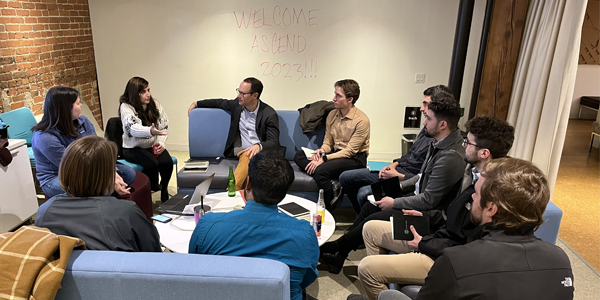
Ascend Program Kickoff
The Denver Ascend Mentorship Program kicked off this year’s cohort with its first session last
Thursday. Pairing emerging professionals with mid-career architects, the group includes mentors
and mentees from a dozen firms throughout Denver. The first session met at the AIA offices at
the Alliance Center. Maxing out at 12 participants and facilitators, the small group will meet every
month this spring and summer to share knowledge, experiences, and offer career guidance.
AIA COLORADO EVENTS
FEBRUARY 22
Denver Existing Building Performance
Join the City and County of Denver to learn about upcoming existing building code and how you
can ensure buildings you work with comply with equipment replacement requirements. We will
address how this new policy impacts buildings, where to start, and resources including financial
incentives and available trainings so you can better work with your clients and give them the right
tools to succeed.
Even if you’re not currently doing work in Denver, more and more jurisdictions in Colorado will be
adopting similar requirements. This is a great opportunity to get a glimpse into the future for all
architects in Colorado. Visit Denver’s Office of Climate Action, Sustainability and Resiliency
website and sign up for the event at the link below.
+MORE
MARCH 9
Academy of Architecture for Health: Annual Update
You are invited to join the 2023 Academy of Architecture for Health (AAH) Knowledge
Community for an update from AAH National and a discussion on local developments on March
9th at Noon.
We will be joined by the 2023 AAH National President, Kenneth Webb, who will share updates
from the Academy, as well as a representative of the American College of Healthcare Architects
(ACHA). Additionally, AAH Colorado Chair Jack Reed will be sharing a recap of last year’s
activities, along with a preview of the year ahead. Please register beforehand for this virtual
event.
+MORE
2023 CALL FOR APPLICATIONS
Considering AIA Fellowship?
Fellowship is the highest recognition, other than the gold medal award, given to architects
recognizing their work, their service, and volunteerism. It is not an award for longevity in the
profession, but for merit and effort. As we engage 2023 and evaluate professional goals for the
coming year, we invite you to learn more about and consider AIA Fellowship. Preliminary
submittals for the nominating committee to review as they assist our members interested in
Fellowship are due by March 27th.
+MORE

Architectural Education Foundation Scholarships Now Open
The Architectural Education Foundation, in partnership with AIA Colorado, offers traveling and
professional development scholarships to support your educational endeavors and gain more
experience. Since 1961, they have awarded more than $800,000 to more than 250 students,
architects, and teachers. Thanks to their support, we’re pleased to announce the availability of
academic and travel scholarships for 2023.
+MORE
PARTNER NEWS + EVENTS
FEBRUARY 20
CAP Lecture Series: Bio-Design and the Built Environment with Assia Crawford
The research presented in this talk will focus on strategies for developing living building materials
that can address sustainability issues in the Anthropocene. The talk will examine bio-design
integration into established building practices and will highlight the ethical implication and
challenges that emerge by introducing non-human actors into building settings. This lecture is at
Noon and is free and open to the public. This event will also be livestreamed and recorded.
Please RSVP beforehand.
+MORE
NEWS AT NATIONAL
Earthquakes in Turkey and Syria
AIA and its architects, often serving as volunteers, assist communities following disasters.
Updates regarding AIA’s activities in disaster areas, resources, and volunteer opportunities can
be found at AIA National’s website.
+MORE
Firm Survey Report
The AIA Firm Survey Report is the only report that covers the full complexity of firms that power
the architecture and design profession. With data from more than 500 firms, this essential
resource includes metrics to measure practice, evaluate performance, and set strategy. Free for
AIA Members.
+MORE
Healthcare Design Awards
The Healthcare Design Awards showcase the best of health care building design, health care
planning and health care design-oriented research. The awards highlight the trends of health
care facilities and the future direction of these facilities. Projects should exhibit conceptual
strength that solve aesthetic, civic, urban, and social concerns as well as the requisite functional
and sustainability concerns associated with a health care setting.
+MORE
Insurance and Bonds as Risk Management Tools for Construction Project Owners
An AIA Contract Documents Webinar taking place February 23rd from 11am – Noon. Learn about
various types of insurance coverages and about payment, performance, and warranty bonds
owners should consider for each construction project.
+MORE
A’23 in San Francisco
A’23 – AIA Conference on Architecture is heading to the Bay Area June 7-10, 2023. Get the
lowest hotel rate by booking your room in the AIA hotel block today.
+MORE
Colorado Architecture News | 02.01.23

THE WEEK IN WORDS
“We are the living heritage of our state and together we are the architects of its future.”
– Gov. Jared Polis in his State of the State address, delivered January 17th.

As we are now embarking on a new year, we want to simply say Thank You for making 2022 such a great year as well as for your continued involvement into this year. We had a record number of members, allied members, and premier partners last year and we’re grateful for your commitment to AIA Colorado’s mission.
Most of you reading this have already renewed while others are in the process of renewal. If you haven’t already done so, AIA Members please visit aia.org to check your renewal status and ensure that you’re all set for 2023. Allied Members please renew here. Once again, Thank You for helping to create a movement of change agents to broaden the impact of architecture!
AIA COLORADO NEWS

Colorado Climate Policy with Senator Chris Hansen
On January 23rd, a room full of architects turned out to hear Senator Chris Hansen (District 31) lay out recent policy wins in the fight against the climate crisis and espouse on his vision for how to progress those wins into the future. Editorial Committee Member Drew Allen, AIA, was there and shares his observations from the event.
+MORE
2023 CALL FOR APPLICATIONS

This past Friday, January 27th, AIA Fellows enjoyed their first gathering of the year. Held at Rowland + Broughton studios, the gathering was also attended by AIA Colorado Board Members and Staff.
Considering AIA Fellowship?
Fellowship is the highest recognition, other than the gold medal award, given to architects recognizing their work, their service, and volunteerism. It is not an award for longevity in the profession, but for merit and effort. As we engage 2023 and evaluate professional goals for the coming year, we invite you to learn more about and consider AIA Fellowship. Preliminary submittals for the nominating committee to review as they assist our members interested in Fellowship are due by March 27th.
+MORE

Architectural Education Foundation Scholarships Now Open
The Architectural Education Foundation, in partnership with AIA Colorado, offers traveling and professional development scholarships to support your educational endeavors and gain more experience. Since 1961, they have awarded more than $800,000 to more than 250 students, architects, and teachers. Thanks to their support, we’re pleased to announce the availability of academic and travel scholarships for 2023.
+MORE
CONTINUING EDUCATION
Interested In Getting Ahead With Your Credits This Year?
Available all year round, the AIA Colorado On-Demand Continuing Education platform offers courses that cover a variety of topics to help you best serve clients and communities through excellence in design and practice.
+MORE
AIA MEMBER NEWS
CCY Architects Broadens Leadership Team
CCY Architects has announced that Maura Trumble has joined the ownership of the firm, becoming CCY’s first female Principal.
+MORE
News to Share?
Does your firm have news that you’d like to share with the AIA Colorado community? If so, please send to jon@aiacolorado.org for consideration and inclusion.
AIA COLORADO EVENTS
FEBRUARY 22
Denver Existing Building Performance
Join the City and County of Denver to learn about upcoming existing building code and how you can ensure buildings you work with comply with equipment replacement requirements. We will address how this new policy impacts buildings, where to start, and resources including financial incentives and available trainings so you can better work with your clients and give them the right tools to succeed.
Even if you’re not currently doing work in Denver, more and more jurisdictions in Colorado will be adopting similar requirements. This is a great opportunity to get a glimpse into the future for all architects in Colorado. Visit Denver’s Office of Climate Action, Sustainability and Resiliency website and sign up for the event at the link below.
+MORE
Save The Dates!
While we will have much more to share about both of these events in the months to come, we’re excited to share the following:
SEPTEMBER 19
2023’s Design + Honor Awards Celebration at Mile High Station
NOVEMBER 15-17
2023’s Practice + Design Conference will be held at Keystone
PARTNER NEWS + EVENTS
Denver Landmark Preservation Commission Opening
Denver’s Landmark Preservation Commission is seeking a new commissioner to fill an upcoming vacancy this spring. Commissioners shall attend twice-monthly meetings and periodic special meetings to hear and decide requests for:
- Alterations, additions, signage, site work, zone lot amendments, and new construction within local historic districts and individual landmark sites
- Demolition within historic districts and individual landmark sites
- Historic preservation tax credit certification
- Individual landmark or historic district
If you’re interested in this position, please review the full list of duties and qualifications, then submit a resume or professional biography to Nikolaus Remus. Nominations have been extended and will now be accepted by AIA Colorado through noon on Thursday, February 9th. AIA Colorado will send a list of interested members in good standing to Landmark Preservation staff but does not internally evaluate nominations.
+MORE
Denver Lower Downtown Design Review Commission
Denver’s Lower Downtown Design Review Commission is seeking new commissioners to fill the following vacancies this spring:
- Preservation architect
- Business owner/operator in the Lower Downtown Historic District
- Real-estate developer
If you’re interested in this position, please review the full list of duties and qualifications, then submit a resume or professional biography to Nikolaus Remus. Nominations will be accepted by AIA Colorado through noon on Friday, February 24th. AIA Colorado will send a list of interested members in good standing to the commission but staff does not internally evaluate nominations.
+MORE
NEWS AT NATIONAL
A Key Year In Advancing AIA’s Federal Legislative Agenda
After a strong 2022 when AIA claimed several legislative victories on Capitol Hill, 2023 is shaping up to be another pivotal year in advancing AIA’s public policy agenda. AIA’s 2023 Lobby Day takes place on Wednesday, February 15th, and will focus on two bills: the Democracy in Design Act and the Resilient AMERICA Act.
+MORE
2023 The Future of Cities
Explore key themes, provocative solutions, the critical role of design leadership, and adapting solutions to different cities, climate zones, and political environments. The Future of Cities is a new six-course series hosted by Communities by Design (CxD), a public service program that has spent decades working with communities to address big challenges like climate change, equity, housing, and revitalization.
+MORE
Embodied Carbon Reduction in the Built Environment
The U.S. passed the Inflation Reduction Act of 2022 with $369 billion in funding to cut climate pollution in half by 2030. Presented by AIA Trust, learn how the built environment contributes to climate change and what choices you can make to reduce embodied carbon.
+MORE
New Trends in Professional Liability Insurance
What trends in professional liability and risk management should you be planning for in 2023? AIA Trust’s latest review, conducted with the American Council of Engineering Companies (ACEC) and the National Society for Professional Engineers (NSPE), has the answers.
+MORE
December 2022 Architectural Billings Index Released
Demand for design services from U.S. architecture firms continued to contract in December, according to a new report from the American Institute of Architects (AIA).
+MORE
A’23 in San Francisco
A’23 – AIA Conference on Architecture is heading to the Bay Area June 7-10, 2023. Sign up to be notified of registration and event updates.
+MORE