Learning from Leaders: Honor Awards Panel

Thursday, November 13, 4:15pm, Keystone Conference Center
Learning from Leaders: Honor Awards Panel
The “Learning from Leaders: Honor Awards Panel” session at the AIA Colorado Practice + Design Conference brought together award-winning architects and professionals to explore the evolving role of architecture in shaping communities and addressing societal challenges. Moderated by William Logan and Vanessa Kauffman Zimmerly of Modern In Denver, recognized for their contributions to design journalism and as AIA Colorado Impact Award winners, the panel featured distinguished recipients: Kevin Nguyen, AIA (AIA Colorado Architect of the Year), Kaylyn Kirby, AIA (AIA Colorado Young Architect of the Year), Keith Hayes, AIA (AIA Colorado Firm of the Year, Barker Rinker Seacat Architecture), Rick Sommerfeld, AIA (AIA Colorado Educator of the Year), and Sean Jursnick, AIA (AIA Colorado Citizen Architect).
The panelists shared their journeys, highlighting themes of mentorship, collaboration, and community impact. Kevin Nguyen, AIA, emphasized architecture’s ability to enhance creative capacities, while Kaylyn Kirby, AIA, reflected on overcoming imposter syndrome and fostering connections through advocacy. Rick Sommerfeld, AIA, discussed vulnerability and iterative learning in his design-build program, which bridges academia and professional practice, sharing anecdotes about unique projects like a toilet on Long’s Peak and affordable housing on Navajo Nation. Sean Jursnick, AIA, underscored curiosity and communication as tools for addressing the housing crisis, citing his work on housing advocacy and design competitions that engage policymakers. Keith Hayes, AIA, attributed his firm’s 50-year longevity to soft skills, conflict resolution, and collaboration with consultants like Group 14, KL&A, Martin/Martin, JVA, and AE Design.
The discussion highlighted Colorado’s unique design community, characterized by collaboration, a shared love for the outdoors, and a commitment to sustainability. Panelists noted the slower pace of life in Colorado fosters thoughtful design and connection, contrasting with the competitive environments of coastal cities.
Amidst uncertainty, including economic challenges and technological advancements like AI, the speakers emphasized adaptability and the power of connection. They advocated for architects to leverage their unique skill sets in addressing broader issues, from housing advocacy to sustainability, while embracing metrics to quantify the value of design. The session underscored the collective responsibility of architects to shape a better future through collaboration, innovation, and community engagement, inspiring attendees to say “yes” to opportunities and embrace discomfort as a path to growth.
Key
Takeaways
The Transformative Power of Saying Yes
Career trajectories can fundamentally change when architects embrace opportunities by saying yes more often than no, even when facing uncertainty or discomfort.
Curiosity and Questions Drive Professional Growth
Sustained professional development comes from maintaining curiosity, asking deeper questions about societal issues, and not being afraid to reach out to experts while remaining humble about what you don’t know.
“For me, I think one intangible that I found stood out being here, being recognized for housing advocacy, was my curiosity and asking questions, trying to understand things deeper, seeing a lot of conversations happening out in the world broadly, that I thought the architecture profession could contribute to.” – Sean Jursnick, AIA
Using Metrics to Defend Architectural Value
Architects must take control of defining and measuring the value of their work through quantifiable metrics, using research and post-occupancy evaluation to justify design decisions beyond purely aesthetic considerations.
Soft Skills and Conflict Resolution as Core Competencies
Success in architecture heavily depends on developing soft skills, particularly conflict resolution and the courage to have difficult conversations, since much of the work involves navigating relationships with diverse stakeholders.
“There’s a lot of conflict in architecture, and I’m really lucky that one of our former partners, Ron Schneider, really took that Bull by the horns and made sure that we were all trained in conflict resolution… some days, I swear to God, it’s just about being willing to pick up the phone and it could be a hard conversation on the other end.” – Keith Hayes, AIA
Embracing Vulnerability as a Leadership Strength
Effective architectural education and leadership involves showing vulnerability and admitting when you don’t have all the answers, creating authentic learning environments where problems are solved collaboratively.
“I think that the older I get, the less I know. And I’m trying to be more vulnerable with my students, to sort of show them that, you know, in a way, we’re working through the problem together, and we have a tendency to take on projects that we’ve never done before.” – Rick Sommerfeld, AIA
Architecture as Community Building, Not Just Building Design
The most fulfilling and impactful architectural work comes from understanding that the profession is fundamentally about community engagement and translating people’s stories into meaningful spaces.
The Generosity of the Architectural Community
The architecture profession is characterized by remarkable generosity, where experienced practitioners are willing to share knowledge and support emerging professionals, creating a supportive network that extends nationally and internationally.
Architects’ Unique Role in Policy and Advocacy
Architects possess distinctive communication and visualization skills that make them uniquely qualified to influence policy and advocate for community needs, particularly in areas like housing where their expertise can shape better outcomes.
Strategic Team Building Through Personality Awareness
Long-term firm success requires intentional team composition based on understanding different personality types and working styles, ensuring all necessary skills and perspectives are represented on project teams.
Colorado’s Collaborative Architecture Culture
Colorado’s architecture community stands out for its collaborative rather than competitive nature, fostered by shared values around environmental stewardship and a right-sized professional community that encourages mutual support.
Regulation & Resilience in Custom Residential Architecture
Thursday, November 13, 4:15pm, Keystone Conference Center
Regulation & Resilience in Custom Residential Architecture
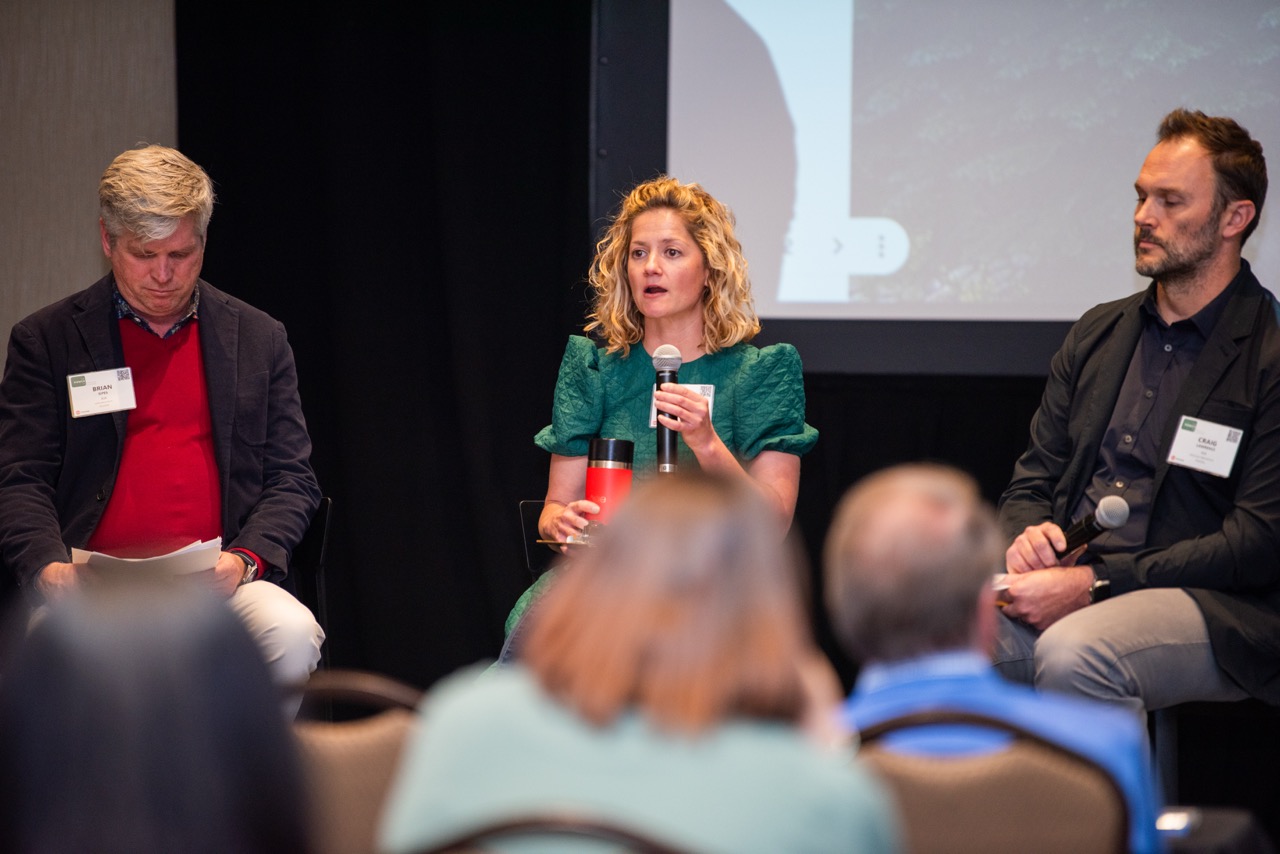
The session “Regulation & Resilience in Custom Residential Architecture,” held during the AIA Colorado Practice + Design Conference, brought together architects, collaborators, and industry leaders to address the evolving challenges in custom residential design. Organized by AIA Colorado’s Custom Residential Architects Network (CRAN), the session focused on the intersection of regulation and resilience, emphasizing their impact on sustainability, equity, and safety. CRAN, co-chaired by Brandon Herbst, Assoc . AIA, and Blake Sullivan, AIA, connects architects specializing in custom residential projects to share strategies and elevate practice.
Moderated by Blake Sullivan, AIA, the panel featured Craig Lawrence, AIA, Bunny Tucker, AIA, and Brian Sipes, AIA, who offered diverse perspectives on resilience in architecture. Resilience was defined as the ability of homes to endure, adapt, and sustain occupants over time, with Passive House construction highlighted for its passive survivability, airtightness, and energy efficiency. Panelists discussed the integration of resilient materials, such as thermally modified wood, Rockwool insulation, and T-stud framing, which enhance fire resistance and durability while meeting Wildland Urban Interface (WUI) regulations.
The session explored the impact of regulations, including energy codes and WUI requirements, on project delivery. While regulations were seen as drivers of innovation and safety, challenges such as interdepartmental conflicts in zoning and building codes were noted. Insurance challenges in WUI zones were discussed, with panelists advocating for preferred rates for resilient designs. Passive House certification costs, averaging $20,000, were highlighted as a worthwhile investment for verified performance, and Denver’s legislation supporting multifamily Passive House projects was praised as a step toward scaling resilience.
Equity and community building emerged as key themes, with strategies to improve air quality and acoustic privacy in affordable housing developments. Panelists emphasized the psychological aspects of resilience, with homes serving as spaces for safety and recovery. Architects were urged to act as consensus builders, integrating complex systems and advocating for smart regulations. Future goals included achieving cost-neutral Passive House construction, advancing energy modeling in renovations, and scaling resilient design to positively impact communities.
The session concluded with a call to action for architects to embrace interconnected complexity, advocate for stringent yet smart regulations, and prioritize resilience as a fundamental aspect of design. Panelists encouraged architects to lead the way in creating durable, high-performance homes that benefit both individual clients and broader communities.
Key
Takeaways
Luxury Market as Technology Incubator
High-end residential projects serve as testing grounds for resilient technologies and strategies that can later be adapted and scaled for affordable housing, similar to how the space race drove innovation that benefited broader society.
We kind of look at it sometimes like the 1960s space race. And we use our luxury home experience like NASA did to develop the technologies or experiment and play with the technologies and then we make it a point to find community-based projects, affordable housing projects… and donate our fees and our knowledge to try to bring those along.
Air Sealing Success Depends on Contractor Education
The critical gap between designing high-performance envelopes and achieving them lies in contractor execution. Architects must actively educate builders, facilitate proper sequencing, and maintain involvement throughout construction to ensure air sealing details are properly implemented.
We can as designers draw a dashed line on an assembly and say air barrier… and then your GC gets it and they’re just like nope. And that’s a real problem to overcome… where we can add value and where we become critical in the construction process is by helping to educate, helping to bring consensus around these systems.
Airtightness Provides Multi-Hazard Protection
Beyond energy efficiency, extreme airtightness (under 1 ACH) protects homes from multiple environmental threats including wildfire smoke infiltration, poor air quality from distant fires, and toxic exposure during disasters, enabling occupants to shelter in place safely.
We’ve seen many homes on the periphery, avoid infiltration of smoke and toxicity into their homes and high levels of damage… there was an example of a house that was renovated to passive house standards in Louisville where all of the neighboring homes were required to evacuate for extensive periods of time… but they were able to go right back after the fire.
Innovation Through Creative Problem-Solving
Advancing community-wide resilience requires architects to develop new tools and approaches, such as simplified energy modeling for renovations and cost-neutral passive house construction methods, while leveraging emerging financial incentives and rebate programs.
I want to find a way to get passive house level construction to be cost neutral with business as usual because at the end of the day the finances are driving the work… finding creative financing strategies too, whether it’s insurance, banking… finding a way to get those first costs leveled out for the client would allow us to really scale up this movement.
Architects as Orchestrators of Complex Systems
Resilient design requires architects to function as conductors who integrate diverse expertise – from fire chiefs to MEP consultants to building scientists – rather than just aesthetic designers, orchestrating all stakeholders toward comprehensive solutions.
Architect is the orchestra… the chief conductor… you’re bringing up a little bit of this and you’re telling them to be a little quiet and you’re changing the pace and that’s exactly what you just described, is we are going out, we’re finding the information, and we’re orchestrating that successful solution.
Client Education Through Integrated Design Approach
Rather than presenting resilience as an add-on cost, successful architects integrate high-performance strategies into their standard design process, sometimes implementing them without explicit client requests when they align with other project goals.
Sometimes we just sneak it in anyway… you look for the intersection of those different aspects of the project, and you get there by bringing the energy efficiency along with the durability, or you get there by other methods, and you just make it an integrated part of the design.
Insurance Companies Drive Real-World Standards
While building codes set minimum requirements, insurance companies are becoming the true drivers of resilient construction standards, making coverage increasingly difficult to obtain and pushing architects to exceed code requirements for client protection.
The WUI code, state WUI code’s great, but the insurance companies are getting more and more resilient and just getting coverage in our area is becoming difficult. So we as architects have to be ahead of the curve.
High Performance Design Achievable Across Price Points
Custom passive house construction can be delivered within market-rate construction costs ($400-665/sq ft in Colorado) by integrating high-performance strategies from the design concept phase, using simple forms for energy efficiency, and prioritizing sophisticated mechanical systems over elaborate finishes.
We designed and built custom passive houses within that range. So we’ve got one that’s under construction right now in Glade Park that’s coming in under $400 a square foot, and then several in the Denver metro area that are between 500 and 665 dollars a square foot.
Regulations as Design Opportunities, Not Obstacles
Successful architects view building codes and WUI regulations as minimum baselines that create opportunities for innovation, rather than constraints, by staying ahead of regulatory curves and finding creative solutions that exceed requirements.
I don’t see regulations in general as ever a hindrance… true resilient home would be sort of ahead of those regulations. So we always look at, as I know many of you do too, that the code is the minimum. Anything less would be against the law.
Passive House Standards Enhance Wildfire Survival
Passive house construction naturally provides wildfire resistance through airtightness that prevents ember infiltration, non-combustible materials like rock wool insulation, and thermal envelopes that prevent ignition – creating a powerful synergy between energy efficiency and fire safety.
There is a growing and already large body of knowledge, and very dramatic visual evidence from the Palisade fire that building to passive house standards makes you more fire resistant… that house didn’t ingest embers, and that was 99% of why it survived, then the next 1% was its thermal envelope prevented ignition.
Rewiring the Framework for Architectural Education
Thursday, November 13, 4:15pm. Keystone Conference Center
Rewiring the Framework for Architectural Education
At the AIA Colorado Practice + Design Conference, Rafael Chavez, AIA, presented “Rewiring the Framework for Architectural Education,” offering insights into transforming the profession by engaging students earlier in their educational journey. Chavez, a licensed architect and project architect at HDR, also known as DJ Chavo and Coach Chavo, began with an interactive warm-up, leveraging his certified personal trainer credentials to energize the audience. He shared his academic background at the University of Illinois and recounted his formative work experience in Guam during the recession, which shaped his global perspective.
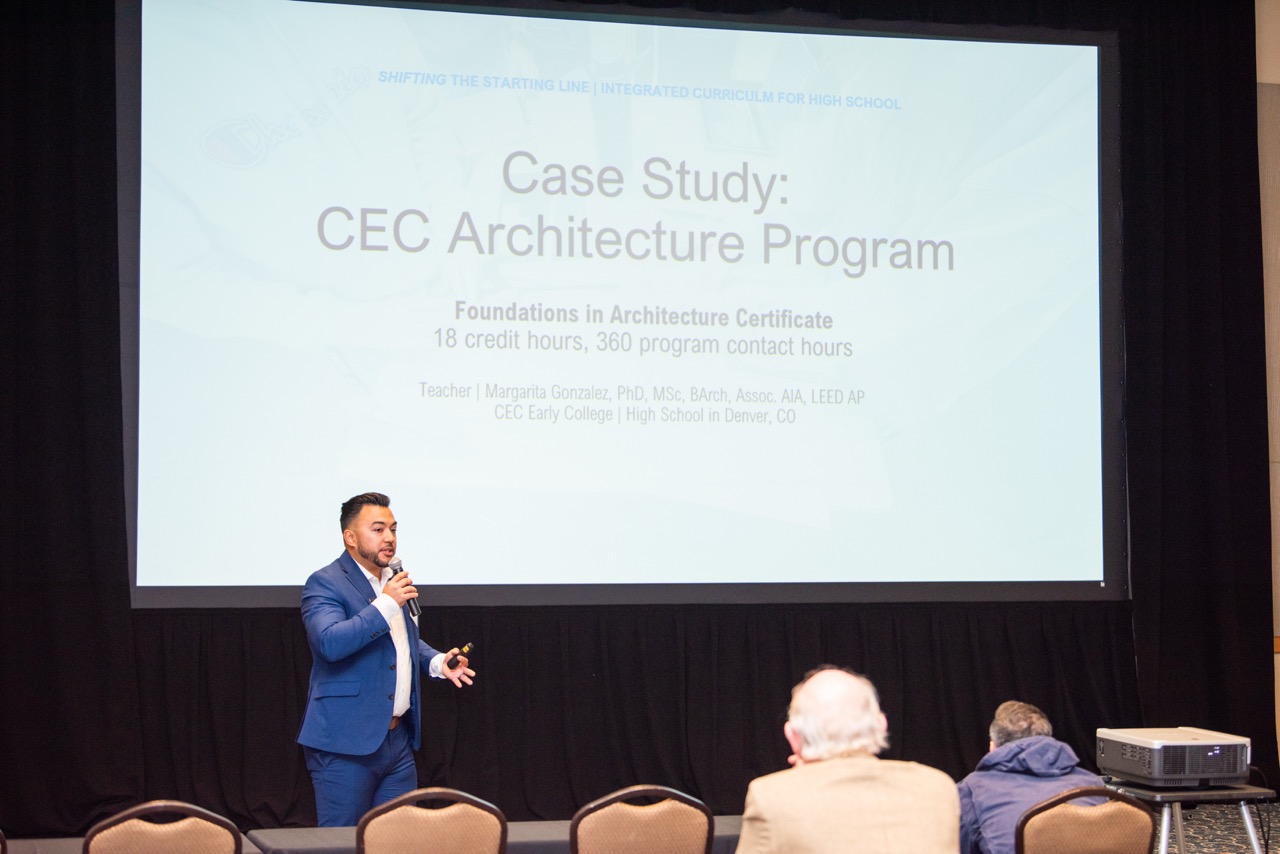
Chavez introduced the NCARB by the Numbers report, revealing a 12.9-year average licensure timeline and a decline in registered architects, alongside promising diversity trends. He proposed shifting the starting line for architectural education to high school, highlighting Colorado’s integration of career clusters and the CEC Early College program led by Margarita Gonzalez, Assoc. AIA. This program equips students with certifications in tools like Revit and SketchUp and fosters collaboration and design thinking.
Chavez detailed the Denver Public Schools Launch Internship Program, which provides paid internships through firm donations ($500 for spring/fall, $1700 for summer). He emphasized its impact on graduation rates, with participants achieving a 90% rate compared to the district’s 77%. Weekly intern presentations were highlighted as a key strategy for building communication skills, alongside technical fluency. Chavez shared the success story of Shap, a former intern who mastered design tools, created advanced models, and enrolled at USC with full funding.
Comparing the Launch Program to ACE and CAL initiatives, Chavez noted its tailored focus on architecture and its ability to foster meaningful mentorship. He showcased HDR’s investment in interns, including success stories of former participants joining the firm as professionals. Chavez concluded by urging firms to host high school interns, emphasizing the importance of equity in action and the need to cultivate the next generation of architects through early engagement and mentorship.
Key
Takeaways
Cultural Fluency Deserves Equal Investment
Architecture firms invest heavily in technical training for staff but often overlook cultural fluency. The profession needs to recognize and address barriers faced by diverse students, including language challenges, family financial pressures, and lack of exposure to the field.
You know, we really invest in technical fluency in our offices, in our studios as a profession. But sometimes cultural fluency is a bit, I would say, overlooked… These are a lot of the things that we hear from students that are coming from these high schools from, from these programs. The most common example, I didn’t know about architecture. Next one, a really big one. I need to support my family sometimes.
Shift the Starting Line to High School
Rather than waiting until college to introduce students to architecture, the profession should engage high school students through structured programs. This early intervention can address diversity issues and better prepare students for architectural careers before they make college decisions.
Typically we’re starting with college interns coming into the industry and beginning their first internship as a freshman in college. I’m really proposing on shifting that starting line. NCARB has a set date which is basically after you graduate high school on when you can start that NCARB profile. And I want to suggest that we shift that now.
Industry Needs More Participation
Despite the success of existing programs, only 16 architecture firms participate in Denver Public Schools’ career development program. The profession needs significantly more firms to engage in high school outreach to address the talent pipeline and diversity challenges.
Now the question I want to ask everyone, has anyone hosted an architecture intern in the high school level in their studio or how many? We need more of that. We need more of that investment in the community because I think there is this stigma behind what high school students are capable of.
Early Professional Networks Transform Careers
70% of students in the program report increased professional networks, giving them mentors and industry connections before college. This early networking provides crucial support during challenging academic periods and career decision-making.
70% of the students who participated in the coach and launch program have reported an increase in their professional network. By the time these students are graduating, they already have connections in the industry, and they have connections and people and mentors that they can talk to if they have any questions or are in college and not having the support they need.
Remarkable Program Completion Rates
Denver Public Schools’ Launch Internship Program achieved a 90% completion rate with over 400 unique enrollments, demonstrating that when properly structured and supported, high school students are highly committed to completing architectural internships.
During the 2023 and 2024 DPS report, the Launch Internship Program had over 400 unique enrollments and they had a 90% completion rate with the program. That is, that’s like unheard of for a high schooler.
Minimal Time Investment Required
Successful high school internship programs require only one champion in the office dedicating 1-2 hours per week. The key is creating structured curricula that replicate college-level design studios while maintaining proactive student engagement and regular presentations.
What does that time commitment look like on the company side? It really just takes one person. It takes one champion in the office… And really, you’re only spending around, like, one to two hours max per week with these interns.
Internships Dramatically Improve Graduation Rates
Students participating in the Launch program show significantly higher high school graduation rates (90%) compared to the district average (77%), while also improving in core academic subjects like math, reading, and writing through real-world application.
Two key points on this one that I think is very interesting is the networking… And I mentioned before the launch graduation rate, the district is on the bottom. It’s 90% for Denver Public Schools students who went through the launch program. That is a huge increase of students graduating from their peers that aren’t participating in these internships.
Concrete Success Stories Validate Approach
Multiple program alumni have successfully entered prestigious architecture programs, using their internship projects as portfolio pieces. Notable successes include students accepted to USC, Cal Poly, and University of New Mexico, with some receiving full scholarships.
Kate was a Summer intern in 2022 and she was able to get into Cal Poly architecture program after her internship program… Then there’s Shap. I don’t know how he did it, but aside from him submitting to USC architecture program and using the project to submit as a portfolio, he was able to submit and find funding for school. He had all four years paid after he was accepted.
Alarming Diversity Gap in Architecture Licensure
NCARB data reveals a significant disparity in architecture licensure completion rates, with 35% of white candidates and 45% of candidates of color not finishing within the typical 10-year period. Additionally, all demographic groups except white males and females are performing below average on licensure exams.
Looking at the 10 year span, that typical span for architects in the NCARB program trying to get license, looking at white candidates versus candidates of color, there is a big discrepancy between how many are getting licensed, and finishing that program. It’s nearly double.
High School Architecture Programs Show Promise
Programs like CEC Early College in Denver demonstrate that high school students can successfully engage with architectural concepts, tools, and design processes. Students complete two-year programs covering fundamentals through advanced software like Revit and SketchUp, often achieving certifications.
Their class structure is broken down into a two year program. You can enroll as early as a freshman, but typically you’ll see around the sophomore through senior level high schoolers get started on these on this program essentially is broken down into four semesters. Starting from kicking off with the fundamentals of architecture and design and then introducing all our tool sets such as Revit, SketchUp, AutoCAD and they even go after certifications in those programs by the time they graduate.
The Power of Place: Reclaiming Equity Through Design in Native Communities
Thursday, November 13, 10:30am, Keystone Conference Center
The Power of Place: Reclaiming Equity Through Design in Native Communities
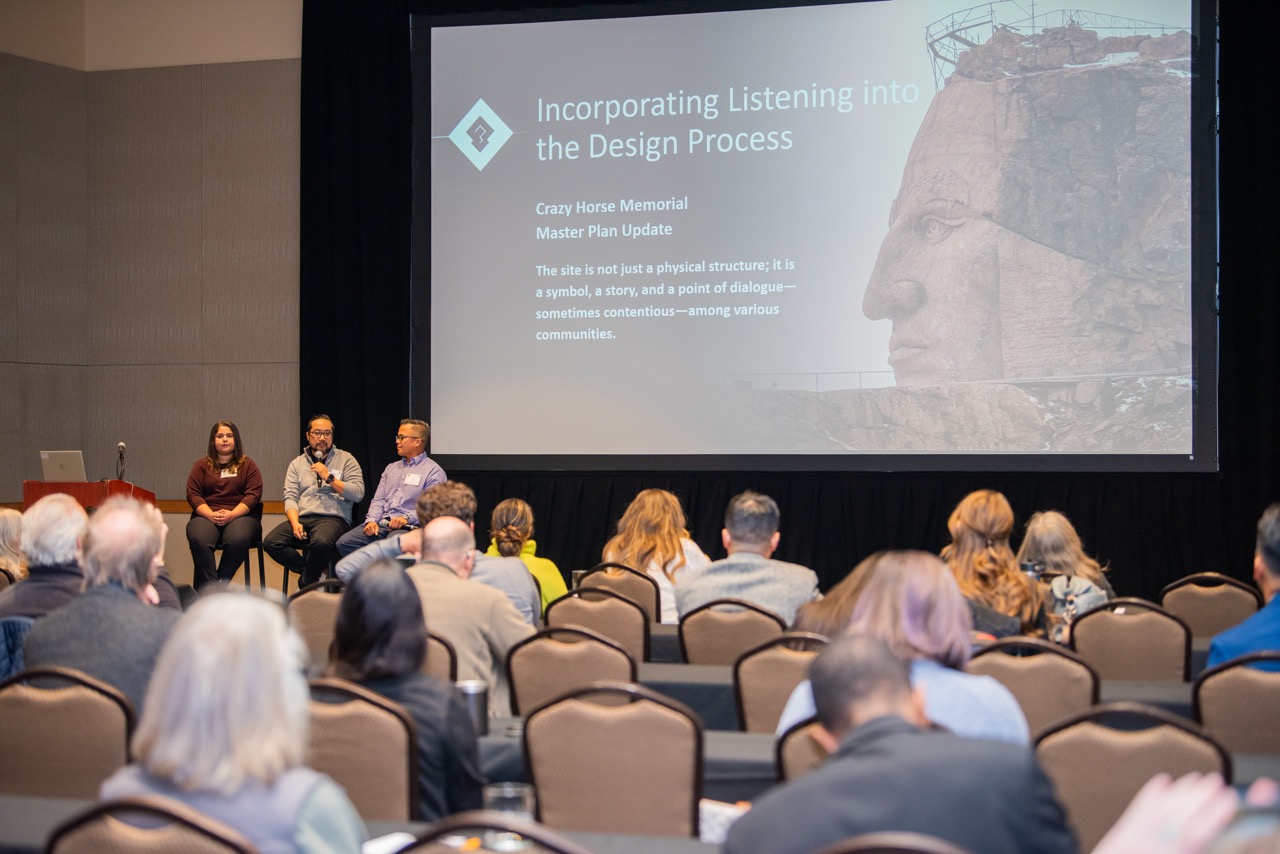
At the AIA Colorado Practice + Design Conference, the session “The Power of Place: Reclaiming Equity Through Design in Native Communities” showcased how thoughtful design can honor traditions, address challenges, and foster meaningful connections. Led by Joe Cruz, AIA, Chris Le, Assoc. AIA, and Trisha Parekh, Assoc. AIA, from Mead & Hunt, a multidisciplinary firm specializing in infrastructure, aviation, water, and community development, the discussion centered on three impactful projects: the Crazy Horse Memorial master plan update, the Durango Airport Expansion, and the Plaza Biage Dormitory in Shiprock, New Mexico.
The speakers emphasized the importance of listening deeply to Native American communities, whose oral traditions and hidden stories often go unnoticed. Sustainability and resilience were aligned with cultural identity to foster belonging and pride. The Crazy Horse Memorial update tackled representation controversies, incorporating the medicine wheel as a guiding principle and advocating for Native-led design partnerships. The Durango Airport engaged the Southern Ute Tribe, with tribal council member Linda Baker shaping design decisions. Art programs and museum exhibits curated by the tribe enhanced the airport’s connection to the community, while design choices prioritized natural light and views of the San Juan Mountains.
The Plaza Biage Dormitory drew inspiration from the Navajo hogan and the four sacred directions—North, East, South, and West—integrating tilt-up concrete with red pigment to reflect the landscape. Navajo cultural values of stewardship and harmony with nature informed sustainable design choices, including water conservation, energy efficiency, and biophilic elements. Bureau of Indian Affairs design standards guided the dorm’s alignment with cultural identity and wellness. Post-occupancy comfort surveys will ensure the dorm meets student needs.
Through these projects, the session highlighted how equity-focused design can transcend technical metrics, creating spaces that embody cultural identity, pride, and stewardship. By listening, collaborating, and embracing humility, architects and planners can uplift underrepresented communities and build a legacy of resilience and belonging.
Key
Takeaways
Deep Listening as the Foundation of Culturally Responsive Design
Working with Native communities requires moving beyond traditional stakeholder engagement to active, transformative listening that challenges designers’ assumptions and opens space for unheard stories and oral traditions.
Listening isn’t just passive. It’s an active process. It’s about engaging with the people and being open to the perspectives of others and being open to the idea of changing your perspectives. Setting aside your own ego and being able to incorporate everything that you’re hearing.
Cultural Frameworks as Design Organizing Principles
Traditional cultural concepts like the Four Sacred Directions can serve as powerful organizing principles for site planning, moving beyond functional zoning to create spaces that embody cultural meaning and spiritual connection.
The project is grounded in the concept of the four sacred directions… North represents spirituality and wisdom… The east is the direction of new beginnings and learning… The south speaks of vitality and play… And west is associated with gathering and introspection.
Belonging Through Intentional Design Elements
Creating belonging for Native students requires five key design principles: honoring cultural origins, ensuring safety and security, fostering community connections, meaningful representation, and supporting individual flourishing through environmental wellness.
Belonging begins with honoring where you came from… Spaces that reflect Navajo art, stories and traditions. An architecture that mirrors the landscape… It reminds students that who they are is seen, valued and celebrated.
Maintaining Long-term Community Relationships
Successful projects with Native communities require ongoing relationships beyond project completion, including post-occupancy surveys, continued community engagement, and recognition that infrastructure serves communities that will remain long after buildings may change.
Something that’s unique about the Southern Ute and their ideas for their community is that… They’ve always been there. So even if the airport goes away in 50, 100, 200 years, that suddenly you will remain in that space. They’ve always been there.
Sustainability and Cultural Values as Unified Principles
Environmental sustainability and Native cultural values are not separate concepts but complementary approaches that both emphasize stewardship, respect for natural resources, and long-term community resilience.
The principles that guide leads to worship of the environment, natural resources, wellness and community benefit mirror the Navajo worldview. And in that alignment we found shared language, one that transcends metrics and standards and moves towards meaning.
Trust Building Through Genuine Engagement
Authentic engagement with Native communities can unlock unprecedented access and collaboration opportunities, as demonstrated when genuine listening led to access to spaces that had been closed even to foundation leadership.
When they saw that we were bringing our genuine selves and that we were listening, we were granted access to the courtyard house… It had been so closed off that members of the foundation itself had never been in the house. The CEO and the board director had never been in the house.
Representation Through Authentic Cultural Integration
Meaningful representation goes beyond aesthetic elements to include giving communities curatorial control over their own spaces and stories, as demonstrated by giving tribes ‘the keys’ to design their own exhibit areas.
The airport manager basically gave the keys and said, these are your spaces to curate, where whatever you want to put in these spaces to inform people about the airport about, do it, you have the opportunity to do it.
Addressing Controversies Through Transparent Dialogue
Long-standing cultural controversies should be addressed head-on through public dialogue rather than avoided, creating frameworks for ongoing conversation and understanding between different tribal perspectives.
For 77 years, they haven’t really been addressed. And so what we’re hoping for… we set up the framework to address these challenges. They had never been addressed publicly before… let’s address them head on publicly for the future to create dialogue and to kind of demystify some of the challenges.
Stepping Back to Elevate Native Leadership
True equity sometimes means recommending that Native designers lead projects while non-Native firms provide technical support, even when it means stepping away from lucrative design roles.
I made the recommendation that we don’t take the project… What I recommended was that we uplift a Native American designer, and they lead the design conversation for the next phases. But that doesn’t mean lose the project… Bring your other architectural skill sets to bear, support the architectural design through other elements.
Buildings as Living Classrooms for Cultural Values
Sustainable buildings can serve as teaching tools where students learn environmental stewardship through daily interaction with renewable energy, water conservation, and natural systems, making abstract concepts tangible experiences.
The building itself becomes a living classroom, a place where students can touch, see, feel what sustainability means. They learn how the sunlight powers their door through renewable energy, how rainwater will support the native landscape… They’re not just living in a sustainable building, they’re learning from it.
The New Colorado Model Low Energy and Carbon Code
Thursday, November 13, 10:30am, Keystone Conference Center
The New Colorado Model Low Energy and Carbon Code
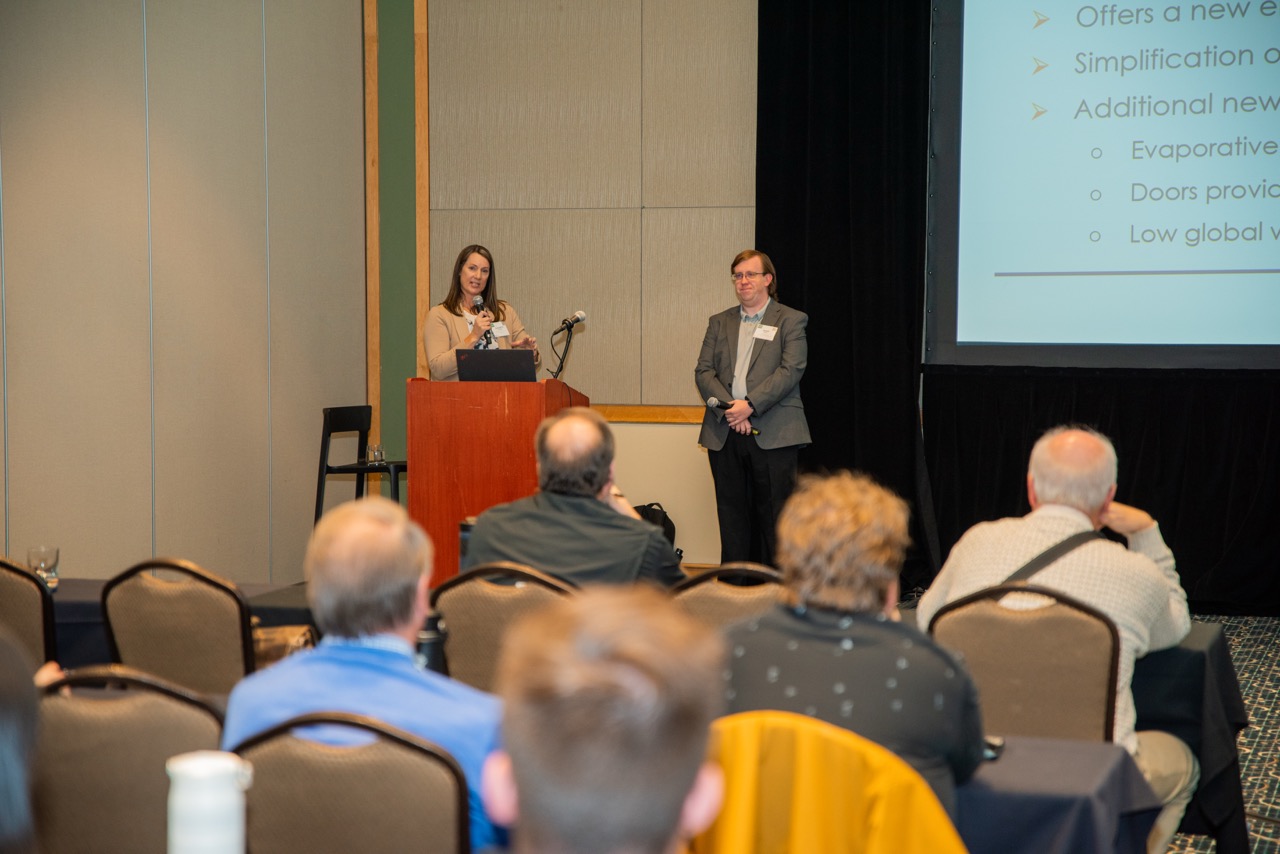
At the AIA Colorado Practice + Design Conference, Elizabeth Gillmor and Adam Berry led the session “The New Colorado Model Low Energy and Carbon Code,” offering an in-depth exploration of Colorado’s progressive energy code landscape. Representing the Colorado Energy Office and the Colorado Energy Code Development Board, the speakers detailed the evolution of energy codes, including the 2019 House Bill 12-1260, which established a statewide minimum energy code, and the subsequent adoption of the 2021 IECC with Electric Ready, Solar Ready provisions. They introduced the Low Energy and Carbon Code, set to become mandatory for jurisdictions adopting new building codes after July 1, 2026, emphasizing its role in advancing electrification, renewable energy integration, and EV readiness.
Colorado’s home rule status allows local governments to tailor code adoption, creating a diverse implementation landscape. Gillmor and Berry highlighted the Low Energy and Carbon Code’s advantages, such as simplified compliance pathways, fuel debiasing to support electrification, and tailored requirements for large homes exceeding 7,500 square feet, which must achieve net zero energy status. They presented case studies, including an affordable housing project in Adams County that avoided costly mandatory solar requirements under the 2024 IECC by adopting the model code, and a grocery store chain that found electrification more cost-effective under the Low Energy and Carbon Code, prompting a shift in their Colorado design standards.
The session also addressed challenges like accessibility requirements for EV infrastructure, demand response capable equipment to manage peak grid loads, and the complexities of transitioning to the 2024 IECC. The speakers emphasized the importance of influencing local jurisdictions during this transitional period to adopt the Low Energy and Carbon Code early, ensuring consistency and alignment with Colorado’s ambitious decarbonization goals.
Attendees were encouraged to leverage resources from the Colorado Energy Office, including bi-weekly webinars, the Colorado Code helpline, and the Energy Code Adoption Toolkit, which offer guidance on compliance, training, and planning. These tools, along with innovative energy modeling pathways and credit structures like C406 and R408, empower professionals to advocate for the adoption of the Low Energy and Carbon Code and contribute to a sustainable built environment in Colorado. By embracing this code, jurisdictions and practitioners can simplify enforcement, reduce costs, and align with the state’s net zero emissions goals, fostering a resilient and energy-efficient future.
Key
Takeaways
Colorado Removes Mandatory Commercial Solar Unlike National Code
Colorado specifically removed the 2024 IECC’s mandatory solar requirement for commercial buildings over 5,000 sq ft, recognizing that the state’s grid is already moving toward 100% renewable electricity by 2040. This saves projects significant costs while aligning with state energy goals.
When looking at the consideration of do we want to require every commercial building above 5,000 square feet to have a solar array when we are considering that the grid is already moving towards a largely renewable status anyway? And the answer was no, we don’t want to require that.
Strategic Communication Can Influence Jurisdictional Adoption
When advocating for the new code with jurisdictions, practitioners should emphasize benefits like Colorado-specific optimization, simplified compliance, and reduced learning burden for staff, rather than focusing on cost savings which may not resonate with officials.
Never, never, never say, I want to use this code because it’s cheaper. Even if it is, don’t ever say that… It’s better for Colorado because it is. It’s better for your building because it is… It’s going to make the jurisdiction’s life easier if they don’t have to learn both the 2024 IECC and the model code.
Critical Transition Period Creates Unique Advocacy Opportunities
Practitioners are in a unique position to influence jurisdictional code adoption during the transition period before July 1, 2026, when the Low Energy and Carbon Code becomes mandatory. This creates unprecedented opportunities for professionals to advocate for better codes in their communities.
You as consultants have a weird amount of power right now. And I really want to encourage you to exercise it to advocate for your practice, your clients, your community… we are here in this funny time. I just want to encourage everyone to use the resources, make sure knowledge is power, make sure you understand how this will impact you and utilize it to your advantage.
Jurisdictional Coordination Reduces Practitioner Complexity
Since most practitioners work across multiple jurisdictions, advocating for consistent code adoption reduces complexity and costs. The new code will eventually become mandatory anyway, so early adoption creates consistency and avoids the need to learn multiple systems.
How many of you work in only one jurisdiction? Yeah. Okay. We got one hand out of the whole room. So the other thing that this does is that your neighbors, your neighboring jurisdictions are going to be adopting this code because they’re going to have to soon. And it’s easier for us as practitioners to work with the same code.
Simplified Compliance Pathways Reduce Design Complexity
The new code eliminates the confusing dual-table credit system from 2024 IECC, combining all credits into a single table. It also removes unpopular requirements like occupancy-controlled receptacles, focusing on measures that actually work in practice.
2024 IECC… you may have noticed there are now two tables and you would have to choose credits from your standard C406 table and the renewable energy and load management credit table, which is a beast. The model code gets rid of that… everybody hates them and nobody uses them. Like what a waste of money, right? Let’s just not make people waste money and let’s spend it on something else.
Demand Response Requirements Prepare Buildings for Grid Management
New demand response capable equipment requirements prepare buildings for smart grid integration without forcing participation. This allows utilities to manage peak loads while giving building owners the choice to participate in programs that can reduce their energy costs.
This code requires demand response capable equipment. And I think it’s really important to clarify that this only requires the equipment itself to be capable of participating in a demand response program. The choice of whether or not to participate in a demand response program will still live with the customer as it always has.
Real Projects Show Dramatic Cost Savings Under New Code
Case studies demonstrate substantial savings: an affordable housing project avoided a $250,000 solar requirement, and a grocery store saved $400,000 while achieving better compliance. These aren’t theoretical benefits but proven results from actual projects.
We panicked because of that mandatory solar requirement that would have killed this project. There was no money for mandatory solar… it was going to be a $250,000 solar array. Killed the project… So we approached Adams county and we said, hey, do you think we could utilize this model low energy carbon code? Because I think it would be a really good fit for this project.
Tiered Residential Requirements Address Colorado’s Diverse Housing Market
The new code creates three tiers for residential buildings based on size: under 5,000 sq ft (similar to 2024 IECC), 5,000-7,500 sq ft (7-10% more efficient), and over 7,500 sq ft (net zero required). This addresses the reality that Colorado has both modest homes and massive luxury properties that shouldn’t be regulated identically.
We have to recognize in a state like Colorado, we have a lot of communities that see homes much, much, much, much larger than that… 30, 40, 50,000 square feet. We’re not really talking about a residential building anymore at that point. We’re really talking about a commercial building in reality.
Fuel Debiasing Makes Electrification Easier and More Cost-Effective
The code eliminates the historical penalty for electrification by comparing all buildings to the same gas baseline rather than like-for-like equipment. This means heat pumps get credit for their actual efficiency improvements, making electric buildings easier and often cheaper to design.
Now all buildings are considered equal. All buildings have the same baseline and you are complying via a site energy metric… if you use a heat pump that has, say a 3.0 cop that is three times more efficient than gas. So by comparing to a gas baseline, you are rewarded for that energy improvement without having to worry about energy costs.
Comprehensive Support Resources Available at No Cost
Colorado provides extensive free resources including bi-weekly webinars, custom training sessions, a code helpline with 2-3 day response times, new planning tools for credit calculations, and grants for jurisdictions. These resources support both practitioners and jurisdictions during the transition.
We provide all kinds of different on demand training… All you have to do is ask. We will build a training, we will provide the training and we can record it for you for later viewing if you want. All at no cost to you. So all of this is free CEUs.
The Climate Innovation Imperative: Risk, Resilience, and the Standard of Care
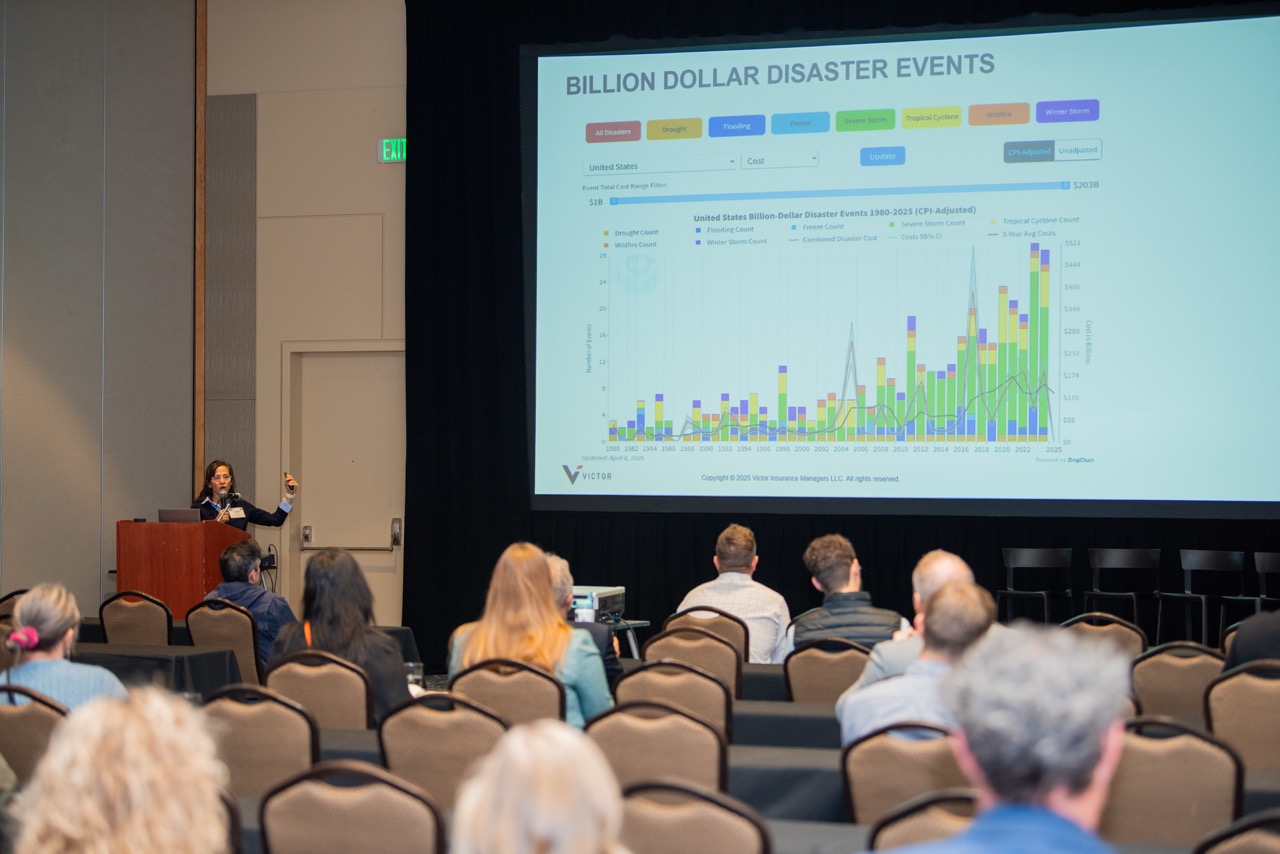
Thursday, November 13, 10:30am, Keystone Conference Center
The Climate Innovation Imperative: Risk, Resilience, and the Standard of Care
At the AIA Colorado Practice + Design Conference, Yvonne Castillo Esq. of Victor Insurance Managers delivered an insightful session titled “The Climate Innovation Imperative: Risk, Resilience, and the Standard of Care.” Castillo, representing Victor Insurance, the largest underwriting manager for design firms globally, highlighted the firm’s partnership with CNA Insurance and its pioneering role in professional liability policies for architects since the 1950s. As head of the Risk Advisory Department, she emphasized the growing importance of understanding and mitigating liability risks in the face of climate-driven hazards.
The session began with a review of foundational climate science, including NOAA’s atmospheric carbon dioxide data and NASA’s temperature data, which reveal alarming trends in emissions and global warming. Castillo connected these findings to NOAA’s tracking of billion-dollar disaster events, illustrating the rising frequency and costs of climate-related disasters. She underscored the need for architects to consider future climate conditions—extreme heat, flooding, drought, and storm surges—when designing assets intended to last decades.
Studies like the AIA Resiliency in the Built Environment and HGA/University of Minnesota Climate Adaptation studies were discussed, revealing gaps in stakeholder understanding and the industry’s slow adoption of climate projection data. Castillo also referenced ACEC’s guidance clarifying that building codes, often based on outdated weather data, are insufficient for addressing future climate risks.
Legal cases provided critical insights into how courts are addressing climate-related negligence claims. The Barnett vs City of Yonkers case highlighted timing in negligence analysis, while the Conservation Law Foundation vs ExxonMobil case emphasized the expectation to consider foreseeable severe weather. The Battery Park City Neighborhood Association vs Battery Park City Authority case and Argos Properties vs City Council of Virginia Beach case demonstrated judicial support for long-term planning based on climate data. Conversely, the Save the Colorado vs US Army Corps of Engineers case showcased the risks of ignoring future climate conditions, leading to halted construction and legal challenges.
Castillo recommended tools like the AIA Trust Climate Screening Service, LEED V5 climate risk assessments, and portals such as Argonne National Laboratory’s ClimRR, NOAA’s Climate Explorer, USDA Wildfire Risk Portal, and NOAA Sea Level Rise Viewer. She stressed the importance of informed consent provisions in contracts, documenting client decisions to decline resiliency measures, and defining scope and limitations to protect against liability. The session also addressed challenges to the Act of God defense and used a school of fish metaphor to explain the evolving standard of care. Castillo concluded with practical strategies for integrating climate data into design practices while safeguarding professional responsibilities.
Key
Takeaways
Courts Are Requiring Climate Data Consideration
Recent court cases demonstrate that judges expect professionals to consider available climate projection data in their analysis. The Colorado Gross Reservoir case specifically rejected the argument that climate data is ‘too uncertain’ to use, establishing that professionals should incorporate climate science even without perfect certainty.
The court said, I don’t expect that you have a crystal ball and that you can predict with exact certainty what those future projections are going to look like. But just like you incorporate any technical scientific data in your analysis as engineers, why would you leave out climate data, climate scientific data in that analysis, especially when you’re conducting a feasibility analysis to determine what the best solution to meet future demand is.
Accessible Tools Make Climate Analysis Feasible
Multiple free and affordable tools now exist for climate risk assessment, including NOAA portals, Argonne National Laboratory data, and the AIA Trust’s Climate Screening Service. These tools make climate analysis accessible to firms of all sizes without requiring climate science expertise.
Argonne National Laboratory this is a really, really good free online portal for you to find high resolution hourly climate projection data. It’s free. If you go through the Climater portal, this data is much more finer scale. It’s going to cover hazards like extreme heat, which is going to be important for all of you working here in Colorado. Those impacts on H vac systems, precipitation and a number of other hazards. So you can get some really good high resolution data if you go to that portal. And again, this is not a complicated climate modeling or climate scientific task. Me, I can do it and I’m a lawyer.
‘Client Didn’t Ask’ Is Not a Strong Defense
Relying on the defense that ‘the client never asked for climate analysis’ is legally weak. Courts expect licensed professionals to know more about built environment risks and to proactively address foreseeable hazards, regardless of whether clients specifically request this analysis.
The biggest barrier in using future forward climate data is that clients aren’t asking for it. Okay, so I want to focus on that last bullet point because again, from a professional liability standpoint, that really stood out to me was a big red flag. Because in a negligence case, courts, if you find yourself in a negligence, hopefully none of you have been, but if you find yourself in a litigation where a negligence claim has been lodged against you, the courts and the jurors are likely not going to align with that kind of defense.
Industry Practice is Creating New Standards
The professional standard of care is being shaped by emerging industry practices. As more firms adopt climate-forward approaches, access climate data, and implement resilience measures, these practices become part of what courts consider ‘reasonable’ professional behavior.
So all of these undercurrents that I’m sharing with you today, this essentially represents that our knowledge is changing, we are doing things differently. We don’t have a neat, clean boundary around what is generally accepted practice. And the challenge for you is that as our knowledge of these risks grow, so does the standard of care they run together.
Contracts Must Address Climate Risk Conversations
Architects should include specific contract provisions for climate risk screening, informed consent when clients decline resilience measures, and clear scope limitations. These contractual protections help manage professional liability exposure while ensuring clients understand the risks they’re accepting.
The first thing I would recommend is perhaps you have some sort of climate risk screening clause in your contract, just so that you have the option to say to your client, I’m going to share with you some climate modeling data. It’s credible, this is why it’s credible. And this is a conversation we’re going to have about it. But it doesn’t necessarily mean that this information is going to be incorporated into our professional services agreement, because that’s up to you whether you want to invest in additional resiliency measures.
Documentation is Critical for Risk Management
Architects must document climate risk conversations with clients, including what data was shared, what resilience measures were discussed, and client decisions to decline additional measures. This documentation shifts liability away from the architect when clients choose not to invest in resilience.
You want to document that you had the conversation that you shared, for example, the AIA’s climate screening model, or you looked at NOAA data or the Argonne data. You had that conversation on this date. This was the data that you shared. You might want to even append it to your contract and to say, here’s what we talked about. If you don’t want to invest in these additional resiliency measures that go beyond code, because code does not necessarily address these challenges, that’s fine. But we’re going to document it, we’re going to put it in writing.
Standard of Care is Evolving with Climate Science
The professional standard of care is not static but evolves as knowledge grows. As climate science becomes more accessible and widely understood, courts expect architects to incorporate this knowledge into their practice, similar to how the asbestos case established that timing of knowledge affects liability.
Climate risks. So timing is everything in a negligence analysis on what is reasonable when it comes to the question of what courts think that you could have or should have done to address certain risks. And because timing is so important, this is why I wanted to talk about this with you all relating to climate change and our knowledge of climate risks. Today, if you Google climate change or adaptation or resiliency, you’re going to get more. I can guarantee you more than a billion results are going to pop up.
Climate Knowledge Creates Legal Expectations
The abundance of available climate data fundamentally changes professional liability expectations. Unlike past decades when climate risks were unknown, architects today have access to extensive climate projection data, making the traditional ‘Act of God’ defense increasingly weak in litigation.
Today we have access to a lot of climate forward data. It’s free, it’s online. You can go right now. I can go today. I can look at my location, my house, I can pull up what my house location is going to look like in the year 2050, in the year of 2100, based on credible scientific data and multiple models from scientific communities around the world. So I have that information to me free and I’m not even a design professional. So the fact that this stuff exists and it’s out there and because of this knowledge that you know that we have this wealth of resources to help you understand or at least be able to see at a high level what your projects look like in the future to me, this is going to call into question that act of God defense.
Building Codes Don’t Address Future Climate Conditions
Most building codes are based on historical weather data, sometimes from the 1980s, and don’t account for future climate conditions. Architects understand this limitation, but clients and contractors often mistakenly believe code compliance ensures resilience, creating a dangerous communication gap.
The vast majority of the architects who responded to the survey to one particular question believe that code does not make a building resilient enough for its location and it will not enable buildings to withstand all likely hazards in their locations. Very important point. So most architects recognize that building codes are not addressing resiliency. That’s a very good thing. The problem with that is the other two groups, the clients and the contractors who responded to the survey said the exact opposite.
Government Projects Set Higher Expectations
Courts give wide discretion to government entities using public funds for long-term climate planning, viewing it as fiscally responsible. The Battery Park City case established that prioritizing long-term resilience over short-term disruption serves the public interest and efficient use of taxpayer dollars.
The court stated, I lifted one quote here, that the public interest here is incontestable. One of the fundamental purposes of the project is to ensure that it can be enjoyed by generations to come and that the authority properly exercised discretion to prioritize long term planning and public safety, even if it means substantial alterations to the park.
How to Constructively Manage Leadership Differences in Your Design Firm

Friday, November 14, 10:30 – 11:30am, Keystone Conference Center
How to Constructively Manage Leadership Differences in Your Design Firm
Please note, this presentation was not recorded.
Running a small or mid-sized design firm isn’t easy, especially when two or more partners are at the helm. Learn how to let go of the “everyone does everything” mentality, build your leadership team, and reconcile differences constructively.
Does your business partner occasionally drive you crazy? Do you occasionally drive your business partner crazy? The answer is most likely yes…and yes. Running a small or mid-sized design firm isn’t easy, especially when two or more partners are at the helm. Decision-making can be difficult. Responsibilities can feel unbalanced. Priorities can differ. But the good news is you’re not alone – and there’s no such thing as a perfect partnership.
Or perhaps you’re considering bringing on a new partner, elevating an emerging leader, or even merging with another firm. These options are valid growth strategies – and they are also VERY important decisions for your business and emotional health. In this session, CVG CEO, Todd Reding, discussed the complexities of partnership, including how to know when you’re ready to share leadership responsibilities, what to look for in a business partner, and how to constructively address leadership conflicts.
Singularity, AI, and The Circular Economy
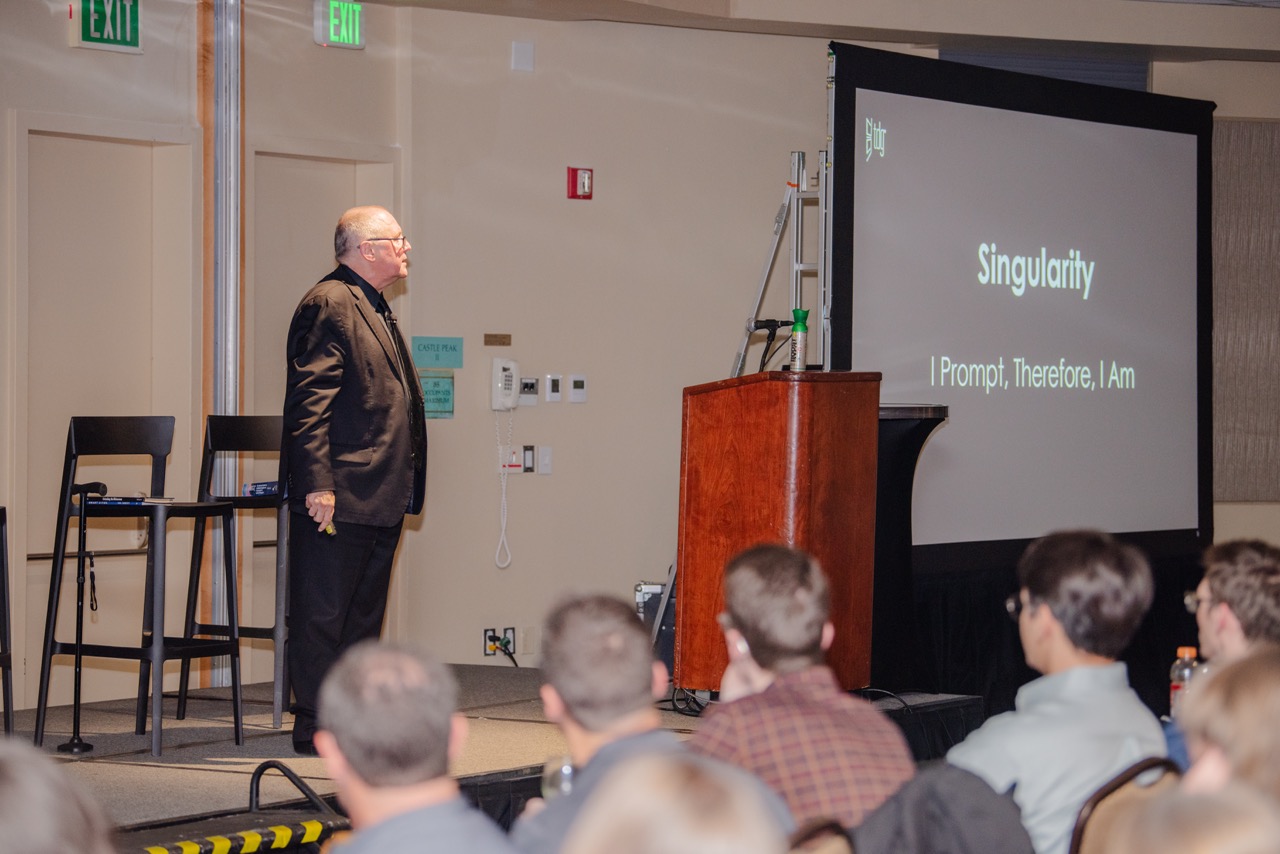
Wednesday, November 12, 4pm, Keystone Conference Center
Singularity, AI, and The Circular Economy
At the AIA Colorado Practice + Design Conference, Paul Doherty delivered an engaging session titled “Singularity, AI, and The Circular Economy,” offering a visionary perspective on the future of architecture and construction. Doherty, renowned for creating Revit and Buzzsaw, announced groundbreaking plans to acquire Autodesk and transform it into a services company powered by blockchain-backed project coins and decentralized autonomous organizations (DAOs). He shared his experiences leading smart city projects like the New Murabba and Trojena in Saudi Arabia, emphasizing the critical role of cultural anthropologists in designing spaces that prioritize societal and community needs.
Doherty explored transformative technologies such as AI, singularity, and blockchain, highlighting their potential to revolutionize workflows, improve data integrity, and create new revenue streams. He introduced agentic AI as a tool for automating tasks, freeing professionals to focus on creative and impactful work. He also shared insights into VRML, Ethereum, and digital twins, which bridge the gap between design and operations, enabling continuous data stewardship beyond the certificate of occupancy.
The session showcased Doherty’s innovative projects, including his collaboration with Netflix Korea on Squid Game and his partnership with James Cameron to integrate Avatar technology into immersive designs. He emphasized the importance of regenerative materials like Hexis, a bamboo-corn hybrid, and basalt, which offer sustainable alternatives for construction. Doherty also discussed physical AI innovations, such as drones and humanoid robots, which are transforming construction practices and enhancing safety.
Doherty underscored the importance of embracing change and adopting tools like process mapping to identify automation opportunities and improve workflows. He envisioned a future where decentralized systems powered by AI and blockchain foster transparency, collaboration, and efficiency across the industry.
Through compelling anecdotes and examples, Doherty illustrated how emerging technologies can empower architects to create sustainable, regenerative designs aligned with the principles of the circular economy. He concluded by emphasizing the importance of learning from younger generations, who are native to the digital world, and fostering collaboration to address challenges in the built environment. His vision for Autodesk, combined with partnerships like Procore and Ferguson, promises to redefine the industry and inspire innovation for years to come.
Key
Takeaways
Physical AI is Already Transforming Warfare and Construction
Physical AI, combining robotics with artificial intelligence, is already being deployed in real-world applications like autonomous drone warfare and will soon revolutionize construction safety and efficiency.
You’re seeing it right now in the Ukraine, Russian war. Do you see those swarms of mini drones and what they did to the bombers of the Russian Air Force? This stuff is real. That was all AI. It learned what it saw in the field, it re-cropped what was supposed to happen… Physical AI is here… it’s really going to be about equipment, you know, being able to save lives by having dangerous activities, like being on a demolition team, being a roofer.
AI as Companion, Not Replacement
AI should be viewed as a companion tool that handles mundane tasks and provides superhuman capabilities to users, rather than replacing human expertise. It’s most effective when integrated into existing processes rather than used as a standalone solution.
AI takes care of the mundane. It’s a companion. It’s not going to give you the answer. It will provide answers. But it’s up to you to know, is this thing hallucinating or not? Because of the majority of the time it is… People are using this stuff and they’re just doing it. Why? Because it’s making something easier for them. And in certain cases it kind of looks like you have superhero powers when you use it.
Everything is Connected to Everything
The future of construction requires understanding that all systems, processes, and stakeholders are interconnected, demanding holistic approaches that consider the entire building lifecycle from conception through operation.
I reread a book about the biography of Leonardo da Vinci. And this quote really, really stuck with me because he’s saying, I’m learning how to see again that everything’s connected to everything. And I went, aha. That’s just it… That’s what I mean, that everything is connected to everything. We no longer stop because our AIA contract says, well, we’re done. No, you’re not. No, you’re not. You are now the stewards of that building’s data.
Generational Shift in Digital-Physical Integration
The next generation doesn’t distinguish between digital and physical worlds, requiring architects to design built environments that seamlessly integrate both realms rather than treating them as separate entities.
They found a social footing. So that when they’re in the Boy Scout troops that they’re acting the same way at a troop meeting as they are online, they don’t see the difference between the digital world and the physical world. We do. There’s gaming time and then it shuts off. And now we’re in the real world… We’re designing the built environment for that next generation. Have you had those discussions?
Process Mapping is the Key to the Kingdom
Process mapping is a critical but underutilized business tool that helps firms understand how work gets done, enabling them to make informed decisions about what to automate and what processes to maintain manually.
Process maps. That is the key to the kingdom… You had to understand how work got done because then you had to hire the people at the local level… And if you had consistent processes, you could then say, what do we automate and what don’t we automate at this time for your firm and for your crews? It changed my life. Understanding graphically how things worked and how work got done.
Digital Twins Cross the Certificate of Occupancy
The future of digital twins extends far beyond traditional BIM models, continuing to serve building owners throughout the operational lifecycle and creating new revenue streams for architects and designers.
You take a look at every piece of software in the design profession and in the construction world, they all stop at the certificate of occupancy, every one of them… What AI, Blockchain and all these other tools, what they’re really going to do for us is provide different revenue streams, additional revenue streams, because you’re going to be able to host your digital twins… and actually be a partner with those building owners.
Major Autodesk Acquisition Announcement
Paul Doherty announced plans to acquire Autodesk for $90 billion through sovereign wealth funds, promising to reduce software costs by 75% and transform the company into a services-based, blockchain-enabled platform.
I’m here to announce that I’m acquiring Autodesk and bringing them private. I have the world’s greatest team to do this. The reason why I’m heading to Dubai and to Saudi Arabia is that the three sovereign wealth funds from Qatar, the UAE and Saudi Arabia made a promise to President Trump back in May that they’re going to invest in America.
Circular Economy Drives Regenerative Design
The construction industry must shift from a ‘take, make, dispose’ model to a circular economy focused on regenerative design that heals and improves the environment through innovative materials and processes.
Right now this is our society worldwide, and it’s horrible. You know, we take, we make, and we dispose. We’re a disposable society as a human race. The circular economy says this. Let’s regenerate by design… When you regenerate, you actually have this way of seeing how everything’s connected to everything and things then regenerate themselves.
Blockchain Enables Immutable Construction Data
Blockchain technology can solve the construction industry’s data trust issues by creating immutable records of transactions and project information, eliminating fraudulent documentation and enabling reliable data for the first time.
Blockchain is immutable. It’s not a PDF document that you insert information that could be wrong. It’s an agreement of a transaction that says, Akhil is Akhil. I’m Paul. We both agree it gets written into the source code. You can’t change it. That’s amazing. For the first time, we’re going to have the opportunity as an industry to actually have immutable data that’s filtered out over time.
Real Estate-Backed Cryptocurrency for Construction
A new model of project-specific cryptocurrency backed by real estate value could incentivize quality work by allowing trades to take partial payment in tokens that appreciate with the property’s success.
Every project that uses this system is going to be issued a project coin. That coin’s value is going to be equally distributed based on the value of the real estate itself. This is real estate backed cryptocurrency, not that bitcoin crap… You know that when it’s finished it’s going to raise the value of the real estate. So why not take 5 or 10% of your invoice and keep it as crypto. You’re going to make more money that way than you ever would with invoicing for services.
Beyond Technology: Leading AI-Driven Transformation in Architecture

Wednesday, November 12, 3pm, Keystone Conference Center
Beyond Technology: Leading AI-Driven Transformation in Architecture
At the AIA Colorado Practice + Design Conference, Brooke Grammier, CIO of CanonDesign, delivered the session “Beyond Technology: Leading AI-Driven Transformation in Architecture,” exploring AI’s transformative impact on the architecture, engineering, and construction (AEC) industry. CanonDesign, recognized by Fast Company as a top innovator workplace for two consecutive years, exemplifies innovation through its diverse practices, including architecture, engineering, consulting, and software services. Grammier emphasized the critical role of leadership in driving AI adoption, highlighting Canon Design’s AI steering committee, which ensures secure implementation of tools like Billie, an internal large language model (LLM) enhancing data accessibility.
Grammier detailed the Innovation Design Consortium (IDC), founded by 41 major architecture firms, including CanonDesign, to advance AEC collaboration. The IDC promotes data sharing and joint tool development, reducing redundancy and accelerating progress. Firms can join via idc-aec.com and access consulting outputs such as data readiness surveys, glossaries, and job descriptions for emerging roles. She outlined the four phases of the data journey—orientation, readiness, ownership, and advanced use cases—emphasizing most firms are in early stages.
CanonDesign’s AI Week educated employees on AI ethics, copyright, bias, and practical applications, achieving high engagement across the firm. Grammier highlighted Recon, an agentic AI tool that automates client research, reducing weeks of manual work to minutes, and Billie, which integrates secure LLMs and agentic AI tools for seamless data access. She also introduced D5 Render, a design tool enabling in-house rendering, reducing costs and empowering designers to create floor plans and visualizations efficiently.
Grammier explained the emotional journey in digital transformation, noting the importance of leadership in maintaining morale during challenges. She referenced an MIT study showing higher success rates for generic LLM adoption over custom-built tools and emphasized reskilling gaps in smaller firms, urging them to prioritize training. CanonDesign focuses on capturing market share, improving project delivery, and advancing smart building practices, ensuring AI adoption aligns with strategic goals. Grammier concluded by encouraging firms to embrace AI as a tool for innovation, emphasizing that professionals who adapt to AI will outperform those who resist it.
Key
Takeaways
Industry Collaboration Prevents Redundant Tool Development
Architecture firms are wasting resources by independently developing the same tools. The Innovation Design Consortium demonstrates how industry collaboration can reduce costs and accelerate innovation by sharing development efforts and data.
Every firm that I know was building a revit health check several years ago, and we each spent probably fifty grand each, and we should have just had one revit health check that we each spent maybe $500 each and created that for the industry.
Managing the Emotional Journey Prevents Digital Transformation Failure
70% of digital transformations fail due to the emotional journey that occurs when expectations don’t match reality. Leadership must manage expectations and maintain team morale through the inevitable challenges of data cleanup and process refinement.
70% of digital transformations actually fail, mostly because of resistance from employees and organizational culture… if you get too steep and you get into that red zone. From a company perspective, it’s really hard to bring yourself back up. And this is where most digital transformations fail or most business transformations fail.
Most Firms Are Still in Early Data Journey Phases
The majority of architecture firms are positioned between phase zero (data orientation) and phase one (data readiness) of the four-phase data journey. This represents a significant opportunity for firms that advance more quickly through these phases.
Phase zero is data orientation. This is what the 41 firms that are founders of the Innovation Design Consortium went through last year. So we had CEOs and CEOs and other C level executives from the 41 largest architecture firms sit through data orientation with consultants to just understand what this was, what the terms were, what the process was, why it was important. Most firms in our industry are sitting somewhere between phase zero and phase one.
AI Governance Requires Cross-Departmental Collaboration
Effective AI governance involves multiple departments working together to ensure safe and compliant tool usage. Canon Design’s AI steering committee, led by legal but including risk, marketing, design, and other departments, reviews all AI tools before implementation.
We also at Canon Design have an AI steering committee. We have a team of people that’s actually led by our legal department, but it includes people from our risk department, our marketing from design, from practice, quality, sustainability… this group gets together and looks at tools. So we have a process for when somebody wants to use a new AI tool. They have to run it through this group.
Innovation Speed Depends on Adoption Rate
The pace of innovation is directly tied to how quickly people adopt new tools and technologies. Successful firms focus on building tools that many people will use rather than sophisticated tools that only a few will adopt.
Innovation moves at the speed of adoption. I believe our firm is pretty innovative, because we’ve been really successful at getting people to adopt things because we do think about how we meet people, where they are, and how we get people engaged and how we get people to adopt those tools. And so when people are adopting, things move a lot faster.
AI is Business Transformation, Not Just a Technology Initiative
AI implementation requires fundamental business transformation across the entire organization, not just a technology upgrade. Leadership at all levels must be deeply engaged because this transformation affects every aspect of the business, from hiring practices to organizational culture.
This is not your typical technology initiative. This is business transformation. This is transforming all of our businesses. It’s transforming the industry. This is more than just the technology initiative, which means you better have your CEO understanding what this is and all of the other leadership at your company, because if they’re not understanding data and AI at a level that they need to understand it, and they’re just pushing it off to your technology team, then your company is not going to survive this because it is business transformation.
Reskilling Is Critical for Professional Survival
The architecture profession requires comprehensive reskilling to remain competitive. Professionals who learn to use AI effectively will replace those who don’t, making training and adaptation essential for career survival.
Architects will not be replaced by AI, but architects that use AI will replace architects that do not use AI. So that means architects need to reskill themselves to understand how to use AI and how to better their processes. Because if you don’t, then the ones that do learn how to do that are going to be a lot more efficient and likely replacement.
AI Enables In-House Capabilities Previously Outsourced
AI tools are enabling architects to perform tasks they previously contracted out, such as high-quality renderings. New tools like D5 Render allow designers to create professional renderings in-house, reducing costs and increasing creative control.
This is something that our designers would normally contract out. So we would normally hire an external firm to do all of our renderings, and we would spend however much money doing that. And with this tool, they were able to use it. And the comment back from the designers was, it was so easy that even I could do it.
Meet Users Where They Are for Maximum Adoption
Successful AI tool adoption requires meeting users in familiar environments. Canon Design’s Billy LLM succeeded because it resembled ChatGPT, which users already knew how to use, resulting in the highest adoption rate in the speaker’s 24-year career.
This is actually one of the most adopted tools I have ever rolled out at any company in my 24 years of working. It has been so popular because we’re meeting people where they live, right? Everyone’s using ChatGPT 90%, according to that last slide a couple slides ago. So if people are already familiar with using that tool, meet people where they are.
Business-Led Implementation Outperforms Technology-Led Initiatives
Successful AI implementation requires business leaders, not technology teams, to lead initiatives. Canon Design’s approach has business unit heads leading AI workshops and development in their respective areas, ensuring practical relevance and adoption.
But the important key is all of these things are owned and led by the business. So when I talk about we’re trying to get more market capture. Our head of marketing is running these workshops with us. He’s leading it. When we’re talking about smart buildings, our smart buildings leadership is leading that. It’s not me trying to lead all of this stuff as a cio.
AI in AEC: Mastering the Implementation Challenge

Wednesday, November 12, 2pm, Keystone Conference Center
AI in AEC: Mastering the Implementation Challenge
Summary
At the AIA Colorado Practice + Design Conference, Akhil Hemanth, Assoc. AIA, an AI technology architect at Newcomb and Boyd, presented his vision of transforming his firm into an AI-first engineering firm. In his session, “AI in AEC: Mastering the Implementation Challenge,” Akhil explored the transformative potential of AI in the architecture, engineering, and construction (AEC) industry. He emphasized AI’s role in amplifying human creativity, quoting Fei Fei Li: “Artificial intelligence is not a substitute for human intelligence. It is a tool to amplify human creativity and ingenuity.”
Akhil discussed the current state of AI, showcasing tools like Gemini Nano Banana for advanced visualization, Hayog for residential design automation, and Sparkel.ai for hosting models. He emphasized the importance of considering the expanded workflow from RFP to handoff, highlighting process automation examples such as a knowledge management app, Earl for RFP generation, and a CA app for site visit reports. Project automation tools included ChatGPT’s image models, Nano Banana’s visualization capabilities, XFigure AI’s parametric design workflows, and agentic AI for multi-agent collaboration across disciplines.
To guide firms in adopting AI, Akhil introduced the Four E’s framework: exploration, effort, efficiency, and expense. Exploration involves identifying problems AI can solve, effort addresses adoption challenges like training and cultural resistance, efficiency focuses on workflow improvements, and expense evaluates ROI and investment strategies. He compared consultants and internal adoption, explaining that while consultants provide immediate value, internal teams offer long-term innovation.
Akhil shared examples like automating lead calculations and emphasized the importance of pilot programs to evaluate AI tools. He introduced an AI assessment tool with 20 questions across four sections to help firms gauge their readiness for AI adoption.
The session concluded with thought-provoking questions about the future of design, the commoditization of expertise, and the shift from drawings to insights. Akhil encouraged attendees to embrace AI’s transformative potential and become “surfers” riding the wave of change, adapting to the incoming wave of AI disruption in the AEC industry.
Key
Takeaways
Dramatic Time Reduction in Design Processes
AI tools are already achieving significant time savings in design workflows, with some processes that traditionally took 5-6 hours now completed in 10 seconds. This raises important questions about project pricing and timeline expectations when firms can deliver faster results.
So normally would have taken us almost like five to six hours. This does it in 10 minutes. Actually no, 10 seconds… And so now when you’re writing new contracts, are you going to still give the same duration that you would normally give in a design and still price it out the same way, or would you compress the thing knowing that now, you know, it takes say one week to come for design?
Agentic AI Represents the Next Evolution
The industry is moving from generative AI to agentic AI, where multiple AI agents work together to complete complex tasks autonomously. This represents a shift from single-task automation to multi-disciplinary collaboration, similar to how design teams coordinate across different specialties.
So think of you’re doing as a design, wherein you have a design, but you’re sort of like five people, right? So the designer, you have the structural engineer, MEP and civil. So normally you would, you know, a client comes to you, you would start off with the design concept, then you would send it off to the structure… That’s what agentic AI is, but it’s happening digitally.
Change Management is the Biggest Implementation Challenge
The primary obstacle to AI adoption isn’t technical capability but human resistance to change. Successful implementation requires AI champions within the firm, realistic timelines (6-12 months minimum), and dedicated training time despite competing project demands.
And the most important, again like I said, is a big pain point is cultural resistance. The hardest challenge isn’t technical for the most part. It’s human resistance to change often slows down the adoption of new tools… I think having a champion within the firm is, I think is determinant to making AI work within the firm.
Internal vs. Consultant AI Adoption Trade-offs
Firms face a critical decision between hiring AI consultants for immediate results or building internal capabilities for long-term value. While consultants provide rapid implementation, internal teams achieve higher value after 12-18 months and offer unlimited growth potential without plateauing.
So if you were to map them both consultants provide immediate value but they kind of plateau over time. Internal teams take longer to ramp up but they achieve higher value long term. So in the graph you kind of have a tip over point between the consultant and the in house, in house team, which is I think between 12 to 18 months.
Vendor Evaluation Best Practices
When evaluating AI software vendors, firms should demand evaluation results showing the tool’s accuracy, request 2-week pilot programs to test within their specific workflows, and avoid vendors who won’t provide these. Many current AI tools are overpriced due to market hype.
You should ask for eval or evaluation results. Like what is an evaluation set that they have used to come to a result that they are then showing you? That is one. And you should also push for two week example usage of the app. If they don’t give you that, just walk away.
AI Assessment Methodology for Firm Readiness
Firms should conduct comprehensive assessments across the Four E’s framework to understand their AI readiness. This includes evaluating current workflows, identifying automation opportunities, measuring success metrics, and comparing against industry benchmarks to create targeted implementation strategies.
So this framework, before we even get to the framework, what is important is something that you all have to do is look at the current state of the firm workflow, just the current state assessment. What are some of the strengths? What are some of the opportunities that you think that exist but you know you’re not making use of them.
From Creation to Curation Paradigm Shift
The design profession may be evolving from creating original work to curating and refining AI-generated outputs. This fundamental shift challenges traditional notions of architectural practice and raises questions about where professional value will lie in an AI-augmented future.
What if design becomes more about curating AI outputs than creating things from scratch? What if the most valuable firms in AEC become AI companies rather than traditional design firms? What if our expertise becomes commoditized by AI and our value lies somewhere completely different.
Embracing Change as Competitive Advantage
Rather than viewing AI as a threat (the asteroid approaching the dinosaur), AEC professionals should position themselves as surfers riding the wave of technological change. This mindset shift from resistance to adaptation is crucial for thriving in the AI-transformed industry landscape.
The first image, and I know, Mike, you mentioned this is a dinosaur that’s looking at an incoming asteroid. And I personally feel the AC industry, in this case is the dinosaur, and we are looking at AI, which is the incoming asteroid. But having said that, I want us to be the surfer. I want us to be willing to surf the wave of change.
Practical AI Applications Already Transforming Workflows
Current AI applications in AEC include knowledge management systems that search through project drawings and documents, automated proposal generation from past projects, and site visit reporting tools that capture photos and generate reports through voice interaction. These tools demonstrate immediate productivity gains.
It’s a knowledge management app, so think ChatGPT, but having access to all of the drawings, completed images of the project sites, details, elevations, and you’re just like talking to your assistant to, you know, try to find these drawings for you, trying to find the images for you. So it’s a complete knowledge management within the firm.
Process Automation vs. Project Automation Distinction
AI implementation should extend beyond traditional project workflows (the five architectural phases) to include process automation covering business development, project setup, project management, knowledge management, and firm operations. This holistic approach maximizes AI’s business value across the entire firm ecosystem.
But there is also this whole aspect of process automation which we also should talk about. Because the entire presentation that I want to give today is from the lens of us looking as a business. So from business as from the lens of the business, if we want to make AI valuable to us, we need to be looking at the entire workflow from when we get an RFP till the handoff.