Category: News

Revitalizing Main Street, One Building at a Time

Incorporating Passive House Design Standards
2021 Town Hall Recap
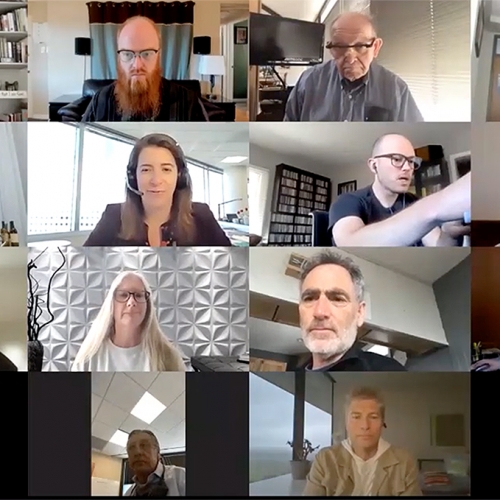
In 2020, AIA Colorado introduced a new slate of imperatives: environmental stewardship; justice, equity, diversity, and inclusion (J.E.D.I.); and creating a culture of belonging. To support the latter, we introduced a series of Town Hall events last year by geographical section to better address needs unique to your region and help you connect with architects in your area.
Continuing to bolster a culture of belonging, AIA Colorado hosted yet another Town Hall event in April, with a focus on pivoting post-pandemic. After opening remarks, members gathered into virtual breakout rooms by section—South, West, North, and Denver. We learned best practices from panel discussions, gained insights from experts, and connected over informal conversations. If you missed the event, you can access the recording from the Denver breakout or read on for the highlights from all sections.
SOUTH SECTION – TOWN HALL RECAP
By JP Arnold, AIA Colorado Allied Member, Marketing and Business Development Manager at Bridgers & Paxton
South Section Director James Childs, AIA, led the engaging discussion during our Town Hall breakout session. With a focus on pivoting during the pandemic, topics ranged from adaptability updates to enhancing virtual meetings with clients. Scripting out your proposal presentation, ensuring adequate lighting, and looking in the camera lens were discussed as virtual meeting improvements. Some architects continued a busy design workload while facing challenges of connecting with fellow team members and designers. The absence of water-cooler conversations and impromptu talks about design in the office building had a noticeable effect. A remedy to this in-person disconnect was either meeting at an open-space park or meeting virtually and not discussing work at all during these shorter weekly social meetings.
However, the effects of remote work have resulted in some benefits, as well. Technology has been connecting members across the state verses Denver-based events, and a more connected membership served as a byproduct of this current environment. Finally, in the midst of instantaneous communication and technological capabilities, quality architectural design is a must. Just because a designer can quickly click “send” does not serve our profession well if designers do not take the appropriate time for accuracy and quality standards. Review and coordination must occur with teams and clients. We look forward to future Town Hall discussions!
DENVER SECTION – TOWN HALL RECAP
By Alisa Rice, AIA, Senior Associate at Hord Coplan Macht
Denver Director Julianne Scherer, AIA, introduced and moderated a discussion with Laura Aldrete, Denver Executive Director of Community Planning and Development. Aldrete oversees Denver’s citywide and neighborhood planning efforts and the implementation of regulations for land use and design. In this presentation, she discussed the department initiatives, goals, impacts from the pandemic, and resources for architects.
The work of the department helps to ensure life-safety and quality-of-life standards, now and in the future. Lessons learned from the pandemic included a more digitized environment. E-permits increased from 75 percent pre-pandemic to 98 percent during the pandemic and predicts in the future they will issue 89 percent e-permits. Compared to 2019, the number of permits did not decrease but the value of projects decreased with more residential projects. There were $5.3B in project value for fees in 2019 and $4B in project value for fees in 2020. The review time for small projects is 5 days, and they are working to reduce it to 2. For complex commercial projects the review time is 2.5 weeks and 5 weeks for Denver Fire. Access e-permits online.
In working with Denver Community Planning and Development, Aldrete would like to see more interactive work sessions with the architects in the future to speed up the process and be able to talk through any comments and responses. They want to make the SPD process more streamlined for all projects. Affordable housing is a crisis now in Denver, and it is a goal of Mayor Hancock to address it. Aldrete said that she would like this to be the first project type to use this process and would also like to consider expedited permitting for affordable housing. Learn more about their “Expanding Housing Affordability” work.
So how do we look forward and be more inclusive? Denver must be a leader in how we achieve equity, climate action, and good quality urban design. We must have community outreach and think about how we can make neighborhoods complete, so all amenities are within a 10-minute walk. We need to improve access to opportunity and reduce vulnerability. She also provided the following resources for Denver architects:
- See Blueprint Denver for more information on growing an inclusive city.
- View the Denver Green Code concerning climate action discussion.
- If you are interested in participating in the Denver Green Code pilot program, email Eric Browning.
- See more information on the Latino/Chicano Historic Context project, including ways to participate.
- Sign up for the DPD newsletter.
Aldrete also reviewed how architects can have a positive impact on Denver’s growth, enhancement, and preservation. We must think about the long-term impacts of where and how future growth occurs.
WEST SECTION – TOWN HALL RECAP
By AIA Colorado COO Amy Blagriff, Hon. AIA
West Director Sarah Broughton, AIA, led the breakout session for the West. After gathering for a Town Hall in summer 2020, they kicked-off the meeting reflecting on the past year. Since that time, they have began to see urban exodus, which continues to this day. It’s brought many new development opportunities, but also crowding. On a positive note, the net result of new people has been to energize to the West community. They are also reporting a high volume of work that they never would have predicted in a pandemic. Challenges include onboarding new staff, determining which jobs to accept, and understanding topography needs—on the western slope, clients want to see plans by snow melt, which is very different than project needs on the front range.
Within projects, attendees have been discussing the impacts of climate change, rapid growth challenges such as limited permits to drill wells, long-term effects of growth, resource limitations, and fire risk impacts on design specifications. Within the practices, while firms have adapted well to remote work, they reinforced the importance of togetherness. While learning how to work remotely, firms have also come to address the need for more flexibility. The challenge will be in “unwinding,”—how can we use this pandemic as a catalyst for change? What will and should our remote policies look like? How do we identify and correct those things in our culture we now realize were not working as well as we had thought pre-pandemic?
Within client services, in-person meetings now feel very special, yet also odd as there is less physical closeness, for example, hesitation to gather closely around a set of drawings. Clients seem to value firms more now as human, and similarly, architects view clients with more humanity. Some clients have a recession mentality and approach our firm as if they should be grateful to have work. In addition, boundaries have dropped with clients, and impatience is escalating.
With regard to the future, the consensus is that remote work is here to stay. Members of the West have been able to work with clients on a different level than ever before, thanks to digital tools. The challenge will be onboarding and reassessing culture. Overall, employees seem positive and have adapted well. The takeaway: Moving forward: open and direct communication and opportunities for connection will continue to be key!
NORTH SECTION – TOWN HALL RECAP
One of the many perks of the AIA Colorado Town Hall events is the ability to connect with peers regionally in a more informal setting. Leading the North section breakout discussion was North Director Rob Pyatt, AIA, who guided attendees through a group discussion, allowing space for humble conversation to occur, lessons learned to be informally shared, and recognition of achievements, including those newly licensed.
Similar to members in the West, work has not slowed in the North. However, projects are limited. In Boulder, where the cost of land is exorbitant and limited, residential firms are seeing a lot of remodels and renovations.
Within firm practices, the pandemic has shed a lot of light on the additional stressors for working parents. Long gone is the traditional work model of being glued to a desk for 8+ hours straight. Childcare is at the forefront of priorities now. Parents have adapted through working late nights, odd hours, or alternating work and parenting days with their partners. Onboarding continues to be a challenge, and there are employees who have never met face-to-face.
One firm principal acknowledged his own previous reservations surrounding remote work and how the pandemic has shifted his perception. The work is getting done, and the virtual space has created more equity, with more staff being able to attend meetings. Firms are also benefiting from the reduction of time spent on the road to and from meetings.
The takeaway: Backlogs are strong, flexibility is valued, and the challenge will be creating work/life boundaries and adapting the firm culture in this new space.