Event Recap: Designing Within the Limits
Event Recap
Designing Within the Limits: Water Innovation & the Future of Resilient Development in Colorado
July 22, 2026
As Colorado faces increasing pressure from prolonged drought, rising temperatures, population growth, and changing water availability, AIA Colorado’s Committee on the Environment (COTE) launched its two-part summer webinar series with a timely discussion exploring the future of water-conscious design.
Created and moderated by committee members Alexis Campion, Assoc. AIA, and Francis Mougne, AIA, the series brings together experts from architecture, engineering, utilities, research, and planning to examine how the design profession can help create more resilient communities.
The online event featured an interdisciplinary panel including Dr. Sybil Sharvelle of Colorado State University, Lauren McNeill of Group14 Engineering, Russ Slade of Denver Water, and Mike Riggs, AIA, of RTA Architects. Together, the panel explored how architects can respond to Colorado’s finite water resources through innovation, collaboration, and long-term planning.
A recurring theme throughout the discussion was that while Colorado’s water challenges are significant, many opportunities already exist within today’s regulatory framework. Panelists emphasized that graywater reuse, rainwater harvesting, on-site treatment systems, and fit-for-purpose water strategies are no longer theoretical concepts, they are practical solutions that can be implemented today on many projects. Several speakers noted that one of the greatest barriers is not policy itself, but a lack of awareness and early coordination among project teams, owners, and local jurisdictions.
The conversation also highlighted the importance of viewing water as a design resource rather than an assumed utility. Panelists encouraged architects to begin conversations about water reuse early in the design process, evaluate building water intensity alongside energy performance, and consider future-proofing projects through strategies such as dual-plumbing systems and infrastructure that can accommodate future water reuse technologies.
Drawing from projects including the National Western Center Hydro Building, the Pikes Peak Summit Complex, and several Living Building Challenge projects across Colorado, speakers shared lessons learned about navigating permitting, water rights, and innovative building systems. While challenges remain, particularly around Colorado’s complex water laws, panelists agreed that demonstration projects are helping build momentum toward broader adoption and future policy improvements.
Russ Slade of Denver Water offered a sobering overview of Colorado’s current drought conditions and the long-term realities of water supply planning. He discussed how climate change, wildfire, declining snowpack, and increasing demand are reshaping water management across the Front Range, emphasizing that conservation, watershed stewardship, and non-potable reuse will become increasingly important components of resilient communities. Denver Water’s investments in forest restoration, recycled water infrastructure, and advanced forecasting technologies illustrate the scale of planning required to secure reliable water supplies decades into the future.
The discussion also explored emerging challenges such as AI data centers, agricultural water use, and the economics of water reuse. Rather than viewing these as isolated issues, panelists encouraged participants to think holistically about circular water systems, watershed health, and designing buildings that can adapt as water becomes an increasingly valuable resource.
Despite the complexity of the challenges ahead, the webinar concluded on an optimistic note. Panelists pointed to Colorado’s culture of innovation, collaborative problem-solving, and growing awareness of water issues as reasons for confidence. As more successful projects demonstrate what is possible, the design community is well positioned to help shape policies, technologies, and buildings that support a more resilient water future.
SPEAKERS:
Sybil Sharvelle One Water & CSU Hydro Building
Dr. Sybil Sharvelle is a Professor in the Department of Civil and Environmental Engineering and is a member of the Environmental Engineering focus area. Her research interests include water reuse (graywater and reclaimed water), integrated urban water management, and waste conversion to energy. Her doctoral work included development of a system for treatment of graywater for potable reuse during space missions. This project led to her current interest in fit-for-purpose water systems, in which she has led projects funded by the Water Research Foundation, USEPA and National Science Foundation. Dr. Sharvelle was a member of the National Research Council Committee for Beneficial Use of Graywater and Stormwater and chaired the NWRI panel for Decentralized Non-Potable Water Systems.
Lauren McNeill Group 14
Lauren McNeill is an Associate Principal with Group14 Engineering – a woman-owned sustainability & energy efficiency consulting firm based in Denver, Colorado. In her 16 years of experience at Group14, Lauren has led over 100 projects in meeting their sustainability goals, including several projects that incorporated creative water reuse: Aspen Distillery, Northglenn City Hall, Yannell Conservation Habitat, and the Hydro Building at National Western Center.
Russel Slade Denver Water
Russ Slade is a Senior Planner at Denver Water with 19 years of experience supporting the utility’s water resources and operations. He spent a decade in the Water Rights group, where he played a key role in adjudicating and defending Denver Water’s water rights. For the past nine years, Russell has been part of the Raw Water Supply team, focusing on the operation and accounting of water rights across Denver Water’s collection system. His work bridges legal, operational, and planning perspectives to help ensure reliable and sustainable water supply management.
Mike Riggs Pikes Peak RTA
Mike Riggs, AIA, LEED BD+C, Principal, has over twenty years’ experience at RTA. Mike has a diverse background while working on a number of K-12, retail, office, and healthcare projects. Mike served as the Project Architect on the Pikes Peak Summit Complex, and he was responsible for the technical execution of the design and construction documents. Mike’s role continued through construction as the lead representative for the design team and he continues in that role through the LEED Certification and Living Building Certification processes, which are still ongoing.
Part 2
Pursuing Net Zero Water in Colorado: Navigating Water Law, Permitting & Infrastructure Constraints
Following a first conversation exploring the future of water-conscious design in Colorado, AIA Colorado’s Committee on the Environment (COTE) continued its two-part summer webinar series by turning to the practical realities of putting those ideas into action.
Created and moderated by committee members Alexis Campion, Assoc. AIA, and Francis Mougne, AIA, Part 2 in the series, Pursuing Net Zero Water in Colorado, brought together experts in water resources, utilities, infrastructure, and engineering to explore how water rights, permitting requirements, infrastructure constraints, and long-term planning shape what is possible—and why architects should begin thinking about water early in the design process.
About the
Committee on the Environment
The Committee on the Environment (COTE®) is a state and national AIA Knowledge Community working for architects, allied professionals, and the public to achieve climate action and climate justice through design. We believe that design excellence is the foundation of a healthy, sustainable, and equitable future. Our work promotes design strategies that empower all AIA members to realize the best social and environmental outcomes with the clients and the communities they serve.
This committee will review AIA’s 2030 Challenge and more to advance AIA Colorado’s imperative of environmental stewardship.
Member Spotlight: Andy Rockmore, AIA

AIA Colorado Member Spotlight celebrates the architects who are shaping Colorado’s built environment and strengthening our profession. Through conversations about design, leadership, career paths, and the communities they serve, this series offers a personal look at the people behind the projects and the ideas that continue to move architecture forward.
AIA Colorado Member Spotlight
Andy Rockmore, AIA
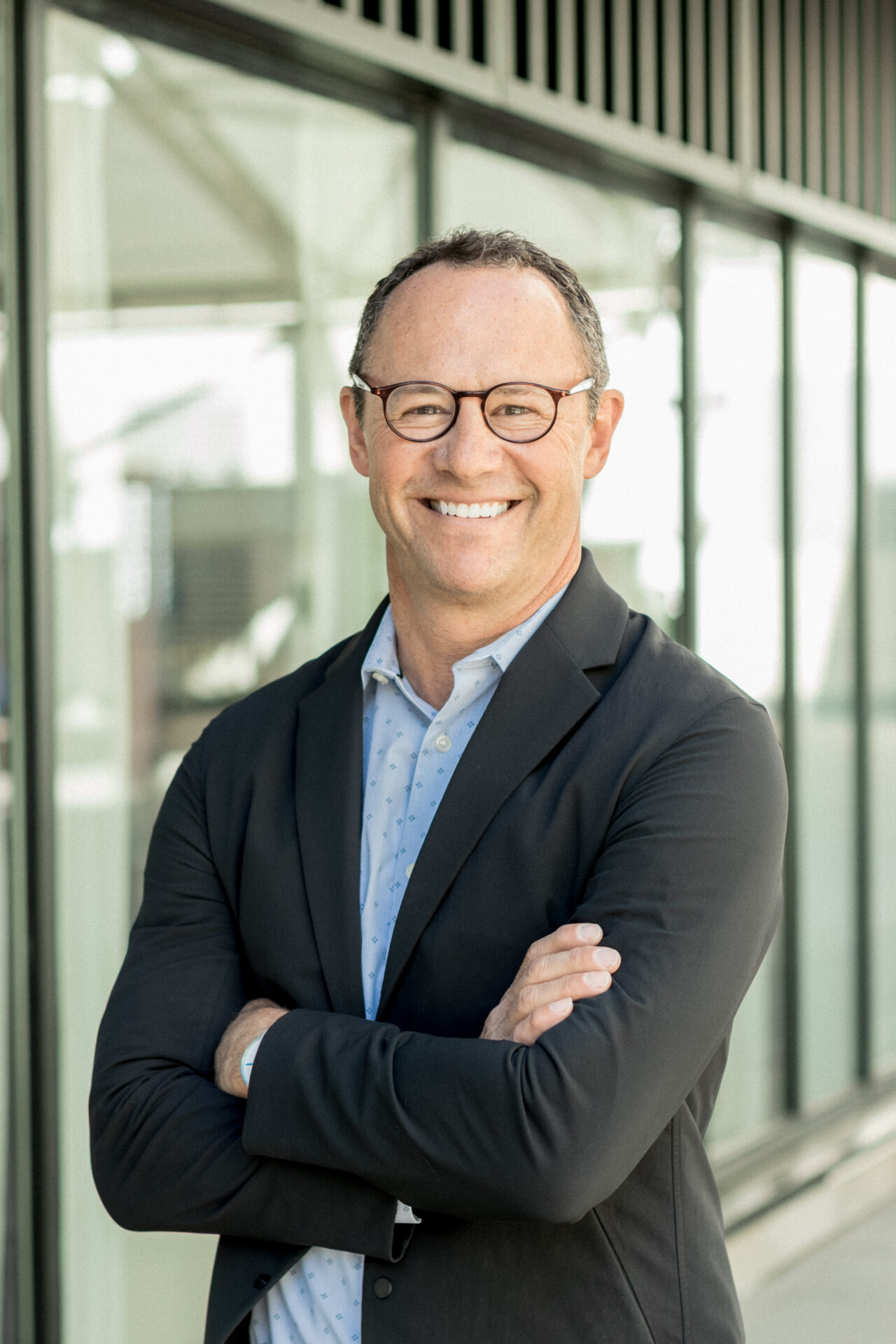
Title: Architect / Principal
Firm: SAR+ Architects
Location: Denver, CO
Years in practice: 22
Credentials: AIA
Introduction
From helping shape Denver’s urban renaissance to leading one of Colorado’s most respected design firms, Andy Rockmore, AIA, has spent more than two decades creating places that strengthen communities and enrich the public realm.
As a Principal at SAR+ Architects and the 2026 President of AIA Colorado, he believes architects have a responsibility that extends well beyond buildings, serving as problem solvers, civic leaders, and advocates for resilient, vibrant communities.
In this Member Spotlight, Andy reflects on discovering architecture as a teenager, finding creativity within constraints, the future of artificial intelligence in practice, and why connecting with fellow architects remains one of the profession’s greatest rewards.
The Conversation
What drew you to architecture, and when did you know it was the right path for you?
As a child, I was always drawing, everywhere! My parents once found an entire mural on the wall under my bed, 1 foot tall, 6 feet long. My father also loved to build additions to our house, furniture, and anything else the family needed. I loved being his helper.
In 10th grade, my mother took me to see the architecture studio at RPI, where I eventually went to college. I’ll never ever forget that moment, walking into a room full of drawings and models and people making amazing structures. It was a whole new world I didn’t know existed! I still feel similarly when I walk into our office every day.
“I still feel the same excitement walking into our office today as I did walking into my first architecture studio.”
How do you approach the balance between creativity and constraints such as budget, code, and client needs?
Balance is the perfect word to describe what architects try to achieve between all those forces and many more. The most important approach is accepting the possibilities AND the constraints! We are professional service providers, working in the interest of others first. Too often architects prioritize creativity and ignore constraints, leaving a client unable to implement what they need. Responsible architects know all too well, creativity is found within the constraints, not in avoiding them.
“Responsible architects know all too well that creativity is found within the constraints, not in avoiding them.”
What is one tool, habit, or process you rely on that others might not expect?
I still take notes by hand, because I remember what I write/draw. I find it easier to focus, listen intently, and remember what I’ve documented immeasurably better than typing.
In your view, what role should architects play in shaping Colorado’s communities?
As architects, we need to be using our diverse problem-solving skills to play in many roles. Colorado is a relatively young state with a national identity tied to its mountain towns, our front range cities, and outdoor culture. Colorado architects should ensure new development reinforces our state’s unique character, rather than superimposing ideas from other places.
Colorado architects should be leaders in climate resilience, focusing on wildfire risk, water scarcity, and increasing energy demands.
Our profession needs to keep expanding our traditional role by serving the public, not simply private clients. Architects should get involved in local government to help influence affordability initiatives, school planning, community development, and civic infrastructure. Our communities need us!
Our communities need us!
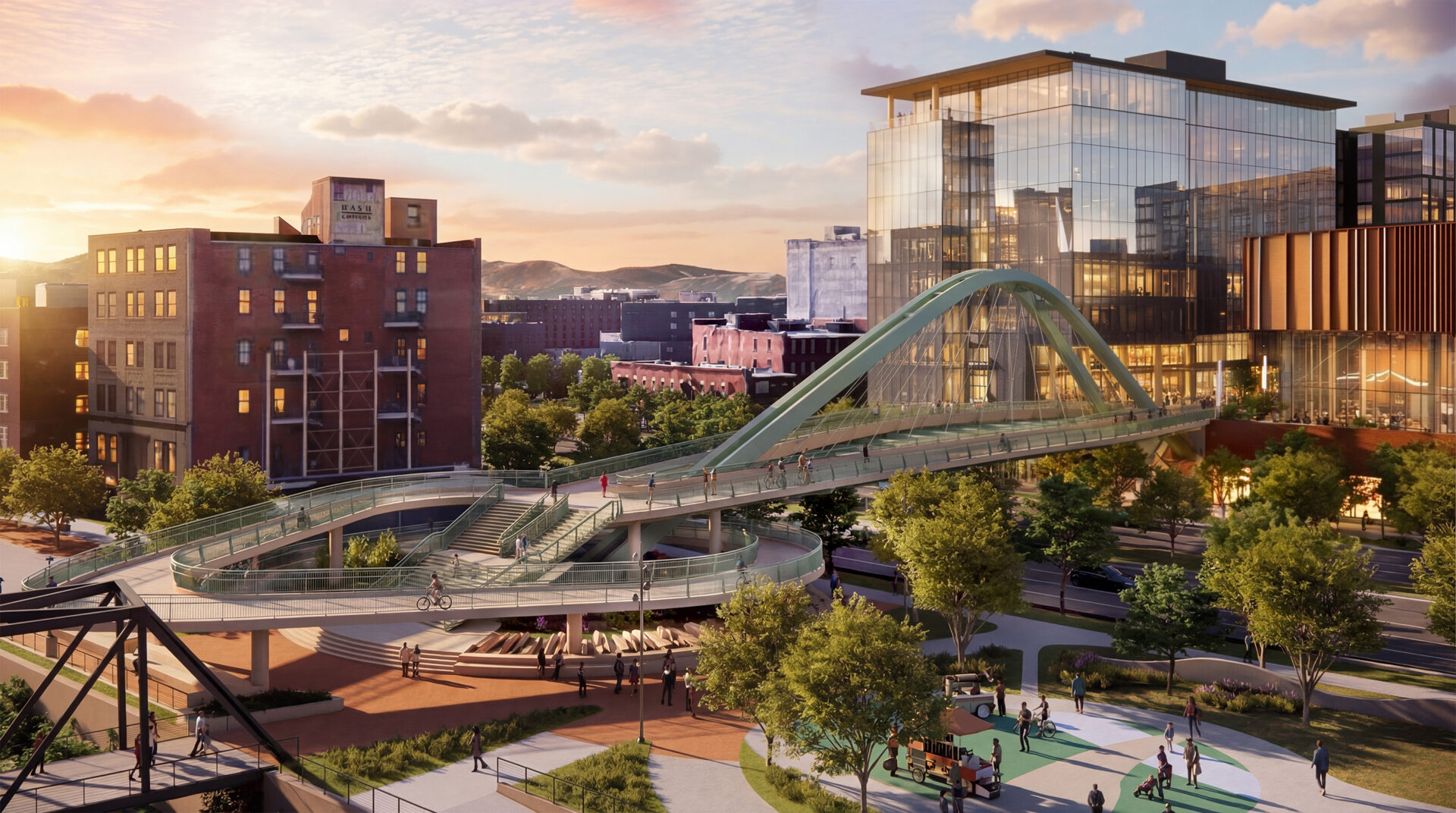
As part of the first phase of the KSE Ball Arena Redevelopment, Wynkoop Crossing will connect Denver’s historic Lower Downtown district to the emerging mixed-use neighborhood surrounding Ball Arena, helping transform a formerly disconnected edge of downtown into a vibrant, accessible urban corridor.
Rendering provided by SAR+ Architects
Where do you see the future of architecture heading in the next 5 to 10 years?
I believe that AI will continue to impact our profession in very significant ways. However, unlike some of the doomsayers, I’m confident there will be even more value placed on an architect’s judgement, reason, empathy, and ability to solve problems that create healthy places, meaningful connections, and a sense of ease to help people thrive in our complex world.
How has AIA Colorado supported your career or practice?
I’m continually grateful for the ways AIA supports our firm by providing resources that help us run our business and stay ahead of our evolving profession. Whether it’s the Compensation Report, the latest AI Toolkit, or leadership and mentoring opportunities like AIA Colorado’s Ascend and the Christopher Kelley Leadership Development Program, our firm has benefited tremendously from AIA’s support.
On a personal level, my involvement with AIA has connected me to the profession in meaningful ways. I’ve had the opportunity to build friendships with architects from across the country, and I’m continually struck by, and comforted by, how much we all have in common. Despite practicing in different places and facing different challenges, we share a common passion for improving our communities through design.
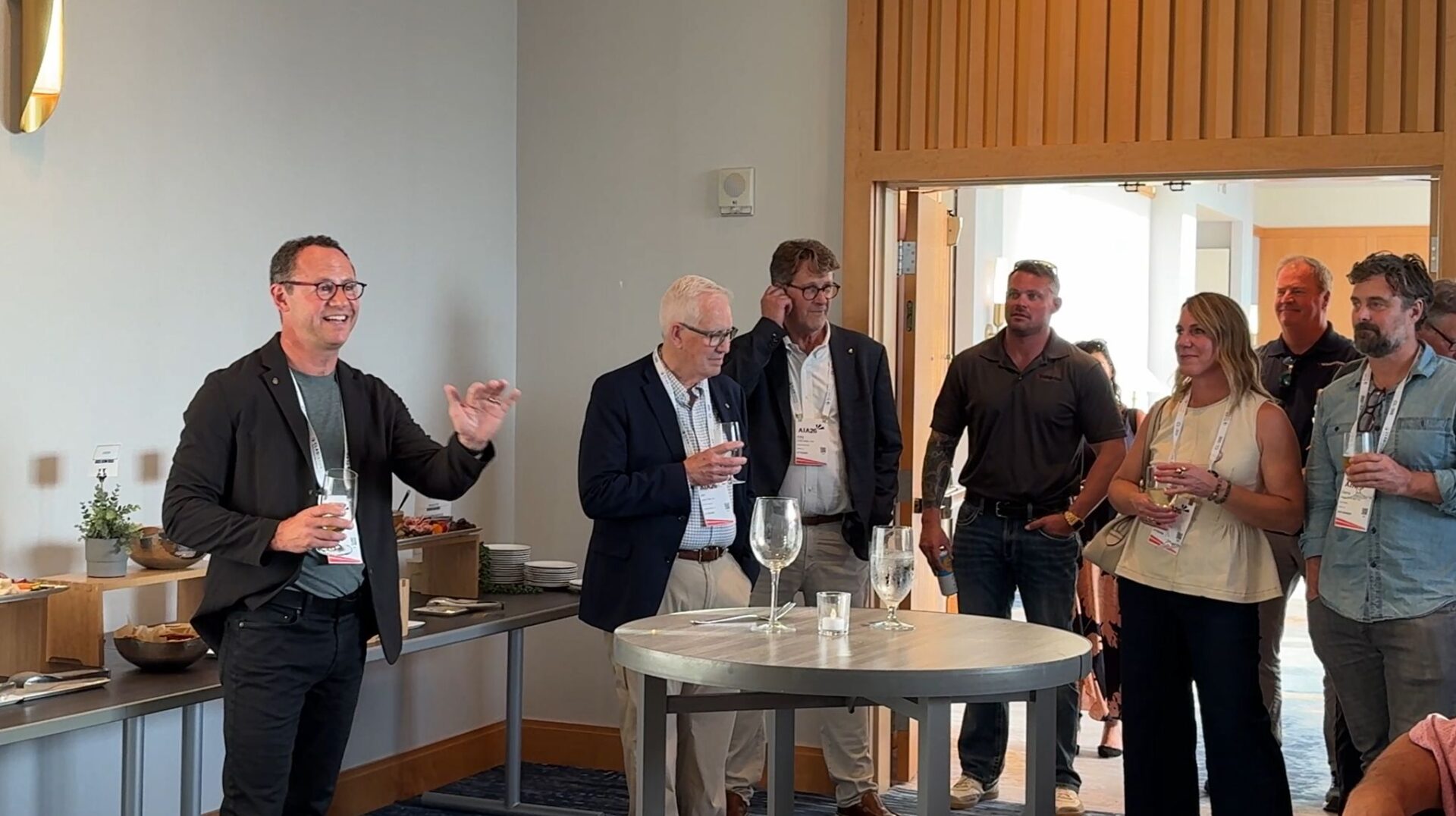
I’ve really enjoyed getting to know and connect with AIA Colorado members from across the state, and this year’s AIA Conference in San Diego was a great opportunity to spend time together.
If you were not an architect, what would you be doing?
If I couldn’t practice architecture, I’d be a therapist. I find people and their stories far more interesting, complex, and wonderful than any building or place.
Thank you to Andy Rockmore, AIA, for sharing his story to kickoff the AIA Colorado Member Spotlight series!
Colorado Architecture News | 07.15.26
News from the Colorado Chapter of The American Institute of Architects
07.15.26
In this Newsletter:
- Practice + Design Conference Call for Presentations
- Academy of Architecture for Health National Update
- Colorado ByDESIGN™
- July 22 • Committee on the Environment Water Series: Part 1
- July 29 • Highlands Ranch Senior Center tour
- Aug 5 • Committee on the Environment Water Series: Part 2
- Aug 7 • Coffee meet & greet in Fort Collins
- Aug 19 • Timber Ridge Village tour in Vail
- Aug 20 • Palmer High School construction tour
- Aug 27 • Anythink Nature Library tour
- Premier Partner spotlight: KL&A Engineers & Builders
AIA COLORADO’S
NEWS
Share Your Expertise
The 2026 Practice + Design Conference Call for Presentations submission window closes July 31st!
This year’s theme, The Work of Tomorrow, explores how architects embrace uncertainty with optimism, shaping the future through innovative ideas, evolving practices, and forward-thinking design.
Share your expertise with your peers by leading a session in Keystone this fall. Submit your presentation by Friday, July 31, 2026, at Noon.
Academy of Architecture for Health National Update
What priorities are shaping the future of healthcare design? During AAH Colorado’s recent National Update, 2026 AAH National President Pierce McVey, AIA, LEED AP, shared the Academy’s strategic initiatives, upcoming programs, mentorship opportunities, and the 2026 theme of Resilience, while Colorado Chair Tim Neely, AIA, highlighted the chapter’s volunteer efforts, community health initiatives, and upcoming programming. Read the full recap, explore opportunities to get involved, and watch the complete recording of the session here.
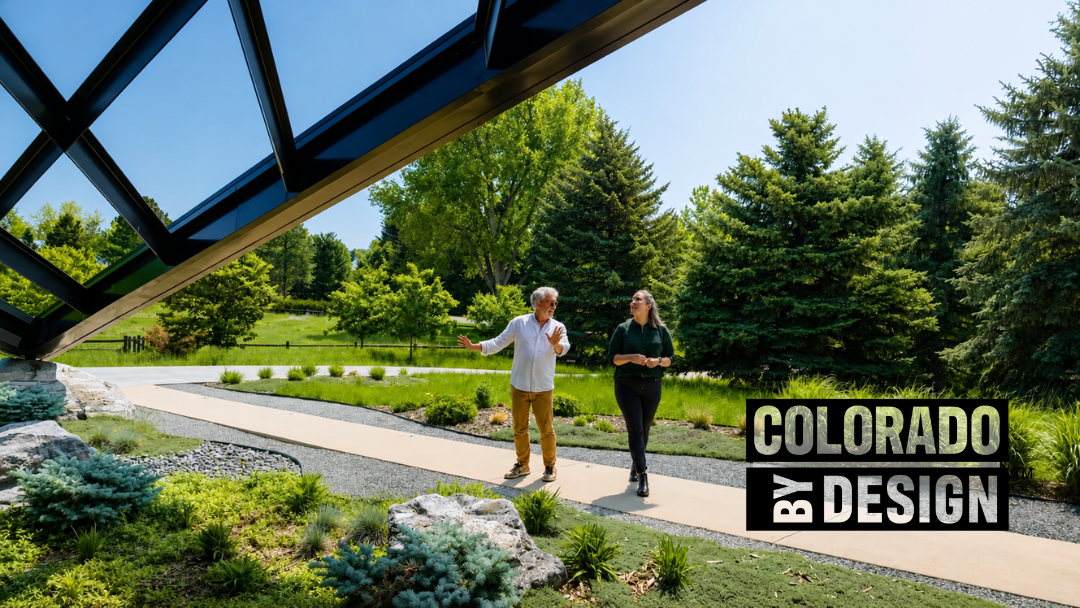
Colorado ByDESIGN™
With the conclusion of Colorado ByDESIGN™, all five broadcast episodes are now available to watch, offering an inspiring look at the remarkable architecture being designed across our state. A heartfelt thank you to the many AIA Colorado member architects and firms who generously opened their projects and represented Colorado’s architecture community with creativity, excellence, and thoughtfulness.
If you’ve designed a project you’re especially proud of and believe it would make a compelling feature in a future episode, the ByDESIGN team would love to hear from you and begin the conversation about bringing your work to the screen!
Watch all five episodes and learn more about featuring your project on the show here.
AIA Group Enrollment
Group Enrollment provides firms employing 10+ members with a single, consolidated invoice for their teams. Support your team with AIA membership! Firms can enroll anytime at by visiting the dedicated landing page here, or email membership@aiacolorado.org to let us know you are interested and we will help connect you with the national team to onboard your firm.
AIA COLORADO’S
EVENTS
July 22 • Designing Within the Limits: Water Innovation & the Future of Resilient Development in Colorado
Wednesday, July 22nd, at Noon, join AIA Colorado’s Committee on the Environment (COTE) on examining how water scarcity is shaping the future of development in Colorado and explores strategies for creating more resilient, water-conscious communities. Participants will learn about innovative water management approaches, emerging technologies, and integrated planning solutions that support public health, safety, and welfare through sustainable resource stewardship and resilient infrastructure design. Session to be submitted for 1 LU|HSW. More info and RSVP here.
July 29 • Where Community Happens: A Tour of Highlands Ranch Senior Center
Wednesday, July 29th, at 5pm, join members for a tour of Highlands Senior Center, a vibrant community hub designed to support wellness, accessibility, and social connection for aging adults. Tour will be led by architects from OZ Architecture and will examine how flexible programming, intuitive circulation, natural light, and community-driven aesthetics contribute to environments that enhance health, safety, and welfare for older adults. Tour has been submitted for 1 LU|HSW. More info and RSVP here.
Aug 5 • Pursuing Net Zero Water in Colorado: Navigating Water Law, Permitting & Infrastructure Constraints
Wednesday, August 5th, at Noon, join AIA Colorado’s Committee on the Environment (COTE) on exploring the challenges and opportunities of pursuing Net Zero Water development in Colorado through a discussion of water rights, permitting requirements, and infrastructure constraints. Participants will gain insights from industry experts on lessons learned and practical strategies for advancing resilient, water-conscious projects that support public health, safety, and welfare. Session approved for 1 LU|HSW. More info and RSVP here.
Aug 7 • Coffee meet & greet in Fort Collins
Friday, August 7th, at 8am, join AIA Colorado North members for your morning beverage and conversation at The Caldwell, one of Fort Collins’ newest establishments. RSVP here.
Aug 19 • Timber Ridge Village tour in Vail
Wednesday, August 19th, at 2pm, join members in the West for a tour of of Timber Ridge Village in Vail, one of the most ambitious workforce housing developments undertaken in Colorado’s mountain communities. As the Town of Vail’s largest capital project to date, this $165 million redevelopment transforms a long-standing employee housing site into a modern, transit-oriented neighborhood featuring more than 300 deed-restricted homes for the local workforce. Designed by Pure Design in collaboration with Triumph Development West and the Town of Vail, the project demonstrates how architecture, planning, public policy, and innovative construction methods can address the growing housing challenges facing resort communities. Tour approved for 2 LU|HSW. More info and RSVP here.
Aug 20 • Palmer High School construction tour
Thursday, August 20th, at 4pm, join South members for a tour of the new Palmer High School, an ongoing Palmer High School project by RTA Architects and Perkins Eastman. This guided jobsite tour of Palmer High School offers participants first-hand exposure to active building construction within an occupied educational campus, with an emphasis on installation of precast concrete wall panels, construction means and methods, sequencing, and coordination across multiple trades. The tour will review how work is planned, staged, and executed on a constrained, occupied school campus, including temporary protection, access control, and safety measures. Tour approved for 1.5 LU|HSW. More info and RSVP here.
Aug 27 • Anythink Nature Library tour
Thursday, August 27th, at 4pm, join members for a guided tour of the Anythink Nature Library, designed by Davis Partnership Architects. Situated on a 15-acre hillside adjacent to the Aylor Open Space trail network, the project explores how architecture can foster meaningful connections between people, learning, and the natural environment. Attendees will experience the building’s curvilinear design, daylight-filled interiors, and integrated indoor/outdoor programming spaces, including gardens, nature-focused learning environments, and community gathering areas. The tour will highlight strategies related to site integration, biophilic design, experiential learning, and the creation of healthy, restorative public spaces. Participants will gain insight into the collaborative design process and the architectural decisions that support the library’s mission to help visitors “find their place in nature.” Tour approved for 1 LU|HSW. More info and RSVP here.
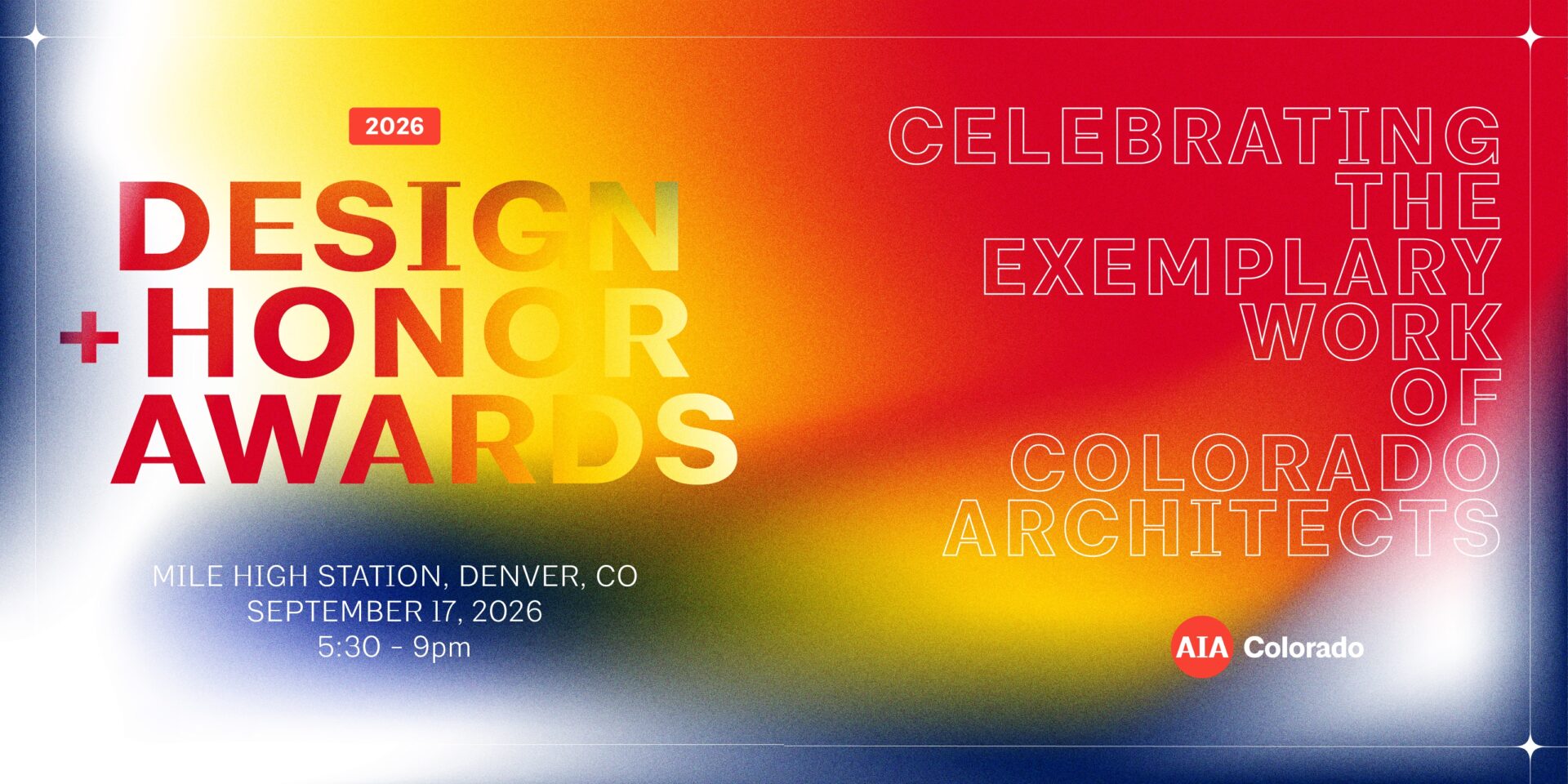
Thursday, September 17, 2026, 5:30 – 9pm, at Mile High Station, Denver.
Learn more about the event and buy your tickets here.
COMMUNITY
NEWS
City of Colorado Springs seeking architect to serve on the Fire Board of Appeals
The Fire Board of Appeals is established to hear and decide appeals of orders, decisions or determinations made by the fire code official or his/her designee relative to the application and interpretation of the currently adopted International Fire Code. Meeting time is the 2nd Friday of every month at 8:30am. Interested applicants are encouraged to review the Downtown Form-Based Zone Boundaries prior to applying, available here. Applications are due this Friday, July 3st. Apply here.
2026 Jason Pettigrew Leadership Scholarship: Call for Entries
The Jason Pettigrew Leadership Scholarship honors the legacy of Jason Pettigrew, Assoc. AIA, whose passion, leadership, and commitment to emerging professionals left a lasting impact on the Western Mountain Region. Established in 2004 following his passing, the scholarship supports Associate AIA members who demonstrate leadership potential and a commitment to service within the profession. Recipients receive funding to attend both the AIA Leadership Summit in Washington, D.C., and the AIA College of Fellows Western Mountain Region Conference, providing valuable opportunities for leadership development, networking, and engagement with the Institute. Applications are open to Associate AIA members in the Western Mountain Region states, with submissions evaluated on demonstrated leadership, AIA involvement, and future commitment to the profession. More information can be found here and applications can be started here. Application deadline is Monday, August 10th.
CAREER CORNER
JOB BOARD UPDATES
AIA Colorado Job Board
Looking for your next career move? Explore fresh job listings updated daily. Hiring? Showcase your open position for 30 days and connect with top-tier talent.
Featured listings:
NEWA FROM
AIA NATIONAL
Next to Lead
Next to Lead is a leadership development training program for racially and ethnically underrepresented women in architecture. The 2026 Next to Lead program will kick-off in September 2026 and conclude in June 2027. Applications are due by August 7, 2026. Learn more and apply at AIA.
Economic Update Q3 2026 ABI Insights
Join AIA Chief Economist Richard Branch and AIA EVP/Chief Executive Officer, Carole Wedge, FAIA, for our quarterly conversation on key insights into the industry’s latest economic data and trends. Register at AIA.
AIA COLORADO’S
PREMIER PARTNER SPOTLIGHT

We’re proud to highlight one of AIA Colorado’s Premier Partners, KL&A, and look forward to their ongoing support and involvement serving Colorado’s architecture community.
KL&A is a firm built around the idea that structural engineers should return to a master builder role by taking ownership of structural systems. A collaborative approach and project centric behaviors are our differentiators, facilitating a more engaging design and construction process. Their philosophy of personal responsibility has generated a corporate culture of problem solving and innovation. They are engineers first and foremost, which they leverage on their steel detailing and steel construction projects. hey also take great pride in sustainability efforts, utilizing mass timber to minimize embodied carbon in our structures, and providing Life Cycle Assessments on our committed projects.
AIA COLORADO’S
ALLIED MEMBERS
Find the Right Expertise
Our Allied Members bring depth and diversity to Colorado’s design and construction community. These experienced professionals offer specialized knowledge that complements architectural practice and elevates project outcomes statewide.
Helpful Links:
- Mile High Station, Denver, CO
- Thursday, September 17
- Tickets available here
- Awards sponsorship information
2026 Practice + Design Conference
- Keystone Conference Center, Keystone, CO
- November 11 – 13
- Conference Call for Presentations
- Submission window closes July 31
- Conference sponsorship information
- Expo Hall registration
AIA Colorado Firm Directory
- Add your firm to the directory here.
Volunteer Opportunities:
Have news to share? If you or your firm have been featured in the media, published in a design outlet, received an award, or announced a major promotion, email AIA Colorado’s Communications Director Jon Bell.
Academy of Architecture for Health: National Update

Tuesday, July 14, 2026, Noon
Academy of Architecture for Health
National Update
The Academy of Architecture for Health (AAH) Knowledge Community welcomed Pierce McVey, AIA, LEED AP, 2026 AAH National President, for an overview of the Academy’s structure, strategic priorities, national programs, and opportunities for member involvement.
Pierce described AAH’s role in advancing healthcare architecture through education, networking, research, professional development, and thought leadership. He encouraged members to become involved through the Academy’s volunteer committees, noting that committee service often provides a pathway into national leadership and board positions.
AAH maintains an active presence at the profession’s major healthcare conferences, including the Planning, Design & Construction Summit, the Summer Leadership Summit, and the Healthcare Design Conference + Expo. This year’s Summer Leadership Summit will explore equity in healthcare under the theme Bridging the Gaps and Advancing Healthcare for All. National programming also includes the Healthcare Design Awards, NextGen scholars and U40 recognition, Tuttle Fellowship research presentations, case study workshops, and student design charrettes and challenges.
Pierce highlighted several initiatives that are helping AAH develop future leaders and broaden participation in healthcare design. The Colleague-to-Colleague Mentorship Program currently connects 26 mentees with nine mentor-group leaders from a diverse range of locations, firms, and practice settings. The Academy’s HBCU Fellows program is also building connections with educators and students at historically Black colleges and universities while expanding participation in national student programs.
Members were also introduced to Spectacle, AAH’s online publication focused on healthcare design, Academy activities, emerging ideas, and opportunities for professional contribution. Now entering its second year, the publication offers members another venue for sharing projects, research, and thought leadership.
Another important national development is the upcoming release of the new Facility Guidelines Institute edition this fall. Pierce noted that the changes are expected to represent a significant evolution in how the guidelines function within healthcare design and code frameworks, making the update especially relevant to practitioners.
AAH’s 2026 presidential theme is Resilience, viewed through a broad lens that includes climate response, organizational adaptability, healthcare delivery, workforce wellbeing, community health, and the ability to recover from disruption. The Academy is developing new pathways for participation through white papers, research briefs, technical design challenges, field research, and interdisciplinary workshops. The goal is to engage emerging professionals, cultivate thought leadership, and create ideas that may eventually inform larger national programs and competitions.
Pierce closed by encouraging members to participate at the national level. In addition to providing leadership experience, national involvement offers access to a strong professional network of healthcare designers, researchers, educators, and industry partners across the country.
Academy of Architecture for Health
Colorado Update
Tim Neely, AIA, Chair of AAH Colorado, provided an overview of the chapter’s local programming, community partnerships, and volunteer opportunities for the remainder of the year.
Community service remains an important part of AAH Colorado’s work. The chapter has maintained a longstanding relationship with Denver Health’s Newborns in Need program, where volunteers assemble care packages for newborns and families. Members have also supported Project C.U.R.E. by sorting and packing surplus medical supplies for shipment to healthcare organizations and communities around the world.
Tim also highlighted AAH Colorado’s partnership with Women in Healthcare on an annual healthcare symposium. Recent symposiums have explored the future of healthcare, the relationship between technology and human-centered care, artificial intelligence, the future of nursing, mental health, and emerging models of treatment. Planning is now beginning for the next symposium, and members will have opportunities to help develop topics, identify speakers, secure sponsorships, and support the event.
The chapter’s ongoing Community Health Initiative has examined how healthcare organizations, architecture, planning, and community development intersect. Past programs have explored housing as a foundation for health, partnerships between health systems and housing organizations, community-based care, physician wellbeing, and design strategies that support healthier populations.
This year, the initiative is expanding through a volunteer-led project in Littleton. Building upon an Urban Land Institute study, AAH Colorado members are exploring redevelopment possibilities for a former retirement community site and the surrounding neighborhood. The effort is examining housing, public space, neighborhood connectivity, arts and community programming, and opportunities to incorporate preventative healthcare or other local health services.
The project is intended to continue conversations with residents, city leaders, planning officials, preservation advocates, healthcare providers, and other community stakeholders. Tim invited members, including students and emerging professionals, to participate in future study sessions and help translate broad community goals into more tangible design and planning ideas.
The session reinforced that AAH involvement can take many forms, from attending educational programs to volunteering, mentoring, writing, conducting research, supporting community initiatives, and serving in chapter or national leadership roles. Members interested in healthcare design are encouraged to connect with AAH Colorado and find an opportunity that aligns with their interests and experience.
Colorado Architecture News | 07.01.26
News from the Colorado Chapter of The American Institute of Architects
07.01.26
In this Newsletter:
- Practice + Design Conference Call for Presentations
- Business of Architecture: People Management recap
- Marketing for Architects: From Project to Publication recap
- Design Like a Girl: year 3 update
- Equity in Practice: Session 3 recap
- West Virtual Connect 2026 Legislative Session update
- Colorado ByDESIGN™ episode 4 broadcasts this Saturday
- 2026 Design + Honor Awards Celebration tickets now available
- July 2 • Goatbarn Lane tour
- July 14 • Academy of Architecture for Health (AAH) National Update
- July 22 • Committee on the Environment Water Series: Part 1
- July 29 • Highlands Ranch Senior Center tour
- Aug 5 • Committee on the Environment Water Series: Part 2
- Aug 19 • Timber Ridge Village tour in Vail
- Aug 20 • Palmer High School construction tour
- Aug 27 • Anythink Nature Library tour
- Premier Partner spotlight: KL&A Engineers & Builders
AIA COLORADO’S
NEWS
Share Your Expertise
The 2026 Practice + Design Conference Call for Presentations submission window closes July 31st!
This year’s theme, The Work of Tomorrow, explores how architects embrace uncertainty with optimism, shaping the future through innovative ideas, evolving practices, and forward-thinking design.
Share your expertise with your peers by leading a session in Keystone this fall. Submit your presentation by Friday, July 31, 2026, at Noon.
Business of Architecture: People Management recap
How do great leaders create engaged, high-performing teams? At our latest Business of Architecture Committee session, members were led through a thoughtful discussion on employee engagement, effective feedback, one-on-one check-ins, and the shared responsibility between leaders and employees for building a healthy workplace culture. Explore the key insights and practical takeaways from the conversation in our full recap.
Read the recap here.
Marketing for Architects: From Project to Publication recap
What makes an architecture project worthy of publication? In the first session of AIA Colorado’s Marketing for Architects series, editors, reporters, storytellers, and creative directors shared practical advice on pitching projects, building relationships with media, and telling stories that extend beyond great design. Read our recap to discover actionable insights you can apply to your next project here.
Design Like a Girl |
Design Like a Girl |
Design Like a Girl: year 3 update
Design Like a Girl continues to inspire the next generation of female designers through hands-on workshops introducing middle school students to careers in design. Held on Fridays throughout the school year at the CU Denver College of Architecture and Planning, these all-day workshops invite students to spend the day learning about design with mentors from across the Colorado architecture and design community, with Spanish-speaking mentors providing essential translation for participants for whom English is not their primary language, significantly expanding the program’s reach. See photos and catch up with the architects growing the program here.
Equity in Practice: Session 3 recap
The final installment of AIA Colorado’s Justice, Equity, Diversity, and Inclusion (J.E.D.I.) Committee three-part Guides for Equitable Practice series shifted the conversation from understanding equity to putting it into practice. Highlighting Chapters 7-9 of the AIA Guides for Equitable Practice, presenters Jennifer Edwards, Assoc. AIA, Sonya Shah, AIA, and Margarita Gonzalez, AIA, explored how firms and individuals can create more equitable workplaces through intentional career development, meaningful community engagement, and measurable goals. Read the recap here.
West Virtual Connect 2026 Legislative Session update
Members from across Colorado’s Western Slope gathered for a West Virtual Connect roundtable focused on the outcomes of the 2026 legislative session and the issues most likely to affect architects practicing in mountain and rural communities. Led by AIA Colorado Advocacy Engagement Director Nikolaus Remus, AIA, and West Section Director Will Otte, AIA, the discussion explored housing, land use, infrastructure, sustainability, and emerging policy issues that could shape the future of practice in the region. Read the recap here.
Colorado ByDESIGN™
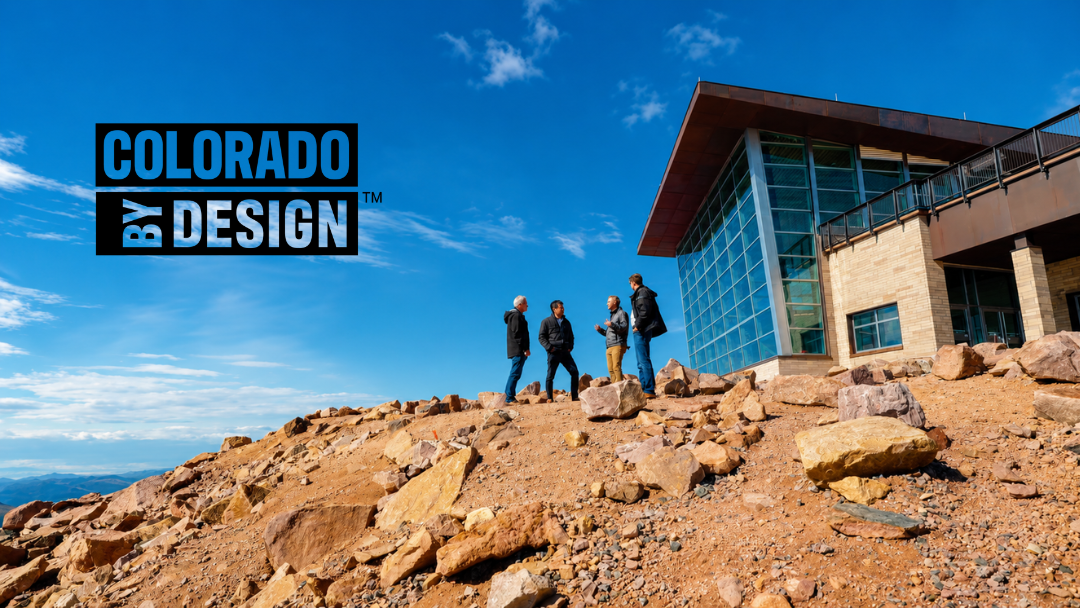
The fourth episode airs this Saturday afternoon on CBS Colorado (KCNC TV Channel 4 Denver) and CBS News Streaming Colorado, featuring Origami House by BOSS.architecture, the U.S. Olympic and Paralympic Museum and Park Union Bridge by Anderson Mason Dale, [au]workshop’s Confluence Fort Collins, and Meridian 105 Architecture’sThe Berkeley Hotel.
Watch the first four episodes here.
Pancratia Hall Lofts |
Pancratia Hall Lofts |
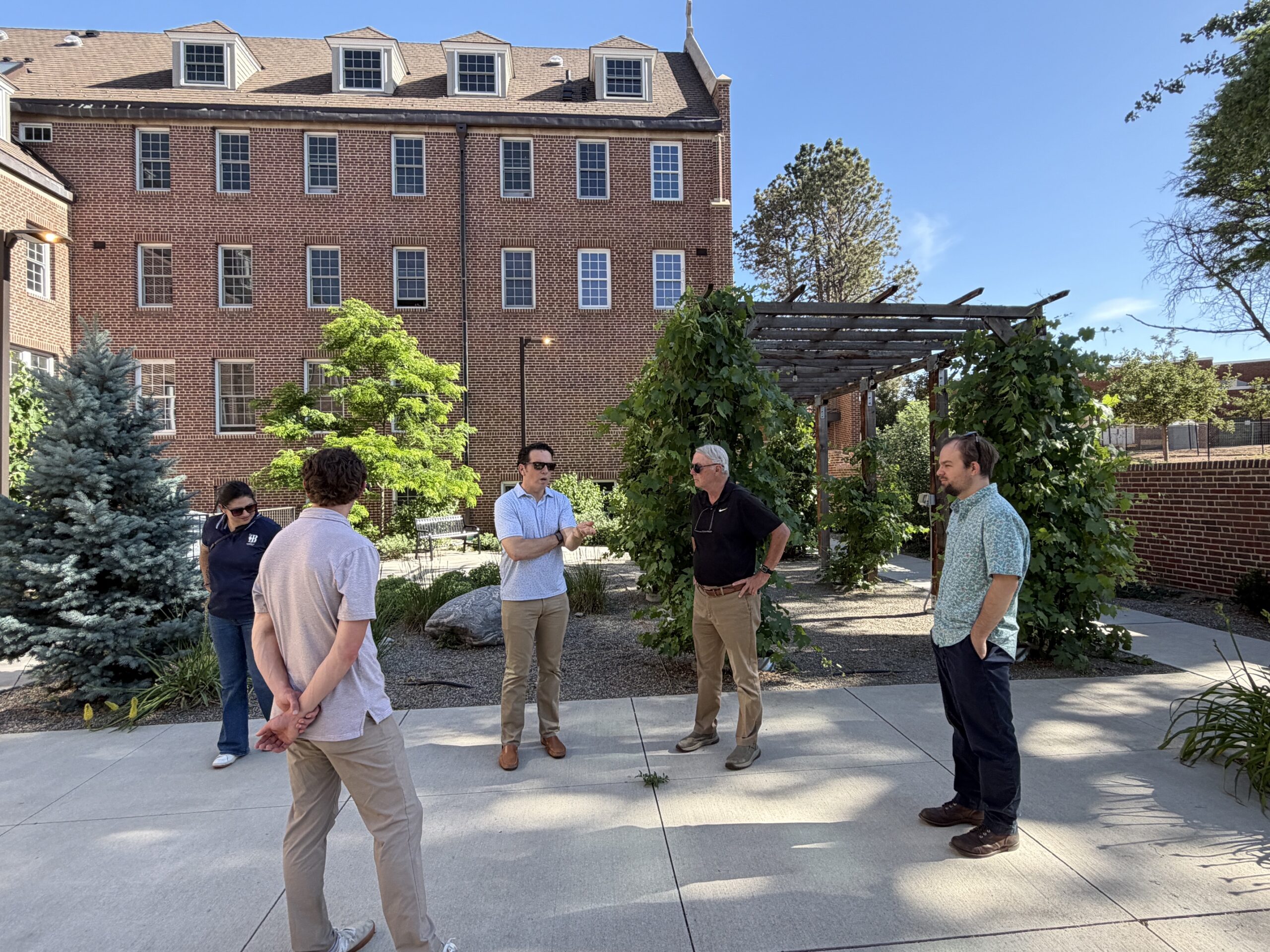
Members recently toured Pancratia Hall Lofts, where a 1930 historic landmark at Colorado Heights University has been transformed into 74 deeply affordable homes while preserving the character of the original chapel, gymnasium, and academic spaces. Thank you to OZ Architecture, Hartman Ely Investments, Proximity Green, and William Brummett Architects, P.C. for hosting such an insightful tour.
AIA COLORADO’S
EVENTS
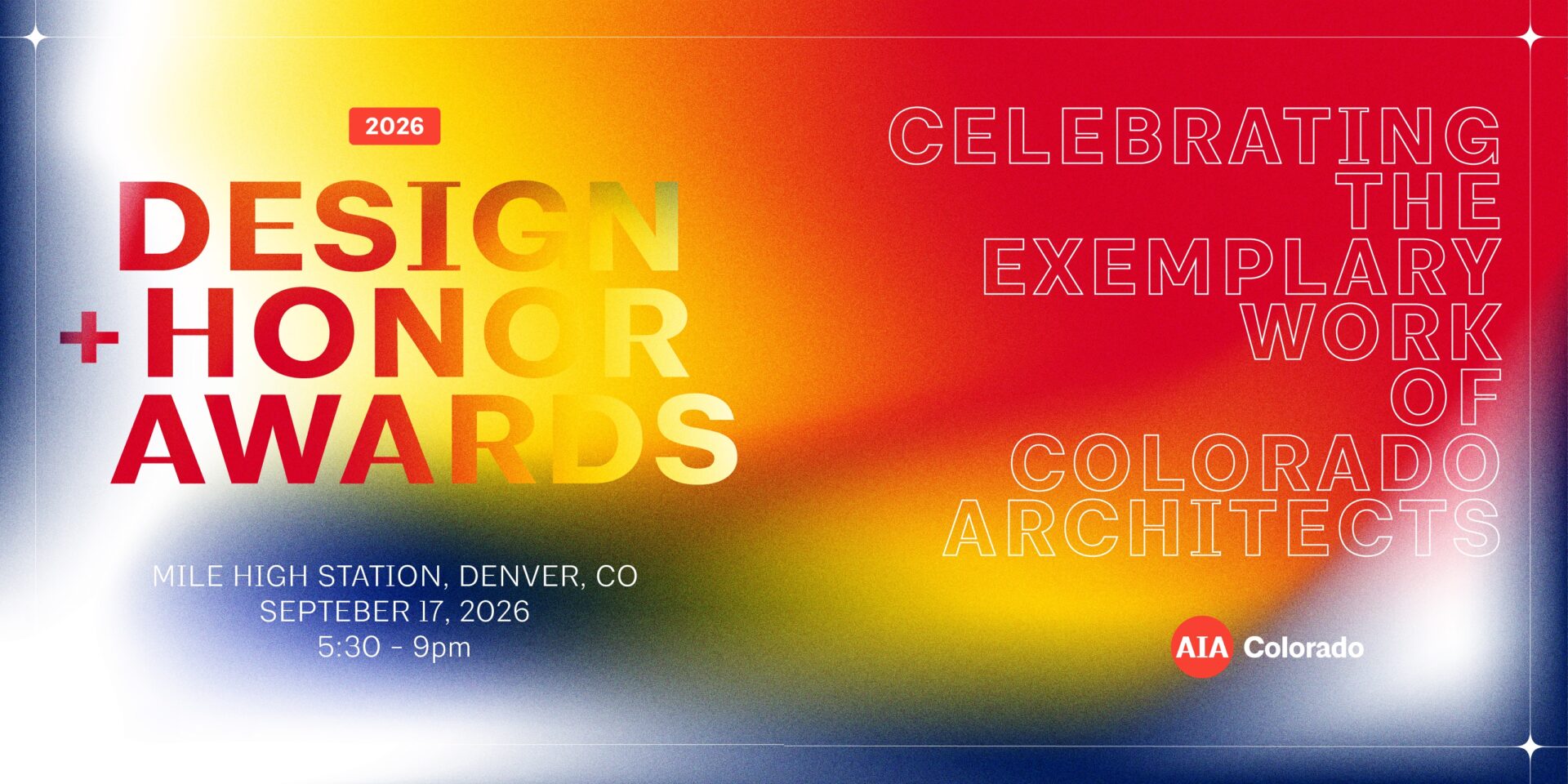
2026 Design + Honor Awards Celebration
The AIA Colorado Design + Honor Awards Celebration is more than an awards ceremony. It’s a celebration of Colorado’s architecture community and the people, ideas, and partnerships that continue to shape the built environment across our state.
Whether you’re accepting an award, cheering on your peers, reconnecting with colleagues, or simply celebrating another remarkable year of architecture in Colorado, this is an evening you won’t want to miss.
Thursday, September 17, 2026, 5:30 – 9:00pm, at Mile High Station, Denver. Learn more about the event and buy your tickets here.
July 2 • Goatbarn Lane Tour
Thursday, July 2nd, meeting at 3:45pm, join North members for a tour of Goatbarn Lane, a AIA Colorado 2022 Design Award of Excellence Award recipient, 2022 American Institute of Architects National Small Project + Housing Award, and 2022 Residential Design Architecture Award. Designed by Renée del Gaudio, for her father, the home reflects a philosophy of living with less, prioritizing simplicity, durability, and a strong connection to the natural environment. Tour submitted for 1 LU|HSW and limited to 15 AIA members, learn more and RSVP here.
July 14 • Academy of Architecture for Heath (AAH) National Update
Tuesday, July 14th, at Noon, virtually join the 2026 Academy of Architecture for Health (AAH) Knowledge Community for an update on national initiatives, local activities, and opportunities to get involved in shaping the future of healthcare design. Special guest Pierce McVey, AIA, LEED AP, 2026 AAH National President, will provide an overview of AAH’s organizational structure, strategic priorities, and key initiatives for the year ahead. More info and RSVP here.
July 22 • Designing Within the Limits: Water Innovation & the Future of Resilient Development in Colorado
Wednesday, July 22nd, at Noon, join AIA Colorado’s Committee on the Environment (COTE) on examining how water scarcity is shaping the future of development in Colorado and explores strategies for creating more resilient, water-conscious communities. Participants will learn about innovative water management approaches, emerging technologies, and integrated planning solutions that support public health, safety, and welfare through sustainable resource stewardship and resilient infrastructure design. Session to be submitted for 1 LU|HSW. More info and RSVP here.
July 29 • Where Community Happens: A Tour of Highlands Ranch Senior Center
Wednesday, July 29th, at 5pm, join members for a tour of Highlands Senior Center, a vibrant community hub designed to support wellness, accessibility, and social connection for aging adults. Tour will be led by architects from OZ Architecture and will examine how flexible programming, intuitive circulation, natural light, and community-driven aesthetics contribute to environments that enhance health, safety, and welfare for older adults. Tour has been submitted for 1 LU|HSW. More info and RSVP here.
Aug 5 • Pursuing Net Zero Water in Colorado: Navigating Water Law, Permitting & Infrastructure Constraints
Wednesday, August 5th, at Noon, join AIA Colorado’s Committee on the Environment (COTE) on exploring the challenges and opportunities of pursuing Net Zero Water development in Colorado through a discussion of water rights, permitting requirements, and infrastructure constraints. Participants will gain insights from industry experts on lessons learned and practical strategies for advancing resilient, water-conscious projects that support public health, safety, and welfare. Session approved for 1 LU|HSW. More info and RSVP here.
Aug 19 • Timber Ridge Village tour in Vail
Wednesday, August 19th, at 2pm, join members in the West for a tour of of Timber Ridge Village in Vail, one of the most ambitious workforce housing developments undertaken in Colorado’s mountain communities. Tour to be submitted for 1 LU|HSW. More info and RSVP here.
Aug 20 • Palmer High School construction tour
Thursday, August 20th, at 4pm, join South members for a tour of the new Palmer High School, an ongoing Palmer High School project by RTA Architects and Perkins Eastman. Tour approved for 1.5 LU|HSW. More info and RSVP here.
Aug 27 • Anythink Nature Library tour
Thursday, August 27th, at 4pm, join members for a guided tour of the Anythink Nature Library, designed by Davis Partnership Architects. Situated on a 15-acre hillside adjacent to the Aylor Open Space trail network, the project explores how architecture can foster meaningful connections between people, learning, and the natural environment. More info and RSVP here.
COMMUNITY
NEWS
Colorado Springs Fire Department quarterly meetings with architects
The Colorado Springs Fire Department would like to extend an invitation to local architects to attend a quarterly meeting for collaboration and discussion of pertinent topics. If you have specific topics that you would like to discuss, please email them to Senior Fire Inspector Jacob Watson at Jacob.Watson@coloradosprings.gov at least two days before the meeting.
The next meeting will be Friday, July 24th, from 9 – 11am, at the Fire Construction Services conference room at 2880 International Circle Colorado Springs, CO 80910.
2026 Jason Pettigrew Leadership Scholarship: Call for Entries
The Jason Pettigrew Leadership Scholarship honors the legacy of Jason Pettigrew, Assoc. AIA, whose passion, leadership, and commitment to emerging professionals left a lasting impact on the Western Mountain Region. Established in 2004 following his passing, the scholarship supports Associate AIA members who demonstrate leadership potential and a commitment to service within the profession. Recipients receive funding to attend both the AIA Leadership Summit in Washington, D.C., and the AIA College of Fellows Western Mountain Region Conference, providing valuable opportunities for leadership development, networking, and engagement with the Institute. Applications are open to Associate AIA members in the Western Mountain Region states, with submissions evaluated on demonstrated leadership, AIA involvement, and future commitment to the profession. More information can be found here and applications can be started here. Application deadline is Monday, August 10th.
CAREER CORNER
JOB BOARD UPDATES
AIA Colorado Job Board
Looking for your next career move? Explore fresh job listings updated daily. Hiring? Showcase your open position for 30 days and connect with top-tier talent.
Featured listings:
NEWA FROM
AIA NATIONAL
AIA/Deltek ABI: Architecture Firm Billings Weaken Further as Economic Uncertainty Slows Projects
Architecture firm billings declined in May as economic uncertainty continued to weigh on the design sector. The latest AIA/Deltek Architecture Billings Index also saw declines in project inquiries and new design contracts. Read more at AIA.
AIA COLORADO’S
PREMIER PARTNER SPOTLIGHT
We’re proud to highlight one of AIA Colorado’s Premier Partners, KL&A, and look forward to their ongoing support and involvement serving Colorado’s architecture community.
KL&A is a firm built around the idea that structural engineers should return to a master builder role by taking ownership of structural systems. A collaborative approach and project centric behaviors are our differentiators, facilitating a more engaging design and construction process. Their philosophy of personal responsibility has generated a corporate culture of problem solving and innovation. They are engineers first and foremost, which they leverage on their steel detailing and steel construction projects. hey also take great pride in sustainability efforts, utilizing mass timber to minimize embodied carbon in our structures, and providing Life Cycle Assessments on our committed projects.
AIA COLORADO’S
ALLIED MEMBERS
Find the Right Expertise
Our Allied Members bring depth and diversity to Colorado’s design and construction community. These experienced professionals offer specialized knowledge that complements architectural practice and elevates project outcomes statewide.
Helpful Links:
- Mile High Station, Denver, CO
- Thursday, September 17
- Tickets available here
- Awards sponsorship information
2026 Practice + Design Conference
- Keystone Conference Center, Keystone, CO
- November 11 – 13
- Conference Call for Presentations
- Submission window closes July 31
- Conference sponsorship information
- Expo Hall registration
AIA Colorado Firm Directory
- Add your firm to the directory here.
Volunteer Opportunities:
Have news to share? If you or your firm have been featured in the media, published in a design outlet, received an award, or announced a major promotion, email AIA Colorado’s Communications Director Jon Bell.
West Virtual Connect: 2026 Legislative Session Update

Wednesday, June 24, 2026
West Virtual Connect
2026 Legislative Session Update
Members from across Colorado’s Western Slope gathered for a West Virtual Connect roundtable focused on the outcomes of the 2026 legislative session and the issues most likely to affect architects practicing in mountain and rural communities. Led by AIA Colorado Advocacy Engagement Director Nikolaus Remus, AIA, and West Section Director Will Otte, AIA, the discussion explored housing, land use, infrastructure, sustainability, and emerging policy issues that could shape the future of practice in the region.
A major focus of the conversation was housing. Participants reviewed several bills aimed at increasing housing opportunities across Colorado, including legislation supporting affordable housing development on underutilized public properties and efforts to encourage transit-oriented development around future rail investments. While some housing-related proposals failed to advance due to the state’s $1.5 billion budget deficit, attendees discussed how affordable housing remains one of the most pressing challenges facing mountain communities and workforce retention.
The group also examined legislation related to wildfire resilience, natural disaster mitigation, and the growing conversation around large-scale AI data centers. Members discussed the potential impacts these facilities could have on Colorado’s energy and water resources, particularly for communities that depend on mountain watersheds. While several proposed regulations did not pass this year, participants noted that many of these issues are expected to return in future legislative sessions.
Additional discussion covered updates to accessibility code references, transportation funding proposals, utility regulation, and workforce-related legislation. Throughout the presentation, Remus emphasized the importance of member engagement in AIA Colorado’s advocacy efforts, noting that input from architects practicing in rural, resort, and mountain communities helps ensure legislators understand how statewide policies affect different regions of Colorado.
The session concluded with a conversation about representation and participation in AIA Colorado’s advocacy work. West Section leaders encouraged members to engage with the Government Affairs Committee and share feedback on legislation affecting their communities, reinforcing the important role local perspectives play in shaping effective advocacy at the Capitol.
ABOUT
West Virtual Connect
Members west of the Front Range convene quarterly in a virtual setting to explore the challenges and opportunities shaping practice in the region. The West Section Advisors regularly host open roundtables, welcoming all members in the West to join and contribute.
RSVP for events at AIA Colorado’s event page.
Equity in Practice: Session 3
Session 3
Career Advancement, Community Engagement, and Measuring Progress
The final installment of AIA Colorado’s Justice, Equity, Diversity, and Inclusion (J.E.D.I.) Committee three-part Guides for Equitable Practice series shifted the conversation from understanding equity to putting it into practice. Highlighting Chapters 7-9 of the AIA Guides for Equitable Practice, presenters Jennifer Edwards, Assoc. AIA, Sonya Shah, AIA, and Margarita Gonzalez, Assoc. AIA, explored how firms and individuals can create more equitable workplaces through intentional career development, meaningful community engagement, and measurable goals.
While each chapter focused on a different topic, a common message emerged throughout the afternoon: equity is not achieved through good intentions alone. It requires transparent systems, ongoing conversations, accountability, and a commitment to continuous improvement.
Chapter 7
Advancing Careers
Jennifer Edwards, Assoc. AIA, introduced Chapter 7 by examining how firms can create career pathways that are both transparent and adaptable. Rather than viewing career advancement as a traditional ladder where success requires increasingly greater personal sacrifice, the chapter encouraged participants to consider a “career lattice” model that recognizes employees’ lives, responsibilities, and goals evolve over time.
The discussion emphasized that equitable advancement benefits both individuals and firms. When employees understand how promotions are determined, receive consistent feedback, and have access to mentorship and flexible career pathways, they are more likely to remain engaged, grow professionally, and contribute to healthier workplace cultures.
Participants were encouraged to evaluate their own organizations by asking practical questions:
- How are promotion decisions made?
- Are advancement expectations clearly documented?
- Do employees regularly discuss career goals with supervisors?
- What barriers may unintentionally prevent some employees from advancing?
Jennifer also emphasized the importance of regular one-on-one conversations throughout the year, noting that career goals should remain active discussions rather than annual performance review checkboxes.
Chapter 7 Takeaways
- Career advancement should be transparent, not mysterious.
- Flexible career pathways acknowledge that employees’ professional and personal needs change over time.
- Regular conversations between supervisors and employees create stronger accountability and better career development.
- Equitable advancement strengthens retention, motivation, and long-term leadership diversity.
Quotes
“When employees see a clear path forward, they are more likely to stay, grow, and contribute to a stronger profession.”
“Designing your career path using the lattice approach… making sure your needs and goals are getting met.”
Chapter 8
Community Engagement
Sonya Shah, AIA, shifted the conversation beyond firm culture to architecture’s responsibility to the communities it serves. She distinguished community engagement from community-centered design, encouraging attendees to think critically about who is being invited into the design process, how feedback is collected, and whether engagement continues throughout a project’s lifecycle.
Rather than treating engagement as a single public meeting or survey, Sonya encouraged architects to view it as an ongoing relationship. Community needs evolve over time, particularly on projects that span multiple years. Successful engagement means continually checking in, sharing project updates, and ensuring community voices continue shaping design decisions from concept through occupancy.
The discussion also explored practical engagement strategies, including surveys, QR codes, community festivals, voting exercises, and post-occupancy evaluations. More importantly, participants were reminded that collecting feedback is only valuable if it ultimately informs better design decisions.
Chapter 8 Takeaways
- Community engagement is a continuous process, not a single event.
- Successful engagement requires reaching people where they already are.
- Diverse participation produces stronger projects and builds public trust.
- Architects have a responsibility to translate community feedback into meaningful design decisions.
Quotes
“Authentic engagement builds trust.”
“It’s not just about performing one of these events. How do you take that information and put it into your design?”
Chapter 9
Measuring Progress
Margarita Gonzalez, Assoc. AIA, concluded the series by focusing on one of the most important questions facing equitable practice:
How do we know we’re making progress?
Her presentation emphasized that meaningful change requires measurable action. Rather than attempting to improve every area simultaneously, firms and individuals were encouraged to identify one area of focus, establish a baseline, create measurable goals, implement strategies, evaluate progress, and repeat the process.
Using SMART goals as a framework, Margarita demonstrated how equitable practice can become part of an organization’s everyday operations rather than an occasional initiative. Whether working in a large firm with dedicated human resources staff or operating a small practice, every organization can begin taking practical steps toward greater equity.
She also shared her own experience creating internship opportunities for underrepresented students, illustrating how even relatively small actions can contribute to meaningful long-term change.
Chapter 9 Takeaways
- Progress begins by establishing a baseline.
- Focus on one meaningful goal rather than trying to solve everything at once.
- SMART goals create accountability and measurable outcomes.
- Equity becomes part of firm culture when goals are communicated, measured, and revisited regularly.
Quotes
“Just start with your goal. Take that step. Take that action.”
Session 1’s Recap
Equity in Practice Series: Session 1 – Intercultural Competence, Workplace Culture, and Compensation
AIA Colorado’s J.E.D.I. Committee kicked off its three-part Equity in Practice series with a session focused on intercultural competence, workplace culture, and compensation, three interconnected forces shaping equity in the profession. This series is based on AIA’s Guide for Equitable Practice.
Co-chairs Sarah Morasso, AIA, and Alexander Person, AIA, framed the conversation by emphasizing that architecture is not neutral, and that advancing equity requires both individual reflection and systemic change.
Session 2’s Recap
Equity in Practice Series: Session 2 – Recruitment & Retention, Negotiation, and Mentorship & Sponsorship
AIA Colorado’s Justice, Equity, Diversity, and Inclusion (J.E.D.I.) Committee continued its virtual Equity in Practice Series with a discussion focused on Chapters 4–6 of the AIA Guides for Equitable Practice: Recruitment & Retention, Negotiation, and Mentorship & Sponsorship.
Committee co-chairs Sarah Morasso, AIA, and Alexander Person, AIA, were joined by Stephanie Fernandez, Assoc. AIA, exploring how workplace systems, leadership practices, and professional relationships shape career growth and equity within architecture firms. Through guided discussion and practical examples, attendees examined how firms can intentionally create more transparent, supportive environments that strengthen both individuals and organizations.
Design Like a Girl: Year 3 Update
Year 3 Update
Design Like a Girl
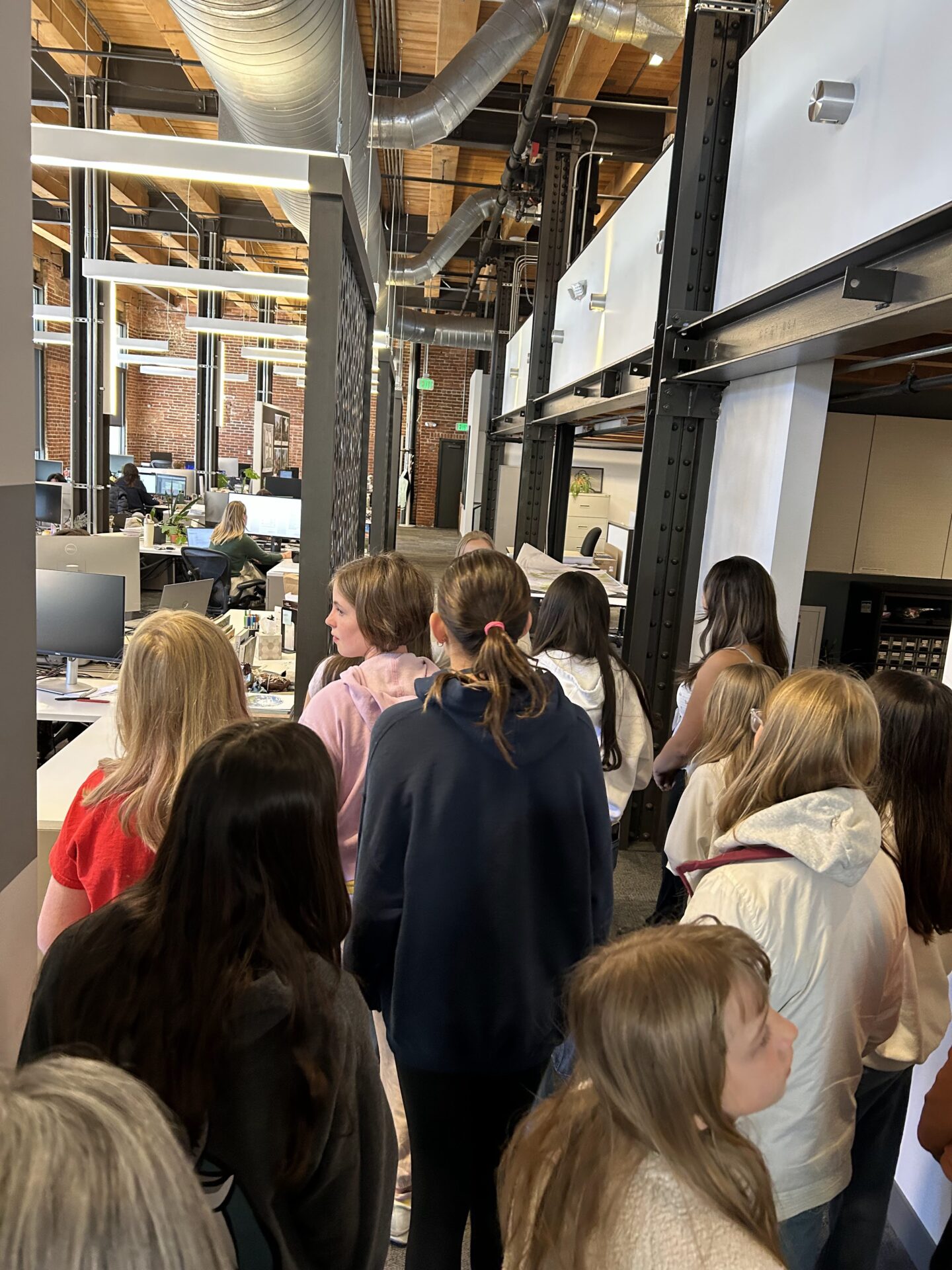
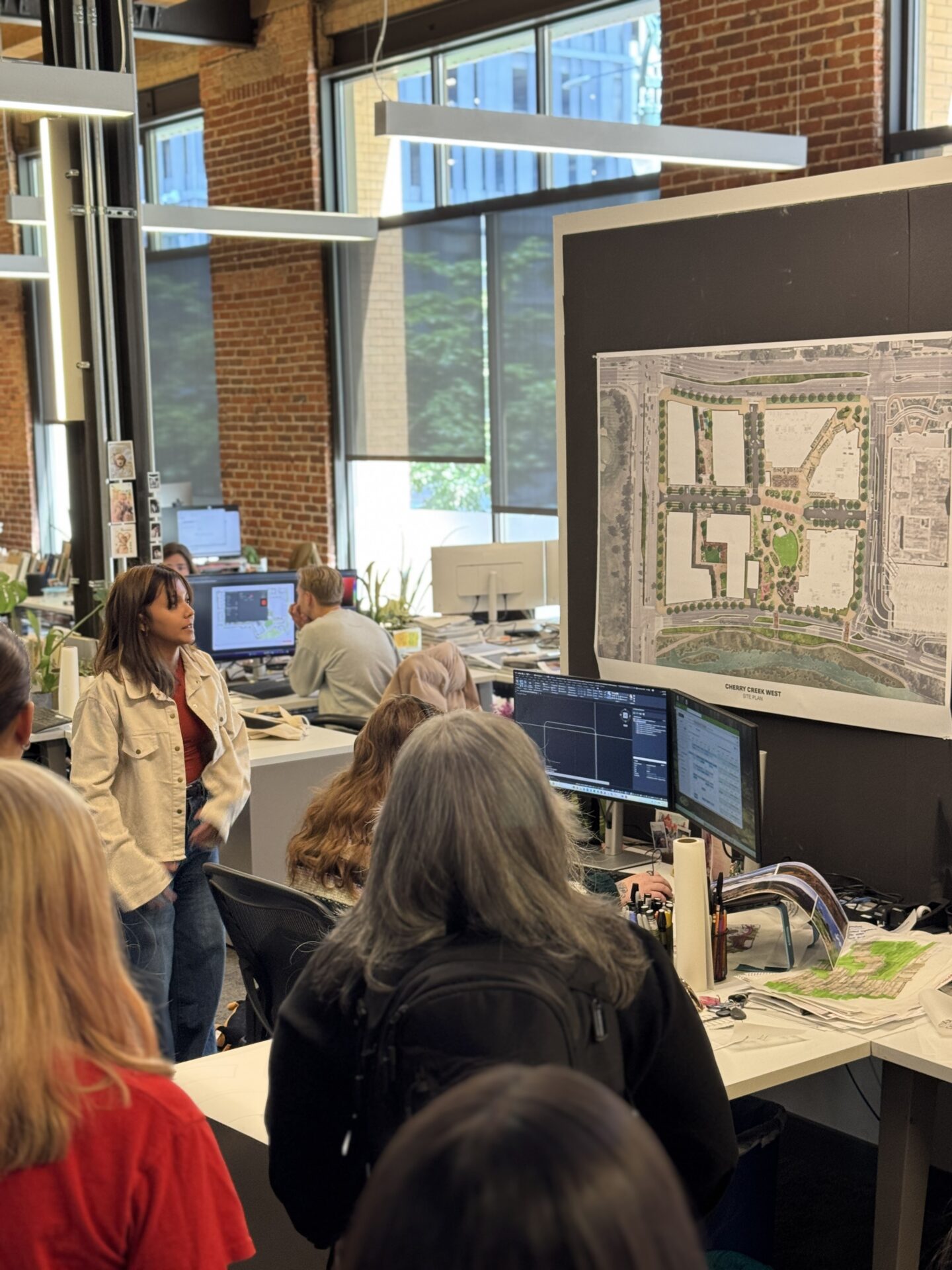
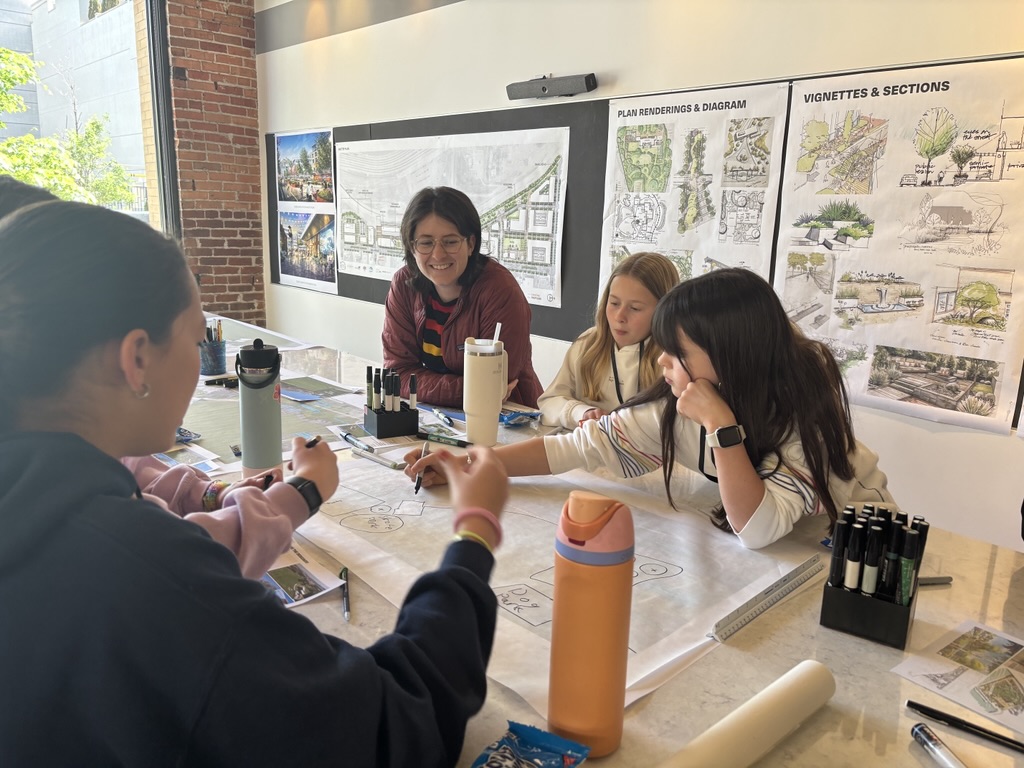
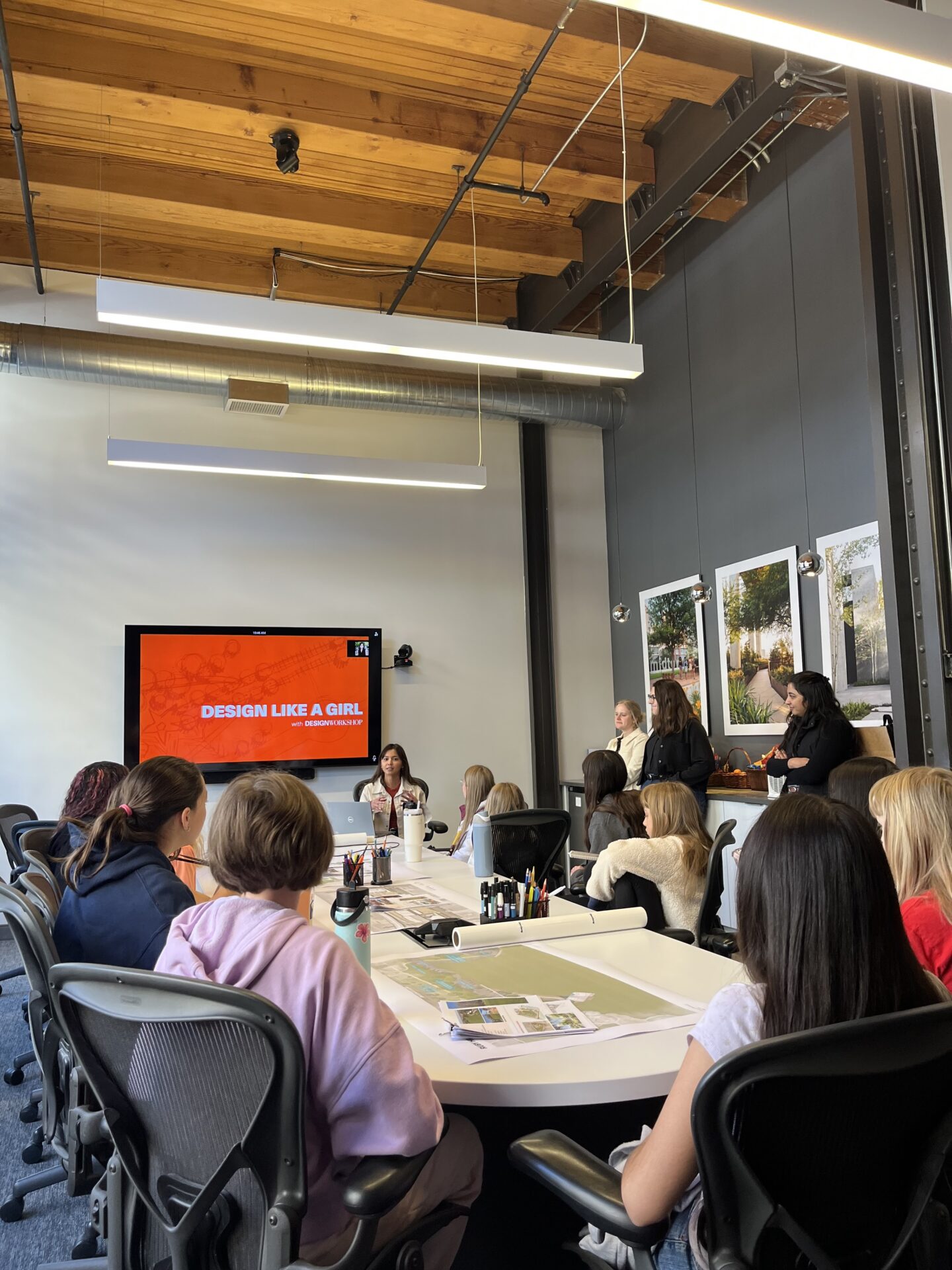
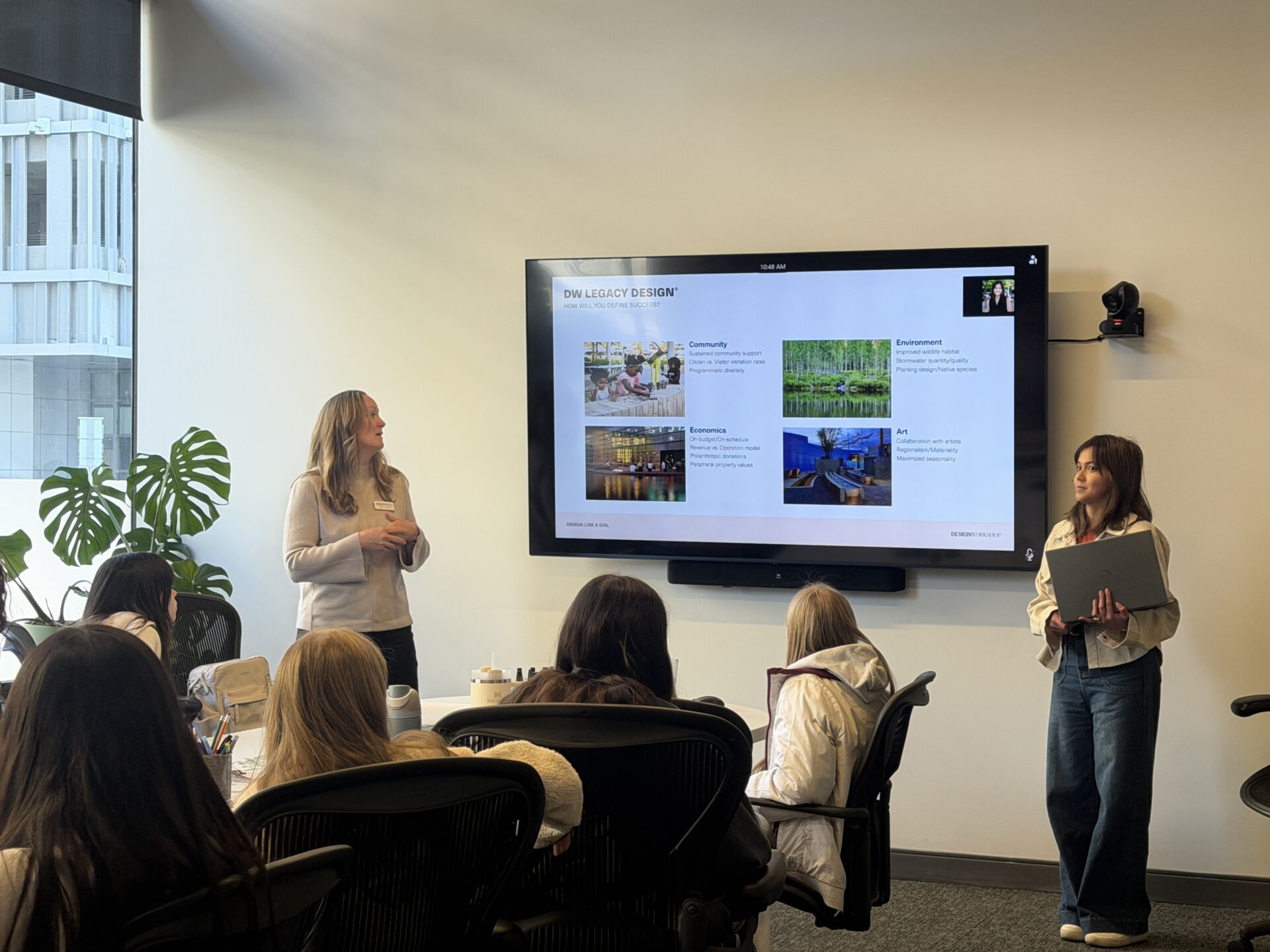
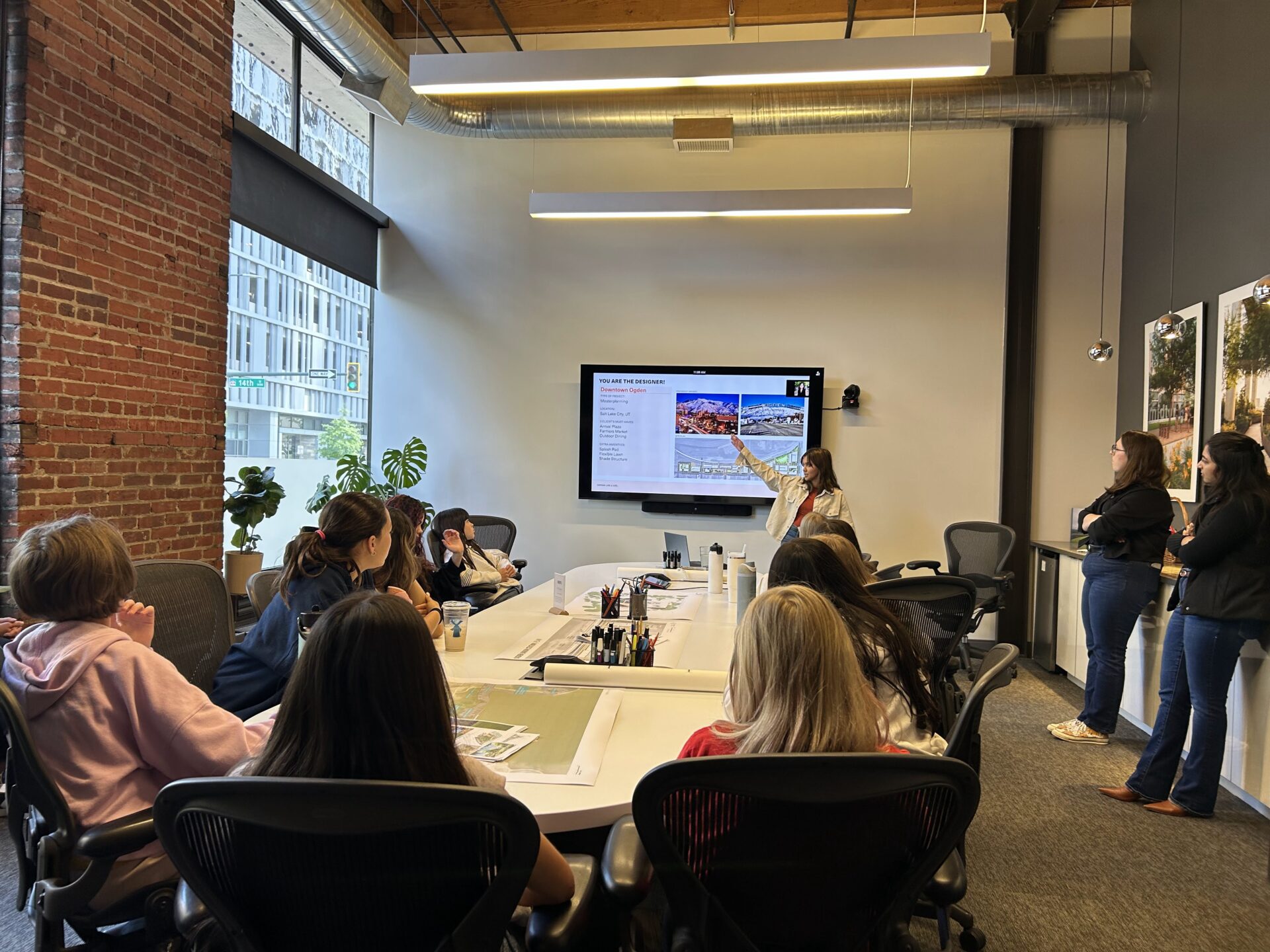
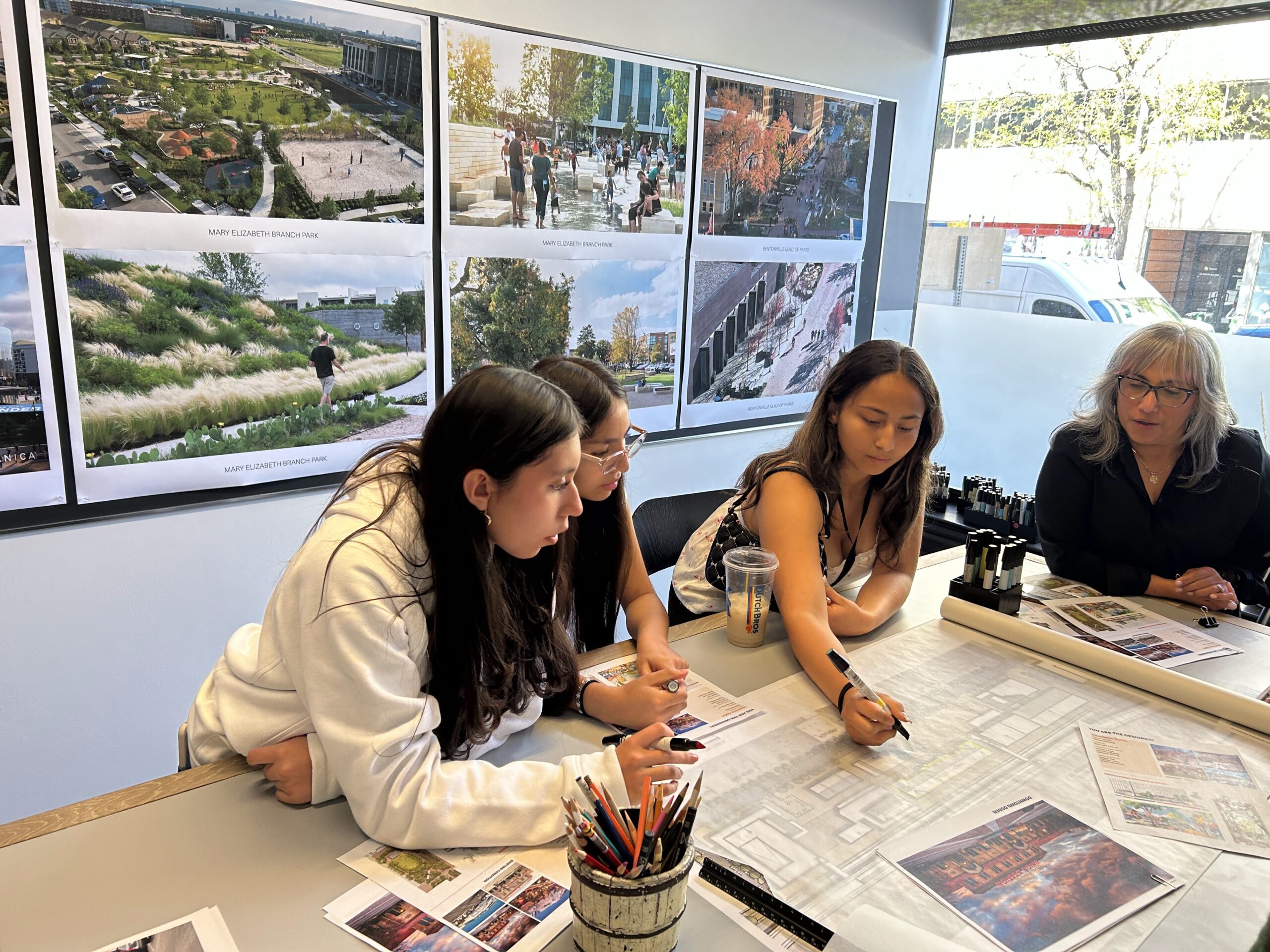
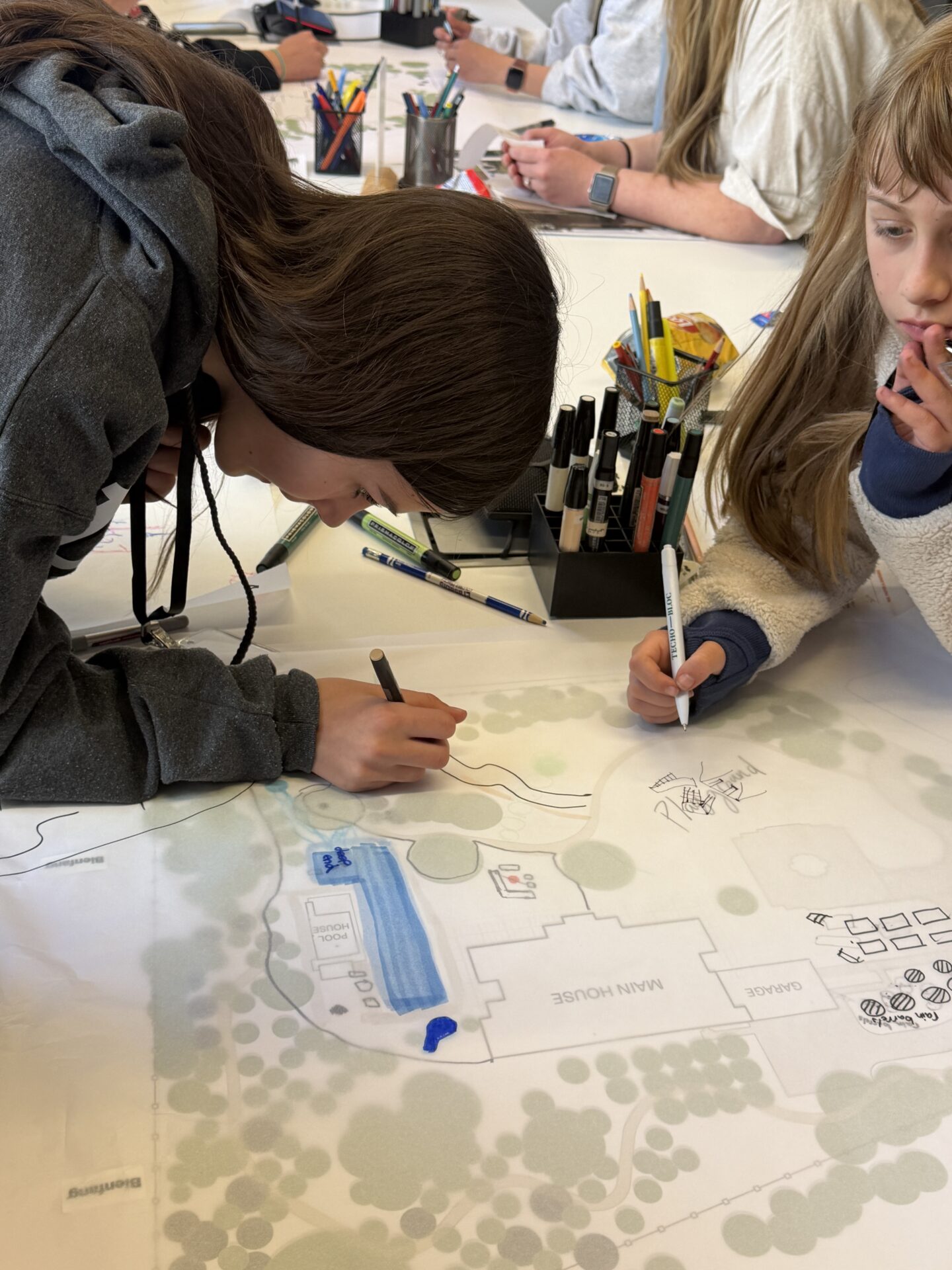
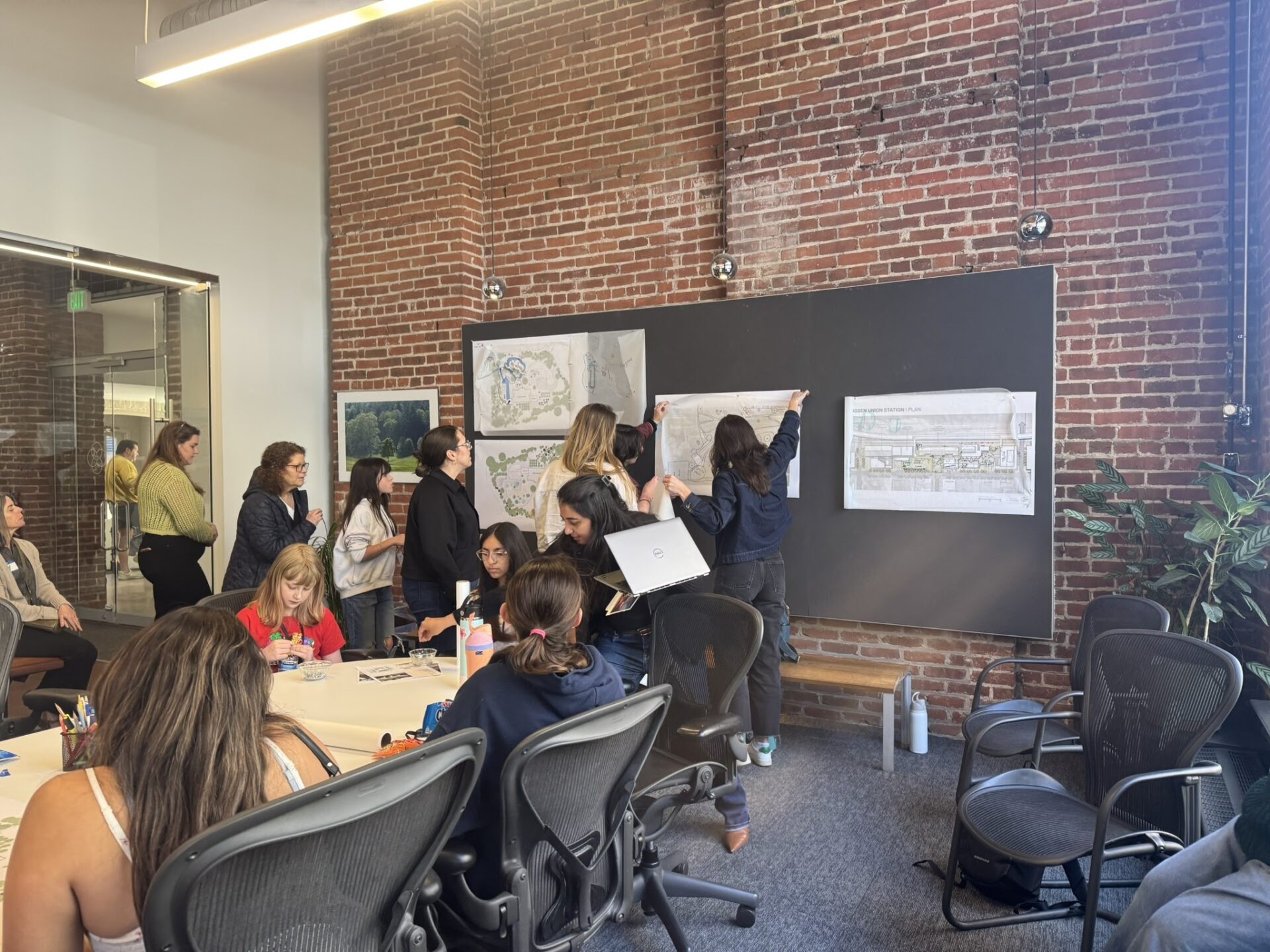
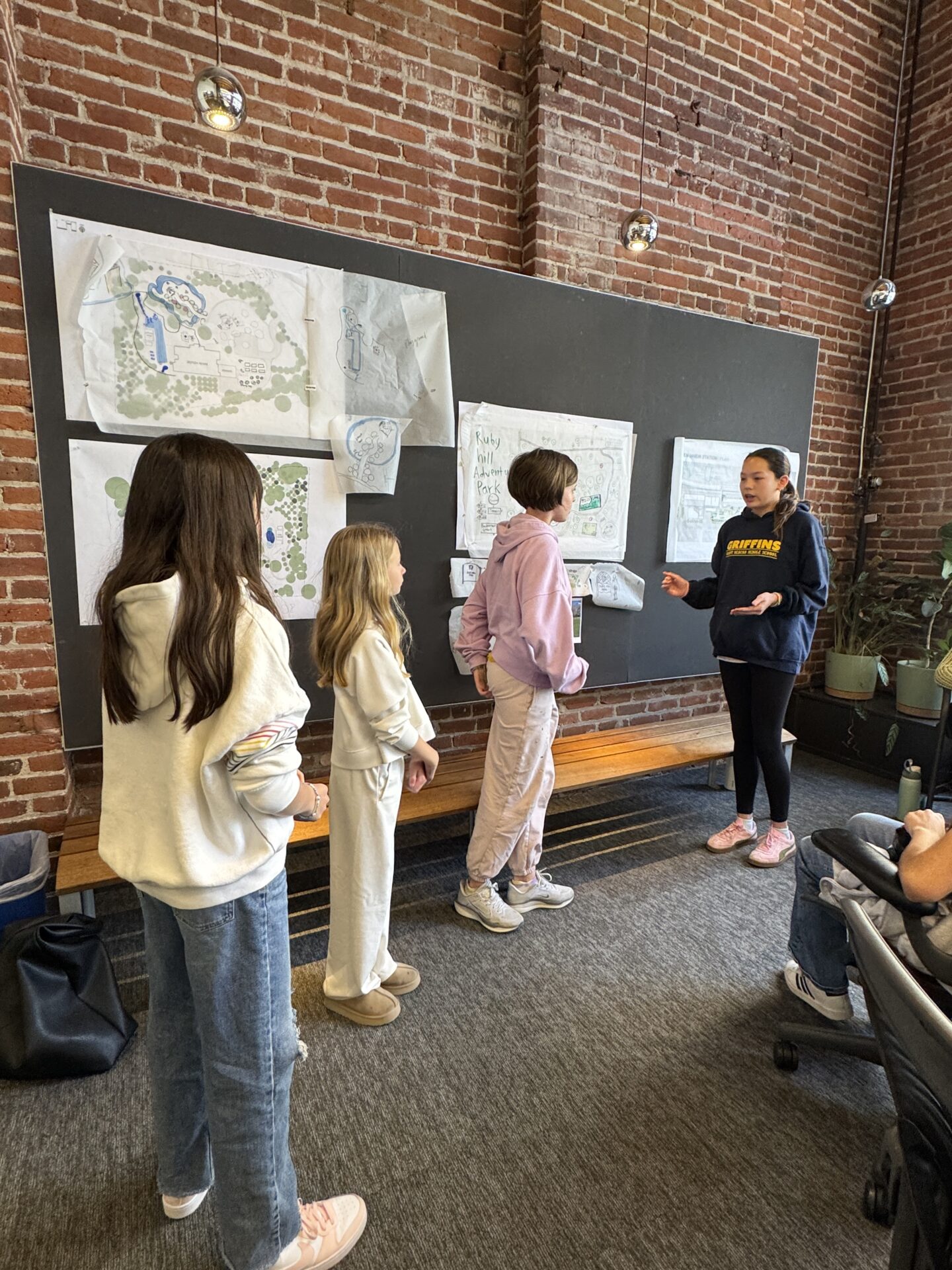
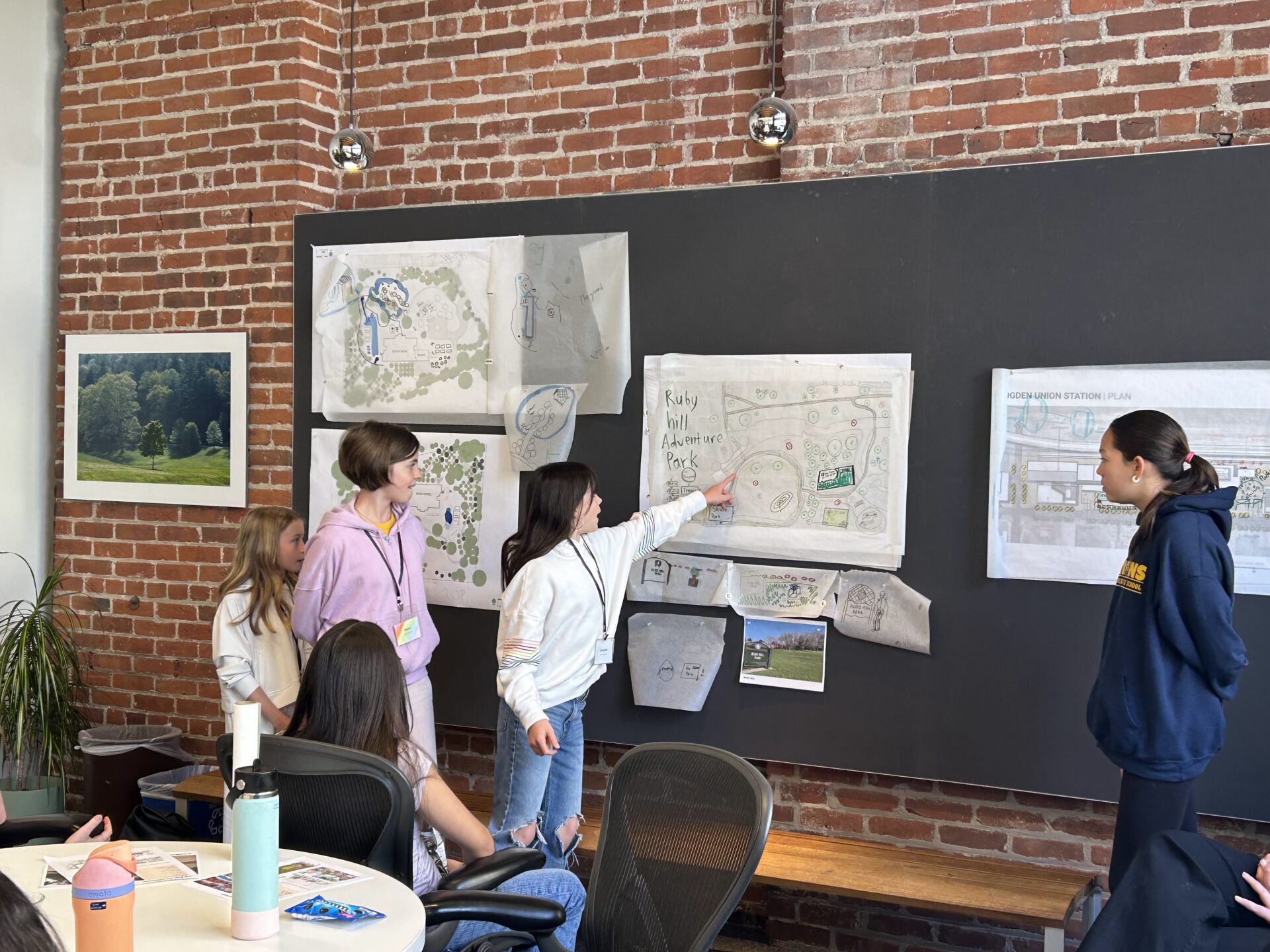
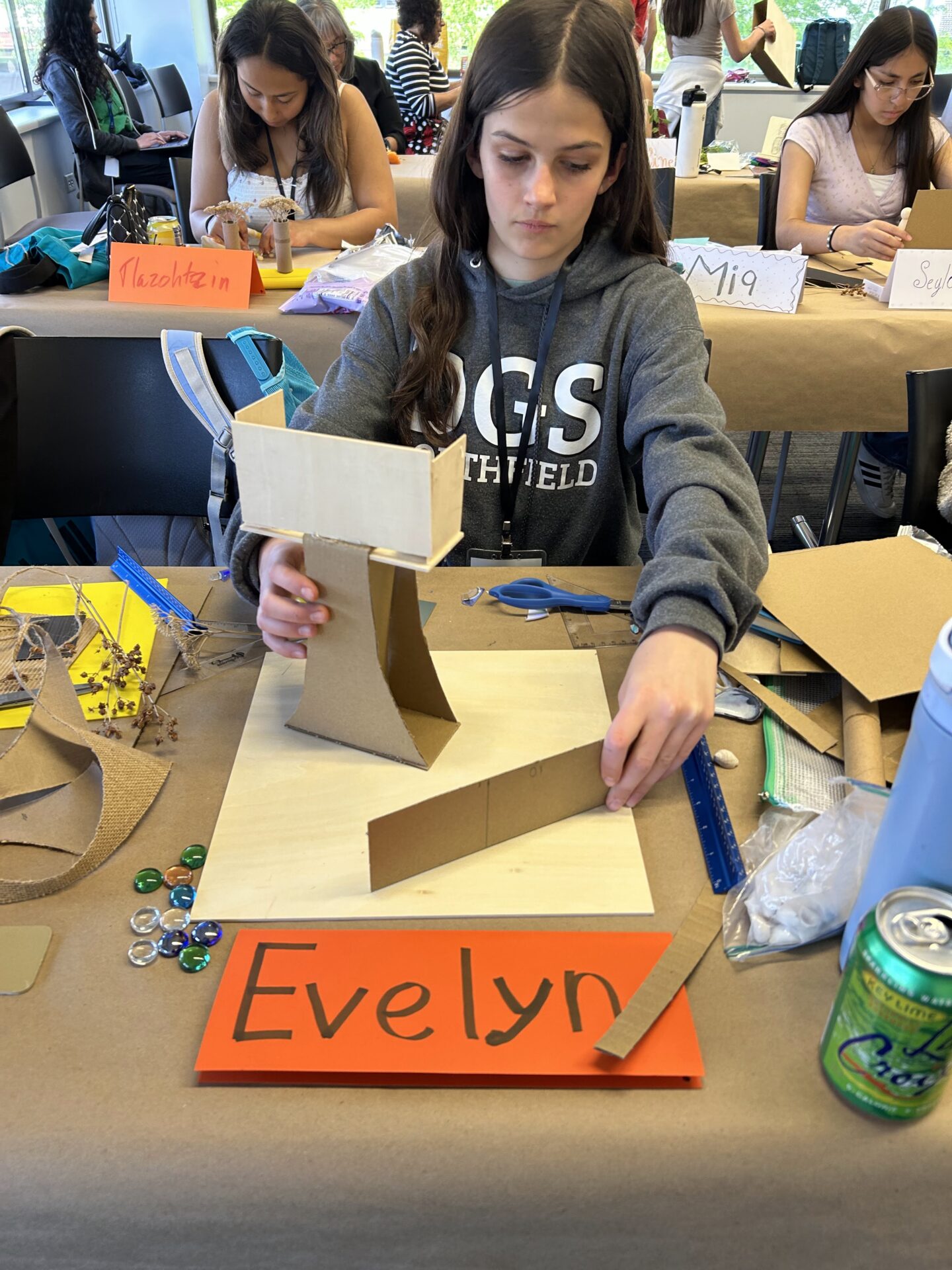
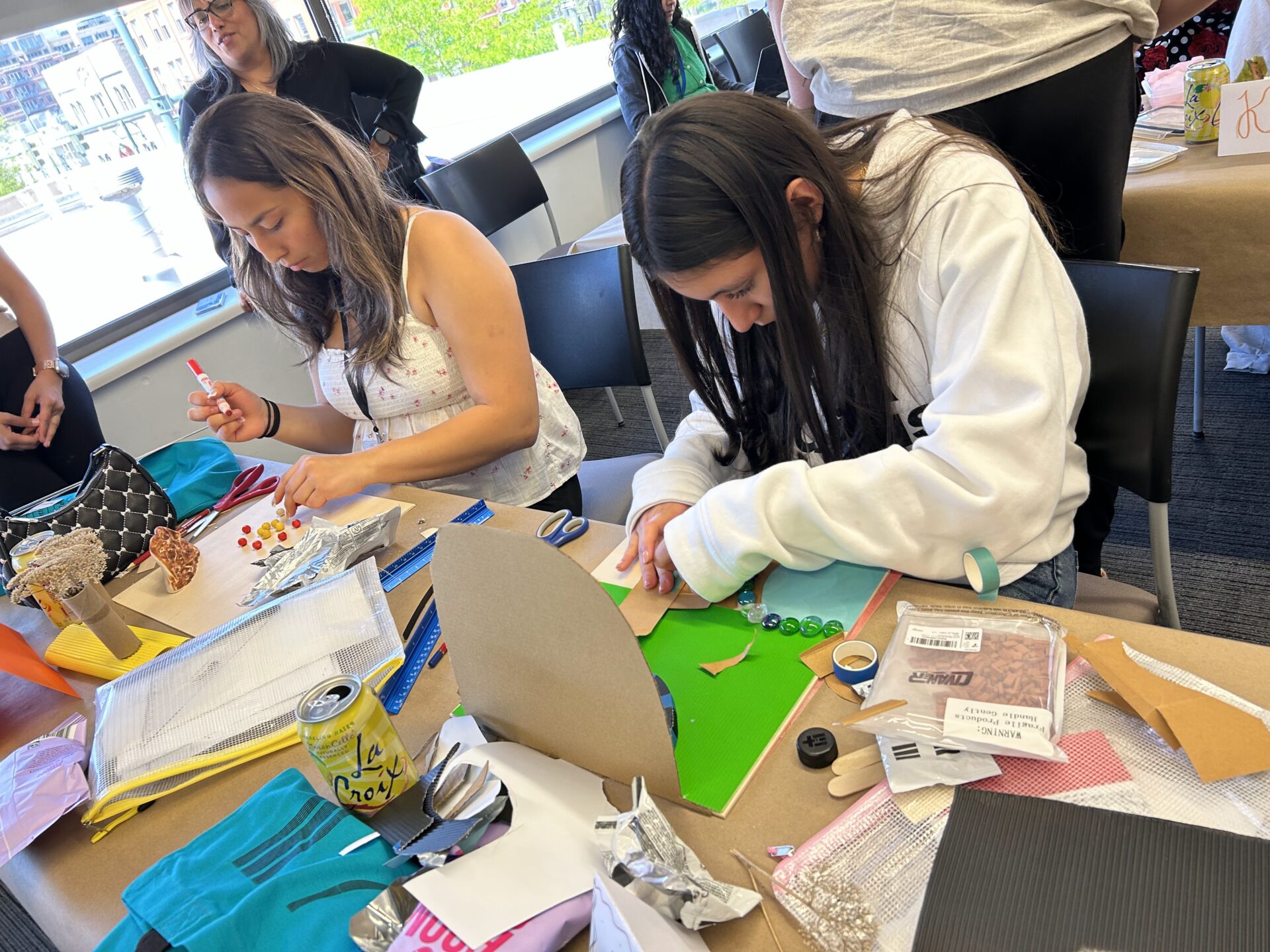
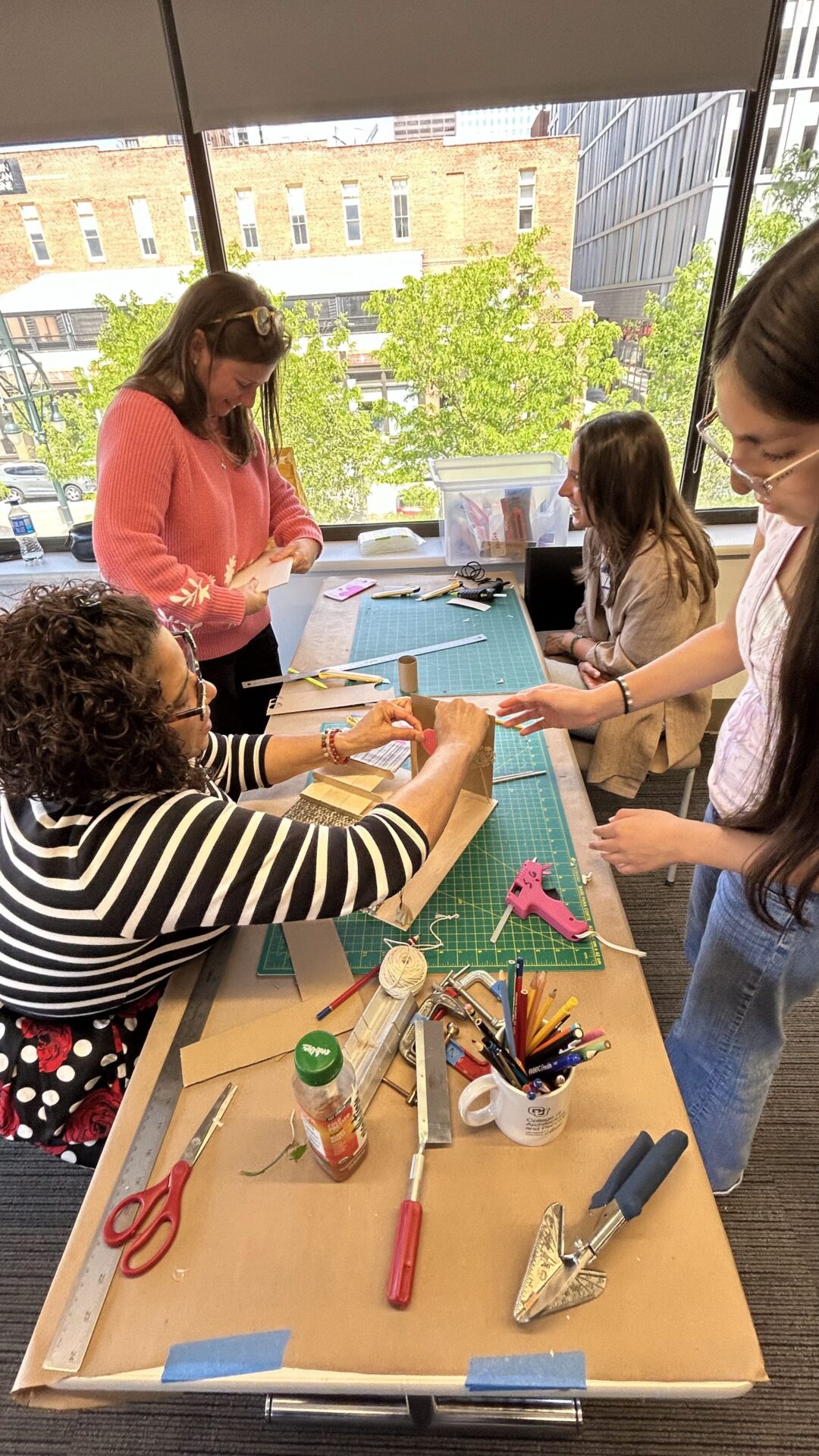
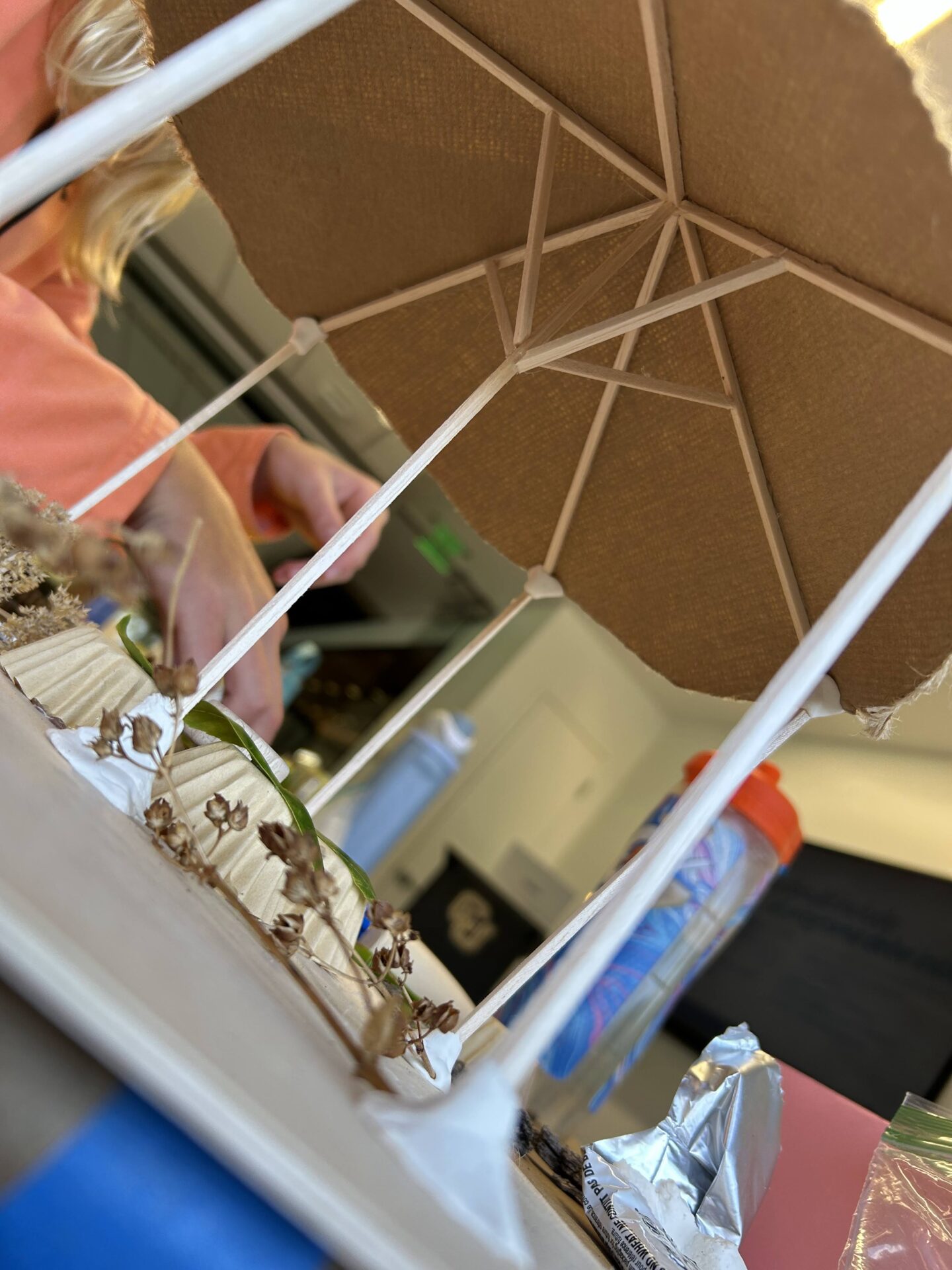
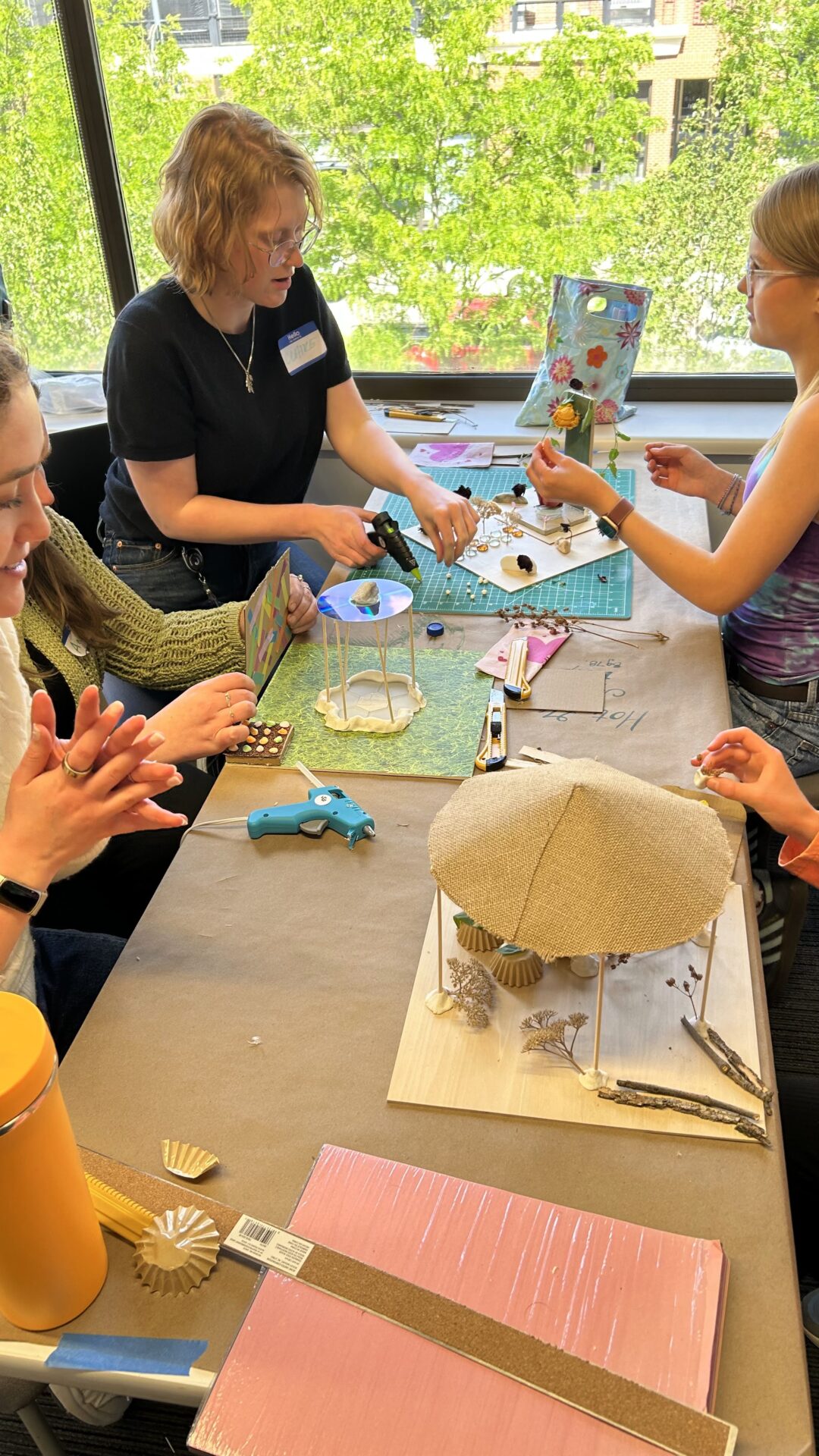
Now in its third year, Design Like a Girl continues to inspire the next generation of female designers through hands-on workshops introducing middle school students to careers in design. Held on Fridays throughout the school year at the CU Denver College of Architecture and Planning, these all-day workshops invite students to spend the day learning about design with mentors from across the Colorado architecture and design community, with Spanish-speaking mentors providing essential translation for participants for whom English is not their primary language—significantly expanding the program’s reach.
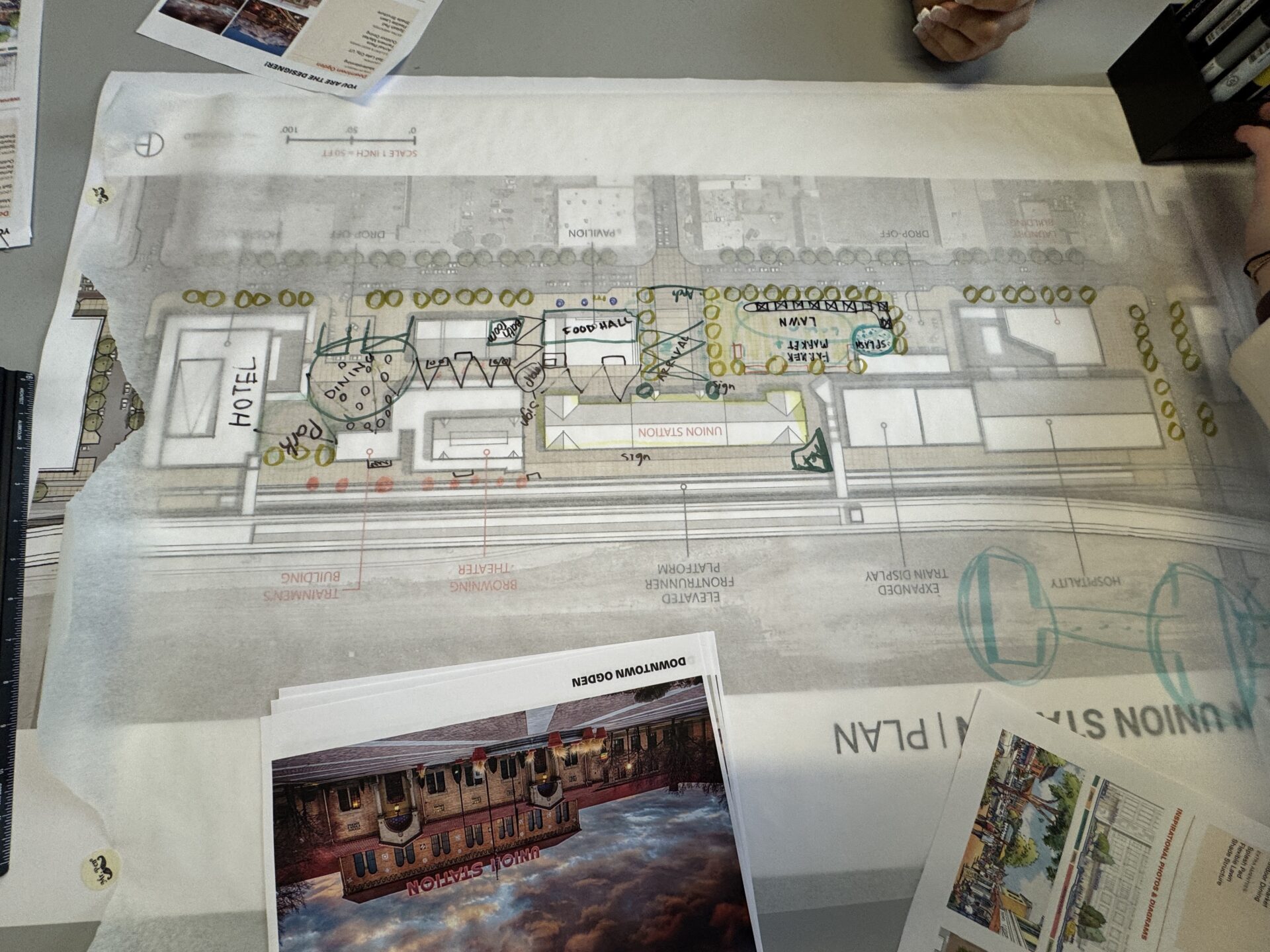
The workshops typically begin with an introductory lesson or activity in the morning, followed by an afternoon dedicated to building models inspired by the theme of the day’s workshop. Design briefs this year included an entryway for a program of the designer’s choice, a ‘she-shed’ for creativity, and an outdoor space inspired by their favorite activity. Mentors are always impressed by the imagination and thoughtfulness expressed in these projects by the young designers.
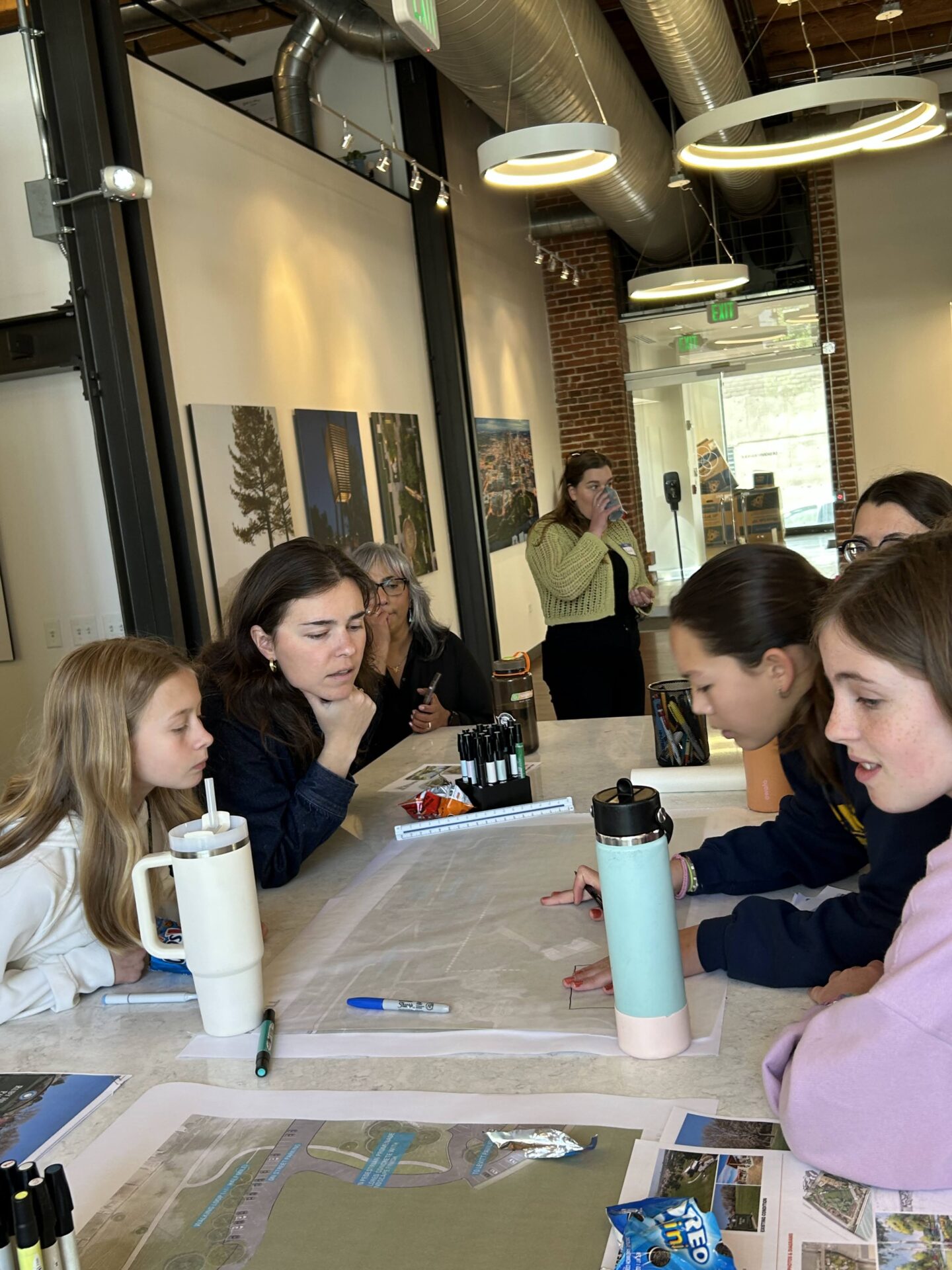
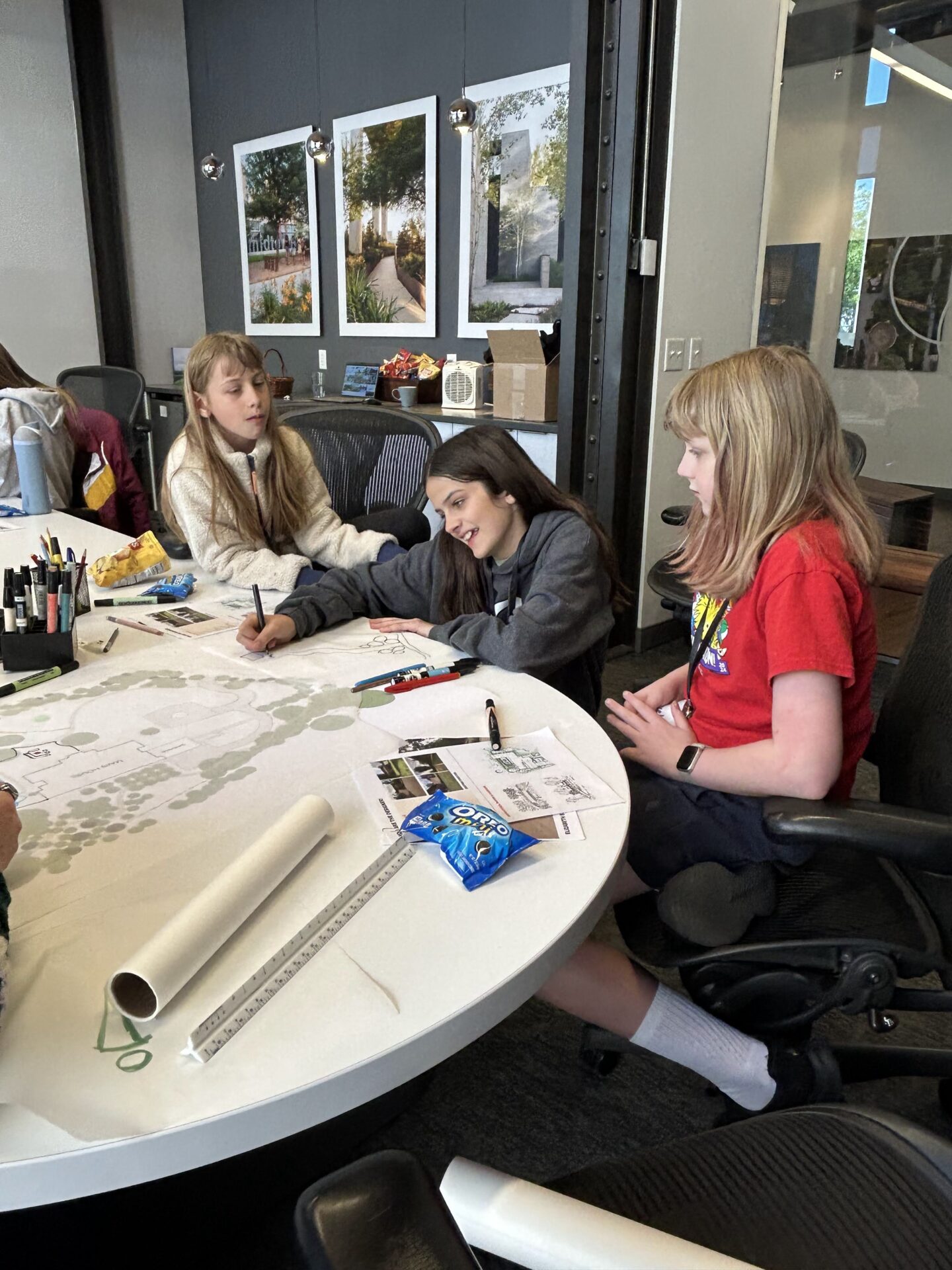
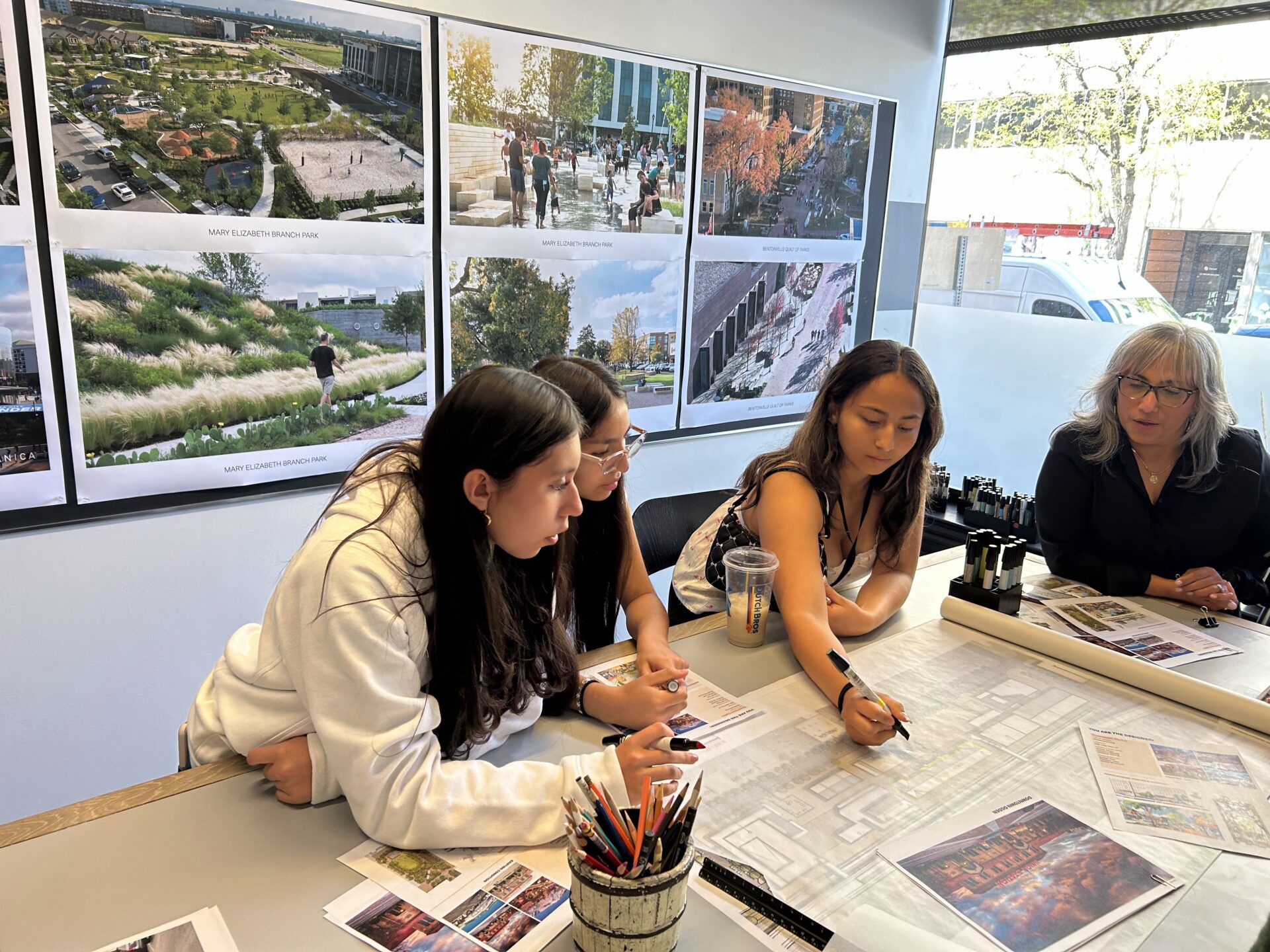
Design Like a Girl partners with Denver Public Schools to provide these workshops to students free of charge through the Spark Early Career Exploration Program, which aims to expose middle school students to professional work environments. This year, funding was also secured through an AIA Architecture Week grant for K-12 educational opportunities.
Spark Coordinator Ivonne Miranda Correa spoke to the impact of this year’s workshops: “[The mentors] did such an amazing job demonstrating how a diversity of skills, personalities and interests can lead to meaningful and rewarding careers in the field. And just as importantly, you model what it looks like for women to support and uplift one another professionally. That gives our students the opportunity to imagine a real future for themselves and to know they can find a supportive community along the way.”
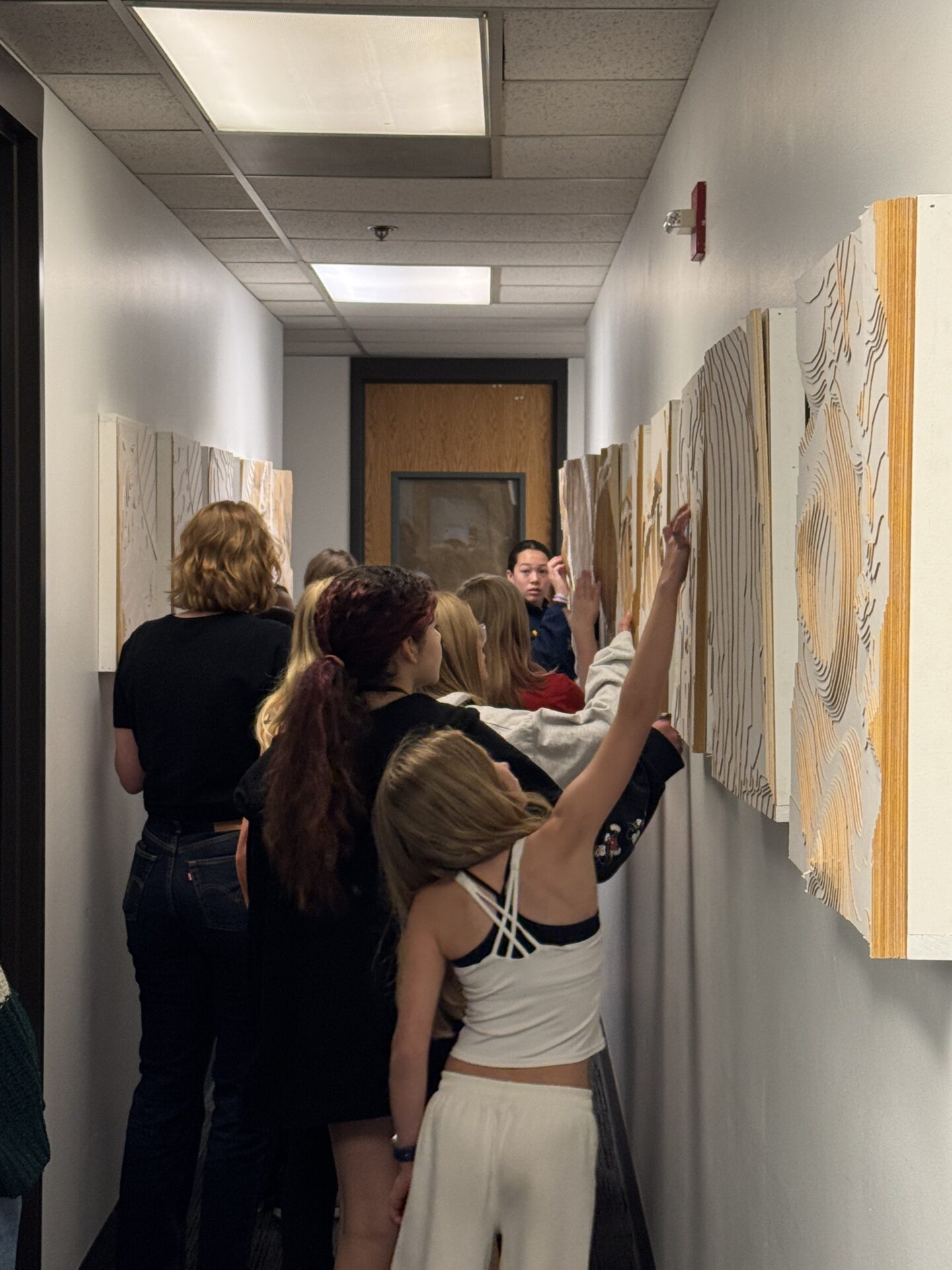
Feedback from student participants is equally strong. Model making is always the highlight of the day, but the girls also love the opportunity to get out of the classroom. Site visits this year took the girls to local design firms Rowland + Broughton and Design Workshop, as well as walking tours of Larimer Square and the 16th Street Mall.
The lead organizers of the Colorado chapter of Design Like a Girl, Sarah Goldblatt, AIA, Anna Friedrich, AIA, Ely Merheb, AIA, Dawn DiMedio, AIA, and Claire Messer, Past President of All For Women in Architecture Students, would like to thank every mentor that donated their time and creativity to inspire the future designers of the built environment.
Special thanks also to:
- Joanna Schmickel, FAIA, CGS Architects (DLAG Program Founder)
- Jeana Delamarter, Manager of Undergraduate Recruitment and K-12 Outreach, CU Denver College of Architecture and Planning
- Sondra Osif, Spark Program Manager Career & College Success, Denver Public Schools
- Ivonne Miranda, Spark Middle School Coordinator, Denver Public Schools
- Guest Speaker Kati Peditto, PhD
- Nurain Rafee, Design Workshop
- Brittany Soler, Assoc. AIA
- AIA Colorado J.E.D.I. Committee
- AIA Architecture Week
- Anderson Mason Dale Architects
- Rowland + Broughton Architecture and Interior Design
- Design Workshop
- Dikeou Realty
If you are interested in participating as a mentor next year, be on the lookout for a sign-up notice in the AIA Colorado newsletter. Recruiting for the 2026-2027 school year will begin in late summer 2026. You can also contact Sarah at sarah@sarahgoldblatt.com to be notified when mentor registration opens.
Marketing for Architects: From Project to Publication

MARKETING FOR ARCHITECTS
EVENT RECAP
Wednesday, June 17, 2026
Great architecture deserves to be seen, but great design alone rarely earns media coverage.
That was the central message of AIA Colorado’s first Marketing for Architects session, From Project to Publication, where editors, journalists, storytellers, and content creators shared an inside look at how projects make their way into magazines, newspapers, websites, and social media.
Moderated by Jon Bell, AIA Colorado’s Communications & Creative Director, the panel brought together four distinct perspectives:
- Vanessa Kauffman Zimmerly, Editor, Modern in Denver
- Catie Cheshire, Commercial Real Estate Reporter, Denver Business Journal
- Parker, Founder and Creative Director, Developing Denver
- Bryant Palmer, Founder and Chief Storyteller, Oh Hey Creative
While each panelist approaches storytelling differently, they agreed on one fundamental point: architects need to think about publication long before a project is complete.
DISCUSSION
Key Takeaways
Design Solves Problems. That’s the Story.
One of the strongest themes throughout the discussion was that compelling projects aren’t defined solely by beautiful photography or striking forms.
For Modern in Denver, every project begins with a larger question.
“Design can and should solve problems.”
Vanessa Kauffman Zimmerly explained that the publication looks beyond aesthetics to understand what a project contributes. Whether addressing climate resilience, housing affordability, new building technologies, or simply improving life for a family, editors are looking for projects that advance the conversation around design.
Architects who can clearly articulate the problem they set out to solve are already telling a stronger story.
Different Publications Are Looking for Different Things
Although every outlet tells stories about architecture, each approaches them from a different perspective.
For the Denver Business Journal, newsworthiness often comes from business impact. Reporter Catie Cheshire explained that project milestones, economic impact, development trends, and compelling data all help a story stand out.
Developing Denver, meanwhile, reaches more than 100,000 followers through highly visual social media content. Founder Parker focuses on transparency, helping the public understand what’s being built, why it’s happening, and how projects affect their communities.
Bryant Palmer approaches the process from the opposite direction, helping firms identify which stories fit which publications.
The lesson for architects was simple: don’t send the same pitch to every outlet.
Understanding each publication’s audience dramatically increases the likelihood that your story will resonate.
Relationships Matter More Than Press Releases
Perhaps the biggest misconception discussed during the session was that publication begins with a single email.
Instead, every panelist emphasized relationships.
Editors appreciate hearing about projects months, or even years, before completion. Reporters value firms that consistently provide useful information. Social media creators benefit from ongoing project updates rather than one-time announcements.
Bryant Palmer summarized the public relations perspective succinctly:
“PR is a long game.”
Successful firms aren’t simply pitching projects. They’re building trust over time.
That relationship makes future conversations easier, improves communication, and creates opportunities that wouldn’t otherwise exist.
Think About Publication Before Construction Ends
One of the most practical conversations centered around preparation.
By the time a project is finished, many publication opportunities have already been shaped by decisions made months earlier.
Panelists encouraged architects to think about:
- Developing a clear design narrative.
- Investing in professional photography.
- Planning for media rights and image licensing.
- Identifying project collaborators.
- Securing homeowner or client participation when appropriate.
- Documenting construction milestones.
Zimmerly noted that architects should begin thinking about how a project might appear in a magazine spread while it is still being designed.
That foresight makes storytelling significantly easier later.
Awards Aren’t the Story
One of the most memorable moments came when the panel discussed awards.
Winning recognition is valuable, but it shouldn’t become the entire pitch.
As Catie Cheshire explained:
“Just because you won an award doesn’t mean it’s a story.”
Instead, architects should explain why the project earned recognition.
What challenge did it solve?
What community did it serve?
What innovation moved the profession forward?
The award validates the work, but the project’s impact is what captures readers’ attention.
Make It Easy to Find You
For firms with limited marketing budgets, the panel offered encouraging advice.
You don’t need a large communications department to improve your visibility.
Simple steps can make a meaningful difference:
- Keep your website current.
- Include clear contact information.
- Create an online press page with photography, project facts, and downloadable assets.
- Share project updates consistently on your own channels.
- Attend industry events and introduce yourself to editors and reporters.
As several panelists noted, opportunities are often missed simply because someone couldn’t find the right person to contact.
FIVE TAKEAWAYS
for Every Architecture Firm
Whether you’re a sole practitioner or part of a large firm, the discussion offered several practical lessons:
Tell the “why,” not just the “what.” Beautiful buildings matter, but the story behind them matters more.
Start early. Publication begins during design and construction, not after ribbon cutting.
Invest in photography. Professional imagery remains one of the most valuable marketing assets a firm can create.
Build relationships before you need them. Editors, reporters, and creators are far more likely to engage with people they know.
Think beyond traditional media. Publications, business journals, podcasts, newsletters, and social media platforms all play an important role in shaping public conversations about architecture.
For architects looking to elevate their practice, the message was both encouraging and practical: meaningful stories already exist inside every project. The challenge isn’t creating a story. It’s learning how to tell it.
WATCH
From Project to Publication

BUSINESSS OF ARCHITECTURE KNOWLEDGE COMMUNITY
Discussion Recap
Tuesday, June 16, 2026
Moderated by Mary Cipollone of Big Onion Partnerships, this AIA Colorado Business of Architecture Knowledge Committee session centered on what actually drives employee engagement, how managers shape culture, and how architecture firms can rethink “people management” as a core leadership skill rather than an administrative function.
The session blended participant discussion, research data, and practical frameworks for leading teams. A consistent thread ran through the conversation: engagement is not abstract or cultural wallpaper, but something directly shaped by everyday managerial behavior, especially communication, trust, and feedback.
DISCUSSION
Key Takeaways
Employee Engagement Is Lived, Not Defined
The discussion opened with participants sharing their own definitions of employee engagement. The responses were immediate and human-centered: conversations, participation, creativity, ownership, and simply wanting to be in the office.
A shared definition was then introduced:
“Enthusiasm for involvement in work.”
This led into research showing clear organizational outcomes: higher engagement correlates with productivity, profitability, lower absenteeism, and reduced turnover.
Participants also reacted strongly to workforce wellbeing data, including:
- “41% of employees are stressed.”
- “One in 5 employees are lonely.”
- “Half of all employees are watching for or actively seeking a new job.”
The tone in the room shifted toward recognition that these are not abstract statistics, but reflections of everyday workplace conditions.
What Great Managers Actually Do
A key reflective exercise asked participants to think about the best boss they’ve ever had. Two themes emerged repeatedly: trust and agency.
One participant noted:
“The best idea wins… providing an environment where you’re supporting design but allowing folks to have input.”
Another shared:
“It trusted me to handle it… and grow into that role.”
The facilitator emphasized that this is not incidental, it is structural:
“Holding people to high expectations is a critical piece of trusting relationships.”
The takeaway: strong managers do not reduce expectations to avoid discomfort; they expand capability through trust, feedback, and stretch opportunities.
Manager Impact on Engagement Is Disproportionately High
One of the most significant data points discussed was:
“The effectiveness of an employee’s manager accounts for 70% of the variance in employee engagement.”
And similarly:
“57% of employees have left a job because they weren’t getting what they needed from their manager.”
The implication was direct: engagement is less about perks or policy and more about the immediate relationship between managers and their teams.
This reframed “people management” as a core business lever rather than a soft skill.
Rethinking One-on-Ones and Management Rhythm
A large portion of the discussion focused on the structure and frequency of one-on-one meetings.
The facilitator advocated for weekly check-ins:
“A big fan of the weekly check-in.”
But participants challenged feasibility in architecture firms with large teams and project-based structures. Alternatives emerged, including:
- Monthly check-ins
- Quarterly formal reviews
- 5–10 minute “scrum-style” weekly touchpoints
- Informal coffee or walk-and-talk conversations
A key insight that emerged:
“The best check-ins are the check-ins that you will actually do.”
Rather than a universal cadence, the group converged on flexibility tied to team size, role complexity, and workflow reality.
Psychological Safety vs Shared Responsibility
A central tension emerged around responsibility for engagement and wellbeing.
One framing question:
“Where’s the line between what our responsibilities are to ensure engagement and where it is a shared responsibility?”
The facilitator response emphasized balance:
- Leaders are responsible for creating conditions for engagement
- Employees are responsible for communicating their needs and self-regulation
- Managers are not responsible for managing all emotional outcomes
A key statement captured this boundary:
“We are not responsible for other people’s feelings… but we are responsible for creating conditions where people can thrive.”
Another important nuance:
“The workplace is not your therapist, your psychiatrist… it cannot be all those things.”
The discussion acknowledged a cultural shift: expectations for leadership support have increased significantly, particularly post-pandemic.
Communication, Feedback, and Cultural Health
The session closed with a focus on communication layering and feedback habits. Managers were encouraged to reinforce messages multiple ways—verbal, written, and repeated touchpoints.
A guiding principle:
“You have to tell somebody something like six times… it is our job to keep communicating it.”
Participants also emphasized the importance of humility and listening:
“Listen as if you’re wrong.”
This tied back to a broader cultural theme: organizations improve not through one-time interventions, but through consistent, small behavioral practices that build trust over time.
Closing Reflection
Participants were asked to share one-word takeaways, with responses including: “empowered,” “hopeful,” “reassured,” and “balance of expectations.”
The overall sentiment of the session was not that people management is easy—but that it is learnable, improvable, and central to firm performance. The strongest managers are those who combine structure with humanity, clarity with flexibility, and expectations with trust.
ABOUT THE
Business of Architecture Knowledge Committee
Members of this committee help to organize events and learning opportunities around the business side of architecture. Topics might include marketing, HR and legal, when to hire, practice structure and organization, contracts/contract negotiation, remote work, and more.
For 2026, the committee is hosting a series of roundtables and all members are invited to attend and participate either in person or virtually.
RSVP for events at AIA Colorado’s event page.